
2024-03-05 06:08
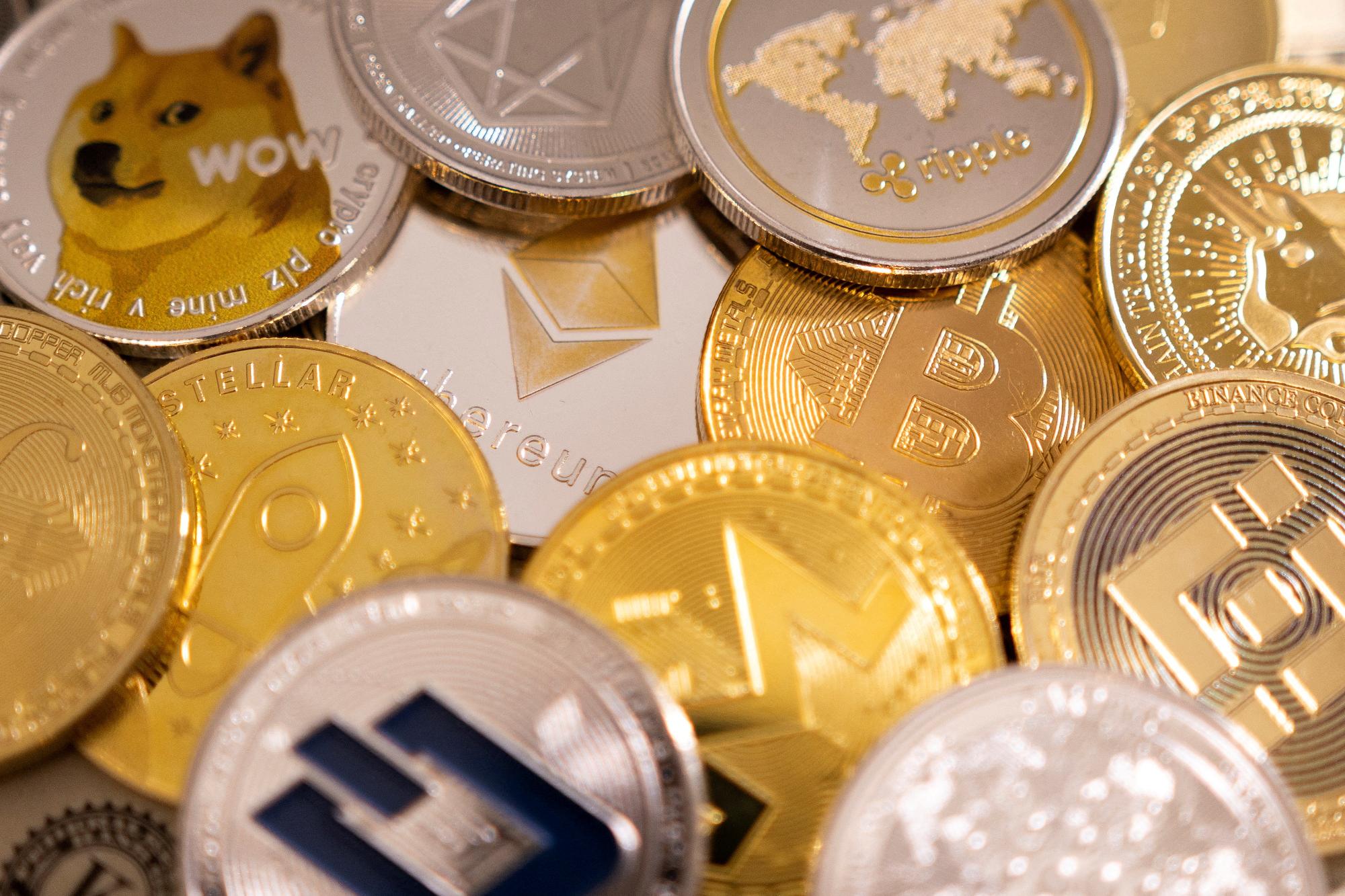
SEOUL/MUMBAI, March 5 (Reuters) - Bitcoin's runaway rally is being driven by investors in Asia. Traders in South Korea, China and other Asian countries are responsible for roughly 70% of bitcoin trading volumes, much like they were in 2021 when bitcoin last hit such heady highs, according to crypto exchange data from The Block. Asia accounted for $791 billion of the $1.17 trillion worth of bitcoin traded in February, with North American investors lagging way behind with $113 billion, broadly reflecting a trend seen since November, the data shows. In China, FOMO has gripped many small investors frustrated with an anaemic stock market. On popular messaging app WeChat, searches for "bitcoin" jumped 12-fold in February. "I want to buy some bitcoin at a good price and hold," Mia Wang, a finance industry employee based in China's eastern province of Zhejiang, told Reuters. "It has jumped a lot and is expensive now, but I worry it won't have any correction." Bitcoin is trading at around $65,000 - close to its record of $69,000 - after an eye-popping 148% rise since early October, primarily driven by U.S. regulators approving spot bitcoin exchange-traded funds (ETFs). BlackRock's iShares bitcoin trust (IBIT.O) , opens new tab has been a major beneficiary of such investment flows. Traders have also poured into the world's biggest cryptocurrency ahead of April's "halving" event, which could reduce supply and push prices up. Supply of bitcoin is limited to 21 million, of which 19 million tokens have already been mined. The legality of trading and owning of bitcoin varies across Asian jurisdictions, ranging from Japan which has comparatively liberal regulations to China where there's a ban. Spot bitcoin ETFs are banned in South Korea, but local brokers offer easy access to bitcoin futures ETFs. KOREA GOES BIG ON BITCOIN South Korea commands a 10% share of the bitcoin cash tokens and listed futures markets, estimates Hong Song-uk, a cryptocurrency analyst at NH Investment & Securities. South Koreans have made a net investment of $23.4 million in the U.S.-listed 2X Bitcoin Strategy ETF this year, compared with $25.1 million in all of 2023, according to the Korea Securities Depository. In February, they also invested $6.89 million in Proshares Bitcoin Strategy ETF . "Because trading of bitcoin ETFs has been banned here, more and more Koreans are buying bitcoin ETF futures, which is helping with its pop now," said Hong. Bitcoin trading volumes on Upbit roughly trebled to 67,000 coins last week versus the previous week, the South Korean exchange said. Yet U.S.-based exchanges such as Coinbase (COIN.O) , opens new tab, Bitstamp and Binance, which operate in some Asian markets, continue to have the biggest share of global volumes at 50%, according to research firm Kaiko. Hong Kong has decriminalised crypto trading over the past year, while allowing bitcoin ATMs and shops to cater to small investors and even offshore Chinese financial institutions. The city's largest bitcoin futures ETF, managed by CSOP Asset Management, has seen its assets under management swell five-fold in the past five months to over $100 million. There is also huge interest in India, where several local crypto exchanges operate legally, but more trading is done on offshore exchanges such as Binance and KuCoin which do not levy the 1% transaction monitoring tax that local operators do. Between July 2022 and July 2023, Indians traded crypto worth 350,000 crore rupees via offshore crypto platforms, accounting for more than 90% of the total crypto trading volume by Indians, according to estimates from the Esya Centre, a local think-tank. https://www.reuters.com/technology/cryptoverse-asian-traders-give-bitcoin-blast-off-2024-03-05/
2024-03-05 06:02
NEW YORK, March 5 (Reuters) - A stronger-than-expected U.S. economy is buoying the dollar, frustrating investors who had bet the currency would wilt under a barrage of interest rate cuts that have yet to materialize. The dollar index (.DXY) , opens new tab, which measures the buck against a basket of its peers, is up 2.4% year-to-date. Net bets on the dollar in futures markets swung positive last month for the first time since late November, Commodity Futures Trading Commission data showed. Driving the U.S. currency's stubborn strength is a robust U.S. economy that has made the Fed hesitant to ease monetary policy too quickly and risk an inflationary rebound. U.S. gross domestic product grew at a 3.2% annualized rate in the fourth quarter. By contrast, the eurozone's economy stagnated last year, China faces a deepening property crisis, and Japan unexpectedly slipped into recession at the end of 2023. While the U.S. economy has remained resilient, "there is no significant evidence Europe and China are picking up," said Thierry Wizman, global FX and rates strategist at Macquarie, who has become more neutral on the dollar after his bearish outlook last year. "That's the reason people have had this change of heart" on the dollar, he said. The dollar's strength will be tested this week as investors brace for Fed Chairman Jerome Powell to testify before lawmakers on Wednesday and Thursday and await U.S. employment data at the end of the week. Signs that the Fed is sticking with its "higher for longer" messaging on rate cuts or that the U.S. economy continues to stay strong could support the dollar's rally. Investors are pricing in some 85 basis points of rate cuts for 2024, compared to more than 150 basis points they had factored in early January, futures tied to the Fed's policy rate showed. Among the dollar bulls is Ugo Lancioni, head of currency at Neuberger Berman, who is betting on the greenback to continue rising thanks to U.S. outperformance even though he believes it has grown expensive relative to other currencies. "Our call right now is purely a relative growth type of call," he said. Getting the dollar's trajectory right is important for investors, given the currency's central role in global finance. A strong dollar could weigh on the outlook for U.S. multinationals as it makes it more expensive to convert their foreign profits into dollars, while also making exporters' products less competitive abroad. About a quarter of S&P 500 companies generate more than 50% of revenues outside the U.S., FactSet data showed. Dollar strength could also complicate other central banks' efforts to fight inflation as it makes their currencies cheaper. The European Central Bank, which concludes its monetary policy meeting on Thursday, has also pushed back against rate cut talk due to sticky inflation. Signs that the euro zone's policymakers might further delay easing could boost the euro at the dollar's expense. Strategists are still broadly bearish on the dollar, though the dollar's persistent strength is testing their outlook. While the median forecast among currency strategists is for the dollar to weaken over the rest of the year, some 80% believed there was a risk of the dollar exceeding their target, a Reuters poll showed in February. Paul Mielczarski, head of macro strategy at Brandywine Global, sees the dollar's recent rebound as more of a "tactical rally as opposed to a change in the underlying trend overall." Mielczarski is encouraged by nascent signs of improving growth outside the U.S., including strength in the global semiconductor cycle, which benefits currencies like the Korean won. Others, however, see more reasons for dollar strength - especially if former U.S. President Donald Trump gains the upper hand in a presidential reelection race that has been deadlocked for months. Analysts at Capital Economics wrote that Trump's proposed tariff increases could shift the Fed back to a tightening bias on monetary policy and set off a wider trade war that spurs safe haven demand for the U.S. currency. The dollar initially rallied after Trump won the 2016 election but fell 10.5% during his term. While that may be far off, investors will still likely be hesitant to renew bearish bets against the greenback, Macquarie's Wizman said. "I think it's a 'show me' story," he said. "The amount of skepticism on the part of traders is high." https://www.reuters.com/markets/currencies/strong-us-economy-sends-dollar-bears-into-hibernation-2024-03-05/
2024-03-05 05:40
DUBAI, March 5 (Reuters) - Dubai's Parkin, which oversees public parking operations in the emirate, has set the price range for its planned initial public offering (IPO) at 2 to 2.1 dirhams ($0.57) per share, it said on Tuesday. The company will offer about a 25% stake, in the emirate's first privatisation deal this year, giving it an overall valuation of up to 6.3 billion dirhams ($1.72 billion). The book-building period will run March 5-13 and the final price is expected to be announced on March 14, Parkin said in a statement, adding its debut on the local bourse is forecast for March 21. Parkin operated about 179,000 paid public parking spaces across Dubai as of the end of last year, of which 4,000 or so were at multi-storey car parks. It also manages an additional 18,000 spaces at developer-owned facilities, it said. Parkin, which expects to make its bourse debut this month, posted revenue of 779 million dirhams in 2023, up 14% from a year earlier, while its core profit rose 23% to 414 million dirhams. Reuters was the first to report in June that the emirate's Roads & Transport Authority (RTA) was considering strategic options for its parking business and invited banks to pitch for roles in a potential IPO. The RTA is monetising assets on behalf of the Dubai government as part of a wider privatisation programme to list state-linked companies and boost attention to its exchange, as the city keeps attracting droves of wealthy individuals and experiences strong population growth. The RTA raised $1 billion from the sale of a 25% stake in toll-road operator Salik in 2022 and another $315 million in December from the sale of another 24.99% stake in Dubai Taxi Corporation, its public taxi business. Both deals garnered strong demand from investors and were oversubscribed multiple times. ($1 = 3.6724 UAE dirham) https://www.reuters.com/markets/deals/dubais-parkin-sets-ipo-price-range-up-21-dirhams-per-share-2024-03-05/

2024-03-05 05:34
CAIRO, March 5 (Reuters) - One of two anti-ship ballistic missiles fired by Yemen's Houthis at the container vessel M/V MSC SKY II in the Gulf of Aden hit the ship and caused "damage", the U.S. Central Command (CENTCOM) said on Tuesday. Initial reports indicated no injuries and the Liberian-flagged, Swiss-owned container vessel did not request assistance and continued on its way, CENTCOM said in a statement. A military spokesperson for the Iran-aligned Houthis said on Monday that they targeted the vessel with "a number of suitable naval missiles". Houthis are targeting Red Sea shipping lanes in support of Palestinians in the Israel-Hamas war in Gaza. The U.S. military said that Houthis also launched an anti-ship ballistic missile from Yemen into the southern Red Sea, however, it impacted the water with no damage or injuries to commercial or U.S. Navy ships. CENTCOM forces conducted "self-defence" strikes against two anti-ship cruise missiles that presented "an imminent threat" to merchant vessels and U.S. Navy ships in the region, the statement added. The United States and Britain have launched strikes on Houthi targets in Yemen and redesignated the militia as a terrorist group. Houthis' Red Sea attacks have disrupted global shipping, forcing firms to re-route to longer and more expensive journeys around southern Africa, and stoked fears that the Israel-Hamas war could spread to destabilise the wider Middle East. https://www.reuters.com/world/middle-east/yemens-houthis-hit-container-vessel-gulf-aden-with-missile-us-centcom-says-2024-03-05/
2024-03-05 05:32
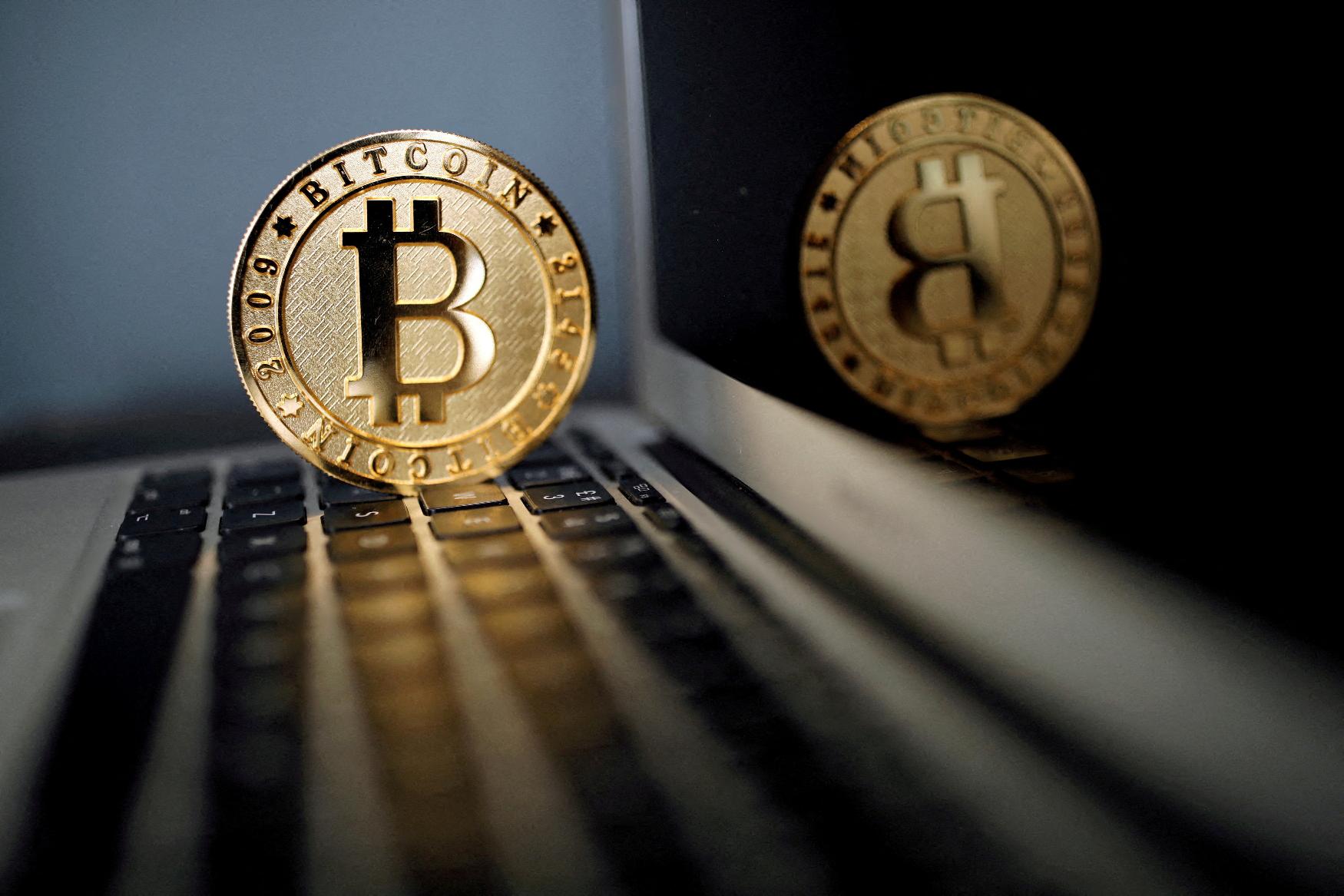
A look at the day ahead in European and global markets from Kevin Buckland An underwhelming kick-off to China's eagerly watched week-long annual parliament, the National People's Congress, plus a weak Wall Street close overnight kept risk assets on the back foot on Tuesday, with the very notable exception of bitcoin. A more than 2% tumble in Hong Kong's Hang Seng index (.HIS) , opens new tab was a good barometer of the mood after Beijing kept its 2024 growth target at a modest 5% and refrained from big-bang fiscal stimulus in the gathering's day-one deluge of policy headlines. Most shares traded in the mainland rose, however, amid suspected state-backed buying of exchange-traded funds that track the blue-chip CSI 300 index. Trading volume in those funds surged in the morning session. Japan's Nikkei also took the opportunity to regroup after marking an all-time peak at the start of the week. And what a week it is shaping up to be, with Fed Chair Jay Powell's semi-annual testimony to Congress, a parade of top-tier U.S. data culminating in the monthly payrolls report on Friday, an ECB policy decision on Thursday, and the UK budget on Wednesday, to name just some top picks. Coming up imminently is a roll-out of PMI readings from around Europe, along with euro zone producer price figures. The overarching global focus, though, has been the Fed, and the latest rumblings are for later rate cuts, with Atlanta Fed boss Raphael Bostic saying there's no pressure to ease amid risks of sticky inflation. That helped to power bitcoin to a two-year high at $68,828, just $72 shy of its all-time peak, and sent bullion to its highest close ever overnight. The traditional currency complex has been very subdued by contrast, with the dollar keeping largely within well-worn ranges against the euro, pound and yen. Key developments that could influence markets on Tuesday: -UK, euro zone, Germany, France, US PMIs (Feb) -Euro zone producer prices (Jan) -US factory orders (Jan) https://www.reuters.com/markets/europe/global-markets-view-europe-2024-03-05/
2024-03-05 05:22
LAUNCESTON, Australia, March 5 (Reuters) - Asia's exports of diesel slumped to a multi-year low in February, and while volumes may recover in March on rising shipments from China and India, it's likely prices will come under further downward pressure. A total of 6.6 million metric tons of diesel were exported from Asia in February, down from January's 8.13 million and the weakest monthly figure for at least two years, according to data compiled by LSEG Oil Research. Despite the drop in diesel supply, the profit margin on the key transport fuel remained weak, suggesting demand growth remains tepid at best. The profit of making a barrel of gasoil, the building block for middle distillate fuels such as diesel and jet kerosene, at a typical Singapore refinery ended at $22.01 on Monday, down from the previous close of $22.17. The margin has been trending weaker since August last year, when it peaked at $36.13 a barrel on Aug. 28. The profit on gasoil is likely to come under further pressure this month as higher volumes of diesel are expected to be shipped in Asia, especially from leading exporters China and India. China's exports of diesel were 713,290 tons in February, down from January's 986,200, according to LSEG, as refiners kept more of the fuel for the domestic market to meet any increased demand over the week-long Lunar New Year holidays, when millions of people travel to see relatives. With key domestic sectors like construction and manufacturing remaining under pressure, it's likely that China's refiners will seek to lift exports in March and April, especially since the profit margin on diesel remains attractive to them, assuming they are able to make the fuel from discounted crude oils from Russia and Iran. India's shipments of diesel were 2.01 million tons in February, down from 2.02 million in January and some 29% below the recent peak of 2.84 million in December. It's expected that more Indian diesel will head to Asia as cargoes are diverted from Europe, partly because of lower demand as the Northern Hemisphere winter ends and partly because of the attacks on shipping in the Red Sea by Yemen's Houthi rebels, which has forced vessels to take the longer, and costlier, route around the Cape of Good Hope. This trend can already be seen in the LSEG data, with India's diesel exports to the West being assessed at 665,960 tons in February and 280,000 in January, a marked drop from December's 1.28 million and 1.12 million in November. India's exports to Asia were 700,440 tons in February and 716,420 in January, up from 371,320 in December and November's 393,050. If India continues to switch diesel exports to Asia from Europe, and China does export more as expected, the profit margin on diesel is likely to come under further pressure. The main factor that may ease some downward pressure is Asia's refinery maintenance season gets underway in March and typically lasts through April and May. GASOLINE TIGHTNESS Asia's other main refined product, gasoline, is showing some similarities to diesel, insofar as February export volumes were weak, with LSEG estimating shipments of 4.51 million tons, down from 5.64 million in January and December's 6.33 million. The drop was largely because exports from China dropped to a 16-month low of 679,290 tons and those from South Korea hit an 8-month low of 813,350. But unlike diesel, the lower supply of gasoline saw the profit margin on making a barrel of the light vehicle fuel from Brent crude at a Singapore refinery increase. The margin, or crack spread, ended at $14.63 a barrel on Monday, up from the previous close of $14.20, and it has been in an uptrend since the recent low of $2.11 a barrel on Oct. 18. The crack may remain supported in coming weeks as exports from India, which vies with South Korea as the largest gasoline shipper in Asia on a net basis, are expected to remain constrained amid strong domestic demand. The opinions expressed here are those of the author, a columnist for Reuters. https://www.reuters.com/business/energy/low-volumes-profits-herald-soft-asia-diesel-market-russell-2024-03-05/


