2023-11-16 06:46
U.S. front-month contract at discount to second month China Oct oil refinery runs slow from previous month U.S. crude stocks rise more than expected NEW YORK, Nov 16 (Reuters) - Oil prices dropped around 5% on Thursday to their lowest in four months, as investors worried about global oil demand following weak data from the U.S. and Asia. Brent futures settled down $3.76, or 4.6%, to $77.42 a barrel. U.S. West Texas Intermediate crude (WTI) shed $3.76, or 4.9%, to $72.90. Both Brent and WTI earlier traded at their lowest since July 7, at $76.60 and $72.16, respectively. Both WTI and Brent's front-month contracts also traded below later-dated contracts, a structure known as contango. "The mood is negative, the charts are negative," said Phil Flynn, an analyst at Price Futures Group. "It's going to take something to change that mood, and until then people will ride it down until they realize it's overdone." The number of Americans filing new claims for unemployment benefits increased to a three-month high last week, suggesting that labor market conditions continued to ease. The report came after other data that showed U.S. retail sales fell for the first time in seven months in October as motor vehicle purchases and spending on hobbies dropped. This pointed to slowing demand at the start of the fourth quarter that further strengthened expectations the Federal Reserve is done hiking interest rates. OPEC and the International Energy Agency (IEA) have both predicted supply tightness in the fourth quarter, but U.S. data on Wednesday showed inventories were abundant. Meanwhile, an expected slowdown in Chinese oil refinery throughput also gave investors pause. Runs eased in October from the previous month's highs as industrial fuel demand weakened and refining margins narrowed. Still, Chinese economic activity rallied in October as industrial output increased at a faster pace and retail sales growth beat expectations. "The current price drop is taking place amid a seemingly auspicious backdrop, which suggests that investors simply do not buy into the 'Q4 stock draw' narrative; something that is not backed up by the recent weekly EIA reports either," said Tamas Varga of oil broker PVM. As the Israel-Hamas conflict appeared to be escalating in Gaza, U.S. officials on Wednesday said they would enforce oil sanctions against Iran, which has long been a backer of Hamas. https://www.reuters.com/business/energy/oil-prices-dip-us-crude-build-asia-demand-worries-2023-11-16/

2023-11-16 06:34
NEW YORK, Nov 16 (Reuters) - Global investors expect a large amount of financial pain out of Argentina no matter who voters pick on Sunday as their next president, with social unrest as top of mind as a much-needed fiscal adjustment will likely trigger even more inflation. Economy minister Sergio Massa and populist outsider Javier Milei go head-to-head in the Nov. 19 presidential election run-off, a choice between sticking with the current Peronist government or a sharp swerve to a right-wing libertarian. The winning candidate, who would take office on Dec. 10, would need to fix an economy with inflation of 143%, a messy array of capital controls, a looming recession and net foreign currency reserves JPMorgan pegs at minus $15.3 billion. "There is no room left to muddle through with the current economic policy stance, and the incoming president will have to take a turn in economic policy," Barclays' Latam economist Pilar Tavella said in a Wednesday note. "How sharp of a turn will depend on a combination of their commitment to reform and the political muscle to execute it." Milei's shock therapy approach includes scrapping the central bank and dollarizing the economy, while Massa's proposal is one of more gradual change though trimming the fiscal deficit and spurring more exports to rebuild reserves. Argentina had agreed to cut its primary fiscal deficit to 1.9% of GDP this year to comply with a $44 billion International Monetary Fund (IMF) program that has helped keep the lights on as the agricultural exporter faced a debilitating drought. The deficit is set to be much wider, with Itau pinning it at 3% of GDP by year-end. The IMF has internally hardened its view on the program and could get tougher on disbursements, meaning the next $3 billion is no longer a given. "The most likely scenario is that we see both parties sitting down with a clean sheet of paper and redesigning the program," said Alejo Czerwonko, CIO for Emerging Markets Americas at UBS Global Wealth Management. "The existing framework and agreement are damaged beyond repair so a change in government offers everybody the opportunity to come up with a new plan." The economy is likely already in recession and is expected to contract again next year. Inflation is seen hitting 185% by the end of 2023, following last year's near 100%. A part of the blame goes to policies that encouraged money printing at the central bank, which the Peronist coalition in power has - successfully so far - used to boost Massa's chances of winning the presidency. Shortly after being sworn in as economy minister, Massa in August 2022 pledged to stop printing money to fight inflation. "When a person who did something fiscally irresponsible tells you 'Once I am elected I will be fiscally responsible' I think it is reasonable to doubt," said Carlos de Sousa, emerging markets debt strategist at Vontobel Asset Management. "Markets will likely prefer a Milei victory simply because he is more credible on delivering the fiscal adjustment." Continuing to dismantle energy subsidies, which totaled $12 billion last year, will be high in the agenda. Investors also agree that the Argentine peso is over-valued, meaning a devaluation is likely in the cards. The official exchange is around 350 pesos per dollar while the black market one is nearly 1,000. But a devaluation would trigger a further spike in inflation, which hits the poor the hardest. With 2-in-5 already under the poverty line in Argentina, there is concern that if the number grows much higher the streets will flood with protesters and social unrest will explode. UBS sees the official exchange rate ending 2023 at 550, then jumping to 1,350 pesos by end-2024 and 1,900 by end-2025. Social unrest "is a risk that remains top of mind for most," said UBS's Czerwonko. "Every investor understands that the macroeconomic adjustments that Argentina needs will inevitably translate into short-term pain." For investors, Argentine stocks traded in New York (.MIAR00000PUS) have been a beacon of hope, up near 15% year to date. But that comes after a near 50% YTD gain four months ago, and the underperformance is expected to continue regardless of who wins, according to JPMorgan's Diego Celedon. "Regardless of the outcome, Argentine equities will face a challenging scenario that should prevent the market from outperforming," Celedon wrote in a client note. https://www.reuters.com/world/americas/argentina-investors-brace-financial-pain-no-matter-who-wins-presidency-2023-11-16/

2023-11-16 06:33
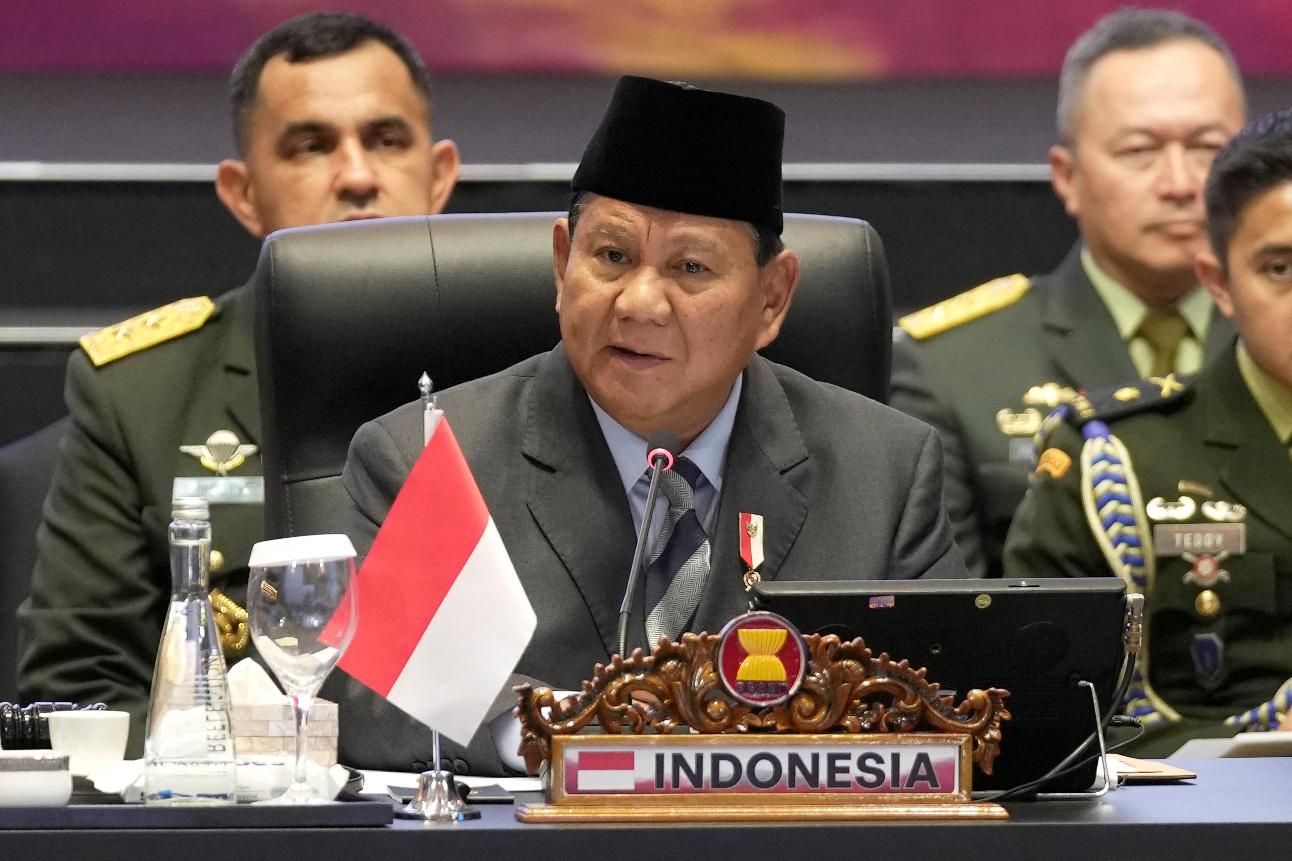
JAKARTA, Nov 16 (Reuters) - Indonesia's leading presidential hopefuls are considering a push to end the state power utility's monopoly as part of efforts to speed up the transition to greener energy, their teams told Reuters. All three candidates vying to win the Feb. 14 election in Southeast Asia's largest economy have said they will prioritise cleaning up the power sector to reduce greenhouse gas emissions. To do that, Defence Minister Prabowo Subianto and former provincial governor Ganjar Pranowo, running neck-and-neck in recent surveys, would consider ending state-run Perusahaan Listrik Negara's (PLN) monopoly in order to allow renewable power producers to sell directly to customers. It won't be an easy task. Indonesia lacks the regulations needed to determine fees independent power producers must pay to PLN and the scope of services PLN can offer to them. The geography of the sprawling archipelago also means the grids of major islands are not interconnected, complicating nationwide power sharing. Former Jakarta governor Anies Baswedan, trailing in opinion polls, has called for improved leadership for the power sector but has not proposed breaking up PLN's monopoly. Previous talk of opening the sector to competition has faced pushback over the prospect that what are now tariffs fixed by the government could fluctuate according to market forces. Proponents argue that opening the sector would accelerate adoption of renewables, as independent power producers will be incentivised to offer green power to companies pledging carbon neutrality. PLN is the sole seller to most customers, managing power plants and also buying from the independent producers, with over half of its supply sourced from coal and 12% from renewables. PLN did not respond to requests for comment. It has said it plans to develop 31.6 GW of renewable capacity from 2024 to 2033. Agam Subarkah, chief executive of climate consultancy Cendekia Ikim Indonesia, said pushing through such a reform would require resolve. "These candidates must remain focused on the purposes of the policy, which are accelerating the adoption of renewable energy, offering competitive pricing to customers and emission reduction," he said. POWER WHEELING Ganjar, the ruling PDIP party's candidate, proposes to focus PLN on expanding power lines and connecting islands, allowing renewable producers to "wheel" electricity onto the grid and to customers, his climate policy advisor Alexander Sonny Keraf said. Keraf, a former environment minister, said PLN had objected to past proposals for wheeling, but if Ganjar wins, "we will force them". Experts drafting energy policy for ex-special forces commander Prabowo have also discussed wheeling, but with the government maintaining control over tariffs, said Eddy Soeparno, senior official at Prabowo's campaign. "Multiple buyers and multiple sellers, but within the context of energy security, which means the selling prices to consumers must remain affordable," said Soeparno, who is also deputy head of parliament's energy committee. Implementing wheeling would require new regulations. Agam, from the climate consultancy, said delaying renewable power to companies could mean lost investment. "If these companies cannot secure renewable energy by 2025 or 2030, they could mark Indonesia down as somewhere they cannot expand their business in because of the difficulty in getting renewable energy," he said. https://www.reuters.com/world/asia-pacific/indonesian-presidential-hopefuls-consider-ending-state-power-monopoly-2023-11-16/
2023-11-16 06:25
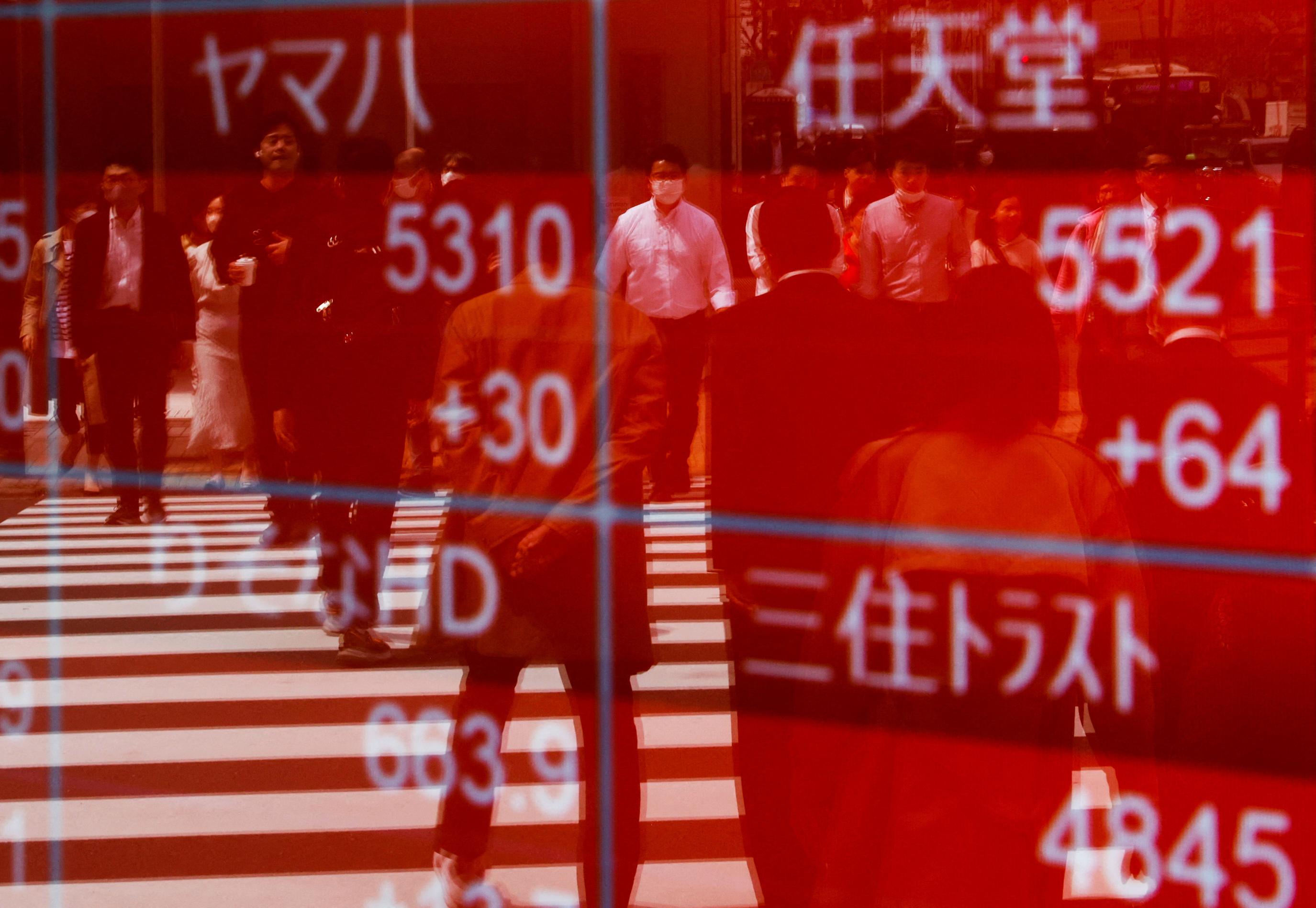
World stocks dip for first time in five sessions Dollar steady after wild week Brent oil dives nearly $4/bbl Graphic: World FX rates NEW YORK/LONDON, Nov 16 (Reuters) - World stocks snapped a five-day rally on Thursday as investors took a breather, while oil prices slumped almost $4 per barrel to a four-month low, on signals of higher U.S. supply and lackluster Chinese demand. By the end of the session, MSCI's gauge of stocks across the globe (.MIWD00000PUS) edged down 0.13%, and shares on Wall Street notched modest gains or losses. The Dow Jones Industrial Average (.DJI) lost 0.13%, the S&P 500 (.SPX) added 0.12% and the Nasdaq Composite (.IXIC) was barely changed. The mood on Wall Street was not helped by a plunge in the shares of Cisco Systems (CSCO.O) and Walmart (WMT.N) following underwhelming forecasts for demand. Some analysts thought that equity markets were not likely to lurch sharply lower for now, despite recent sharp gains, as investors celebrate the prospect that U.S. interest rates might have peaked. "Upside risks to inflation and downside risk to growth mean the risk-positive data flow is unlikely to last through 2024, but it's not clear there will be sufficient data to refute the happy, if probably unsustainable, narrative before the end of the year," analysts at Citi said. That said, oil prices dived to levels last seen on July 7, with U.S. crude sliding 4.9% to $72.89 per barrel and Brent was at $77.46, down 4.6% on the day. Oil prices are tumbling in part because U.S. crude stocks rose by 3.6 million barrels last week to 421.9 million barrels, government data showed on Wednesday, far exceeding analysts' expectations in a Reuters poll. Over in Europe, the pan-European STOXX 600 index (.STOXX) lost 0.72% from a one-month high. The U.S. dollar slipped after data showed the number of Americans filing new claims for unemployment benefits hit a three-month high last week, pointing to a slowing labor market that could help the Federal Reserve's fight against inflation. The dollar index narrowed earlier losses and was flat, while the euro was also little changed at $1.08485. Dollar weakness benefited gold prices , which jumped 1.2% to $1,980.42 per ounce. Indications of a cooling U.S. labor market weighed on Treasury yields. Benchmark 10-year notes were down 9.2 basis points to 4.445%, from 4.537% late on Wednesday. The 2-year note was last was down 8.5 basis points to yield 4.846%, from 4.916%. "If you don't get confirmation of the slowing economic direction from every single piece of data every single day, we risk running out of momentum on the big trades," Societe Generale FX strategist Kit Juckes said. "Until we get to the point where rate cuts are just around the corner, everything is going to be very stop-start. The dollar sell-off is stop-start, the bond market rally is really stop-start and the equity market is all over the place." Germany's 10-year bond yield dipped to a near two-month low of 2.588%, while sterling sank to a six-month low against the euro as dealers in London inched closer their predictions on when the Bank of England (BoE) will start cutting rates. EUR/GVD Many now think it might be as soon as May, although BoE policymaker Meg Greene warned that investors are missing the message that central banks have been pushing recently that interest rates will remain higher for longer. "I think markets globally haven't really clocked on to this," Greene told Bloomberg Television, adding that the BoE was not talking about cutting rates. CHINA PROPERTY Asian stocks fell overnight as new data from China showed continued weakness in its problem-hit property sector, which dented recent optimism about a recovery in the world's second-largest economy. While data this week showed China's industrial and retail sectors are now making a comeback, figures have also shown a sharp drop in property investment and weak home prices, underscoring the ongoing drag the sector is having. There was mixed news from Japan too, where exports grew for a second straight month in October but at a sharply slower pace due to slumping China-bound shipments of chips and steel. "The weak economic data from both countries indicate the fact that the global economy is slowing down, highlighting ongoing macro headwinds that businesses face," said Tina Teng, market analyst at CMC Markets. Chinese stocks showed some disappointment at the first meeting in years between U.S. President Joe Biden and Chinese President Xi Jinping, with Shanghai's blue-chip CSI300 index (.CSI300) closing down 1% and Hong Kong's Hang Seng index (.HSI) ending 1.3% lower. While the two leaders agreed to resume military-to-military communications and cooperate on anti-drug policies, a sign ties are improving, some investors were disappointed at a lack of other breakthroughs. https://www.reuters.com/markets/global-markets-wrapup-1-2023-11-16/
2023-11-16 06:13
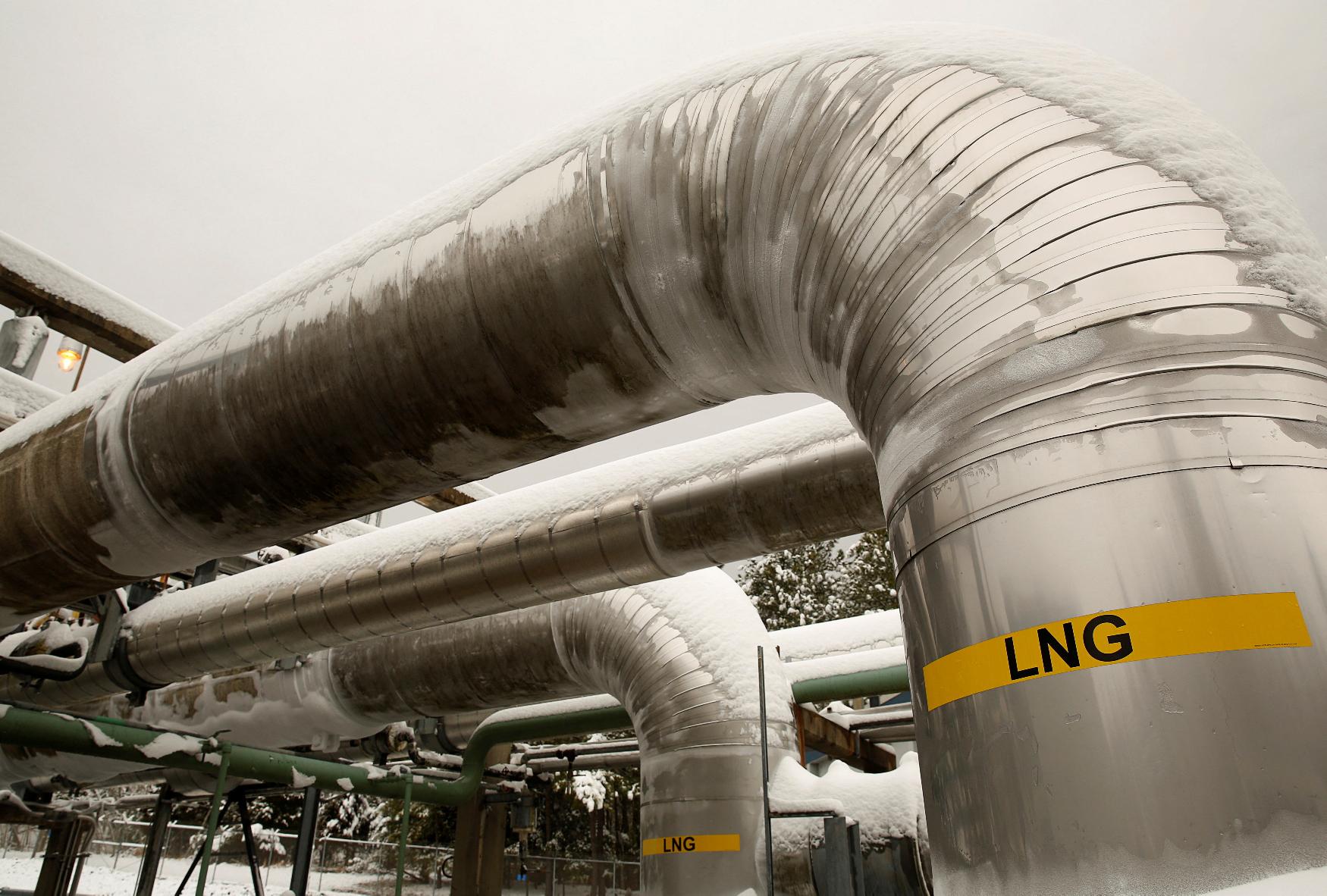
LITTLETON, Colorado, Nov 16 (Reuters) - As Europe's top supplier of liquefied natural gas (LNG), the United States has been the main beneficiary of the pivot by utilities to replace sharply lower Russian pipeline gas supplies with imports from other origins and in the form of LNG. But following the European Union deal on Wednesday to place methane limits on Europe's oil and gas imports from 2030, U.S. LNG shippers will be anxious that their lucrative European market may be at risk due to the enduring high levels of methane emissions throughout the U.S. natural gas supply chain. Methane is the primary component of natural gas, and is a far more potent greenhouse gas than carbon dioxide in terms of climate-warming potential over the near term, according to the Natural Resources Defense Council, a U.S.-based nonprofit. In 2022, U.S. exporters sold $33 billion of LNG to European buyers, over triple the value sold to Europe in 2021 before the Russia-Ukraine war severed pipeline flows to Europe last year, U.S. Energy Information Administration (EIA) data showed. U.S. LNG exports to Europe remain strong in 2023, valued at around $14 billion through August, with Europe accounting for two-thirds of all U.S. LNG exports. However, as part of efforts to reduce overall emissions and measure pollution from their own energy suppliers, European Union member states have agreed to impose maximum methane intensity values on all producers sending fuels to Europe. That means U.S. LNG suppliers will be at risk of losing sales to Europe if the methane intensity of the gas contained in their shipments fails to meet the standards the EU will set. HEAVY FOOTPRINT The United States' oil and gas industry is the largest source of methane in the country, emitting 12,297 kilotons (Kt) of methane in 2021 and ranking second behind Russia (14,866 Kt), according to the International Energy Agency's methane tracker. However, in terms of methane intensity, or a measure of how much methane is emitted in the production of oil and gas, the United States ranks 10th, emitting 8.18 tonnes of methane per kiloton of oil energy equivalent (ktoe). That U.S. intensity rating compares favourably to Venezuela's 53.35 tonnes of methane per ktoe, and is 42% less than Russia's 14 tonnes of methane per ktoe. However, the U.S. reading compares less well to Canada (5.17 tonnes of methane/ktoe) and Saudi Arabia (4.9 tonnes) and so indicates that the U.S. oil and gas sector has scope for emissions improvement among major oil and gas producers. What's more, it is unclear where EU lawmakers will draw the line in terms of what methane intensity levels are acceptable, and if they plan to adjust thresholds over time. Given the importance of gas-fired industry across Europe, it is unlikely that policymakers will impose such harsh standards that may limit volumes from key suppliers and potentially impact local power markets. But given the rapid pace of renewable energy capacity expansions across Europe, and the region's commitment to phase out most fossil fuel use altogether by mid-century, it is possible that Europe's total gas needs will substantially decline by when the new standards are set to kick in. That in turn means policymakers may feel entitled to set high standards in terms of the emissions profile of importable fuels, especially for products with multiple potential sources of emission leakage such as in gas pipelines, storage tanks, liquefaction plants, LNG tankers and regasification units. In addition, and regardless of the final EU decision, it is in the interests of all U.S. oil and gas producers to drastically reduce emissions associated with their operations, as even domestic consumers are demanding increasingly clean sources of energy. That means that if natural gas is to remain a key component in local electricity generation mixes, and a valuable export in the form of LNG, the entire supply chain for U.S. gas and LNG must get cleaner, and fast. https://www.reuters.com/business/energy/tougher-eu-methane-rules-mean-us-gas-sector-must-clean-up-act-maguire-2023-11-16/
2023-11-16 06:13
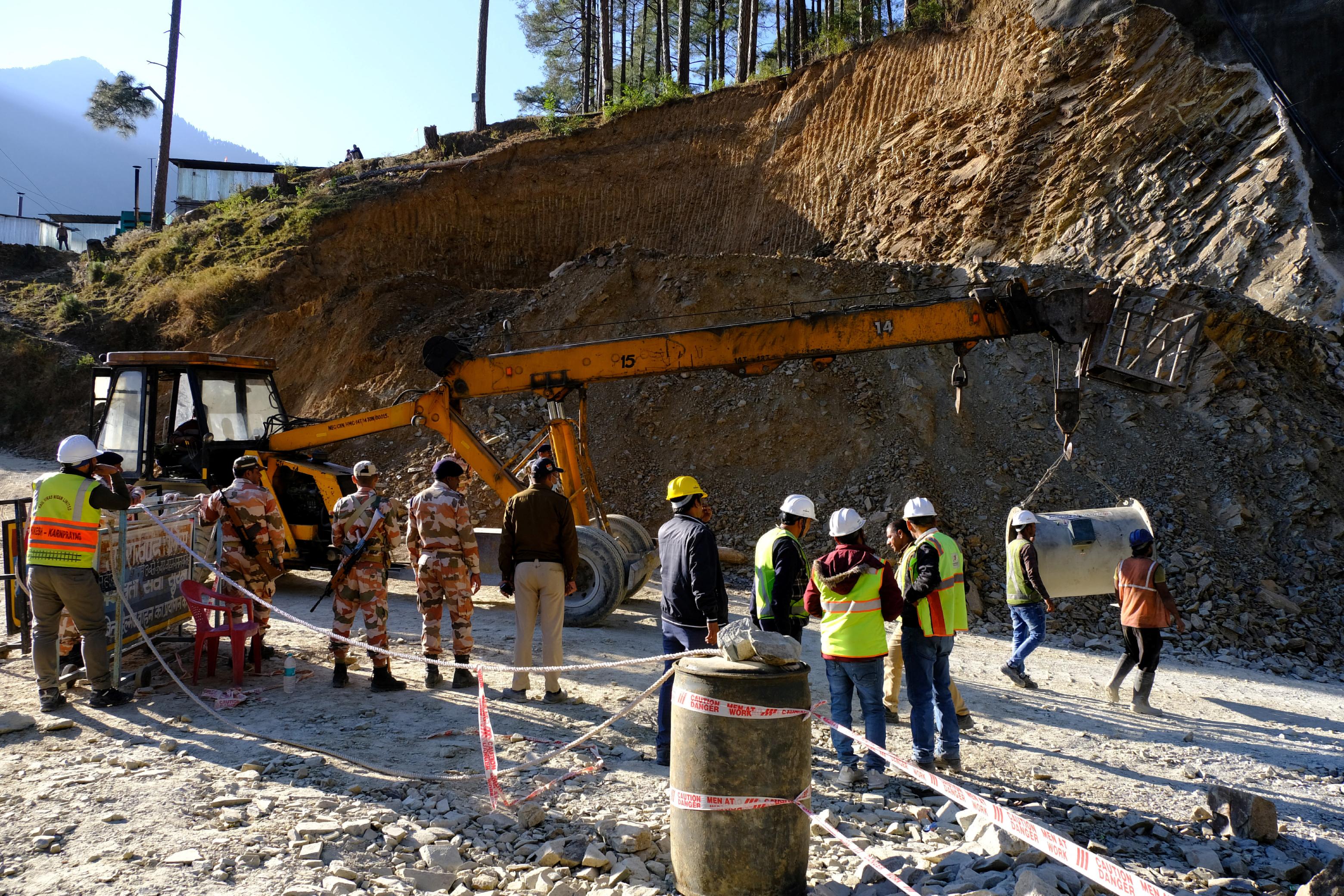
UTTARKASHI, India, Nov 16 (Reuters) - Two of 40 men trapped inside a collapsed highway tunnel in the Indian Himalayas were treated for nausea and headache, officials said on Thursday, as they endured a fifth day confined to a small space in the rubble. Rescue efforts have been focused on drilling through the fallen rock to create space for a pipe that can be used to pull the men to safety. But progress has been hampered by falling debris. Authorities said they were confident an advanced drilling machine brought in from New Delhi will speed up the rescue at the site in the northern state of Uttarakhand. The machine can drill through about 2-2.5 metres (2-2.5 yards) of rock per hour, Ranjit Sinha, the state's top disaster management officer, said. Work would begin shortly to cover the 60 metres distance to reach the men, said Devendra Singh Patwal, a state disaster management official. AMBITIOUS PROJECT The 4.5 km (3 mile) tunnel is part of the Char Dham highway, one of the most ambitious projects of Prime Minister Narendra Modi's government. The $1.5 billion project aims to connect four Hindu pilgrimage sites through 890 km (550 miles) of roads. Since the tunnel collapsed, the trapped men have been supplied with food, water and oxygen via a pipe and they are in contact with rescuers via walkie-talkies. "Two of them, who complained of nausea and minor headache, were given medicines through the pipe and are fine now," Arpan Yaduvanshi, a local police official said. Local media reported that a six-bed makeshift hospital had been put in place near the tunnel to cater to any medical attention the men might need once they are rescued. Authorities have not said what caused the tunnel to cave in but the region is prone to landslides, earthquakes and floods. The highway project has faced some criticism from environmental experts and some work was halted in January after hundreds of houses along the routes were damaged by subsidence. The federal government has said it employed environmentally friendly techniques in the design to make geologically unstable stretches safer. https://www.reuters.com/world/india/rescue-hopes-men-trapped-india-tunnel-rest-new-drill-equipment-2023-11-16/