
2023-11-14 20:24
NEW YORK, Nov 14 (Reuters) - Oil prices were little changed on Tuesday, paring early gains on signs tensions in the Middle East could be easing and uncertainty about U.S. oil inventories. U.S. President Joe Biden said he was holding daily discussions to secure the release of hostages held by the Hamas militant group and believes it will happen. Brent futures fell 5 cents to $82.47 a barrel, below their $84.58 Oct. 6 settlement the day before Hamas attacked Israel. In subsequent weeks, Brent futures traded as high as $93.79 per barrel on Oct. 20. U.S. West Texas Intermediate (WTI) crude held steady at $78.26. "The war premium is going away as it is looking more likely that there will not be a disruption in supply" in the Middle East, said Phil Flynn, an analyst at Price Futures Group. The White House said Biden's top Middle East adviser, Brett McGurk, is heading to the region for talks with officials in Israel, the West Bank, Qatar, Saudi Arabia and other nations. In early trade, both crude benchmarks rose by over $1 a barrel after the International Energy Agency (IEA) boosted its demand growth forecasts and the U.S. dollar fell on data showing inflation was slowing in the world's biggest economy. Flynn said crude price also gave up early gains on Tuesday because the market was uncertain as to what the U.S. oil storage reports would show. The U.S. Energy Information Administration (EIA) will release its first oil inventory report in two weeks on Wednesday. EIA did not release a storage report last week due to a systems upgrade. Last week, the American Petroleum Institute (API), a trade group, surprised the market by reporting a huge, bearish 11.9 million barrel build in crude stocks for the week ended Nov. 3. API will release its report for the week ended Nov. 10 later on Tuesday. For the week ended Nov. 10, analysts forecast energy firms added about 1.8 million barrels of crude into U.S. stockpiles, according to a Reuters poll. That compares with a 5.4 million barrel withdrawal during the same week in 2022 and a five-year (2018-2022) average build of 1.2 million barrels for this time of year. DEMAND FORECASTS The IEA raised its oil demand growth forecasts for this year and next despite an expected slowdown in economic growth in nearly all major economies. A day earlier, the Organization of the Petroleum Exporting Countries (OPEC) boosted its forecast for 2023 global oil demand growth and stuck to its relatively high projection for 2024. U.S. consumer prices were unchanged in October as Americans paid less for gasoline, and the annual increase in underlying inflation was the smallest in two years. Traders bet the U.S. Federal Reserve (Fed) could start cutting interest rates by May, which could boost economic activity and oil demand. Expectations the Fed could cut interest rates next spring sent the U.S. dollar(.DXY) down to a two-and-a-half-month low against a basket of other currencies. A weaker dollar can boost oil demand by making crude cheaper for buyers using other currencies. https://www.reuters.com/business/energy/oil-prices-edge-up-after-opec-says-market-fundamentals-are-strong-2023-11-14/
2023-11-14 20:12
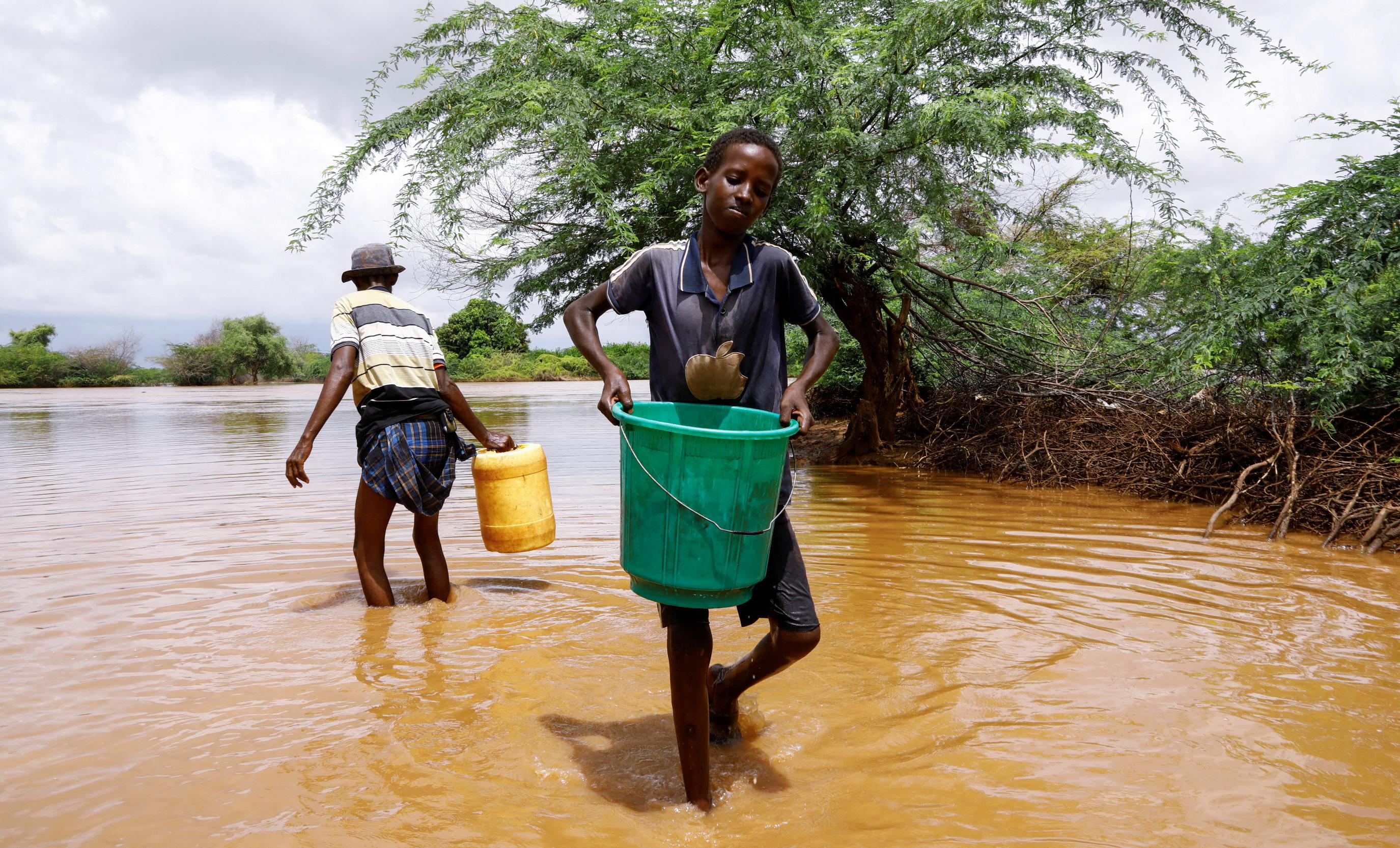
GENEVA, Nov 14 (Reuters) - A quarter of Somalia's population is forecast to face "crisis-level hunger or worse" this year due to drought and floods caused by climate change, the World Food Programme (WFP) said on Tuesday. Floods that have uprooted hundreds of thousands of people in Somalia and neighbouring countries in East Africa following a historic drought earlier this year have been described by the United Nations as a once-in-a-century event. "Livelihoods and lives are at risk, 4.3 million people – a quarter of the population – are forecast to face crisis-level hunger or worse by the end of this year," said Petroc Wilton, WFP spokesperson for Somalia. "This bombardment of climate shocks, from drought to floods, will prolong the hunger crisis in Somalia. The drought killed millions of livestock and ruined countless hectares of pastures and farmlands. Now, these devastating floods are crippling Somalia's ability to recover." In Somalia's Dolow district, homes are abandoned and roads have turned into rivers. Farxhan Ali Abdulle, a shop owner in the town of Dolow on the border with Ethiopia, said no supplies were coming in. "There is a serious shortage of goods, fuel food, and all other things in the city," he said. "We really will be feeling the impact." The floods, which followed heavy rains that started in early October, have already killed at least 32 people and forced more than 456,800 from their homes in Somalia, according to the U.N. Office for the Coordination of Humanitarian Affairs. In Dolow, some say moving around the worst-hit areas of towns and villages has become dangerous because of the animals that could be lurking beneath the surface. "We cannot go to some of the places in the town because of the high level of water and we are afraid of crocodiles and other animals in the flood," said Dolow resident Timaade Hussein Abdi. Some families from Dolow have been moved to camps for internally displaced people. "Sustained support from the international community will be essential," Wilton added. Speaking to Reuters in Luuq town, where the Jubba River burst its banks, aid group World Vision said it had managed to rescue some villagers trapped due to flooding. "We have so far rescued over 400 people from the locations that are completely submerged by the water as a result of the heavy rains that were witnessed over the last week," Muhidin Abdullahi, its operations manager in Somalia said. https://www.reuters.com/world/africa/hit-by-floods-drought-quarter-somali-people-risk-crisis-level-hunger-wfp-2023-11-14/
2023-11-14 20:04
US consumer prices unchanged in October U.S. dollar eyes worst session in a year Silver, palladium gain more than 3% Nov 14 (Reuters) - Gold prices gained 1% on Tuesday as the dollar and Treasury yields retreated after softer-than-expected U.S. consumer inflation data fuelled bets that the Federal Reserve may be done hiking interest rates. Spot gold was up 0.9% at $1,962.44 per ounce by 2:30 p.m. ET (1930 GMT), set for its best session since Oct. 27. U.S. gold futures settled 0.8% higher at $1,966.50. U.S. consumer prices were unchanged in October and underlying inflation showed signs of slowing. In the 12 months through October, the CPI climbed 3.2% after rising 3.7% in September. The report "looked pretty good", said Chicago Fed President Austan Goolsbee, as traders bet that cooling inflation will allow the U.S. central bank to forgo any more interest rate hikes and start cutting rates by May. "CPI data came in significantly weaker than expected, which is quite supportive for precious metals. We are expecting a significant deterioration in the data over the course of the fourth quarter, which should weaken dollar and support gold," said Daniel Ghali, commodity strategist at TD Securities. "Over the next six months, we're looking at gold prices to rally towards $2,100 per ounce." Boosting bullion's appeal, the dollar index (.DXY) fell 1.4%, its biggest daily decline in one year, while benchmark 10-year Treasury yields eyed their worst day in eight months after the inflation data. Investors will also keep a tab on the U.S. producer price index data due on Wednesday. Spot silver rose 3.4% to $23.07 per ounce in its best session in a month. Commerzbank lowered its price forecast for silver at the end of 2024 to $29 per ounce from $30. But it expects silver to noticeably outperform gold, on the back of a positive outlook for industrial demand and ongoing transformation of the economy towards climate neutrality, in which silver plays an important role. Platinum gained 2.7% to $887.52 and palladium climbed 3.8% to $1,019.06. https://www.reuters.com/markets/commodities/gold-advances-yields-dollar-slip-after-us-inflation-data-2023-11-14/

2023-11-14 19:58
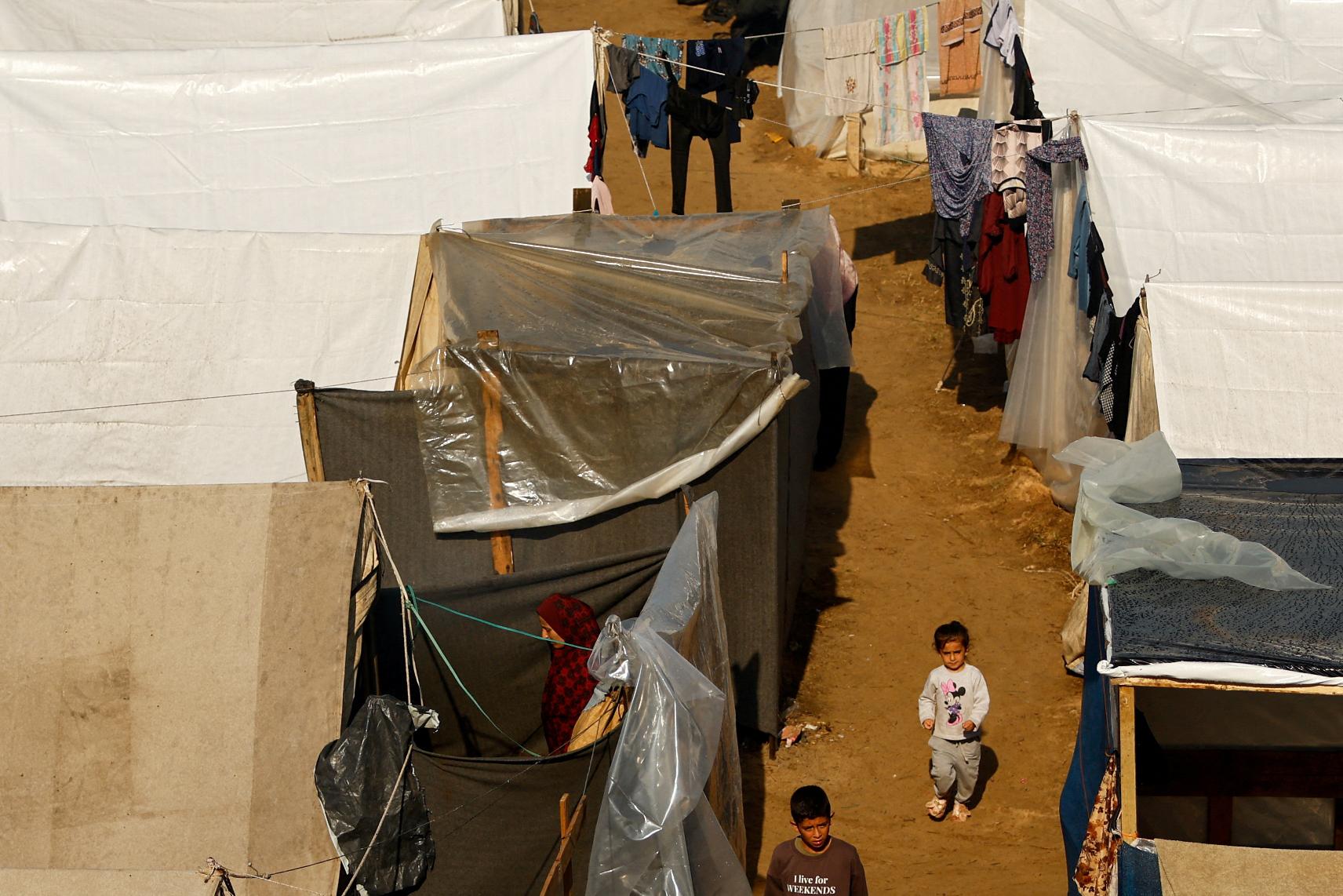
Rainy season has started in Gaza Flooding and overcrowding could spread disease Rain complicates rescue operations, aid deliveries GAZA/GENEVA, Nov 14 (Reuters) - Heavy rain in Gaza on Tuesday brought new concerns and challenges for Palestinians, many of whom are homeless and living in makeshift tents after weeks of Israeli bombardment. The start of the rainy season and the possibility of flooding increased fears that the densely populated enclave's sewage system will be overwhelmed and disease will spread. At a U.N. shelter in Khan Younis in southern Gaza, the rain brought dismay for displaced people who woke to find the clothes they put out to dry the night had been drenched by rain. "We were in a house built of concrete and now we are in a tent," said Fayeza Srour, who sought safety in the south after Israel began its military offensive in response to the Oct. 7 rampage by Hamas fighters who entered southern Israel from Gaza. "The nylon tarps, the tent and the wood will not resist any flooding... People sleeping on the floor, what will they do? Where will they go?" Winters can be wet and cold in Gaza, and the enclave is sometimes hit by flooding. Another displaced Gazan, Karim Mreish, said people at the shelter were praying for the rain to stop."Those children, those women, those elderly pray God that it doesn't rain," he said. "If it does it will be very difficult and words will fail to describe our suffering." The World Health Organization (WHO) said last week that Gaza faced an increased risk of disease spreading because Israeli air bombardments had disrupted the health system, limited access to clean water and caused people to crowd in shelters. It voiced concern on Tuesday about the prospect of rain causing flooding and overwhelming already meagre and damaged sewage facilities. "We've already got outbreaks of diarrhoeal diseases," WHO spokesperson Margaret Harris said in Geneva. She said there were more than 30,000 cases of diarrhoea in a period when WHO would normally expect 2,000 cases. "We've got so much infrastructural damage. We've got a lack of clean water. We've got people very, very crowded together. This is another reason why we are begging for a ceasefire to happen now," she said. Ahmed Bayram, a spokesperson for the Norwegian Refugee Council, said the start of the rainy season could mark "the most difficult week in Gaza since the (military) escalation began." "Heavy rains will mean more impeded movement for people and rescue teams," he said. "It will make it harder to save people stuck under the rubble, or to bury the dead, all of this amidst ceaseless bombardment and a fuel shortage catastrophe." THE 'HERE AND NOW' Israel vowed to wipe out Hamas after the Oct.7 attack, in which Israel said over 1,200 people were killed and about 240 were taken hostage. Medical officials in Hamas-run Gaza say over 11,000 people have been killed in Israeli strikes since then. Facing the daunting scale of the humanitarian needs of Gaza's 2.3 million people, aid organisations have been unable to plan for the challenges posed by rain and flooding. Juliette Touma, Director of Communications at the U.N. Palestinian refugee agency (UNRWA), said the organisation was focused on meeting the population's needs "here and now." "We're barely able to make it from one hour to the next ourselves, because the situation on the ground is so, so, so desperate," she said. Touma said just a small amount of rain could cause the streets of Gaza to flood, given the sewage system's inability to absorb water. "This is on a normal day. This is not when half of Gaza, if not more, is in rubble," she said. The International Committee of the Red Cross (ICRC) said it had also been unable to plan far beyond Gazans' daily needs. "The situation is so volatile and complicated as a result of the hostilities that we have focused really squarely on the humanitarian consequences as they shift from one day to the next," said William Schomburg, head of the ICRC delegation in Gaza. The rain brought relief for some displaced Palestinians in the central Gaza Strip town of Deir Al-Balah who had not been able to drink clean and fresh water in the past weeks. Some placed plastic buckets outside their tents to gather rainwater to drink. "We have been drinking salty water for 30 days. There has been no fresh water. I have just collected this from the rainwater," said Um Mohammad Shahin. https://www.reuters.com/world/middle-east/heavy-rain-gaza-brings-new-problems-fears-palestinians-2023-11-14/
2023-11-14 19:50
WASHINGTON, Nov 14 (Reuters) - The CEO of NuScale Power Corp (SMR.N) defended its small modular nuclear reactor business on Tuesday, saying work continues in the U.S. and two other countries after the company canceled its first plant at an American government lab, amid rising costs. NuScale said last week it had agreed with a Utah coalition of municipal power systems to cancel the six-reactor, 462-megawatt project, which was to be built at the U.S. Idaho National Laboratory by 2030. NuScale and the Utah Associated Municipal Power System said the cancellation was due to worries about low subscription for the plant's power. John Hopkins, NuScale's CEO, was upbeat despite the cancellation. "I know from a financial perspective we have $200 million in the bank. That's cash, no debt. So we have a healthy balance sheet," Hopkins said at an American Nuclear Society conference in Washington. The end of the plant, which received public funding, was a blow to U.S. ambitions for a wave of new nuclear energy to help fight climate change. NuScale's design is a departure from traditional plants powered by one or more large reactors. In 2020, the Department of Energy approved $1.35 billion over 10 years for the plant, known as the Carbon Free Power Project, subject to congressional appropriations. The department has provided NuScale and others about $600 million since 2014 to support commercialization of small reactor technologies. Hopkins said NuScale projects in Romania and South Korea continue to develop. He also said a plan with service provider Standard Power to develop two gigawatts of nuclear power intended for data centers in Pennsylvania and Ohio was on track. A contract for that project would be completed "if not this week, next," Hopkins said. NuScale was the first U.S. company to secure regulatory approval for its design of a small, modular reactor. Backers say such projects can be built in remote locations and can power heavy industries with emissions that have been traditionally difficult to abate. NuScale said in January the target price for power from the plant jumped 53% to $89 per megawatt hour, raising concerns about customers' willingness to pay. Critics say small, modular reactors and other advanced reactor designs are too expensive to succeed. "The termination of NuScale's contract signals the broader challenges of developing nuclear energy in the United States," said Edwin Lyman, director of nuclear power safety at the Union of Concerned Scientists. "Placing excessive reliance on untested technologies without adequate consideration of economic viability, practicality, and safety concerns is irresponsible and clearly won’t work." https://www.reuters.com/business/energy/nuscale-ceo-defends-modular-nuclear-plants-after-project-cancellation-2023-11-14/

2023-11-14 19:26
LISBON, Nov 14 (Reuters) - Chelsea Manning, a former U.S. army analyst and WikiLeaks source, said on Tuesday that technology tools can be more efficient in protecting people's privacy and information than legal or regulatory mechanisms that risk being tampered with. "I believe very strongly that there are technical means of protecting information and those are more reliable," Manning told Reuters in an interview during Europe's largest technology conference, the Web Summit, in Lisbon, Portugal. Manning was convicted by court-martial in 2013 of espionage and other offences for leaking an enormous trove of military reports, videos, diplomatic cables and battlefield accounts to online media publisher WikiLeaks while she was an intelligence analyst in Iraq. Former President Barack Obama later reduced Manning's sentence, and she was released in May 2017. Manning currently works as a security consultant at Nym Technologies, a network that aims to prevent governments and companies from tracking people's online activities. The 35-year-old said that "technical means", such as cryptography, data obfuscation and end-to-end encrypted messaging platforms such as Signal, are ways to ensure privacy and a level of anonymity online. Legal or regulatory mechanisms "can change on a whim ... legislators can be lobbied ... rules can be reinterpreted by courts and burdens of proof are very hard to meet", Manning said. "Regulation can set the tone of what the standards should be," she said. "(But) actual math and actual technology ... are much easier to control and have much more guarantees." 'SIDESTEPPING ETHICS' Artificial intelligence (AI) is the big topic at this year's Web Summit, which draws tens of thousands of participants and high-level speakers from global tech companies, as well as politicians. AI is transforming the world and can be applied in diverse sectors, from improving the early detection of diseases to sorting out data and solving complex problems, but there are also concerns around it. Some tech and political leaders have warned that AI poses huge risks if not controlled, ranging from eroding consumer privacy to danger to humans and causing a global catastrophe. Manning, who herself has worked with and uses the technology, said that "damage has already been done" to some AI training models and that it will be "very hard to undo." "These companies have been overlooking and sidestepping the ethics of these things knowingly in many cases for many years," she said. "The best thing we can do about it now is to try to address it." Earlier this month, at the UK's artificial intelligence summit, leading AI developers agreed to work with governments to test new frontier models before they are released to help manage the risks of the rapidly developing technology. https://www.reuters.com/technology/chelsea-manning-tech-more-efficient-than-laws-ensure-privacy-2023-11-14/


