2024-07-11 06:03
SHANGHAI, July 11 (Reuters) - China's central bank introduced a new cash management tool this week in the form of temporary bond repurchase (repo) agreements and reverse repos, adding to its various open market operations and creating what could become an important interest rate indicator. The following explains the mechanics and intent of this new tool, which market participants say is a big step in the People's Bank of China's (PBOC) new monetary policy framework. WHAT ARE THE TEMPORARY REPOS AND REVERSE REPOS? Both repos and reverse repos are forms of short-term cash management instruments that allow primary dealers to swap government bonds for cash with the central bank, in order to either borrow or park cash. Under these temporary overnight repos, the PBOC can sell securities to primary dealers and agree to buy them back the following day, effectively draining cash from the financial system. Reverse repos help the PBOC inject funds. WHAT ARE THE DETAILS OF THE PBOC'S TEMPORARY REPO OPERATIONS? The PBOC has said temporary overnight repo and reverse repo operations will take place in the afternoon, between 4 p.m. (0800 GMT) and 4:20 p.m. on a working day, if it decides it is necessary based on market conditions. This is in contrast to its other routine daily operations conducted in the morning. The interest rate on the temporary repos and reverse repos will be 20 basis points below and 50 basis points above the seven-day reverse repo rate , or 1.6% and 2.3%, respectively. WHY HAS THE PBOC STARTED THESE REPOS? Analysts believe the mechanism enables the seven-day reverse repo rate to become a new policy benchmark, after PBOC Governor Pan Gongsheng said last month the rate "basically fulfills the function" of the main policy rate but a narrower interest rate corridor may be needed. The interest rates on the temporary repos and reverse repos will form the new interest rate corridor with a width of 70 basis points, analyst say. The market now trades a wide 245 basis points range between the seven-day standing lending facility (SLF) rate and the central bank's interest rate on excess reserves (IOER). WHY NOW? The central bank has sounded warnings and introduced a flurry of measures, including plans to sell treasury bonds, to cool a long-running bond rally. PBOC's Pan said the central bank should take prompt actions to blunt risk accumulation in financial markets and that it is important to "maintain a normal upward-sloping yield curve." Ju Wang, head of Greater China FX & rates strategy at BNP Paribas, said a steeper yield curve could also put a floor under the weak yuan as overseas investors seek yuan bonds. The yuan has lost 2.4% to a resurgent U.S. dollar so far this year, weighed down by its relative low yields versus other economies. WHAT WILL HAPPEN TO INTEREST RATES ON OTHER MONETARY POLICY INSTRUMENTS? Pan said the PBOC may consider a single short-term interest rate as the key policy rate and, if the seven-day reverse repo rate fulfilled that function, it will serve to smooth policy transmission to other benchmarks and tenors. Sign up here. https://www.reuters.com/markets/rates-bonds/why-does-chinas-central-bank-have-new-cash-management-tool-2024-07-11/
2024-07-11 05:57
July 10 (Reuters) - Canada's Unifor union on Wednesday said its members at Shell's (SHEL.L) New Tab, opens new tab Alberta unit have ratified a new four-year agreement that includes a 16% wage increase. The agreement averts a possible strike at the Scotford-based facility after members voted overwhelmingly in favour of a work stoppage in late June. The agreement includes the possibility of further wage gains, Unifor said, adding that it also secured improvements to time off for statutory holidays and various union-based leaves. "On July 7th Shell reached a tentative agreement with Unifor Local 530-A, which has now been ratified by the union membership," a Shell spokesperson said in an emailed statement to Reuters. The Scotford complex consists of a bitumen upgrader, oil refinery, chemicals plant and a carbon capture and storage facility. The upgrader has a capacity of 320,000 barrels of oil equivalent per day of diluted bitumen, according to Shell. Sign up here. https://www.reuters.com/markets/commodities/workers-shells-scotford-facility-canada-strike-new-wage-deal-2024-07-11/

2024-07-11 05:50
HAMBURG, July 11 (Reuters) - Europe's biggest sugar producer Suedzucker (SZUG.DE) New Tab, opens new tab on Thursday posted a 45% fall in first-quarter earnings, hit by higher costs and lower sugar prices. The German company reported operating profit of 155 million euros ($167.9 million) for the quarter ended May 31, compared to 282 million euros in the year-ago quarter. The sugar, CropEnergies biofuel and starch segments all recorded a decline in earnings, it said. Suedzucker had warned in April that high costs ranging from energy, raw materials, logistics to packaging combined with weak sugar markets would cause a fall in earnings for the first quarter. The company warned on Wednesday that its second quarter earnings would decline, without providing concrete numbers. Sugar futures hit 18-month lows in May on expectations of large sugar harvests in Brazil but have since recovered slightly. Suedzucker's sugar revenues rose 16.5% 1,076 billion euros despite falling prices, with "substantially higher" exports from the EU to global markets a major factor, it said. The company also affirmed its previous forecast that full-year group operating profit would fall to between 500 million and 600 million euros from 947 million in the previous fiscal year, which ended in February. It forecast full-year sugar sector operating profit would fall to between 200 and 300 million euros from 558 million last year burdened by rising costs and expected low prices. Suedzucker said results still depended market volatility caused by the war in Ukraine. The EU gave Ukrainian agricultural products, including sugar, duty-free access to the EU market and although volumes have been restricted, the impact on markets remains uncertain, it said. The group's sugar beet cultivation area will increase “moderately” for the autumn/winter 2024 harvest compared to the previous year, it said, with an average harvest expected overall. Sign up here. https://www.reuters.com/markets/commodities/suedzucker-q1-earnings-slump-45-high-costs-low-sugar-prices-2024-07-11/
2024-07-11 05:41
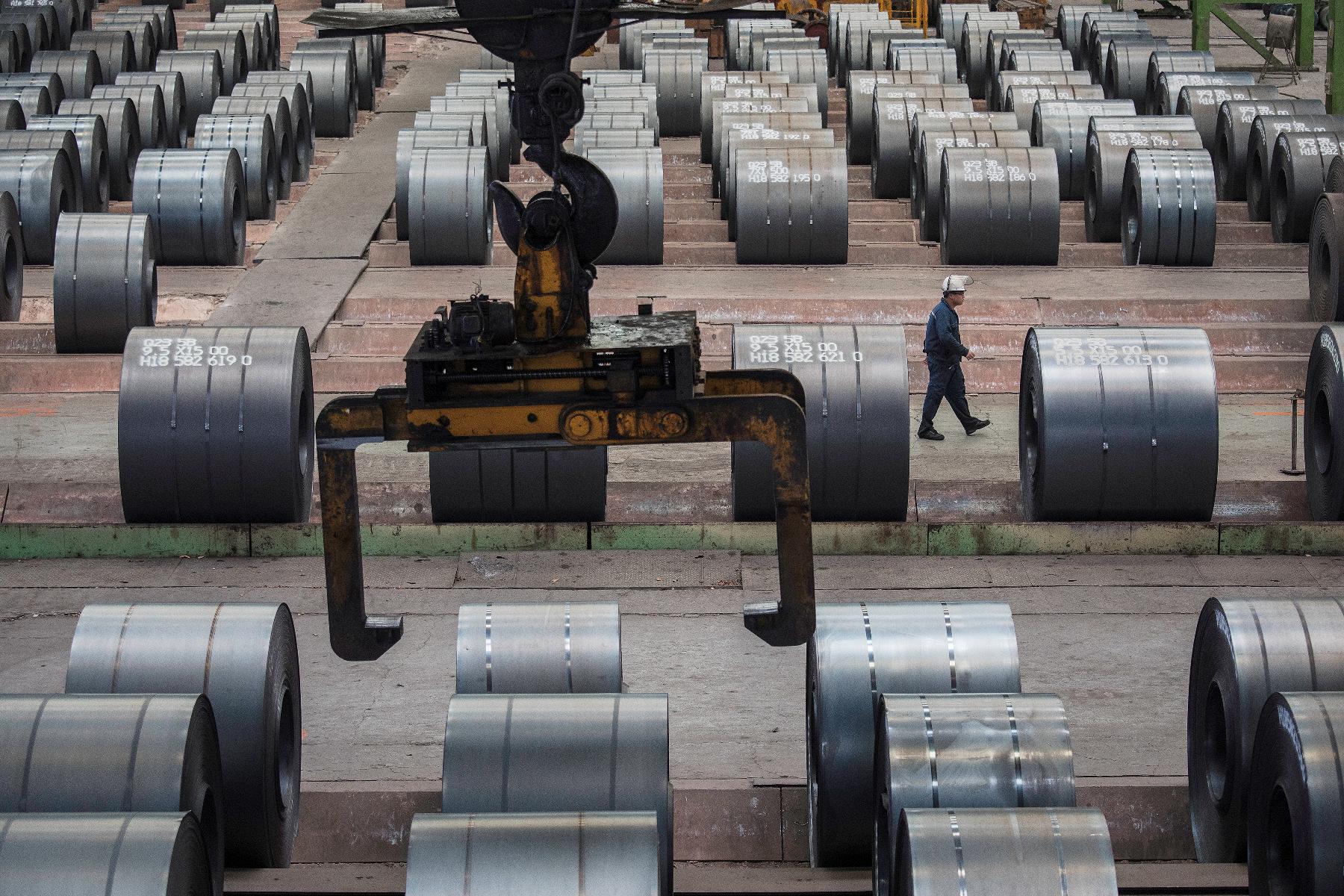
SINGAPORE, July 11 (Reuters) - China approved no new coal-based steel projects in the first half of 2024, researchers said on Thursday, accelerating its shift towards green production as it prepares for the impact of a new carbon levy on exports to Europe. Local governments approved 7.1 million metric tons of new steelmaking capacity from January to June, but all of it was for cleaner scrap-based electric arc furnace (EAF) projects, rather than coal-intensive blast furnaces, said the Centre for Research on Energy and Clean Air (CREA). China's efforts to cut production and recycle more scrap via EAF could reduce CO2 emissions from the steel industry by 200 million tonnes by 2026, equal to the entire emissions of the EU steel sector, CREA said. China's steel industry, by far the world's biggest, is under growing pressure to decarbonise. It is expected to join China's own emissions trading scheme this year, and exports to Europe will be subject to the Carbon Border Adjustment Mechanism (CBAM) starting from next year, which could make them 11% more expensive by 2030. "Chinese steelmakers targeting the EU market will need to take action to reduce the carbon intensity of their products in order to maintain competitiveness," said Xinyi Shen, the report's co-author. Europe introduced CBAM in order to tackle the problem of "carbon leakage", which allows businesses to avoid carbon costs by sourcing products from countries with weaker climate compliance. Starting from 2026, importers of steel, fertiliser, cement and chemicals will pay levies based on the carbon footprint of the products they buy. Researchers at China's Institute for Global Decarbonization Progress (iGDP) said last week that China's steel industry could face up to 5.9 billion yuan ($811.09 million) in total CBAM levies by 2030, depending on how much it cuts emissions. Traditional blast furnace steel could face levies of around 250 yuan per ton by 2030, but scrap-based EAF would not yet face any additional charge, it said. ($1 = 7.2742 yuan) Sign up here. https://www.reuters.com/sustainability/climate-energy/china-accelerates-green-steel-shift-eu-levies-loom-researchers-say-2024-07-11/
2024-07-11 05:10
MUMBAI, July 11 (Reuters) - The Indian rupee was nearly unchanged on Thursday, lagging most of its Asian peers, which were lifted by a dip in U.S. bond yields. The rupee was at 83.5025 against the U.S. dollar as of 10:20 a.m. IST, barely changed from its previous close at 83.52. The currency hovered in a tight 83.50-83.51 band in early trading. Mostly rangebound movement in the rupee over the last few trading sessions has also pushed volatility expectations lower with the 1-month implied volatility dropping to 1.65%, the lowest since March 7. The dollar index dipped below 105 while most Asian currencies rose, with the Korean won up 0.3% and leading gains, ahead of closely watched U.S. inflation data due later in the day. The data is expected to shape expectations of when the Federal Reserve may begin easing policy rates. Interest rate futures are currently pricing in a 73% chance of a September rate cut, according to CME's FedWatch tool. "We currently see a two-way risk to US inflation, with tighter monetary conditions and softer labour market bringing inflation down more, while the upside risks stem from geopolitical tensions," Lloyd Chan, a senior currency analyst at MUFG Bank, said in a note. Economists polled by Reuters have forecast month-on-month core U.S. CPI holding steady at 0.2% in June. Traders expect the rupee to hover between 83.45 and 83.55 during the day's session with routine importer dollar demand hurdling gains for the currency. In addition to the U.S. inflation print, investors will also keep an eye on remarks from Fed officials slated to speak later in the day. Sign up here. https://www.reuters.com/markets/currencies/rupee-flat-near-term-volatility-expectations-drop-4-month-low-2024-07-11/

2024-07-11 05:08
LONDON, July 11 (Reuters) - An escalation in geopolitical conflicts is the biggest risk to the global economy, according to central bank reserve managers, who are generally positive about the world's economic outlook, according to an annual survey released on Thursday. The UBS Asset Management survey of 40 leading central banks that manage more than $15 trillion, about half of the world's foreign exchange (FX) reserves, found two thirds expected the global economy to return to moderate growth and inflation in the next five years. It found that 71% expect U.S. headline consumer inflation to be between 2% and 3% in a year's time. The Federal Reserve has a 2% inflation target. But 87% of the reserve managers surveyed flagged further escalation in geopolitical conflicts as the biggest threat to this benign outcome, and 41% said they are diversifying their investments more across regions and currencies fearing an escalation of tensions between the U.S. and China. Gold has been a particular beneficiary of diversification, and its price has hit record highs. Among respondents, 24% had increased their gold exposure in the past year and 30% plan to do so in the coming year, although they also plan to raise bond allocations. "The recent political decision to use profits from central banks of Russia’s frozen assets to finance Ukraine raises further the risk that FX reserves are no longer seen as a safe haven for central banks," said Massimiliano Castelli, head of strategy and advice at UBS Asset Management. "Gold, an asset held by central banks largely for historical reasons linked to the time when it was a pillar of the global financial system, risks being brought back to life by ongoing geopolitical trends,” he added. Around 260 billion euros ($281.40 billion) of Russian central bank funds are frozen worldwide, mostly in the EU. The upcoming U.S. election could also add to tensions, according to the survey, with 94% of respondents saying a victory for Donald Trump would lead to a further deterioration in U.S.-China relations. This tension does not yet threaten the U.S. dollar's dominant role in FX reserves. Survey participants said their average share of dollar holdings was 55%, virtually unchanged from the previous year. Five participants indicated that they introduced China's yuan as a new currency in their reserves, while two institutions recently dropped it. ($1 = 0.9240 euros) Sign up here. https://www.reuters.com/markets/global-reserve-managers-upbeat-growth-worry-about-politics-2024-07-11/