2024-07-02 03:06
MUMBAI, July 2 (Reuters) - The Indian rupee is expected to decline at the open on Tuesday, weighed down by a further rise in U.S. Treasury yields amid increasing expectations of Donald Trump winning the U.S. presidency. Non-deliverable forwards indicate the rupee will open at 83.47-83.48 to the U.S. dollar, compared with 83.4375 in the previous session. Asian currencies were down between 0.1% and 0.5%, with the offshore Chinese yuan dipping below 7.3050 to the U.S. dollar. In line with Asia, the rupee will "have it difficult" today, a currency trader at a bank said. "Now we are back to watching the 83.50-83.55 resistance (on dollar/rupee)." The 10-year U.S. yield climbed to nearly 4.50% in the New York trading session on Monday, its highest level in a month. The increasing likelihood that Trump will prevail in the November election is prompting investors to demand higher yields on U.S. Treasuries. Following U.S. President Joe Biden's debate performance last week, which was widely criticized, the probability of a Trump presidential win has climbed to 60%, per political betting website PredictIt. "Market participants (are) pricing in fiscal concerns and higher inflation given potential election outcomes," Morgan Stanley said in a note. Elections are taking centre stage, with increased focus on outcomes and political uncertainty continuing to drive price action, Morgan Stanley said, referring to the U.S. and French elections. The jump in U.S. yields comes despite weak U.S. manufacturing data on Monday. The Institute for Supply Management's reading showed U.S. manufacturing contracted for a third straight month in June. Focus now turns to Federal Reserve Chair Jerome Powell's speech later in the day. After that, the minutes of the last Fed meeting are up on Wednesday and then the monthly U.S. jobs report on Friday. KEY INDICATORS: ** One-month non-deliverable rupee forward at 83.52; onshore one-month forward premium at 7.5 paise ** Dollar index up at 105.86 ** Brent crude futures up 0.3% at $86.8 per barrel ** Ten-year U.S. note yield at 4.45% ** As per NSDL data, foreign investors bought a net $186.1mln worth of Indian shares on June 28 ** NSDL data shows foreign investors bought a net $264.5mln worth of Indian bonds on June 28 Sign up here. https://www.reuters.com/markets/currencies/rupee-expected-decline-back-rising-us-yields-2024-07-02/

2024-07-02 00:18
PARIS/SEOUL, July 1 (Reuters) - Renault's (RENA.PA) New Tab, opens new tab electric vehicle unit Ampere said on Monday it would include lithium iron phosphate (LFP) technology in its plans to mass produce EVs, teaming up with LG Energy Solution (LGES) (373220.KS) New Tab, opens new tab and CATL (300750.SZ) New Tab, opens new tab to build a supply chain in Europe. Western automakers are under pressure to expand their range of chemical battery technologies to meet the needs of all market segments amid fierce competition from their often cheaper Chinese rivals. "This decision is an effective and cutting-edge response to market volatility and change in technologies," Ampere said in a statement, adding that LFP batteries would equip "several" models of the Renault and Alpine brands over the next years. The company also pledged to work towards the development of so-called cell-to-pack battery solutions aimed at boosting the range of its EVs, together with South Korea's LGES. In a separate statement, LGES said early on Tuesday it had signed a deal to supply 39 gigawatt hours of LFP pouch-type batteries to Renault to power about 590,000 vehicles, adding the battery cells would be produced in Poland. The deal marks the first LFP battery supply deal for EV use for the South Korean battery maker, LGES said. Automakers are expanding their use of different types of battery chemistry, such as LFP, in a bid to cut costs to make affordable EVs and avoid supply chain concerns around materials like cobalt. LGES said the value of the contract had not been confirmed but the contract period was between the end of 2025 and Dec. 31, 2030. Shares of LGES rose as much as 4.3% on Tuesday morning after the announcement of the deal, but as of 0011 GMT they were trading only 0.4% higher. South Korea's benchmark KOSPI index (.KS11) New Tab, opens new tab was down 0.3%. Sign up here. https://www.reuters.com/business/autos-transportation/renaults-ev-unit-ampere-bet-lfp-technology-ev-batteries-2024-07-01/

2024-07-01 23:32
Photessay: ANMA ISLAND, South Korea, July 2 (Reuters) - Under the light of a moon partially obscured by cloud, the eyes of a dozen deer glow uncannily in the dark on South Korea's island of Anma. They destroy crops and damage trees in their nocturnal wanderings, but by day the spot is deceptively peaceful, though the humans here must live behind fences, penned into homes and fields, as the animals outnumber them seven to one. The people of a village nestled beside peaks and a rocky shoreline near South Jeolla province have all but given up their fight against the deer, whose numbers have exploded since the mid-1980s. Now, they say the only option is to cull the herd. "I'm sorry to say this, but we need to get rid of them, which is our intention, even if that means we have to kill them," said Jang Jin-young, 43, one of the leaders of the village, which numbers about 150. Since the rules ban such efforts, he says the government is weighing a petition from the villagers to designate the deer as "harmful wildlife", rather than livestock, so clearing the way for the herd to be thinned by hunting or other measures. "There are so many deer, I've never seen as many as this before," said Kim Seung-man, who left his job digging up ginseng to anaesthetise the deer with blowgun darts so that they can be carried off the island in the effort to reduce their numbers. Still, sparkling in its serene setting, the island has a lot to offer visitors, said Jang, as the deer are a menace only to residents, particularly the few who still farm. Spread over an area just slightly larger than Central Park in Manhattan, the deer are now estimated to number 1,000, after years of grazing and breeding freely in the absence of predators. "I just want all the deer on the island to disappear forever," said 80-year-old Han Jeong-rye, working in her vegetable garden surrounded by a mesh net that is 1.8 metres (6 ft) high, yet presents no obstacle for the deer, who jump over or rip through it. "It's totally useless, I can't stand it. I'd be happy if somebody could please, please catch them." Similar rows of nets, some as tall as 2 meters (6.6 ft), and even fences of barbed wire, surround rice seedlings in the island's fields, but the deer eventually get around them, defeating the efforts of the ageing. The deer came to the island around 1985, when about 10 were brought by three farmers, hoping to harvest their antlers, shed annually and highly prized in traditional medicine. The budding antler replacements, covered in soft short hair as they grow, are cut and marketed before they harden. Prescribed along with ginseng and medicinal herbs, they are boiled in water to make a traditional remedy, whose cost grows with the quality and number of antler slices in the brew. But dwindling interest in such medicines after the mid-1980s quickly dried up the market for antlers, leading the deer farmers to abandon the animals and leave. Now the sheer number running wild in wide swathes of the island's forest makes it practically impossible to harvest antlers, said Kang Dae-rin, who trades them and runs a deer farm near the capital, Seoul. The weight of numbers also makes it futile to sedate the deer, who also have a severe tick infestation that makes it hard to ship out the animals, or their antlers, added Kang. He has made several trips to gauge the island's potential as a source of the material. "There are a lot more of them than I thought," said Kang, as he waited to board a ferry for the two-hour journey out. Sign up here. https://www.reuters.com/world/asia-pacific/swelling-deer-herd-hems-south-korean-islanders-2024-07-01/

2024-07-01 23:30
WASHINGTON, July 1 (Reuters) - A federal judge on Monday blocked the U.S. government's ban on approving applications to export liquefied natural gas (LNG), in response to a lawsuit by Republican-led states. U.S. District Judge James Cain Jr, in Louisiana, a Trump appointee, ruled New Tab, opens new tab that the LNG export ban "be stayed in its entirety, effective immediately." A coalition of 16 Republican-led states, including Texas, Louisiana and Florida, had filed suit in March in Lake Charles, Louisiana, arguing that the administration of Democratic President Joe Biden lacked the authority to broadly deny the permits. They claimed the U.S. Department of Energy's (DOE) pause on exports would harm the U.S. economy and undermine efforts to supply foreign allies in Europe with steady supplies of LNG as the region seeks to wean itself off piped gas from Russia. The Biden administration said in January the pause would allow New Tab, opens new tab officials to review the process for analyzing economic and environmental impacts of projects seeking approval to export LNG to Europe and Asia where the fuel is in high demand. The January move was cheered by climate activists, an important part of Biden's base, and could have delayed decisions on new plants until after the Nov. 5 presidential election, when Biden will face off against Republican former President Donald Trump. The states argued that the pause on new approvals for LNG exports oversteps the DOE's authority under the Natural Gas Act, which they said requires the agency to affirmatively show projects are inconsistent with the public interest before denying applications. The states also argued the ban jeopardizes billions of dollars in investments planned to build export facilities. Sign up here. https://www.reuters.com/business/energy/federal-judge-halts-us-governments-ban-lng-permits-2024-07-01/

2024-07-01 23:00
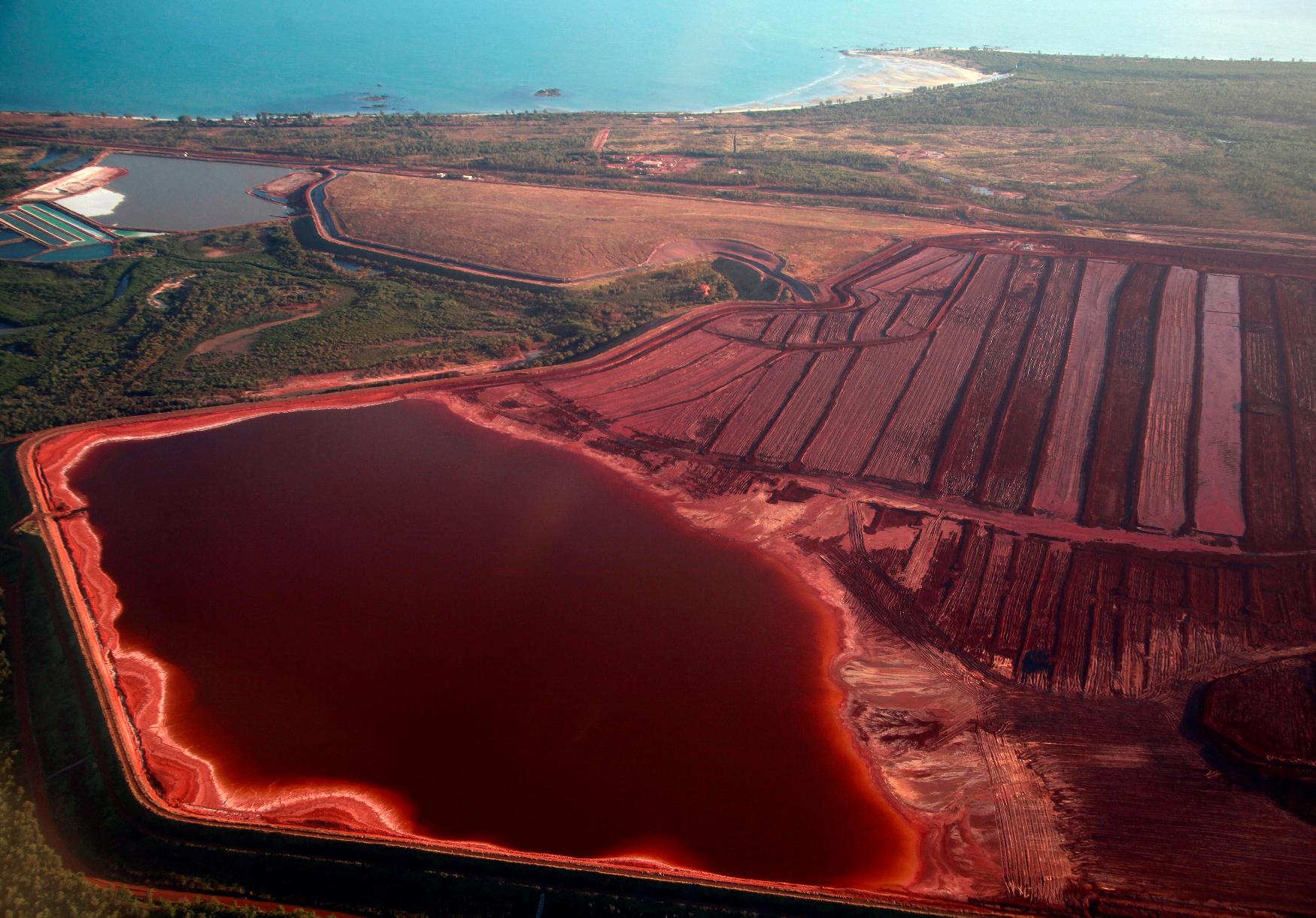
LONDON, July 1 (Reuters) - China's production of primary aluminium is closing in on last year's record highs as previously idled capacity ramps up in Yunnan province. The country increased production by 5% year-on-year to 3.65 million metric tons in May, according to the latest estimate from the International Aluminium Institute. National output is now running close to an annualised 43.0 million tons, within touching distance of the record highs seen in September and October last year. The strength of primary production growth has served to further tighten up the market for alumina, the intermediate product refined from bauxite. Chinese spot prices are currently trading close to their highest levels since late 2021, in turn providing cost support for the metal price. RAIN RESTARTS PLAY Yunnan has seen much improved rainfall this year, alleviating power shortages in the hydro-rich province. The local authorities have lifted operating restrictions on primary aluminium producers, facilitating the restart of around 1.15 million tons of capacity that was ordered off-line last November. Yunnan has emerged as a major primary production hub in recent years as smelters have relocated from coal-rich provinces to lower their carbon footprint. The province now hosts almost six million tonnes of annual smelter capacity and has become an important swing producer depending on rainfall patterns. Right now, local production is in full upswing thanks to an alleviation of the persistent drought conditions that caused rolling closures over the last couple of years. China's annualised production has grown by just over one million tons so far this year, almost fully reversing the sharp drop seen in November when Yunnan capacity powered down. ALUMINA SUPPLY STRETCHED Domestic alumina supply has struggled to keep up with demand from the smelter restarts in Yunnan. While national production of the primary metal rose by 5.4% in the first five months of the year, output of alumina was up by just 3.4%, according to local data provider Shanghai Metal Market. The mismatch of supply and demand is clear to see in the relative price performance of the Shanghai Futures Exchange's (ShFE) alumina and aluminium contracts. The latter is up by 3.5% since the start of January, while the price of alumina has risen by 15.3%. Chinese alumina prices have been volatile in 2024, jumping in January due to concern about bauxite supplies from Guinea and again in May after Rio Tinto (RIO.L) New Tab, opens new tab declared force majeure on third-party deliveries from its alumina refineries in Queensland due to restricted gas supplies. Spot alumina is currently assessed by Shanghai Metal Market at 3,910 yuan ($537.95) per ton, just shy of last month's two-and-a-half year high. The ShFE contract, newly launched last year, has been particularly frenetic, rising above the 4,000-yuan mark in May and currently trading below the spot physical market at 3,800. The root cause of higher and more volatile pricing is China's stretched upstream supply chain. Environmental inspections caused multiple domestic bauxite mines to suspend operations early in the year, which in turn has constrained alumina production growth. The country's increasing reliance on bauxite from Guinea to fill the supply gap means domestic alumina pricing is becoming increasingly sensitive to overseas supply disruption. TWO-WAY FLOWS China has stepped up imports of alumina to help balance the internal market. Inbound shipments totalled 1.15 million tons in January-May, up by 60% on the first five months of 2023. However, the country is simultaneously exporting ever more alumina to Russia. Russian producer Rusal (RUAL.MM) New Tab, opens new tab has been short of raw material since the invasion of Ukraine in 2022, losing both the Nikolaev refinery in Ukraine and access to its Australian joint venture due to sanctions. Chinese alumina producers increased exports to Russia from just 1,750 tons in 2021 to 1.12 million tons last year. Exports so far this year have surged another 46% to 610,000 tons. On a net basis the country has been a relatively small net importer to the tune of just under 500,000 tons in 2024. That's not been enough to fully offset the domestic supply gap nor replenish stocks in any meaningful way. NEW PRICE DRIVER China's alumina squeeze should diminish over the coming months. Current high prices are likely to spur the country's refineries to increase supply while the early-year acceleration in demand should abate as Yunnan's smelters complete their restarts. Analysts at Macquarie expect alumina prices to peak in the third quarter of the year as the market shifts back to supply surplus, although the bank expects only a marginal 220,000-ton surplus over 2024 as a whole. However, the sustained rally in alumina pricing this year is a sign that aluminium's upstream supply dynamics are becoming less stable and more unpredictable. The aluminium market hasn't had to worry much about bauxite or alumina supply in the past. But China's growing dependence on imported bauxite represents a new vulnerability for the world's largest aluminium producer, which in turn means a new driver for the price. ($1 = 7.2683 Chinese yuan renminbi) Sign up here. https://www.reuters.com/markets/commodities/rising-chinese-aluminium-output-pressures-alumina-supply-2024-07-01/
2024-07-01 22:23
Apple, Tesla drove S&P higher Manufacturing PMI weakens in June Chewy drops despite Keith Gill's stake disclosure Indexes up: Dow 0.13%, S&P 0.27%, Nasdaq 0.8% NEW YORK, July 1 (Reuters) - Megacap growth stocks led by Apple and Tesla lifted the tech-heavy Nasdaq to a higher close on Monday, while the Dow and the S&P 500 also eked out slight gains in light pre-holiday trading. Investors were waiting for U.S. labor market data due later this week for clues about the interest rate outlook. Apple(AAPL.O) New Tab, opens new tab climbed 2.9%, Microsoft (MSFT.O) New Tab, opens new tab rose 2% and Amazon.com (AMZN.O) New Tab, opens new tab ended 2.2% higher, boosting the Nasdaq. "The most important driver of earnings is GDP and the economy still looks very healthy to us," said Ben Snider, a senior equity strategist at Goldman Sachs Research. "We're forecasting economic growth this year in the U.S. - over trend - above 2%, so underlying revenue growth still looks strong. On top of GDP, profit margins seem to be recovering after a pretty rough couple of years." A quarter of earnings on the S&P 500 index comes from the largest technology stocks, which also look strong, he said. Shares of automaker Tesla (TSLA.O) New Tab, opens new tab surged 6.1% ahead of second-quarter vehicle delivery data. Wells Fargo added Tesla stock to its third-quarter "Tactical Ideas list" yet kept its "underweight" rating and expressed concerns about slowing growth in deliveries and a risk of price cuts. Shares of semiconductor makers Advanced Micro Devices (AMD.O) New Tab, opens new tab dropped 2.8% and Arm Holdings fell 2.9%, pulling the Philadelphia SE Semiconductor index (.SOX) New Tab, opens new tab close to a one-week low. Real estate stocks (.SPLRCR) New Tab, opens new tab, also seen as a bond proxy, dropped almost 1%, as U.S. Treasury yields jumped to multi-week highs. But higher yields often boost bank profits so the S&P 500 banks index (.SPXBK) New Tab, opens new tab jumped to its highest in more than a month. JP Morgan Chase (JPM.N) New Tab, opens new tab shares were at an all-time high after the biggest U.S. bank on Friday hiked its dividend to $1.25 a share from $1.15. Its board also authorized $30 billion in share buybacks, effective July 1. Chewy (CHWY.N) New Tab, opens new tab dropped 6.7%, reversing sharp early gains, after stock influencer Keith Gill, also known as "Roaring Kitty", disclosed a 6.6% stake in the pet products retailer. Trading volumes were thin, with the equity market set to shut on Thursday for U.S. Independence Day. Volume on U.S. exchanges was 10.59 billion shares, down from the 11.89 billion average for the full session over the last 20 trading days. Thin volumes were expected all week. Manufacturing PMI data from the Institute for Supply Management showed manufacturing contracted for a third straight month in June, while prices paid dropped to a six-month low in an encouraging sign for the U.S. Federal Reserve's battle with inflation. Traders have stuck to their bets of around two interest rate cuts this year, starting from September, LSEG FedWatch showed. Also scheduled for the week are JOLTS job openings data on Tuesday, and ADP employment, factory orders, ISM services PMI data and minutes of the Fed's latest policy meeting on Wednesday. Non-farm payroll data are due on Friday. New York Fed President John Williams noted he still believes price pressures are moderating back to the 2% target. The Dow Jones Industrial Average (.DJI) New Tab, opens new tab rose 50.66 points, or 0.13%, to close at 39,169.52, the S&P 500 (.SPX) New Tab, opens new tab gained 14.61 points, or 0.27%, to 5,475.09 and the Nasdaq Composite (.IXIC) New Tab, opens new tab gained 146.70 points, or 0.83%, to 17,879.30. Declining issues outnumbered advancers by a 1.87-to-1 ratio on the NYSE. There were 162 new highs and 99 new lows on the NYSE. The S&P 500 posted 13 new 52-week highs and 4 new lows while the Nasdaq Composite recorded 45 new highs and 157 new lows. On Friday, the Nasdaq and the S&P 500 notched their third straight quarterly gains, with the tech-heavy index doing so for the first time in three years. However, the Dow's quarterly decline raised concerns about the need for greater diversification in investor holdings. Sign up here. https://www.reuters.com/markets/us/futures-inch-up-focus-shifts-jobs-data-2024-07-01/