2024-06-07 19:28
Morena's victory raises concerns over presidential power checks Investors worry about judicial changes, less oversight Peso falls as much as 8.9% post-election NEW YORK/MEXICO CITY, June 10 (Reuters) - The Mexican governing party's unexpectedly lopsided victory last week has investors concerned that it may use its mandate to sweep aside some of the checks on presidential power which have long been a source of comfort to the business community. The possibility that current president Andres Manuel Lopez Obrador could push through some of those changes during his final month in office in September has some investors especially on edge. Preliminary results showed his Morena ruling party and its allies gained a super majority in the lower house of Congress but fell just short of a super majority, or two-thirds of legislators, in the Senate. Even if on paper that does not give Morena automatic power to rewrite the country's constitution, the peso continued to fall on Monday. Lopez Obrador proposed a bevy of constitutional changes in February that would drastically remake Mexico's judiciary, eliminate or neuter some key regulatory agencies and introduce some expensive new social benefits, including an expanded state pension plan. Some analysts hope that Lopez Obrador's anointed successor, President-elect Claudia Sheinbaum, who will be sworn in on Oct. 1, may take a more gradualist approach, but even that is not a given. She has mostly professed her loyalty to her charismatic mentor's policies. Although none of the measures are welcome by investors, what makes some observers particularly nervous are the proposed changes to Mexico's court system - which would include the popular election of Supreme Court judges - plus the evisceration of key oversight bodies. "What an investor wants least, and even less an investor who is going to install a factory worth billions in Mexico, is for the rules of the game to suddenly change," said Esteban Polidura, Julius Baer's director of investment strategy for the Americas. "That's why they place a big importance on the continued existence of a State of Law, that the existing rules are respected and that the independence of institutions which are there to make decisions not linked to a particular government are respected." CHECKS AT RISK Mexico's peso weakened 7.55% last week against the dollar, its largest weekly decline since the start of pandemic lockdowns in March 2020. Besides the lopsided leftist win, the currency was weighed down further on Friday after Lopez Obrador reiterated the call for his controversial judicial overhaul. On Monday the peso was down again, extending its loss since before the election to as much as 8.9%. Lopez Obrador proposes to cut the number of Supreme Court judges to nine from 11 and all judges would need to be reconfirmed in an extraordinary election next year. The plan has been criticized as a hit on an independent court system, which has served as a check over some of Lopez Obrador's most extreme policies. "One of the great checks that the government has had has been the independent institutions and in particular the judiciary," Ramse Gutierrez, co-director of investments at Franklin Templeton in Mexico City, said. Sheinbaum told local media on Thursday night that any reform has to be properly evaluated and explained to the Mexican people. If the fate of checks and balances looms as the key issue for many investors, others are also anxious about plans to boost retirement and other social benefits at a time of already heightened concerns about election-year spending by the once-frugally minded Lopez Obrador. Mexico's overall fiscal deficit is set to end 2024 at 5.9% of economic output, according to the government estimate, which would be the country's highest since the 1980s. While it may be compelling for Lopez Obrador to spend more on universal pensions, healthcare and education, the costs and fiscal constraints could make it complicated, said Aaron Gifford, senior emerging markets sovereign analyst at T. Rowe Price. "Still, with the budget deficit where it is, markets are worried about fiscal slippage even despite Sheinbaum's pledge to be fiscally responsible." Some still expect Sheinbaum, like Lopez Obrador through most of his six years in power, to end up being a moderate spender. The 2024 budget "was pretty political in the sense that it was aimed at providing fiscal leeway for (Lopez Obrador) to complete a number of pet projects," said Damian Buchet, London-based chief investment officer at Finisterre Capital. "But after that, Sheinbaum has already signaled that without being called fiscal tightening, she would actually return to fiscal orthodoxy." Another question is whether Sheinbaum will emulate Lopez Obrador's tendency to meddle in various aspects of the economy from mining to energy and water, to a partially-built airport near Mexico City which he scuttled early in his term - and whether the guard-rails which sometimes boxed him in will survive the September legislative session. "The main issue is the rules of the game, the State of Law, that the established rules are followed," Franklin Templeton's Gutierrez said, noting that markets were particularly nervous about the idea of choosing judges and justices through popular vote. Sign up here. https://www.reuters.com/markets/emerging/mexico-investors-worry-lopsided-vote-could-threaten-rule-law-2024-06-10/
2024-06-07 18:08
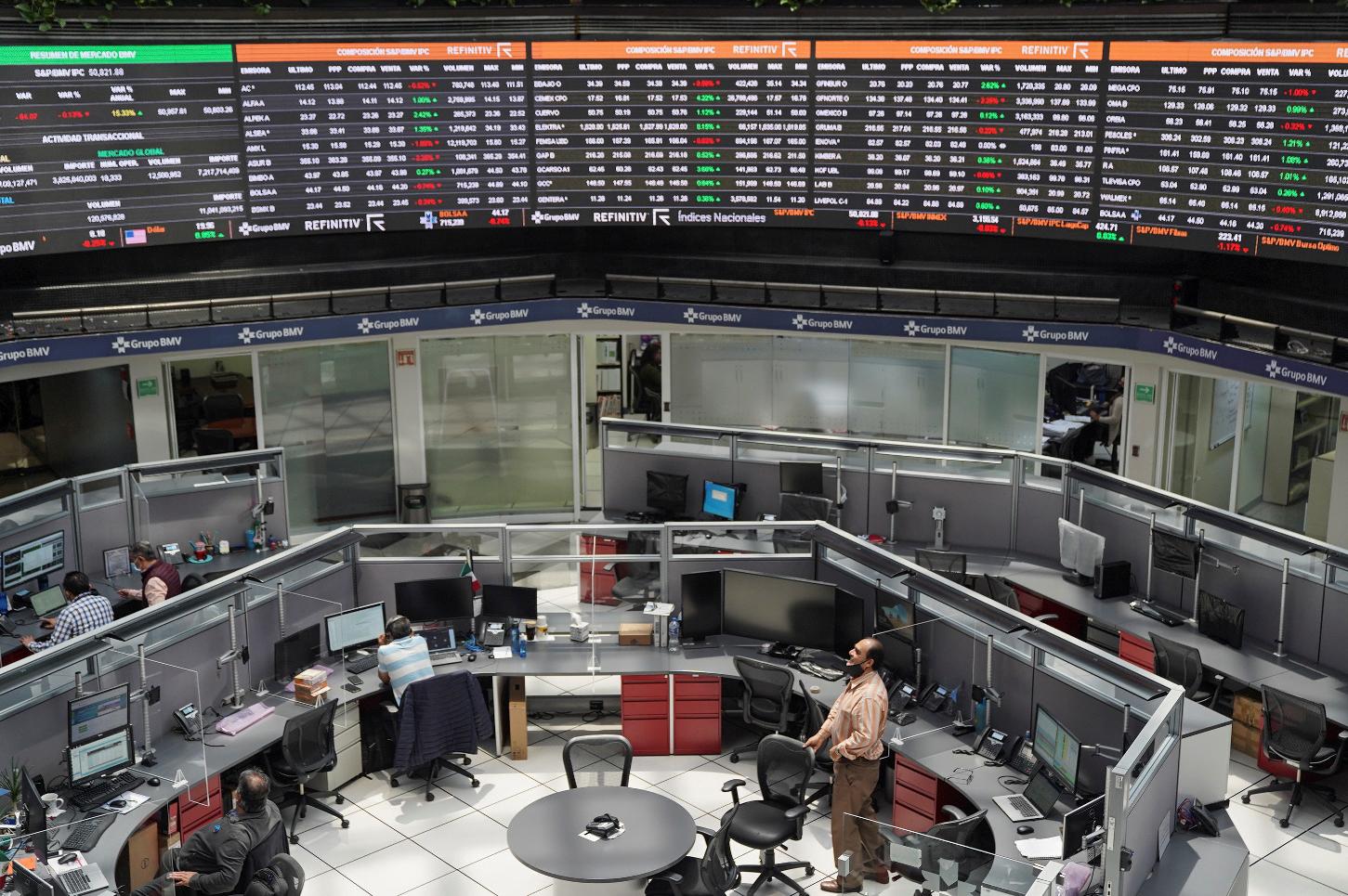
NEW YORK, June 6 (Reuters) - Investors will closely watch next week’s inflation numbers and Federal Reserve meeting for clues on whether the soft landing hopes that drove stocks to record highs are still justified. This year's rally has lifted the S&P 500 up more than 12% year-to-date, on expectations the Fed can cool inflation without hurting growth. Yet recent economic data have sent conflicting signals: U.S. employment numbers released Friday were far stronger than expected, while earlier reports showed a slowdown in manufacturing and a first-quarter growth rate revised lower. May inflation data, due next Wednesday, must walk a tightrope to satisfy expectations of a "Goldilocks economy": satisfactory growth with prices under control. Later that day, investors will look to the Fed for signals on the central bank's rate cut plans. “The market would like some clarity and not see the Fed have to wait until December or January to begin cutting rates,” said Paul Christopher, head of global market strategy at the Wells Fargo Investment Institute, adding a long period of elevated borrowing costs could hurt the economy. Nonfarm payrolls increased by 272,000 jobs last month, the Labor Department's Bureau of Labor Statistics said on Friday, exceeding 185,000 jobs forecast by economists in a Reuters poll. After the data, futures markets showed investors trimming expectations for rate cuts, with chances of a September cut falling to about 55% from about 70% before the report. Strong employment data countered earlier reports suggesting the economy was cooling, including a June 3 release showing U.S. manufacturing activity in May slowed for a second straight month. Despite the S&P 500’s march to new records, some investors worry the gains have concentrated in a few giant technology and growth names such as Nvidia (NVDA.O) New Tab, opens new tab, with the rest of the rest of the market far more tepid. U.S. stock valuations remain well above historic norms, noted Ed Clissold, chief U.S. strategist at Ned Davis Research. The median price to earnings ratio of the S&P 500 would need to fall 31% to hit its long-term median, and 19% to reach its 20-year norm, he said. "People are concerned about how far and how high this market has risen and how narrow it has been," said Raul Diaz, senior investment officer at Northern Trust Wealth Management. Plenty of investors believe strong corporate results and a relatively benign macroeconomic environment can keep supporting stocks. First quarter earnings came in about 8.1% above analyst expectations, according to LSEG data. “We believe U.S. stocks are likely to remain supported by favorable macro conditions, healthy earnings growth, AI tailwinds, and the potential for a Fed pivot before year-end,” wrote Solita Marcelli, chief investment officer Americas at UBS Global Wealth Management, in a note this week. The bank recently upgraded its year-end S&P 500 target to 5,500, up 3% from where the index trades today. Others believe political uncertainty, not economic data, will cause turbulence later this year. The first debate between President Joe Biden, a Democrat, and Republican challenger and former president Donald Trump will take place June 27, nearly three months earlier than the Sept. 16 date suggested by the nonpartisan Commission on Presidential Debates, which has managed them since 1988. That could turn the market’s attention to the 2024 presidential election earlier in the year than usual, said Grace Lee, senior portfolio manager at Columbia Threadneedle Investments. "The market still on the surface looks like everything is fine, but I think there’s a certain nervousness that may not even be about the economic data," said Lee. "People want to stick to what has been working and not go too far out on a limb into other areas that might see political ramifications, whether it's healthcare and drug prices or clean energy." Sign up here. https://www.reuters.com/markets/us/wall-st-week-ahead-inflation-fed-meeting-give-clues-us-market-direction-2024-06-07/

2024-06-07 16:47
Canadian dollar falls 0.6% against the greenback Touches its weakest since May 8 at 1.3758 Canada's jobless rate rises to 6.2% Canada-U.S. 10-year spread widens to 95.4 basis points TORONTO, June 7 (Reuters) - The Canadian dollar fell to a near one-month low against its U.S. counterpart on Friday as stronger-than-expected U.S. jobs data boosted the greenback, while a domestic jobs report gave mixed signals on prospects of further Bank of Canada rate cuts. The loonie was trading 0.6% lower at 1.3750 to the U.S. dollar, or 72.73 U.S. cents, after touching its weakest since May 8 at 1.3758. "We've seen U.S. yields spike, the (U.S.) dollar spike and CAD is just on the wrong end of all that," said Erik Bregar, director, FX & precious metals risk management at Silver Gold Bull. "I think the (U.S. non-farm payrolls) report is full of holes but the market wasn't positioned correctly for the higher than expected headline and the higher than expected wages." The U.S. economy created far more jobs than expected in May and annual wage growth reaccelerated, reducing the likelihood the Federal Reserve will be able to start rate cuts in September. Canada's jobless rate edged up to a more than two-year high of 6.2% in May and wage growth gathered pace, giving diverging signals on how the Bank of Canada will digest the reading for its next rate decision in July. Money markets see a 46% chance the central bank would cut next month, down from roughly 50% before the data. On Wednesday, the BoC became the first G7 central bank to lower borrowing costs, cutting its benchmark interest rate by 25 basis points to 4.75%. Canadian government bond yields moved higher across the curve but by not as much as U.S. Treasuries. The 10-year was up 6.4 basis points at 3.458%, while it was trading 95.4 basis points further below the U.S. equivalent, which is the largest gap in LSEG data going back to 1994. Sign up here. https://www.reuters.com/markets/currencies/c-hits-one-month-low-us-bond-yields-jump-2024-06-07/

2024-06-07 16:44
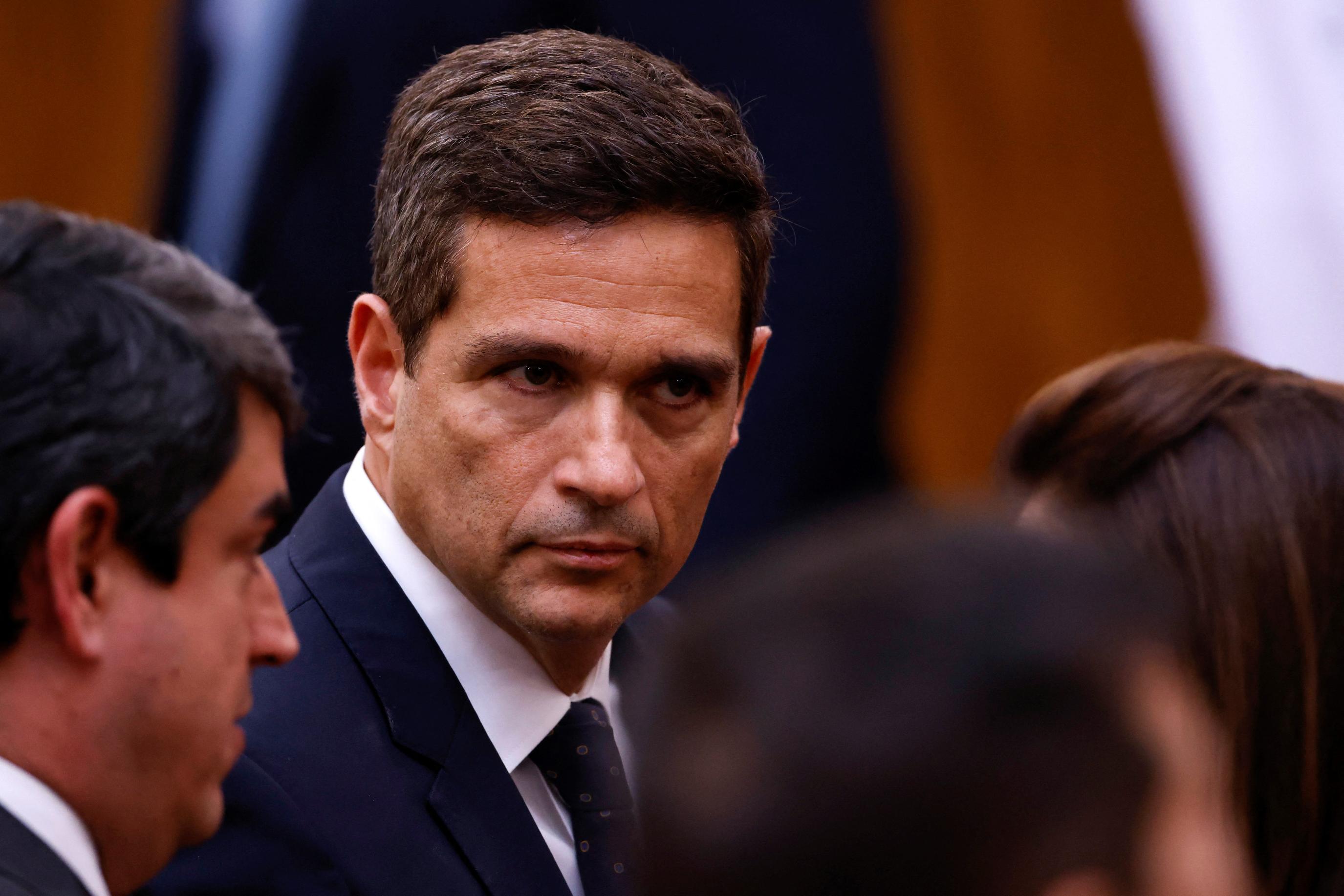
SAO PAULO/BRASILIA, June 7 (Reuters) - Brazil's central bank chief, Roberto Campos Neto, expressed concern on Friday that financial markets were still expecting high inflation despite data showing moderation, a view echoed by other bank officials. The comments by several bank officials suggested alignment over the issue at the bank, following a split decision on rates last month. At an event in Sao Paulo, Campos Neto said he believed time would work in favor of the central bank by dissipating what he called "noises" that have driven market inflation expectations up. Brazilian central bank officials have warned of rising inflation expectations in the country despite better-than-expected inflation figures. Speaking at a different event hosted by the University of Brasilia (UnB), monetary policy director Gabriel Galipolo said that global liquidity restrictions amid an environment of high interest rates in advanced economies had brought additional challenges. "What puts Brazil in a slightly more delicate situation is that we saw changes in the terminal rate, but we continue to see unanchoring (inflation) expectations," he said. Private economists surveyed weekly by the central bank raised their year-end projections for the Selic benchmark interest rate to 10.25%. They also increased their inflation projections to 3.88% this year, 3.77% in 2025, and 3.60% in 2026, compared with the official target of 3%. Campos Neto said the central bank refrained from signaling any future steps in its latest policy decision in May to gain time to understand the international scenario and "such a big dichotomy" between good inflation figures and worse inflation expectations in Brazil. After unexpectedly strong U.S. monthly jobs data doused hopes the U.S. Federal Reserve would soon embark on an easing cycle, Campos Neto said there was no mechanical relation between the data and the conduct of monetary policy in Brazil, stressing policymakers would focus on how these developments could impact macroeconomic variables. Brazil's annual inflation rate hit 3.7% in mid-May, above the central bank's 3% target but within its 1.5%-4.5% target range. Earlier on Friday, at another event in Sao Paulo, the central bank's director of international affairs, Paulo Picchetti, stressed that bringing inflation back to its target was a "huge" challenge, but reaffirmed the central bank's commitment to pursuing it. Picchetti also said it was premature to talk about potentially hiking interest rates at the moment. Policymakers have cut rates by 325 basis points since the easing cycle began in August to 10.50%. In a split decision last month, the central bank reduced rates by 25 basis points, following six cuts of twice that size. The next policy meeting will take place on June 18-19, with interest rate futures pricing in a pause in the easing cycle . Sign up here. https://www.reuters.com/business/finance/brazil-central-bank-aligned-over-concern-about-market-inflation-expectations-2024-06-07/
2024-06-07 16:05
June 7 (Reuters) - The U.S. economy created far more jobs than expected in May and annual wage growth reaccelerated, underscoring the resilience of the labor market and reducing the likelihood the Federal Reserve will be able to start rate cuts in September. The Labor Department's closely watched employment report on Friday also showed the unemployment rate ticked up to 4.0% from 3.9% in April, a symbolic threshold below which the jobless rate had previously held for 27 straight months. The unexpectedly strong report made plain that while the labor market has softened around the edges in recent months, its still-solid performance is set to underpin economic growth and keep the Fed on the sidelines and taking its time in deciding when to begin lowering borrowing costs. The hotter-than-expected wage gains also raised the prospect that elevated inflation may prove stickier than hoped although the impact from the rise in the unemployment rate could temper that. Financial markets slashed the odds of a September rate cut, reducing the probability to about 53% from about 70% before the report, based on rate futures contracts, and now see roughly an even chance of two rate cuts by the end of 2024, versus about a 68% chance seen before the report. "So much for slowing. The headline payrolls number is eye popping.... The Fed will take this to mean that they can still focus squarely on inflation without worrying much about growth," said Brian Jacobsen, chief economist at Annex Wealth Management. The yield on the 2-year Treasury note, which is sensitive to Fed policy expectations, shot up by the most in two months. Yields across other maturities rose sharply as well. The report put stocks on the defensive after a rally led by the AI sector that had carried major indexes to record highs this week. The dollar strengthened broadly. Nonfarm payrolls increased by 272,000 jobs last month, the Labor Department's Bureau of Labor Statistics said. Revisions showed 15,000 fewer jobs created in March and April combined than previously reported. Economists polled by Reuters had forecast payrolls advancing by 185,000. Estimates ranged from 120,000 to 258,000. May's employment gains were higher than the 232,000 monthly average for the past year. CONFLICTING SIGNALS Hiring was widespread across the economy, with a measure of its diversity at its highest level since January last year. The healthcare sector added 68,000 jobs, spread across ambulatory healthcare services, hospitals, nursing and residential care facilities. It continued to lead employment gains as companies seek to boost staffing levels after losing workers during the pandemic. Government payrolls increased by 43,000 positions. Employment in the leisure and hospitality sector rose by 42,000 jobs, with slightly more than half that total coming from employment in food services and drinking places. Professional and business services hired 32,000 more workers, driven by management, scientific and technical consulting services and architectural and engineering-related services. Social assistance and retail hiring also trended up last month. There were small job losses at department stores and home furnishings retailers. The U.S. central bank is expected to leave its benchmark overnight interest rate unchanged at its meeting next week in the current 5.25%-5.50% range, where it has been since last July. Average hourly earnings rose 0.4% after having slowed to a 0.2% rate in April. Wages increased 4.1% in the 12 months through May following an upwardly revised 4.0% annual rise the prior month. Wage growth in a 3.0%-3.5% range is seen as consistent with the Fed's 2% inflation target. The average workweek was unchanged at 34.3 hours. "Accelerating pay growth could be a sign of inflationary pressures ready to rebound if the Fed takes their foot off the brake. On the other hand, higher unemployment could signal weaker wage growth ahead, softer consumer demand, and less pricing power for businesses, which would cool inflation," said Bill Adams, chief economist at Comerica Bank. The U.S. central bank is closely monitoring labor market conditions and economic growth to ensure it doesn't keep rates too high for too long and overcool the economy as it tries to return inflation back to its 2% target. At 4.0%, the jobless rate in May was at the level the Fed in March predicted it would reach by the end of this year. Overall economic output in the first quarter grew at the slowest rate in nearly two years and other data so far in the current quarter, aside from monthly payrolls growth and inflation, on balance has been weaker than expected. Data earlier this week showed job openings declined in April and the number of available jobs per job-seeker reached its lowest level since June 2021. Friday's data showed the labor force participation rate fell to 62.5% in May from 62.7% in April, reversing this year's progress and driven by fewer workers in the 20-24 age range. But participation by the prime-age population, defined as those aged between 25 and 54, rose to its highest level in 22 years. Some economists questioned the divergence between the strong job gains and the rise in the unemployment rate. The two figures are derived from separate surveys within the report. The employment measure, contained in the Household Survey, has fallen in five of last eight months. That survey showed 250,000 individuals left the labor force altogether last month. "The employer and household surveys should tell a similar story, but it’s too early to tell whether the recent divergence is a sign of deeper cracks appearing in the foundation of the labor economy or a temporary anomaly," said Jim Baird, chief investment officer at Plante Moran Financial Advisors. Sign up here. https://www.reuters.com/markets/us/us-job-growth-expected-remain-moderate-pace-may-2024-06-07/

2024-06-07 15:28
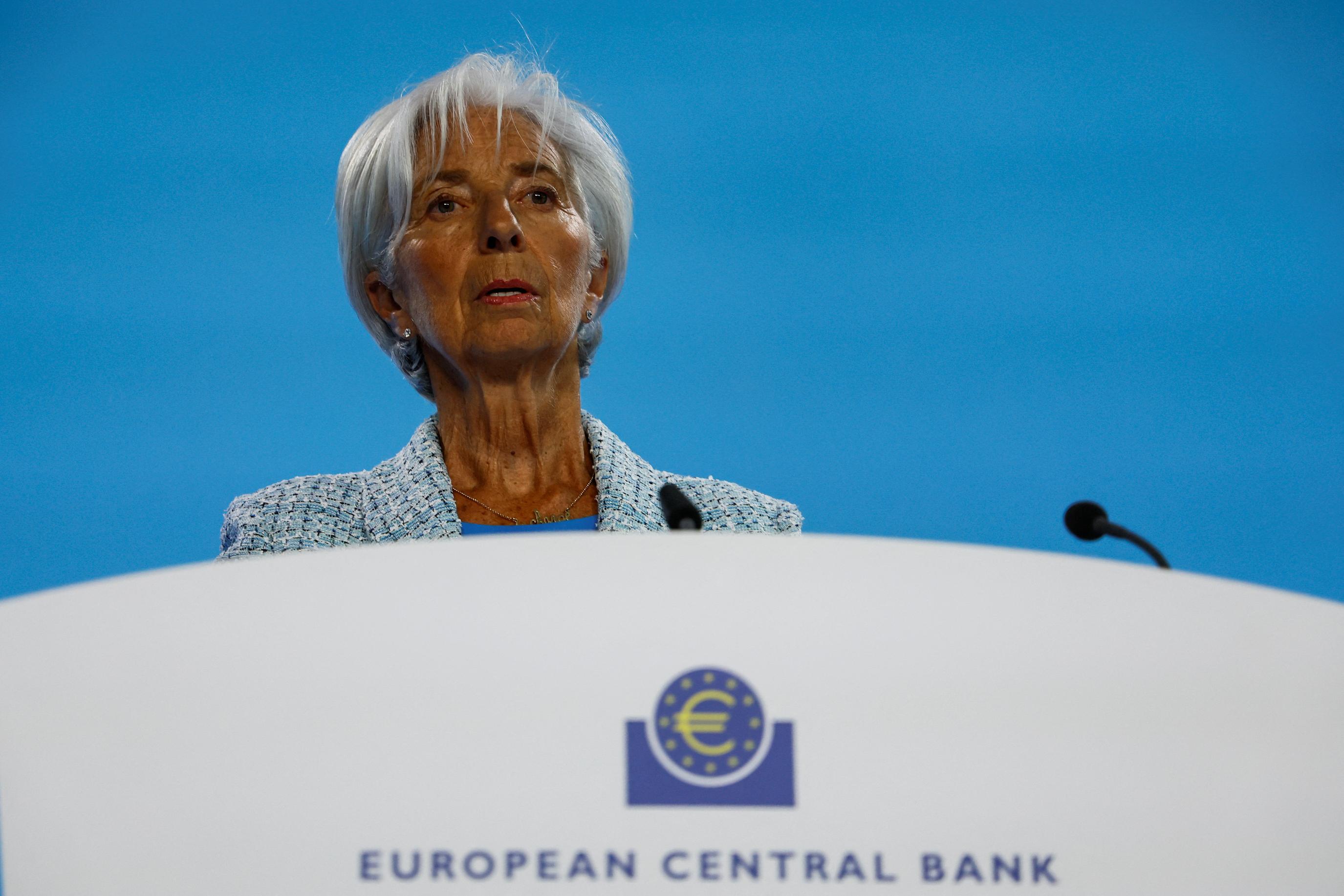
Murky economic outlook divides policymakers Focus on data is easier said than done Long-agreed June cut could backfire FRANKFURT, June 7 (Reuters) - European Central Bank chief Christine Lagarde wore a necklace with the words "in charge" at Thursday's press conference but her guardedness underlined the difficulty of marshalling consensus when the outlook is murky and policymakers divided. The ECB had just gone ahead with its first interest rate cut since 2019 despite higher inflation expectations, partly to keep a pledge that many policymakers had made in public after agreeing it behind closed doors. But the message came with caveats about domestic inflation and wages staying strong, and when Lagarde was asked whether more cuts would follow, she gave an answer that confused some market participants. Her caution illustrates the challenge facing Lagarde as she tries to maintain unity among the ECB's 26 rate-setters - some of whom regretted committing to Thursday's rate cuts several weeks in advance - and communicate their view. "Governing Council members are all over the place, they can't agree on the details so she probably had no alternative," said Erik F. Nielsen, UniCredit's chief economics advisor. The immediate upshot is that the ECB has doubled down on its "data-dependency" mantra: the notion that it will not provide guidance about future policy moves but decide at each meeting based on incoming information. That is easier said than done with around a dozen national central bank governors and board members airing their opinions and preferences on a near-daily basis, as Lagarde acknowledged on Thursday. "I'm sure that you will hear some of my excellent colleagues take their view," Lagarde said. "It (the rate-cutting cycle) will 'take such time', or it will 'move at such speed'. I would caution against any such conclusion." Only hours after the meeting, some policymakers speaking on condition of anonymity said rates would most likely be held steady at the ECB's next meeting in July, with the focus now shifting to September. DEAL OR NO DEAL ECB rate-setters agreed to signal as early as their March 7 meeting that a rate cut was likely this month, part of a deal brokered by Lagarde that brought together doves already clamouring for policy easing with hawks calling for caution. Inflation, after all, had fallen sharply, dropping close to the ECB's 2% target from more than 10% in late 2022 as the economy stabilised after a price squeeze that followed Russia's invasion of Ukraine and the end of the COVID-19 pandemic. But progress has now stalled and rising wages threaten to push up inflation again, making the ECB's rate cut on Thursday harder to defend and putting a question mark over future moves. The U.S. Federal Reserve, facing similar "stickiness" in inflation, has already delayed its rate-cutting plans and strong U.S. jobs growth in May is likely to keep them on ice until September at the earliest. Carsten Brzeski, global head of macro at Dutch bank ING, said the ECB might even have to reverse Thursday's rate cut, just as it did with ill-timed hikes on the eves of the financial crisis in 2008 and sovereign debt crisis in 2011. "There's a risk the ECB could experience a 'reverse Trichet moment'," Brzeski said, referring to the ECB's then-president Jean-Claude Trichet. Lagarde was non-committal when asked if the ECB would continue to dial back its steepest-ever sequence of rate hikes, probably reflecting diverging views on the Governing Council. "Are we today moving into a dialling back phase? I wouldn't volunteer that," she said on Thursday. "Is the dialling back process underway? There's a strong likelihood." Marco Valli, global head of research at UniCredit, said that message was blurred and Arne Petimezas, an analyst at Dutch broker AFS, described it as confusing. "I still don't know if she wanted to suggest that the likelihood of additional cuts is low or high or that the ECB will be on hold for a long time," Petimezas wrote. Sign up here. https://www.reuters.com/markets/europe/lagarde-faces-tough-time-in-charge-ecbs-message-2024-06-07/