2024-04-29 00:04
OSLO, April 29 (Reuters) - Norway's $1.6 trillion sovereign wealth fund, the world's largest, falls short on its climate ambitions by failing to back multiple shareholder proposals pushing oil companies to cut their greenhouse gas emissions, an NGO report said on Monday. The fund pools the Nordic country's state revenues from oil and gas production. Since 2022 its aim is for the 9,000 companies it invests in globally to reach net zero greenhouse gas emissions by 2050, in line with the Paris Agreement. As part of its strategy, the fund's management, Norges Bank Investment Management (NBIM), has set expectations for corporate boards on climate change and votes at annual general meetings on this issue. It says it engages with companies in multiple ways, including via voting on shareholder proposals, and in severe cases can divest from companies if they fail to respond. The fund is failing short, however, on that ambition, according to a report by Norwegian NGO Framtiden i vaare hender (the Future in our Hands), shared with Reuters ahead of its publication on Monday. The report analysed the fund's voting record last year on 16 climate resolutions at nine oil majors, including BP(BP.L) New Tab, opens new tab, Shell(SHEL.L) New Tab, opens new tab, TotalEnergies(TTEF.PA) New Tab, opens new tab, Chevron(CVX.N) New Tab, opens new tab and ExxonMobil (XOM.N) New Tab, opens new tab. It found the fund supported seven such resolutions and backed strategies the group said were "climate harmful" in the remaining nine of those 16 cases. "NBIM has, at times, opposed critical shareholder resolutions on climate during annual general meetings. This misalignment between NBIM's climate engagement strategy and its actual voting behaviour signals a troubling gap in action," said the report. NBIM also voted against all climate resolutions at the annual general meetings of four oil majors - BP, Shell, TotalEnergies and Marathon (MRO.N) New Tab, opens new tab - that have been flagged by CA100+, an investor-led initiative that advocates for the largest emitters to tackle their emissions, as companies that fall short in their efforts to tackle climate change. "NBIM's failure to endorse climate resolutions in line with internationally agreed goals undermines its role as a steward of sustainable finance," said the report. Sign up here. https://www.reuters.com/sustainability/climate-energy/norway-wealth-fund-falls-short-its-climate-ambitions-ngo-says-2024-04-29/

2024-04-29 00:00
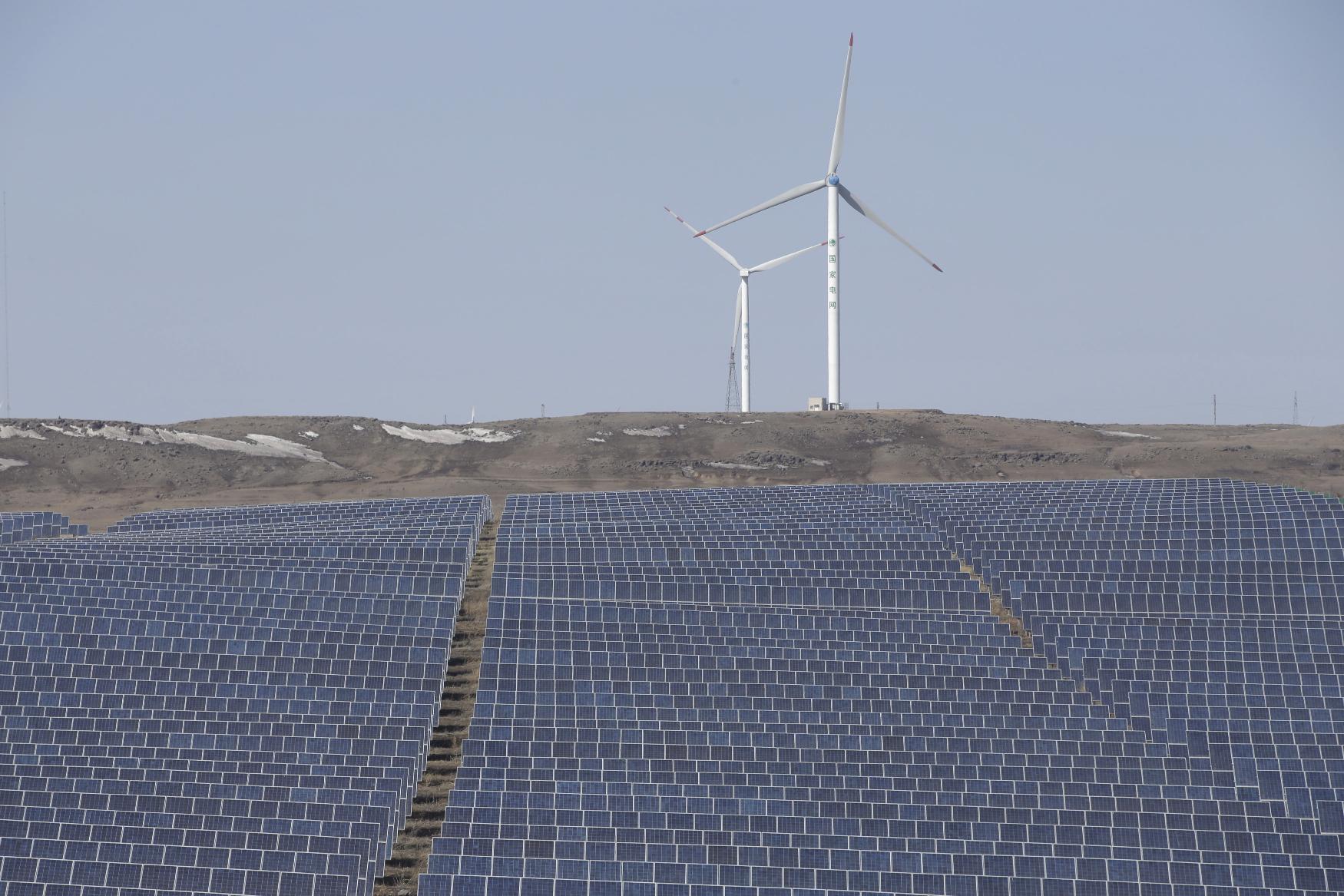
LONDON, April 26 (Reuters) - China's economy has become much less energy intensive over the last 40 years as its industries have modernised and the economy has shifted towards more service sector output. But energy intensity has flatlined for the last five years making it much harder to displace coal by renewables and meet the government's objective of capping total emissions. China converted 1 tonne of standard coal or its equivalent in other forms of energy (including wind and solar generation) into gross domestic product worth 21,000 yuan in 2023. Conversion of energy into economic output was essentially no more efficient than in 2018, after adjusting for inflation, according to estimates prepared by the National Bureau of Statistics (NBS). Energy consumption has roughly tracked economic growth, rather than declining in relation to output as in other major economies. Chartbook: China energy intensity New Tab, opens new tab No other country has been more active than China in deploying huge amounts of wind and solar generation in the last few years. Hydro, wind, solar and nuclear generation supplied 17.5% of total energy consumption in 2022 up from 13.6% in 2017. Most of the gains have come at the expense of coal, which supplied 56% of total energy consumption down from 61% in 2017. But economic output and energy consumption are growing so fast a smaller share has translated into more absolute use. Unless China boosts efficiency, most extra renewables will be used to meet increasing energy requirements rather than replace coal in the next few years. IMPROVEMENT STALLS Before 2018, China achieved large and consistent annual reductions in energy intensity as heavy industries modernised and the economy's composition shifted from energy-intensive manufacturing to less energy-intensive services. The share of energy-intensive primary and secondary industries in total economic output fell to 47% in 2017 down from 57% in 2007 and 65% in 1997. The corresponding share of less energy-intensive services rose to 53% in 2017 from 43% in 2007 and 35% in 1997 (“China Statistical Yearbook New Tab, opens new tab”, NBS, 2023). Some of the improvement in energy efficiency before 2018 was therefore more apparent than real, reflecting a change in the composition of output rather than better equipment and practices. Since 2018, however, there has been no further movement away from manufacturing and towards the services sector. Some of the stagnation likely reflects the impact of the coronavirus epidemic and the movement controls imposed in response. Lockdowns and other social distancing measures hit personal services such as food, travel and entertainment particularly hard. At the same time, the bursting of China's real estate bubble has hit a broad range of services linked to moving home and refurbishing. In response, the government has focused on stimulating manufacturing to offset weakness in other parts of the economy and reduce dependence on imports from the United States and its allies. The result is that the composition of the economy has become more not less energy intensive, offsetting any underlying efficiency improvements. REGAINING MOMENTUM? Some of these changes are likely to prove temporary, especially those associated with the pandemic, while others may be permanent, including the focus on new industries and reducing reliance on imported technology. If the economy resumes its gradual shift towards services, which seems likely as the pandemic effects wane, energy intensity will fall and apparent efficiency will rise again in the next few years. But to the extent the focus on new industries, including electric vehicles, batteries and solar manufacturing, is permanent, there will be a structural increase in intensity and corresponding fall in apparent efficiency. The focus on building new industries, indigenising the supply chain to reduce reliance on imported technology from the United States and its allies and boosting manufacturing exports have all resulted in higher energy consumption and pushed back the timeline for cutting coal consumption and emissions. Related columns: - China’s rising hydro and solar set to cap coal use in 2024 (April 24, 2024) - China's renewables rollout signals future peak in coal (January 19, 2024) - China and India struggle to curb fossil fuels (October 19, 2023) John Kemp is a Reuters market analyst. The views expressed are his own. Follow his commentary on X https://twitter.com/JKempEnergy New Tab, opens new tab Sign up here. https://www.reuters.com/markets/commodities/chinas-transition-hampered-by-flat-lining-energy-intensity-2024-04-26/
2024-04-28 21:47
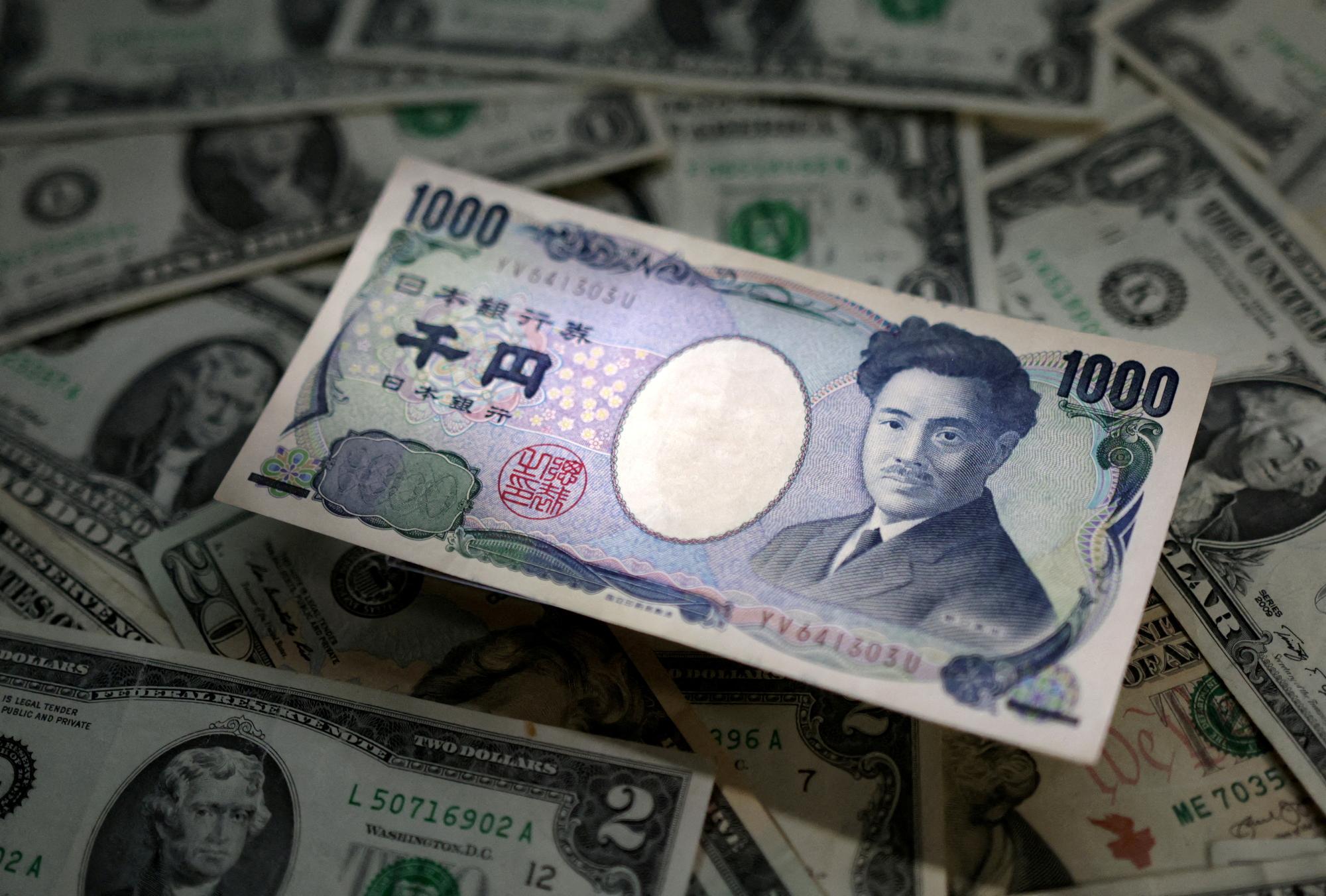
April 29 (Reuters) - A look at the day ahead in Asian markets. Asian stocks should open on Monday buoyed by Friday's tech-led surge on Wall Street, while investors will be scrambling to make sense of the latest twist in the Japanese yen's extraordinary helter-skelter slide against the dollar and other currencies. The yen fell to a fresh 34-year low of 157.79 per dollar on Friday after the Bank of Japan left interest rates on hold, as expected, but failed to signal any meaningful concern about the exchange rate. With the Ministry of Finance still opting not to authorize yen-buying intervention by the BOJ, traders went in full steam. Levels that until recently had been unthinkable, like 160 per dollar or even 170, are no longer so fanciful. Most observers would probably have expected Tokyo to act by now. It last intervened in September and October 2022 when the dollar was around 146.00 and 152.00 yen, respectively. But it hasn't, and there are good reasons for that: contrasting U.S. and Japanese inflation data, yawning U.S.-Japanese yield differentials, and the benefits of weak yen to Japan's asset markets, corporate profits, tourism and all-round competitiveness. On the other hand, speculators are licking their lips. The latest U.S. futures market data on Friday showed that hedge funds are sitting on their largest short yen position in 17 years and second largest ever. These CFTC figures are for the week through last Tuesday, and the yen has fallen another 2% since then. Japanese officials have expressed their disquiet with the yen's weakness, but the longer that talk is not backed up with action, the more hollow it rings. Will traders have 160.00 dollar/yen in their sights this week? You would think so. Other countries in Asia are becoming increasingly uncomfortable with exchange rate developments - Indonesia has raised rates to counter the rupiah's weakness, Vietnam and India have intervened directly in the FX market buying their currencies, and South Korea has indicated it will follow suit. Looking to the week ahead, the U.S. Federal Reserve's policy decision on Wednesday may tempt FX and other markets to play it safe for the next few days. Stocks appear to have shaken off the wobbles after post-earnings rallies in Alphabet and Tesla shares, in particular, boosted a broader recovery on Wall Street. The S&P 500 has recouped half its losses from earlier this month, the Nasdaq and MSCI Asia ex-Japan even more. Highlights from the Asian economic calendar this week include Chinese PMIs, Bank of Korea meeting minutes, inflation from South Korea and Indonesia, and Hong Kong GDP. Figures on Saturday from Beijing, meanwhile, showed that industrial profits in China fell 3.5% in March, slowing the cumulative rise in the quarter to 4.3% from 10.2% in the first two months of the year. Also in China, Tesla CEO Elon Musk on Sunday arrived on an unannounced visit in Beijing, where he met Premier Li Qiang. Here are key developments that could provide more direction to markets on Monday: - Thailand trade (March) - Singapore unemployment (Q1) - Singapore business expectations (Q1) Sign up here. https://www.reuters.com/markets/asia/global-markets-view-asia-graphic-pix-2024-04-28/
2024-04-28 20:56
ABUJA, April 28 (Reuters) - Nigeria secured a $600 million investment in seaport infrastructure from Danish shipping company A.P. Moller-Maersk (MAERSKb.CO) New Tab, opens new tab, the presidency said in a statement on Sunday. The investment was secured during a meeting between President Bola Tinubu and Moller-Maersk Chairman Robert Maersk Uggla on the sidelines of a World Economic Forum meeting in Saudi Arabia. "We believe in Nigeria, and we will invest $600 million in existing facilities and make the ports accommodating for bigger ships," the Nigerian presidency quoted Uggla as saying during the meeting. Nigeria has promised to revamp its ports, including in the commercial capital Lagos, to ease congestion that frustrates businesses. Tinubu said during the meeting that his government would support the modernisation and automation of its ports to improve trade, reduce corruption and boost efficiency. "A bet on Nigeria is a winning bet. It is also a bet that rewards beyond what is obtainable elsewhere," he said. "We need to encourage more opportunities for revenue expansion and minimize trans-shipments from larger ships to smaller ships." Sign up here. https://www.reuters.com/world/africa/nigeria-secures-600-million-maersk-investment-seaport-infrastructure-2024-04-28/

2024-04-28 20:44
April 28 (Reuters) - At least four people died, including a four-month-old baby, and scores were injured in Oklahoma this weekend after dozens of twisters swept the U.S. Southern Plains, while weather alerts on Sunday put more than 7 million Americans under tornado warnings. Oklahoma Governor Kevin Stitt on Sunday declared a disaster emergency for the state, freeing up more money for first responders and recovery operations. "Definitely the most damage since I've been governor," Stitt said in Sulphur, one of the hardest-hit communities, on Sunday afternoon as he provided an update on fatalities and damage. Stitt began his first term as governor in 2019. The Federal Emergency Management Agency had offered the assistance of the federal government, Stitt added. Storm warnings for high winds, heavy rain and hail also were issued by the National Weather Service on Sunday for more than 47 million people stretching from East Texas north through Illinois and Wisconsin. The NWS reported 38 possible twisters hit the area and that the worst of the storms rolled through Central Oklahoma on Saturday into early Sunday morning, spreading into northwest Texas, western Missouri and Kansas. Earlier on Sunday, the Oklahoma Department of Emergency Management reported more than 30 people injured by tornadoes, which destroyed or damaged dozens of homes. The agency said it would not complete damage assessments until storms have fully cleared the area. More than 20,000 customers in Oklahoma were without power as of Sunday afternoon, according to poweroutage.us. Sign up here. https://www.reuters.com/world/us/three-dead-after-dozens-tornadoes-strike-oklahoma-scores-injured-2024-04-28/

2024-04-28 16:51
BAGHDAD, April 28 (Reuters) - TotalEnergies (TTEF.PA) New Tab, opens new tab aims to complete the first phases of a solar power project and an associated gas project in 2025, the Iraqi prime minister's office said in a statement, citing the company's chief executive Patrick Pouyanne. The first phase of the gas project in southern Iraq is expected to initially produce 50 million cubic feet a day (mcf/d) within the next year, the prime minister's office said. Iraq seeks to produce much-needed natural gas for power stations and cut imports that put a burden the country's budget. The OPEC producer currently relies heavily on Iranian gas imports to feed its power grid. Last year, Iraq and French oil major TotalEnergies signed a $27 billion energy deal aimed at increasing oil production and boosting the country's capacity to produce energy with four oil, gas and renewables projects. Besides raising production at the Ratawi southern oilfield, the deal consists of a 1 GW solar power plant, a 600 mcf/d gas processing facility, and a sea water supply project key to boosting Iraq's southern oil production. Iraq flares much of its own gas, extracted alongside crude oil at its fields, because it lacks the facilities to process it into fuel and instead uses Iranian power imports to generate electricity. Sign up here. https://www.reuters.com/business/energy/totalenergies-eyes-completion-first-phase-solar-gas-projects-2025-says-iraq-2024-04-28/