2023-11-24 12:00
MOSCOW, Nov 24 (Reuters) - Chinese car sales in Russia appear to have peaked as domestic production recovers after the exodus of Western automakers, data shared with Reuters showed, but recent growth in the market may stall as high import costs and interest rates begin to bite. The figures are early indicators that Russia's car market, and China's role in it, have stabilised after nearly two years of upheaval caused by sanctions placed on Moscow and Western companies' sudden exit in the wake of the invasion of Ukraine. But the sector, which saw an almost 60% slump in sales in 2022 and production sink to a post-Soviet low, is still a long way from its pre-invasion levels. Sales and output in 2023 are set to be among the lowest in the last 10 years. Prior to the February 2022 invasion, Chinese cars accounted for less than 10% of the Russian market. In August this year, Chinese brands' share of sales peaked at almost 56%, data from analytical agency Autostat and its partner consulting company PPK showed. That percentage has now levelled off, with Chinese brands selling around 60,000 units each month since August, corresponding to a 53% share in September. Sales include imported vehicles and those made inside Russia. Chinese carmakers such as Haval (601633.SS), Chery and Geely (0175.HK) are capitalising on the departure of Western players that used to dominate the market before the invasion of Ukraine, showing Moscow's increasing dependence on Beijing and growing economic ties with China as the West shuns Russia over the war. Russia has jumped from 11th place to become China's largest export market for cars, reaching a value of $9.4 billion in January-October, Chinese customs data showed. In the same period of last year, car exports to Russia amounted to $1.1 billion. Overall, monthly car sales in Russia are now more than double what they were a year ago, Autostat data showed, while separate data from federal statistics service Rosstat showed car production was nearly three times higher in September year-on-year, underlining the sector's partial recovery. Chinese carmakers were crucial in that process, but with demand now largely satisfied there is a ceiling for their further expansion in the sector, Autostat Executive Director Sergei Udalov told Reuters. "The market has reached a state of equilibrium - the main Chinese brands have come to Russia and (pent-up) demand is satisfied," Udalov said. Russia's leading carmaker Avtovaz, which produces the most popular Lada cars, is catering to demand for cheap cars, while Chinese brands are filling the gap left by Western producers for more expensive vehicles, Udalov added. That trend could change should either Avtovaz or Chinese carmakers seek to dip their toes into different pricing categories, Udalov said, but for now, despite depressed sales and production, the market's prospects for growth are slim. 'UNSTABLE, SHAKY' MARKET Sanctions against Russia contributed to lower car production and sales most notably in 2022, but also after Moscow annexed the Crimean peninsula from Ukraine in 2014. Sales have not topped 2 million vehicles since 2014 and production has been lower, too. Just over 626,000 new cars were sold in Russia in 2022 and almost 830,000 were sold in January-October this year. A modest recovery is underway from 2022's lows, but the loss of Western technology and expertise is hurting the sector, analysts say, even as Chinese carmakers bed in at some of the factories vacated by their Western counterparts. In the first three quarters of 2023, Russia produced only a few thousands more cars than in the same period of last year, Rosstat's data showed, but the figures are now trending upwards. "The growth of pent-up demand that started in late spring and lasted through August started to run out of steam in September," said economist Natalia Zubarevich, a professor at Moscow State University. Wages have been rising, partly due to above-target inflation, but four interest rate hikes since July to 15% mean that although people have more money, credit is far more expensive. "The (key) rate should have a depressing effect (on car loans), and this should reveal itself in October and November," Zubarevich said. Meanwhile, the rouble's slide to 100 against the dollar this year has made imports more expensive, depressing purchases of Chinese cars. It has since recovered to around 90. The central bank this month said a ban on imports of some Japanese cars, combined with rouble weakening, was pushing up prices of foreign cars. Avtovaz last week lowered its 2023 production forecast of 400,000 Lada cars by up to 10% in response to U.S. sanctions on Russian industry in September, which specifically targeted Avtovaz. "The market is in a highly unstable, shaky state," said Zubarevich. https://www.reuters.com/business/autos-transportation/chinese-car-sales-boom-russia-levels-off-amid-shaky-local-recovery-2023-11-24/

2023-11-24 11:46
FRANKFURT, Nov 24 (Reuters) - No one is a prophet in their own land, including European Central Bank President Christine Lagarde, who admitted on Friday that her son lost "almost all" of his investments in crypto assets, despite copious warnings. Lagarde has long railed against cryptocurrencies, calling them speculative, worthless and a tool often used by criminals for illicit activity. "He ignored me royally, which is his privilege," Lagarde told a town hall with students in Frankfurt. "And he lost almost all the money that he had invested." "It wasn't a lot but he lost it all, he lost about 60% of it," Lagarde added. "So when I then had another talk with him about it, he reluctantly accepted that I was right." The ECB chief has two sons in their mid-30s but did not say which one she was referring to. The ECB has called for global regulation of crypto assets both to protect consumers who are unaware of the risk and to close a loophole that can be used to channel funding to terrorists or lets criminals launder cash. Worries that privately issued currencies could displace government money were among the reasons the ECB launched its own digital euro project, but the bank is still years away from issuing any digital money. Last month the bank started the "preparation phase" for the digital euro but said it would need another two years before it was in a position to decide whether to roll it out or not. "I have, as you can tell, a very low opinion of cryptos," Lagarde said. "People are free to invest their money where they want, people are free to speculate as much as they want, (but) people should not be free to participate in criminally sanctioned trade and businesses." https://www.reuters.com/technology/ecb-chief-lagarde-admits-her-son-lost-crypto-cash-2023-11-24/
2023-11-24 11:17
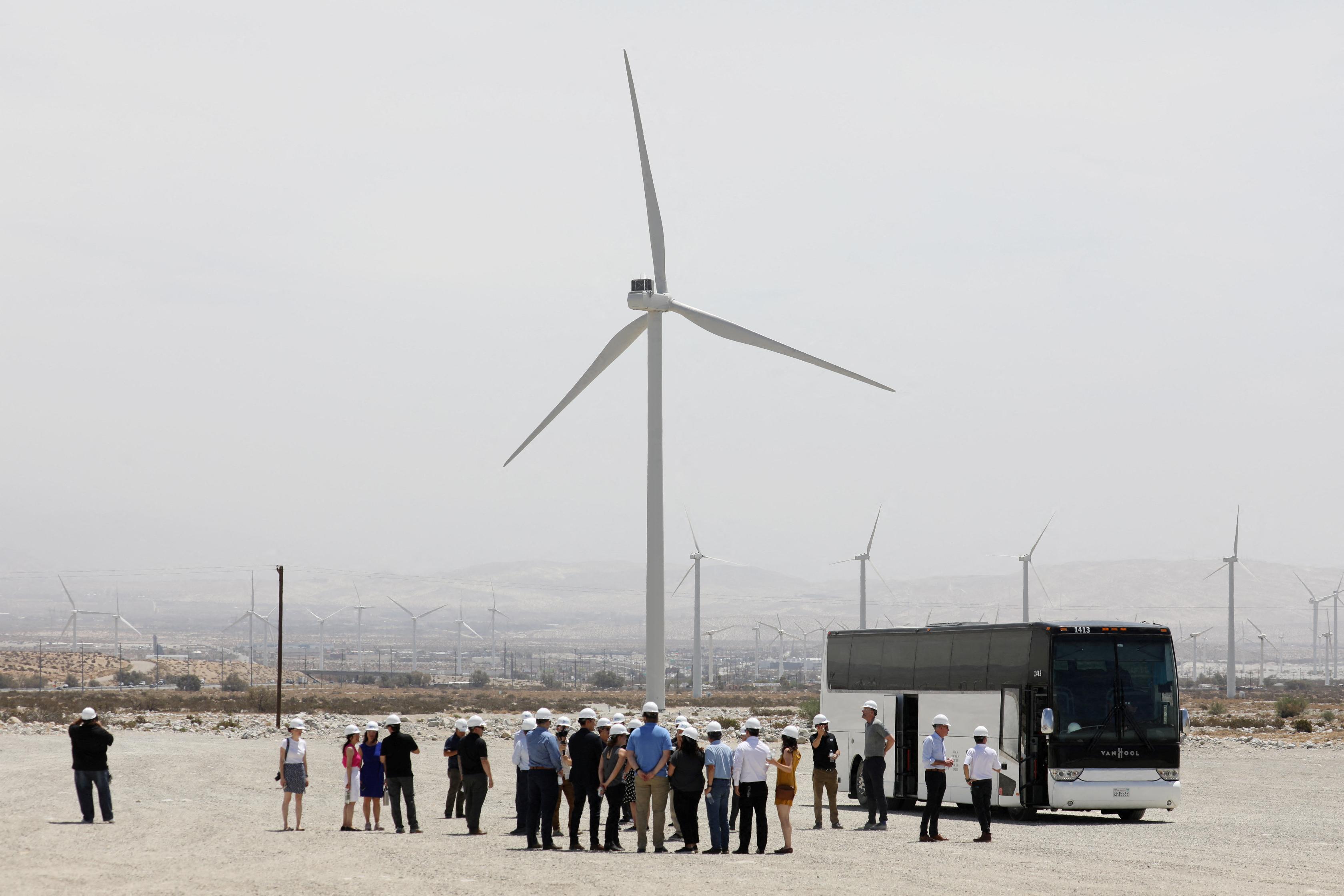
Nov 24 (Reuters) - Canceled offshore wind projects, imperiled solar factories, fading demand for electric vehicles. A year after passage of the largest climate change legislation in U.S. history, meant to touch off a boom in American clean energy development, economic realities are fraying President Joe Biden’s agenda. Soaring financing and materials costs, unreliable supply chains, delayed rulemaking in Washington and sluggish permitting have wrought havoc ranging from offshore wind developer Orsted’s (ORSTED.CO) project cancellations in the U.S. Northeast, to Tesla, Ford and GM’s scaled back EV manufacturing plans. The darkening outlook for clean energy industries is tough news for Biden, whose pledge to deliver a net-zero economy by 2050 faces headwinds that the landmark Inflation Reduction Act's billions in tax credits alone can't resolve. After walking into last year’s United Nations climate summit in Egypt touting the IRA as evidence of unprecedented progress in the fight against climate change, Biden is expected to skip this year’s event in Dubai amid dire warnings that the world is moving too slowly to avert the worst of global warming. Clean energy experts interviewed by Reuters say the mounting setbacks will make the United States' ambitious targets to decarbonize by mid-century even harder to reach. "While we see healthy numbers being deployed each and every quarter and we're continuing to be on a growth path, it's certainly not at the level that is required to hit some of those targets," said John Hensley, vice president for the clean energy trade group American Clean Power Association (ACP). The dynamics of soaring costs and broken supply chains are also slamming projects in other regions. No major nation is on track to meet the emissions reduction goals outlined in the United Nations' Paris accord, which aims to limit global warming to 1.5 degrees Celsius, according to Wood Mackenzie. A White House official said that while there have been macroeconomic setbacks and bottlenecks at the local level to renewable energy deployment, there are plenty of examples of progress, including an expanding EV market and Dominion Energy Inc (D.N) making headway on the nation’s largest offshore wind farm off the coast of Virginia. “In the face of headwinds that are macro in nature, headwinds that affect decision making across the economy, this has been a resilient trajectory," White House National Climate Advisor Ali Zaidi said in an interview. He said the United States will achieve it's climate goals. TEN MILLION HOMES More than 56 gigawatts of clean power projects, enough to power nearly 10 million homes, have been delayed since late 2021, according to an ACP analysis. Solar energy facilities account for two thirds of those delays due in part to U.S. import restrictions. Washington has been trying to combat the use of forced labor and tariff-dodging in a panel supply chain that is dominated by Chinese goods. Issues like permitting gridlock, local fights over where to site solar and wind projects and a grid connection process that can take an average of five years are also routinely cited by developers as among the industry's biggest challenges. "In a number of areas investment has increased," Prakash Sharma, vice president of scenarios and technologies at Wood Mackenzie said in an interview. "But then when it comes to some of those permitting and approvals that are required to push projects forward, or infrastructure development, that's an issue which IRA cannot solve." Tight supplies and strong demand for renewables from utilities and corporations have also driven up contract prices, which could mean higher costs for consumers. Solar contract prices rose 4% to hit $50/MWh for the first time ever in the third quarter, according to tracking firm LevelTen. Vic Abate, Chief Executive of GE Vernova's wind business, said progress is happening more slowly than some had anticipated, but was not fundamentally off course. "I'm not betting against the IRA," he said in an interview. "This is more of a question of when. If last year people were thinking '23 to '24, it's probably more '24 to '25." The IRA aims to shore up the U.S. clean energy supply chain by incentivizing domestic production of equipment like solar panels and wind turbines, but recently manufacturers have warned that a wave of new Asian capacity is threatening the viability of dozens of planned American factories. Turmoil in the nascent U.S. offshore wind industry, meanwhile, is perhaps the most high profile setback. Developers like Orsted, BP and Equinor have sought to renegotiate or cancel contracts due to soaring costs, and have taken multi-billion dollar writedowns on projects. Players also largely failed to show up for a federal sale of wind leases in the Gulf of Mexico in August. The Biden administration's target of deploying 30 gigawatts of offshore wind by 2030 is now widely regarded as unattainable. Meanwhile, some corporations are delaying investment decisions while awaiting the Treasury Department to craft rules on how the IRA's tax credits can be used. Robert Walther, director of federal affairs at ethanol maker POET, for example, says his company is waiting on the design of tax credits for sustainable aviation fuel under the IRA, to see whether the corn-based fuel can qualify as a feedstock. "We're not pulling the trigger on anything until we know what the value of these tax credits are," Walther said. Still, the U.S. can be proud of how it is tackling climate change, particularly when compared with the Trump administration's relatively recent efforts to roll back policies that protect the climate, according to Dan Reicher, a scholar at Stanford University. "These are the normal ups and downs of clean energy development and deployment," Reicher said. "I think we can go to COP with our chin held high that we're making some real progress." https://www.reuters.com/sustainability/sustainable-finance-reporting/bidens-clean-energy-agenda-faces-mounting-headwinds-2023-11-24/
2023-11-24 11:13
TORONTO, Nov 24 (Reuters) - The Bank of Canada's warning that borrowing costs are likely to stay higher-for-longer has prompted anxious mortgage owners to turn to fixed-rate loans in the hope they will bring more stability to their finances after a choppy few years. With the Canadian economy showing signs of a slowdown, money markets are pricing in the first interest rate cuts since March 2020 as soon as April, which would bring down mortgage costs. Still, more home buyers took out fixed-rate mortgages in September compared with a year ago, eschewing variable rate mortgages where the interest rate varies based on current market rates. Fixed-rate loans also offer among the lowest rates available now. The trend is being driven by homeowners preferring stability in monthly expenses rather than betting on lower rates ahead that might lower payments, after being stung by a prediction by the Bank of Canada in the early days of the COVID-19 pandemic that backfired on them. "If you've got a mortgage or if you're considering making a major purchase... you can be confident rates will be low for a long time," Bank of Canada Governor Tiff Macklem said in July 2020 after slashing interest rates to a record low, helping prompt a housing boom that led to Canadians racking up mortgage debt over the subsequent two years. Since then, the central bank has raised the key interest rate to a 22-year high of 5% in July. Now with more than C$900 billion ($656.07 billion), or 60%, of residential mortgages at Canada's big banks likely to be renewed in the next three years, homeowners are having to choose between fixed or variable rate loans. "It is tricky," said Sophie Tremblay, an aviation professional from Montreal. "You don't know what is the best decision to make and right now the banks are fully pushing us to go into a fixed and lock that instead." She said she is already thinking about her mortgage renewal even though it is three years away, given her current payments barely cover interest on her five-year variable mortgage. Roughly half of new mortgages in early 2022 were variable-rate ones, but that number dropped to just 6% in August 2023, according Canada's housing agency. The share of fixed rate loans among five-year and three-year mortgages rose to 68% in August compared with 32% a year ago. In the first three weeks of November, 79% of mortgage seekers in Canada opted for a fixed mortgage, said Hanif Bayat, CEO of financial data firm Wowa Leads. Borrowers have turned cautious after recent rate predictions turned out wrong, but loans based on variable rates may still be popular in the next couple of years as markets gear up for rate cuts in the next two years, he said. NEW ERA National Bank analysts wrote in a research note this month that acceptance of rates staying 'higher-for-longer' might lead some to lock in rates and avoid as much uncertainty as possible. "BoC officials are helping to ingrain this, telling Canadians to brace for an era of higher borrowing costs," the note added. More recently, BoC Deputy Governor Carolyn Rogers this month said Canadians should plan for higher rates, warning rates might not return to low levels seen in the pre-pandemic era as geopolitical risks such as the conflict in the Middle East have added more uncertainty to the global economy. Asked about families making decisions based on Macklem's 2020 comments that rates would stay low for a long time, the BoC pointed to Rogers' comments in November that decisions at the time were made to "support an economy that had effectively been shutdown" and that "two years was a long time for interest rates to be at the level they were." Banks could be looking to lock in customers at a fixed rate as bond yields retreat from their peak, ultimately boosting profitability for the big banks as rates continue to normalize in the coming years, said Ryan Sims, a mortgage agent at TMG The Mortgage Group Inc. Most homeowners in Canada renew their mortgages every three to five years. William Coyle was among a large number of Canadians who bought a house last year, selling his smaller house in the Niagara area for one in Huntsville, a picturesque town north of Toronto. But Coyle's mortgage payments have since shot up 40% and he said he is sometimes forced to dip into his savings. "This level of uncertainty, where we're going and the Bank of Canada's inability to provide accurate information is scaring a lot of buyers," he said. ($1 = 1.3718 Canadian dollars) https://www.reuters.com/world/americas/canadian-homeowners-eye-fixed-rate-loans-higher-for-longer-era-2023-11-24/

2023-11-24 11:13
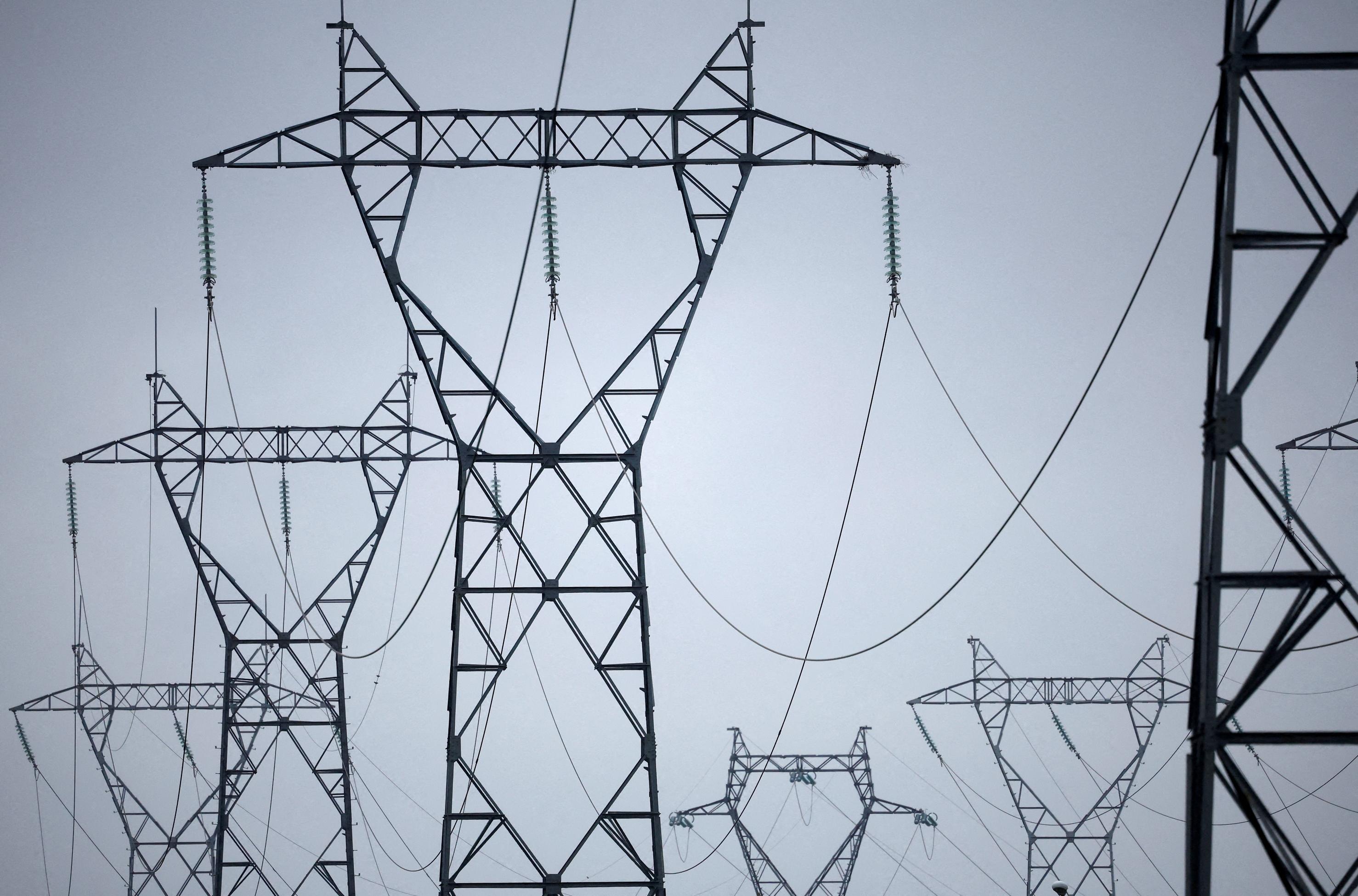
BRUSSELS, Nov 24 (Reuters) - The European Commission has drafted plans to scale up investment in Europe's power grids, including dozens of projects earmarked for priority access to permits and EU funding, a draft document seen by Reuters showed. Europe will need to invest 584 billion euros ($637 billion)to upgrade its power grids this decade, according to European Union estimates. Many grids are decades old and need to be adapted from the traditional model of large, fossil fuel power plants to wind and solar power generation. To kick-start grid investments, the Commission will propose a plan next week. A draft seen by Reuters said that Brussels will grant "projects of common interest" status to 68 electricity projects, granting them access to faster permits and certain EU funds. A dozen of the projects are for energy storage. "Grids need to adapt to a more decentralised, digitalised and flexible electricity system with millions of rooftop solar panels and local energy communities sharing resources," the draft said. A Commission spokesperson declined to comment on the draft document, which could be amended before it is published. Brussels will also work with investors, regulators and credit agencies to make it easier for grid projects to secure loans, equity and guarantees while also exploring new financing instruments with the European Investment Bank. Europe's electricity industry has warned that power grids are becoming a bottleneck to clean energy provision because grids are not being upgraded fast enough to cope with all the renewable energy projects waiting to plug into the network. The EU and power network regulators will also develop various recommendations and guidelines for the Europe-wide overhaul, the Commission document said, such as guidelines on the types of grid investments that should be approved. The draft document was previously reported by Bloomberg News. ($1 = 0.9168 euros) https://www.reuters.com/business/energy/eu-plans-boost-power-grid-investment-2023-11-24/
2023-11-24 11:11
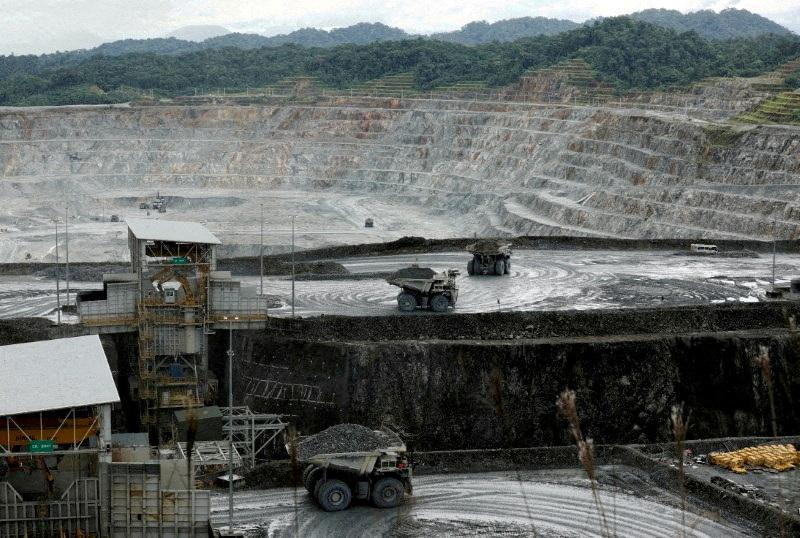
Nov 24 (Reuters) - Panama's top court is expected to start deliberations on Friday to rule on several constitutional challenges to First Quantum Minerals' (FM.TO) contract for the Cobre Panama mine, an outcome keenly watched by the global copper market and investors. First Quantum has faced massive protests since the Panama government signed a new contract for the Cobre Panama mine on Oct. 20, amid allegations of corruption and lack of transparency in the negotiations. The company has denied any wrongdoing. Cobre Panama is one of the world's biggest and newest copper mines, producing about 1% of global copper supply. A majority of lawyers surveyed by Reuters this month said the Supreme Court is likely to rule against the company, citing a precedent. The court has not given a timeline to release the verdict, but some lawyers and officials expect a decision in the coming days or weeks. A ruling against First Quantum will have huge implications. The uncertainty has already wiped about C$10 billion ($7.3 billion), or 50% of its market value, in about a month, impacted copper prices and could be a blow to the Central American nation as the mine accounts for about 5% of its GDP. China's Jiangxi Copper Co (600362.SS) is First Quantum's biggest shareholder. The demonstrations have turned into an anti-government movement, with protesters demanding an end to all mining activity in the country. The movement has also gained support from Hollywood actor Leonardo Di Caprio, who last weekend shared a video from an environmental group that called for the Supreme Court to cancel the contract. On Thursday, First Quantum said the mine is not operating at commercial levels, following blockades by protesters at a key port that have prevented the miner from receiving shipments of coal that power the site and other supplies. The contested contract provides First Quantum a 20-year mining right with an option to extend for another 20 years, in return for $375 million in annual revenue to Panama. If the court deems the contract unconstitutional, Panama would be in a tricky spot, lawyers said, as the government on Nov. 3 signed a bill banning all new mining concessions and extensions. That would prevent the two parties from negotiating a new deal. The contract was inherited by First Quantum in 2013 after it became the operator of the mine. However, Panama's top court in 2017 deemed unconstitutional the law under which First Quantum was operating the mine. The ruling was upheld in 2021, resulting in last month's fresh deal with the government. ($1 = 1.3718 Canadian dollars) https://www.reuters.com/markets/commodities/panamas-top-court-weighs-challenges-first-quantum-copper-mine-contract-2023-11-24/