2023-11-20 06:40
OSLO, Nov 20 (Reuters) - Fertiliser maker Yara (YAR.OL) said on Monday it has signed a binding agreement to capture CO2 emissions from its Dutch ammonia plant and transport it to the Norwegian North Sea for storage deep beneath the seabed. The carbon capture and storage project (CCS) will cut annual emissions of CO2 by 800,000 tonnes over a 15 year period, the Norwegian company said in a statement. When operation begins in 2025, it is expected to become the first time that CO2 from one nation is transported across borders for storage by another, Yara said. The CO2 will be liquefied and shipped by Northern Lights, a company owned by Equinor (EQNR.OL), TotalEnergies (TTEF.PA) and Shell (SHEL.L), from the Sluiskil plant to permanent storage on Norway's continental shelf, 2.6 km (1.6 miles) under the seabed. "This is a milestone for decarbonising hard-to-abate industry in Europe and for Yara it's an important step towards decarbonising our ammonia production, product lines and the food value chain at large," Yara CEO Svein Tore Holsether said. https://www.reuters.com/markets/commodities/yara-store-co2-dutch-plant-under-norway-seabed-2023-11-20/
2023-11-20 06:24
US dollar down to lowest since early September Fed minutes, European PMIs, Nvidia results out this week Japanese equities touch highs since 1990s NEW YORK/SYDNEY, Nov 20 (Reuters) - The U.S. dollar dropped to its lowest in more than two months on Monday on expectations that U.S. interest rates have peaked, while Wall Street's three major stock indexes closed at multi-month highs. Global equities were broadly higher, U.S. treasury yields headed lower after auction and global oil futures gained $2 on the prospect of supply cuts. The MSCI World Equity Index (.MIWD00000PUS) gained 0.71%. Europe's benchmark STOXX index (.STOXX) inched up 0.1%, with energy stocks (.SXEP) leading gains. The healthcare sector (.SXDP) fell after shares in Bayer (BAYGn.DE) dropped to their lowest in 14 years. On Wall Street, the Nasdaq saw its highest close since July 31 while the S&P 500 registered its highest closing level since Aug. 1. The tech-heavy Nasdaq (.IXIC) led gains as shares of Microsoft (MSFT.O) hit record highs. The Dow Jones Industrial Average (.DJI) rose 203.76 points, or 0.58%, to 35,151.04, the S&P 500 (.SPX) gained 33.36 points, or 0.74%, to 4,547.38 and the Nasdaq Composite (.IXIC) added 159.05 points, or 1.13%, to 14,284.53. The dollar index fell 0.42% and touched its weakest since the start of September, as investors appeared to solidify bets that the Fed could start cutting interest rates next year. Japanese shares hit highs not seen since 1990, thanks to strong earnings and offshore demand that fueled a three-week winning streak. The Nikkei (.N225) ran into profit taking but was still up 8.2% for the month so far with the Topix (.TOPX) not far behind. Trading was expected to be muted for much of the week ahead of Thursday's U.S. Thanksgiving holiday. Black Friday sales will test the pulse of the consumer-driven U.S. economy this week. "The historical pattern over the last five years suggests the shortened holiday week typically enjoys modest gains," said Quincy Krosby, chief global strategist for LPL Financial. "With concerns over the resiliency of consumer spending, however, the market can be affected by any indication that Black Friday doesn't witness the throngs of consumers out hunting for bargains, or indications that the start to Cyber Monday won't result in the billions of dollars that are spent online," Krosby added. Minutes of the Fed's last meeting will offer some color on policy makers' thinking as they held rates steady for a second time. "Dovish minutes could trigger some downside risk for the dollar," Ricardo Evangelista, senior analyst at ActivTrades, said. Signs of progress in the battle against inflation in the United States have driven a recovery in stocks this year as investors hope for an end to the cycle of rate hikes that have been policymakers' main tool for fighting price increases on goods. "We expect the mega-cap tech stocks will continue to outperform given their superior expected sales growth, margins, re-investment ratios, and balance sheet strength," Goldman Sachs analysts said in a note. "But the risk/reward profile is not especially compelling given elevated expectations." Tech major Nvidia (NVDA.O) reports quarterly results on Tuesday, and all eyes will be on the state of demand for its AI-related products. A LOT PRICED IN Markets have all but priced out the risk of a further U.S. rate hike in December or next year. Solid bidding in the $16 billion sale of 20-year Treasury bonds indicated expectations remain that inflation will decelerate and the Fed will cut interest rates around June next year. There was relief in Europe for some battered sovereign names, as the risk premia investors ask to hold Italian and Portuguese debt fell after ratings agency Moody's upgraded its view of the two countries. It upgraded the outlook for Italy from negative to stable, and pushed Portugal's long-term issuer rating up two notches to A3 from Baa2, narrowing the spreads on both bonds relative to the region's benchmark German 10-year bonds. Closely watched surveys of European manufacturing are due this week. Any hint of weakness will encourage more wagers on early rate cuts from the European Central Bank. "These surveys will be very important around the euro area services sector given the sharp deterioration seen recently," NAB analysts said. Markets imply around a 70% chance of an easing as soon as April, even though many ECB officials are still talking of the need to keep policy tight. Sweden's central bank meets this week and may hike again, given high inflation and the weakness of its currency. In commodities, oil rose amid speculation OPEC+ will extend, or increase, its production cuts at a meeting on Nov. 26. Brent crude settled up 2.1%, at $82.32 a barrel, as U.S. crude finished at $77.60, up 2.3%. Gold futures settled down 0.22% at $1,980.30 an ounce. https://www.reuters.com/markets/global-markets-wrapup-1-2023-11-20/
2023-11-20 06:23
MADRID, Nov 20 (Reuters) - In Spain, the world's biggest olive oil producer, supermarkets are locking up bottles of the staple cooking oil as prices surge and theft increases. One-litre bottles of extra-virgin olive oil are selling for as much as 14.5 euros ($15.77) in some supermarkets, propelling olive oil into the category of products retailers fit with security tags, alongside spirits, cosmetics and appliances. "We are seeing a major surge in shoplifting," said Ruben Navarro, the CEO of Tu Super supermarket chain, which operates 30 stores in Spain's Andalucia region. "Olive oil has become an ideal product for them to steal." Olive oil prices, now officially at 8 euros a litre, have surged by 150% over the past two years in Spain as a scorching drought in the south has dented the olive harvest. Organised criminal gangs are stealing the oil to resell, Navarro said. Since September, Tu Super has been chaining large 5-litre bottles of olive oil together and padlocking them to shelves to prevent theft. "It is a crazy, extreme measure, but it has worked," Navarro said. Tu Super is not the only one tightening security: in some Carrefour and Auchan supermarkets in Madrid, one-litre bottles are fitted with security tags that have to be removed by staff. STC, a Spanish company providing anti-theft solutions to retailers, saw a 12-fold increase in orders this summer from supermarkets for devices to protect olive oil bottles, managing partner Salvador Canones told Reuters. Spanish police have also uncovered thefts of olive oil from mills and in October arrested two people as part of an investigation into the theft of 56 tonnes of extra virgin olive oil. Families in Spain typically buy olive oil in bulk for cooking. Among the world's biggest consumers of olive oil, they have already significantly cut back: sales volumes of extra-virgin olive oil fell by 17% in the 12 months to September, according to NielsenIQ. While thefts of olives and oil have increased especially, the measures by supermarkets also reflect a broader shoplifting surge. Spain's top business organisation, CEOE, said there was a 30% increase in repeated thefts targeting retailers in 2022, and a further 12% so far in 2023. In Spain, thefts of items worth less than 400 euros are not punished unless it is a repeat offence. Navarro said thieves are taking advantage of lower numbers of staff in stores and shoplifters' often abusive behaviour towards workers is exacerbating the labour shortage. "Our own workers live in fear after the robberies... some of them even end up resigning from their jobs," he said. ($1 = 0.9195 euros) https://www.reuters.com/business/retail-consumer/spanish-supermarkets-lock-up-olive-oil-shoplifting-surges-2023-11-20/

2023-11-20 06:21
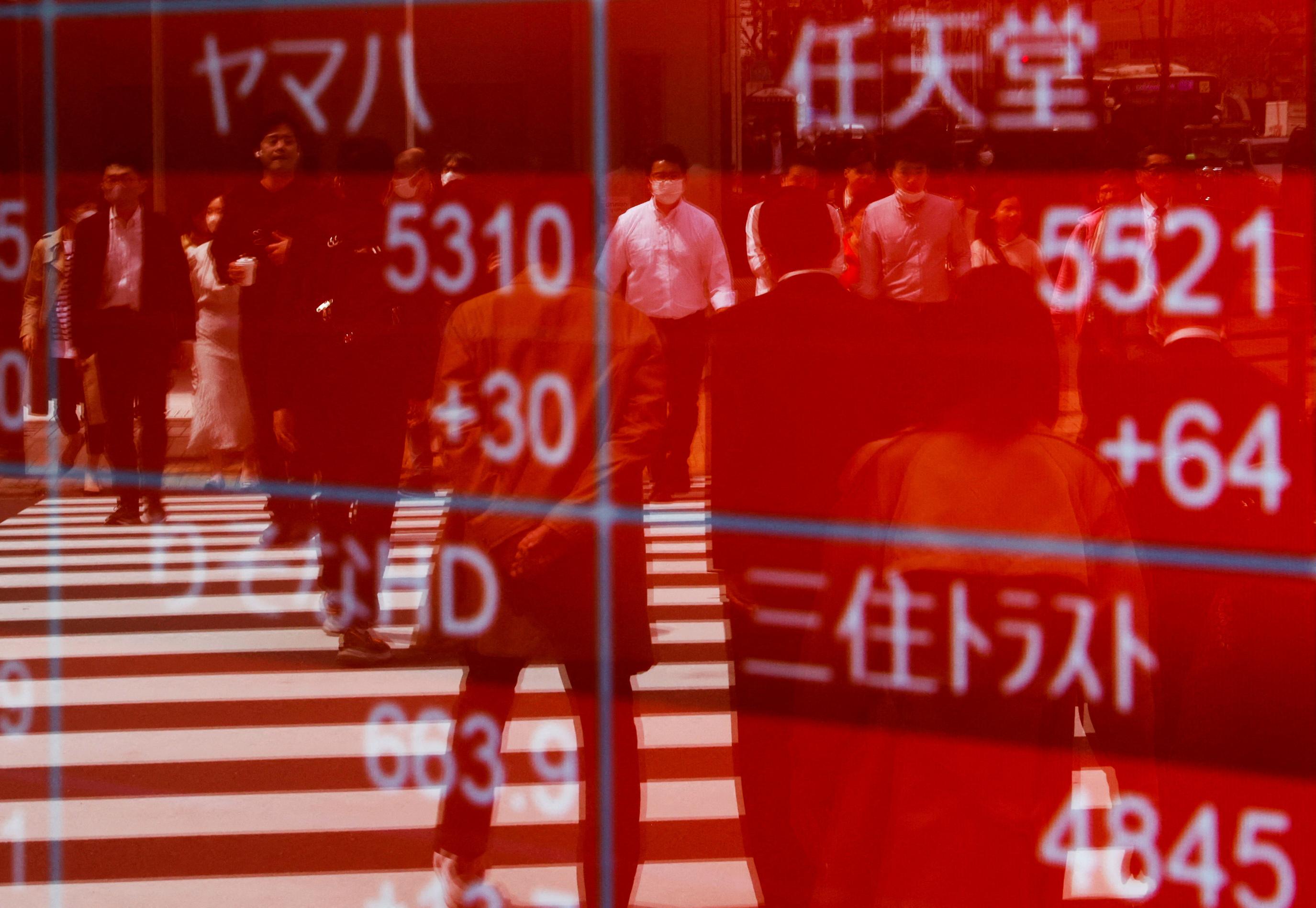
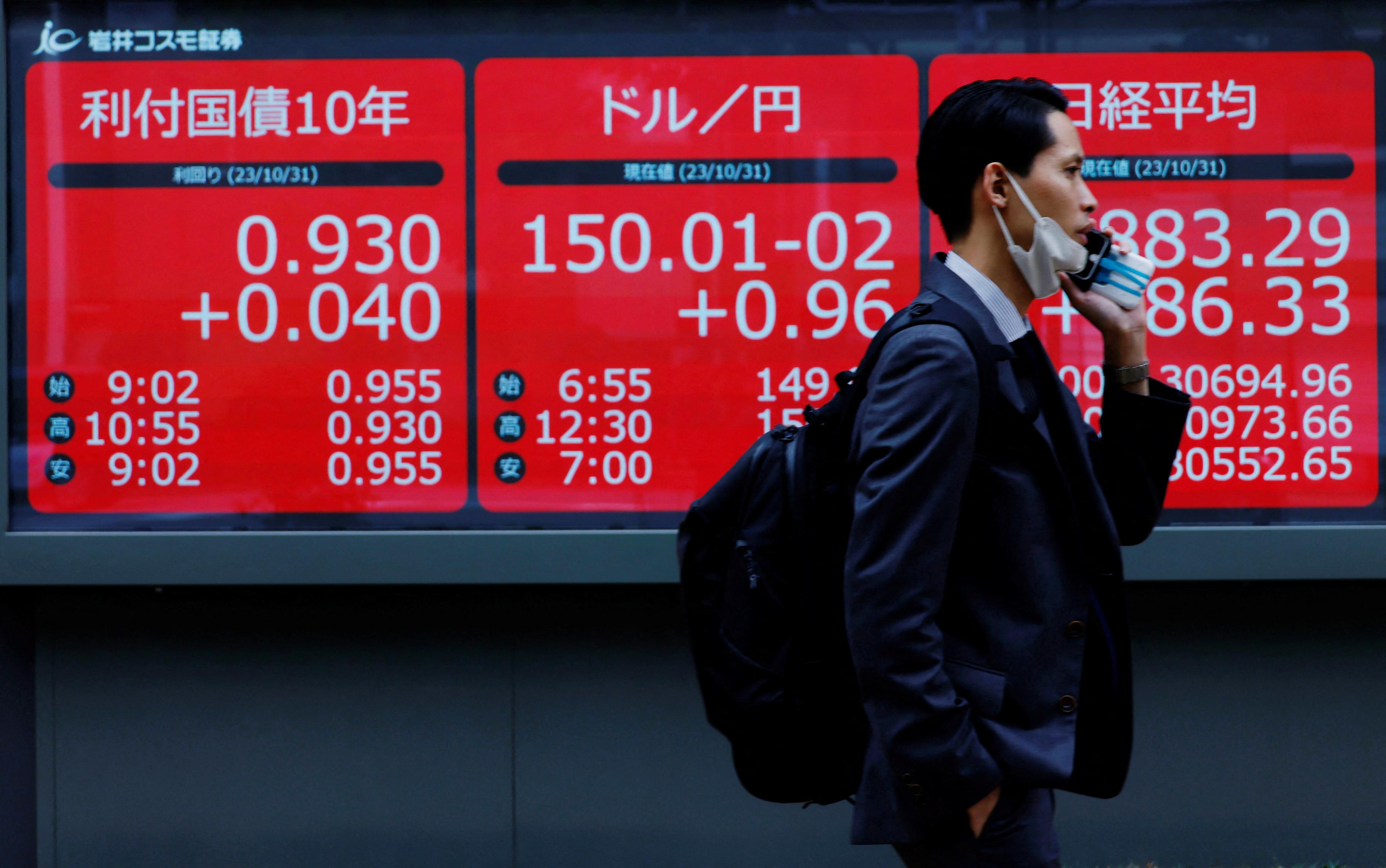
A look at the day ahead in European and global markets from Monday. It's been a mixed start for most of Asia in this holiday-truncated week, though Japanese shares extended their bull streak to hit highs not seen since 1990. The Nikkei is up more than 8% so far this month, and almost 29% for the year so far. The broader Topix is up 26% on the year but still only trades at a price to earnings ratio of 14. That compares to 23 for the S&P 500 and almost 29 for the Nasdaq. The entire market capitalisation of the Topix is 454 trillion yen ($3.03 trillion), yet Japanese companies held 555 trillion yen in internal reserves at the end of the financial year. Half of the listed Japanese companies trade at below book value, and in aggregate hold 20% more cash than their market cap. Corporate profits ex-financials reached a record high of 32 trillion yen in the April-June quarter and recent earnings results have shown the benefit of a weak yen and the return of some pricing power after decades of deflation. Recent surveys show inflation expectations are finally picking up which may prompt households to invest some of the 1,000 trillion yen they currently keep in cash and deposits into equities and bonds. Japan consumer price data for October are due Friday and are forecast to show core rates moved back up to 3.0%, some way above the Bank of Japan's 2% target. A strong wage round and early signs of more bumper pay awards for next year are stoking speculation the BOJ will finally unwind its uber-easy policy, and maybe even turn rates positive - a major boon for financial sector stocks. China's central bank kept its main rates steady on Monday as widely expected, but did set another firm fix for the yuan that saw the dollar slip under 7.2000 and fall more broadly. There were media reports Israel, the United States and Hamas had reached a tentative agreement to free dozens of hostages in Gaza in exchange for a five-day pause in fighting, but no confirmation as yet. S&P 500 and Nasdaq futures were trading a fraction softer on Monday, but are still up sharply on the year so far driven by huge gains in the seven mega-cap darlings. Tech major Nvidia (NVDA.O) reports quarterly results on Tuesday, and all eyes will be on the state of demand for its AI related products. The Black Friday sales will test the pulse of the consumer-driven U.S. economy this week, while the Thanksgiving holiday will make for thin trading. The flow of U.S. economic data turns to a trickle this week, but minutes of the Federal Reserve's last meeting will offer some colour on policy makers' thinking as they held rates steady for a second time. Markets are clearly vulnerable to any hawkish hints given they have priced in early and aggressive easing for 2024. Futures imply zero chance of a further hike in December or next year, and imply a 30% chance of an easing starting in March. Futures also imply around 100 basis points of cuts for 2024, up from 77 basis points before the benign October inflation report roiled markets. Key developments that could influence markets on Monday: - German PPI for October, EU construction output - Appearances by Bank of France Governor de Galhau, Bank of Spain Governor de Cos, Bank of England Governor Bailey - Fed's Barkin appears on TV ($1 = 149.6200 yen) (This story has been refiled to fix the spelling of "it's" in the headline) https://www.reuters.com/markets/europe/global-markets-view-europe-2023-11-20/
2023-11-20 06:11
MELBOURNE, Nov 20 (Reuters) - Around 400 train drivers for BHP's (BHP.AX) Western Australian iron ore division will begin industrial action late this week after rejecting an offer that they said fell short on working schedules, a union representative told Reuters on Monday. Drivers will from Friday stop using a BHP app for roster changes, meaning each worker must be contacted individually if the world's biggest miner wishes to change their working hours, Mining and Energy Union WA secretary Greg Busson told Reuters. Drivers for BHP's highest earning division were trying to show some restraint by voting for action on the lower end of the scale to start, rather than disrupting operations with stoppages, Busson added. BHP's iron ore operations include four processing hubs and five mines that are linked by more than 1,000 km (621 miles) of rail and port facilities. The division accounted for $16.6 billion, or 60% of BHP's earnings before taxes last year. BHP said that the proposed action would present logistical challenges but that it had put in place arrangements to mitigate the impact. "We have put forward a good and comprehensive offer that includes increased base salaries and allowances and recognises the important contribution that the rail team makes to our iron ore business in WA," it said. Worries about a strike had lent support to iron ore prices, which are trading at the highest levels since February. "Concerns over disruptions on the supply side due to the looming strike at BHP in Australia contributed to higher iron ore prices today," said Pei Hao, a Shanghai-based analyst at international brokerage FIS. Drivers received an offer from BHP last Wednesday that did not meet their expectations around rostering, arbitration and camp standards, Busson added. Most of Rio Tinto's trains are now driverless, so rosters are less of an issue. BHP had asked its train drivers in 2021 to move to a two week on, one week off schedule as iron ore miners strived to ship out as much material as they could while prices were high and amid a squeeze on labour. https://www.reuters.com/markets/commodities/bhp-train-drivers-start-restrained-industrial-action-friday-2023-11-20/
2023-11-20 06:10
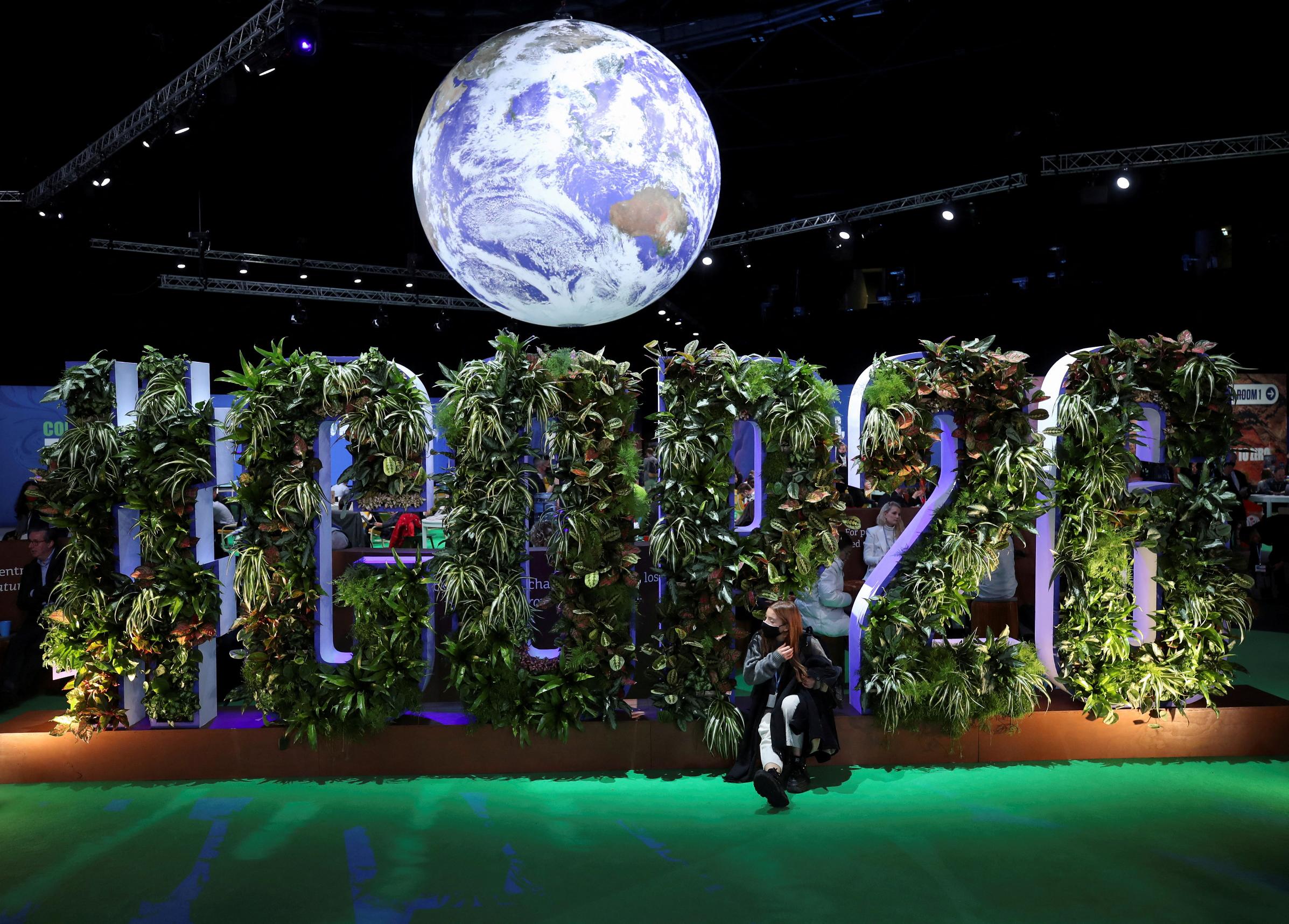
Nov 20 (Reuters) - This year's U.N. climate conference, taking place Nov. 30-Dec. 12 in Dubai, marks the world's 28th leadership gathering to confront global warming since the first "Conference of the Parties" in 1995. But the world has known for far longer of the existential threat posed by climate change, caused mainly by the burning of fossil fuels. Here are some key moments in the history of climate talks: 1800s - For about 6,000 years before the industrial era, global levels of atmospheric carbon dioxide (CO2) remained around 280 parts per million ("ppm"). Several European scientists begin studying how different gases trap atmospheric heat and in the 1890s Svante Arrhenius of Sweden calculates the temperature effect from doubling atmospheric CO2 levels, demonstrating how burning fossil fuels will warm the planet. 1938 - Based on historical weather data, British engineer Guy Callendar reveals that temperatures are rising in line with increasing CO2 levels, and hypothesizes that the two are linked. 1958 - American scientist Charles David Keeling starts systematically measuring CO2 levels over Hawaii's Mauna Loa Observatory, resulting in the famed "Keeling Curve" line graph that shows steadily rising CO2 concentrations. 1988 - Climate scientist James Hansen testifies before U.S. Congress that greenhouse gases from industrial activities are warming the planet and already altering the climate and weather. 1990 - At the U.N.'s so-called Second World Climate Conference, scientists highlight the risks of global warming to nature and society. British Prime Minister Margaret Thatcher says binding emissions targets are needed. 1992 - Countries at the Rio Earth Summit sign onto the U.N. Framework Convention on Climate Change (UNFCCC). The treaty establishes the idea of "common but differentiated responsibilities" - meaning developed countries must do more to tackle climate-warming emissions because they emitted the most historically. The Rio summit also sets up negotiating tracks for protecting biodiversity, among other environmental goals. 1995 - UNFCCC signatories hold the first "conference of parties," or COP, in Berlin, resulting in a final document that calls for legally binding emissions targets. 1997 - At COP3 in Kyoto, Japan, parties agree to emissions cuts for developed countries, with different limits assigned to different countries. In the United States, key Senate Republicans denounce the Kyoto Protocol as "dead on arrival". 2000 - After losing the U.S. presidential election, Al Gore begins giving talks worldwide on climate science and policy that eventually are made into the 2006 documentary An Inconvenient Truth. The film later wins an Academy Award, while Gore and the U.N. climate science authority - the Intergovernmental Panel on Climate Change - receive the Nobel Peace Prize. 2001 - U.S. President George W. Bush calls the Kyoto Protocol "fatally flawed," signaling the country's effective exit. 2005 - The Kyoto Protocol goes into effect after Russia ratifies it, meeting a requirement for ratification by at least 55 countries accounting for at least 55% of emissions. 2007 - Delegates agree at COP13 in Bali to work on a new binding agreement for both developed and developing countries. 2009 - COP15 talks in Copenhagen nearly collapse amid wrangling over a binding post-Kyoto framework. Countries instead vote to "take note" of a non-binding political statement. 2010 - COP16 in Cancun fails to set new binding emissions targets, but establishes a Green Climate Fund to help developing countries cut emissions and adapt to the conditions of a warmer world. The Cancun Agreements also set a goal of limiting global warming to 2C above the preindustrial average. 2011 - COP17 talks in Durban, South Africa, falter after China, the United States and India refuse binding emissions cuts before 2015. Delegates instead extend the Kyoto Protocol through 2017. 2012 - As Russia, Japan and New Zealand resist new emissions targets that don't extend to developing nations, countries at COP18 in Doha extend the Kyoto Protocol through 2020. 2013 - Delegates from poorer nations walk out of COP19 talks in Warsaw over a lack of agreement on climate-related losses and damage, before a watered-down deal is reached. Meanwhile, atmospheric CO2 levels cross 400 ppm for the first time in recorded history. 2015 - The global average temperature rises beyond 1 degree Celsius over the preindustrial average. The COP21 climate talks result in The Paris Agreement, the first global pact to call for increasingly ambitious emissions pledges - called "Nationally Determined Contributions, or NDCs - from both developed and developing countries. Delegates also pledge to try to keep warming to within 1.5C. 2017 - U.S. President Donald Trump calls the Paris treaty bad for the economy, pledging a U.S. exit, which happens in 2020. 2018 - Teen activist Greta Thunberg captures global attention while protesting outside Swedish parliament, and over time rallies youths across the world to join in weekly street protests to demand climate action. 2019 - U.N. Secretary-General Antonio Guterres lambasts a lack of ambition at COP25 in Madrid. 2020 - The annual COP is postponed amid the COVID-19 pandemic. 2021 - Newly elected U.S. President Joe Biden rejoins the Paris Agreement. Later that year at COP26, the Glasgow Pact sets a goal of using less coal and resolves rules for trading carbon credits to offset emissions. 2022 - COP27 in Sharm el-Sheikh, Egypt, results in a historic deal for a Loss and Damage Fund for costly climate disasters, but does little to address the emissions fueling such disasters. https://www.reuters.com/business/environment/un-climate-negotiations-through-years-up-cop28-2023-11-20/