2023-11-17 11:35
LONDON, Nov 17 (Reuters) - Even with two geopolitically risky wars raging and a series of critical elections next year, there's little in annual outlooks suggesting investors should head for the bunkers. Judging by a torrent of 2024 investment advisories already filling inboxes, anxious geopolitics - turbulent for over five years amid trade wars, a pandemic, Russia's invasion of Ukraine and the Israel-Hamas war - is now almost considered a constant to be navigated rather than a reason to go to ground. Even on some of the dominant elections of the year ahead - in the United States, India, Taiwan, Mexico and possibly Britain - there's a sense the range of outcomes are 'known unknowns'. The risks are not downplayed - and the bar for disruptive surprises is clearly lower than for decades. Rather, asset managers increasingly position these as now a feature of global investing choices rather than all-consuming shocks per se. To be sure, Bank of America's most recent monthly fund manager survey - perhaps because polling took place as the Gaza conflict unfolded - found worsening geopolitics the biggest 'tail risk' for the first time since Russia-Ukraine dominated in April 2022. Likely for the same reason, geopolitical risk monitors are at their highest in over 18 months too. But if - as with the Ukraine fallout - spiking energy prices are seen as the main economic risk from a Middle East conflagration, then that's proving well wide of the mark to date. After a brief jump following the attacks on Israel last month, crude oil prices have already reversed all of their gains and are plumbing their lowest levels since July - down 23% in six weeks and tracking year-on-year declines of 14%. And while it's tempting to say the conflict is being downplayed as an energy risk, the swooning oil price is as much to do with stepped up U.S. shale production and Washington's intensified push on domestic energy security. Ebbing demand from a Chinese economy hobbled by property busts and a foreign investment withdrawal due to U.S. investment curbs also hurts. Geopolitics is indeed playing a role, just not in the way it's typically mapped. Another temptation for those anxious about the state of world politics is to seek traditional 'safe' assets like U.S. Treasury bonds as a haven. And yet that would have been a bum steer since the Ukraine invasion as central banks scrambled to douse inflation seeded by the oil and gas price spikes then. Still, after three dire years, sovereign bonds are widely tipped again to be an investment of choice next year - not least as fears of a mild cyclical recession and disinflation allow interest rates to reverse at last. But far from seeing falling bond yields as a retreat to safety, the drop in borrowing rates is now correlated heavily with riskier bets in stocks - evidenced once again in a 10% rally on Wall St (.SPX) this month as long-term borrowing costs fell almost half a percentage point on rate cut hopes. An uncertain dance between soft economic landings and recession next year may dictate where you invest on the corporate credit spectrum, but perhaps the biggest choices are now which country or region you choose. If U.S.-China tensions ramp up again over Taiwan, for example, maybe technology stocks get side-swiped as chips become the oil of that standoff. And yet U.S. tech stocks have been the star performers all this year even as the two superpowers traded brickbats and curbs, and the related 'chip wars' led instead to domestic investment booms and digital security pushes. Once again, geopolitics at work - but not in easily predictable ways. TRIPLE WHAMMY? As to next year's White House and congressional races, the outcome is up in the air as incumbent President Joe Biden and his predecessor Donald Trump are neck and neck in many polls. While most investors would see Trump's return as most jarring to the global status quo, neither of the expected candidates - for different reasons maybe - would be expected to neutralise geopolitical anxiety at large. UBS Global Wealth Management points out that excluding the unrelated banking crash of 2008, Wall St stocks have gained more than 13% on average in presidential election years since 1928 - with best and worst outcomes in years with wins for both parties. "We recommend investors express their political preferences at the polls and not with their portfolios," it said, adding more generally that clients should "prepare for bouts of politically driven volatility and consider hedges". But then it still expects healthy gains for both stocks and bonds over the 12 months. What's more, volatility bouts seem strikingly mild so far. The VIX (.VIX) index of U.S. stock volatility is currently five points below its historic average 19 - and even July VIX futures hover on that mean. After another rough year, bond volatility (.MOVE) is indeed above 20-year averages - but it's already almost half the peaks of March's banking wobble. While that split may underline many funds' preference for bonds over equities, not all forecasters are convinced. Barclays thinks equities will outperform fixed income next year. "The downside risks to the world economy have diminished greatly," it reckons. With such political uncertainty afoot, maybe it's just punch-drunk market pricing itself that packs the biggest risk. Melissa Brown at risk consultancy Axioma fears a 'triple whammy' of low volatility, low trading volume and narrow leadership of tech-flattered stock index gains - along with high stock-to-stock correlations that reveal both macro concerns and investor confusion that make it hard to safely diversify. If interest rates don't come down quickly to tempt out a record $1.4 trillion that's gravitated to cash funds this year, then persistent geopolitical stress and an election year raises the bar for all investment - due largely to its impact on public debt. "There is a political desire to maintain high budget deficits and government intervention," said Andrew McCaffery, Global CIO at Fidelity, whose base case is recession in 2024. "Markets will start to exert a greater price for that spending. We are going to be talking about the cost of capital a lot in 2024, not just for corporates but for governments." The opinions expressed here are those of the author, a columnist for Reuters https://www.reuters.com/markets/geopolitical-angst-more-market-feature-than-shock-mike-dolan-2023-11-17/

2023-11-17 11:24
KYIV, Nov 17 (Reuters) - Some 151 ships have used Ukraine's new Black Sea shipping corridor since it was set up in August, the Interfax-Ukraine news agency reported on Friday, citing a senior government official. A total of 4.4 million metric tons of cargo, including 3.2 million tons of grain, has been shipped via the corridor, Yuriy Vaskov, deputy minister for renovation and infrastructure, was quoted as saying. A U.N.-backed deal that had allowed safe passage for Ukrainian grain exports via the Black Sea collapsed in July after Russia withdrew. In response, Ukraine announced a "humanitarian corridor" hugging the western Black Sea coast near Romania and Bulgaria. Vaskov said that 30 ships were currently loading at Ukrainian ports. They included 22 ships that would carry 700,000 tons of grain and eight ships readying 500,000 tons of other cargo. Ukraine is one of the world's leading grain producers and exporters. Keeping grain exports flowing is key for its economy, which shrank by about a third last year. It is expected to grow by about 5% this year. https://www.reuters.com/world/europe/ukraine-says-151-ships-have-used-black-sea-corridor-2023-11-17/

2023-11-17 11:18
A look at the day ahead in U.S. and global markets from Mike Dolan A cratering of oil prices and more signs of a cooling economy have seen Treasury yields plumb their lowest in two months, underpinning Wall St stock indexes despite notable single stock plunges in Walmart, Cisco and Alibaba. U.S. two-year Treasury yields skidded below 4.80% on Friday for the first time since September 1, with 10-year yields dropping under 4.40% to September lows too. Although they backed up a bit on Friday, U.S. crude oil prices have plummeted this week - hitting four-month lows on Thursday on a mix of rising U.S. inventories and global demand levels that JP Morgan estimates is running at half their standing forecasts for November so far. Crude has now lost almost 25% in just six weeks - aided by the U.S. gradually lifting oil sanctions on Venezuela. But the demand picture stateside was clearly softening too. Signs of a loosening of the U.S. labor market came in a surprising rise in jobless claims for the latest week, while other reports showed homebuilder sentiment ebbing sharply this month and there was an outsize retreat in manufacturing in October. It wasn't all bad news on Thursday - with a better reading on mid-Atlantic business optimism from the Philadelphia Federal Reserve than many had forecast. But the real cause for relief is how the whole picture spurs new-found optimism on disinflation - and how it will dissuade the Fed from hiking interest rates again and, according to futures markets at least, ease them by up to 100 basis points next year. The Labor Department said import prices fell a whopping 0.8% in October, the most in seven months amid a broad decline in the costs of goods - deepening the annual deflation of import prices to as much as 2.0%. Although Walmart's (WMT.N) own stock fell almost 8% on Thursday as it flagged more cautious consumers heading into the holiday season - despite delivering an earnings beat and upping targets - its overall readout should please the Fed. The giant retailer said shoppers were becoming more "choiceful and using discretion" and seeking big discounts that the firm plans to deliver, especially in food. The net result on stock markets was that the S&P500 (.SPX) eked out yet another small gain on Thursday and stock futures - aided by the latest swoon in borrowing rates - were up again ahead of the bell today. The VIX (.VIX) was lower again. Even though the dollar (.DXY), , is taking a hit from the plunge in U.S. Treasury yields, the drop in sovereign borrowing rates was mirrored across the world in Europe , even Japan . Mirroring the softening demand picture elsewhere, British retail sales volumes fell unexpectedly in October as stretched consumers stayed at home. Italian yields and bond spreads also fell even as investors awaited a review of Italy's sovereign credit ratings later in the day - although analysts see little risk that Moody's will relegate the country's debt to junk status. Italy's FTSE MIB index (.FTMIB) was up 0.7%. As so often these days, Chinese stocks underperformed. Alibaba's (9988.HK) Hong Kong shares slumped 10% on Friday after it scrapped plans to spin off its cloud business, citing uncertainties fuelled by U.S. curbs on exports to China of semiconductors used in artificial intelligence applications. The drop, potentially its biggest one-day fall in more than a year, wiped about $20 billion off the Chinese tech giant's market value. The company's U.S.-listed securities closed down 9% on Thursday. The day ahead is relatively quiet on the diary. Although Fed rhetoric has not changed a great deal so far despite the recent data flow, markets will be watching another list of key central bank speakers later in the day. Housing starts numbers for October are the main data highlight, while many will also eye an update on the Atlanta Fed's real-time GDP estimate after such a heavy week of new inputs. Key developments that should provide more direction to U.S. markets later on Friday: * U.S. Oct housing starts/permits * Boston Federal Reserve President Susan Collins, San Francisco Fed President Mary Daly, Chicago Fed chief Austan Goolsbee, Fed Vice Chair for Supervision Michael Barr all speak. Bank of England Deputy Governor Dave Ramsden speaks * United States hosts APEC leaders' meeting in San Francisco https://www.reuters.com/markets/us/global-markets-view-usa-graphics-2023-11-17/
2023-11-17 11:15
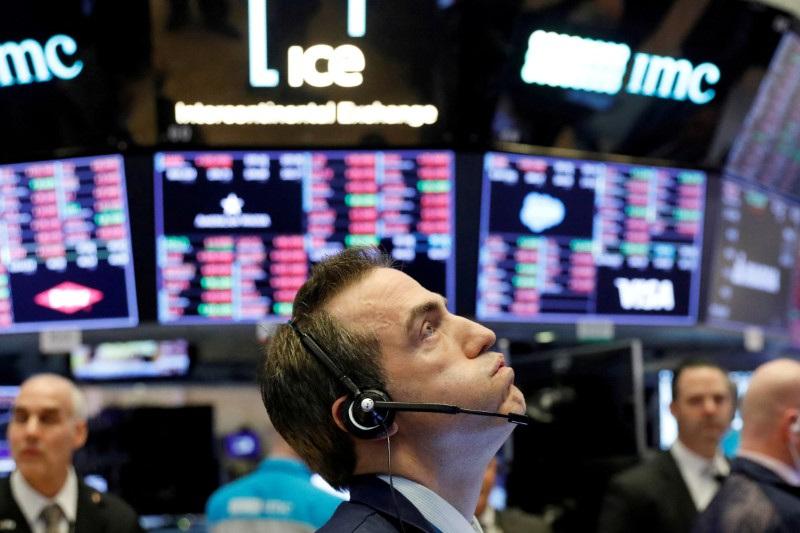
BUDAPEST, Nov 17 (Reuters) - The National Bank of Hungary is expected to cut its base rate by another 75 basis points to 11.5% (HUINT=ECI) next Tuesday, a Reuters poll showed, with the bank under pressure from Prime Minister Viktor Orban's government to reduce rates more sharply. With the European Union's highest inflation rate declining, from a high of 25% in the first quarter to a lower-than-forecast 9.9% last month, the NBH has cut borrowing costs by a combined 575 bps since May to 12.25% - still the EU's highest benchmark. Hungary eked out its first quarterly growth in a year in the third quarter, data showed on Tuesday, as central Europe's economies scrabble out of an inflation-induced downturn amid the war in neighbouring Ukraine. The weakness of the economy has led to repeated calls from Economic Development Minister Marton Nagy, a former central banker, for the NBH to cut rates more sharply. On Friday, Nagy said the bank's rate policy "seriously damages" the economy. Despite those calls, the bank is likely to continue easing next week at the same pace as last month's 75 bps cut, a Nov. 13-17 Reuters survey of 16 economists showed. "We expect the NBH to proceed with easing monetary policy, lowering its base rate by 75bp to 11.5% at its upcoming November 21 meeting," economists at Morgan Stanley said in a note. "We still see risks to our rates call as being skewed towards a speedier 100bp of rate cuts per month in 1Q24, on the back of weaker-than-expected inflation dynamics." Financial news website portfolio.hu cited Deputy Governor Barnabas Virag as saying on Thursday that data showing inflation easing to an annual 9.9% in October and lower oil prices would allow the bank to continue rate cuts at a 75 bps clip next week. Virag was also quoted as saying that the Hungarian base rate could fall below, but stay close to, 11% by the end of the year, when inflation is seen at around 7%. Another 75 bps cut at the December meeting would bring the base rate to 10.75%, in line with the survey's median projection, and within a range forecast by rate-setter Gyula Pleschinger in an interview with Reuters in September. Despite the retreat in headline inflation, core inflation remained in double digits in October, while services prices rose by an annual 13.2%, indicating strong underlying pressures amid a recovery in real wages. https://www.reuters.com/markets/rates-bonds/hungary-central-bank-seen-defying-government-pressure-accelerate-rate-cuts-2023-11-17/

2023-11-17 11:15
LONDON, Nov 17 (Reuters) - Britain's Octopus Energy said on Friday its renewables investing arm had launched a dedicated fund with Japan's Tokyo Gas (9531.T) to invest 3 billion pounds ($3.7 billion) in offshore wind projects by 2030. The Octopus Energy Offshore Wind fund, set up with a 190 million pound cornerstone investment from Tokyo Gas, will invest in offshore wind farms as well as companies creating new offshore wind capacity, with a focus on Europe, Octopus said. The fund will look at both traditional offshore wind turbines and floating turbines. "The potential to make a positive impact, boost energy security and reduce fossil fuels dependence is massive with offshore wind," said Octopus Energy Generation Chief Executive Zoisa North-Bond. Octopus Energy Generation has said it plans to invest $20 billion in offshore wind by 2030, with an aim to boost energy security and reduce dependence on fossil fuels. ($1 = 0.8052 pounds) https://www.reuters.com/sustainability/climate-energy/uks-octopus-energy-launches-37-bln-offshore-wind-fund-with-tokyo-gas-2023-11-17/

2023-11-17 11:07
LONDON, Nov 17 (Reuters) - U.S. Treasury funds recorded their first outflow since February in the week to Wednesday, as global investors shed $1 billion in the government bonds and piled into stocks, according to Bank of America and data provider EPFR on Friday. Investors snapped up $23.5 billion in stocks in the week to Nov. 15, marking the second largest weekly inflow into equities of 2023. The influx to stocks and flows out of U.S. Treasuries follows data on Tuesday that showed U.S. inflation slowing, boosting market hopes that the Federal Reserve is finished with rate hikes, and prompting traders to start mulling future rate cuts. Data this week also showed UK inflation slowing sharply. With macroeconomic data hinting that a deep recession may be avoided, the U.S. benchmark S&P 500 (.SPX) rose about 2.7% in the week to Wednesday, while Europe's STOXX 600 (.STOXX) ticked 2.4% higher. Global bond yields have dropped steadily since early October, driven by mounting evidence that some of the intense price pressures of the past two years are fading in the United States and Europe. Over three quarters of respondents in a BofA Global Research survey of global fund managers on Tuesday said they think the Fed's interest rate hiking cycle is over. Cash funds saw inflows of $20.5 billion, BofA said, and overall investors bought $2.6 billion in bonds, marking a sixth week of inflows. Meanwhile, gold funds saw outflows of $400 million, BofA said. Outflows from emerging markets debt continued for the 16th week, with EM funds shedding $1.6 billion in the latest week. European equities have recorded 36 weeks of outflows in total. In stocks, U.S. large caps clocked their largest inflow since February 2022, with $23.7 billion, while financials recorded their first inflow since July and materials marked their fifth week of inflows, the longest streak since May 2022. BofA's bull & bear indicator, a measure of market sentiment, rose marginally to 1.7 from 1.6, a contrarian "buy" signal, said BofA. On strong HY bond inflows, improving credit technicals and stronger equity market breadth. https://www.reuters.com/markets/europe/treasuries-see-first-weekly-outflow-since-feb-investors-buy-stocks-2023-11-17/