2023-11-17 06:06
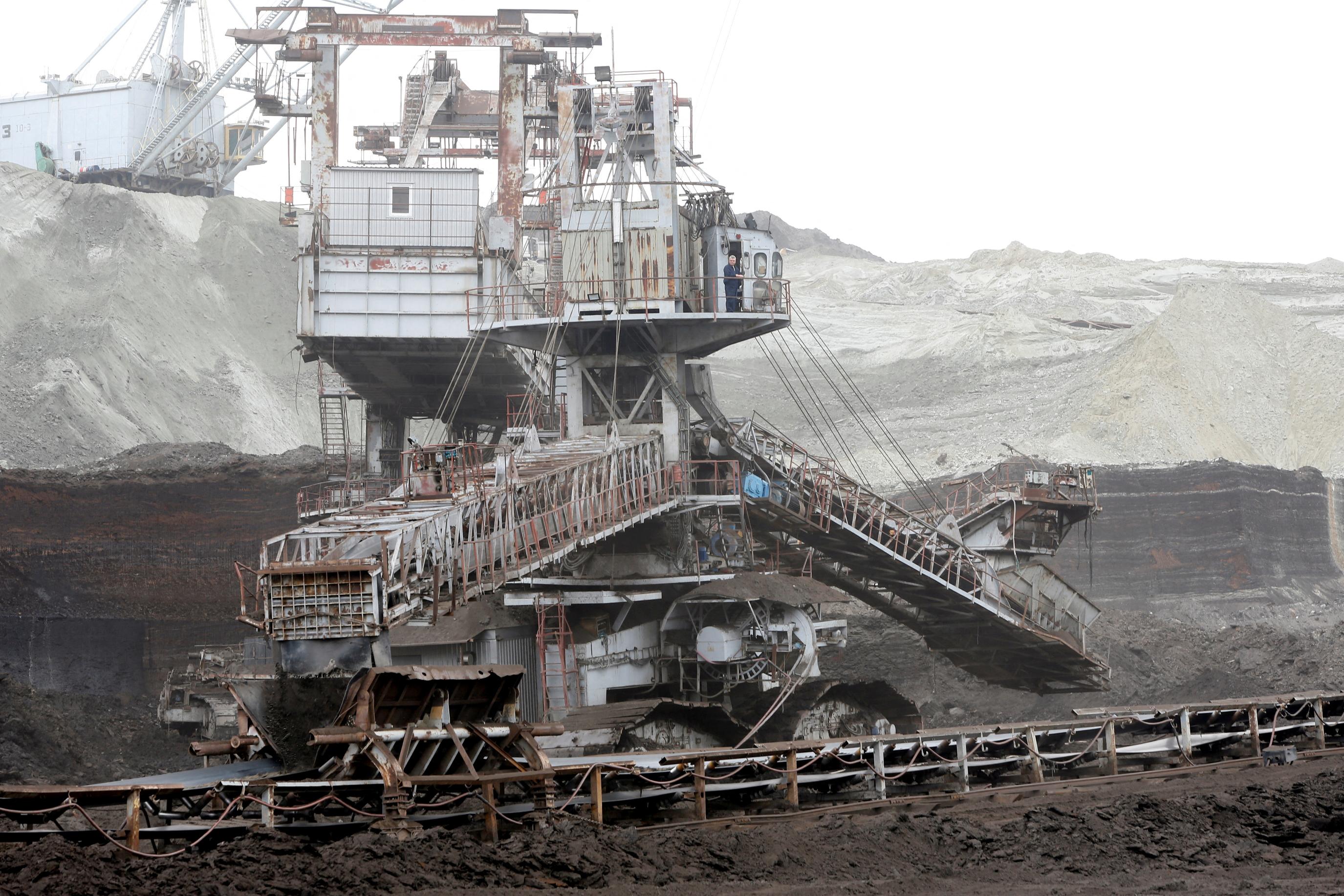
Deal set to be announced at COP28 climate talks in Dubai Would see country's two coal-fired power plants close EBRD would help fund 1.7 GW of renewable energy LONDON, Nov 17 (Reuters) - International lenders including the European Bank for Reconstruction and Development and the World Bank are backing a 4 billion euro ($4.35 billion) plan to wean North Macedonia off coal-fired power, the head of the EBRD told Reuters. The deal, which is expected to be announced at the COP28 climate talks in Dubai beginning on Nov. 30, will lay out a plan to close the country's two coal power plants and replace them with 1.7 gigawatts of renewable energy. "Coal in North Macedonia represents 40% of the energy source, so it's very big, it's very important," EBRD President Odile Renaud-Basso told Reuters. "This is one example of what we would like to showcase in COP, to present this approach and what it can deliver, and the commitment of the country." Dubbed the 'Just Energy Transition Investment Program', the plan follows similar efforts to retire coal plants more quickly in South Africa, Indonesia, Vietnam and Senegal, with the support of governments, public lenders and private investors. Its price tag - the equivalent of 2,000 euros for each of the Balkan nation's 2 million people - underscores the difficulty many small or low-income countries face in financing a transition to cleaner energy. The United Nations in 2018 named North Macedonia's capital, Skopje, the most polluted in Europe, and the country has worked for years to shift away from coal. But in 2021, it reopened the dormant coal-fired REK Oslomej power plant to cut electricity imports. Both of its coal-fired plants are ageing, outdated and run on lignite, the most polluting type of coal. A spokesperson for the World Bank's Climate Investment Funds (CIF) confirmed that North Macedonia was in the running for up to $85 million in concessional finance from it, and said the investment plan, including the specific amount of money, would go to the CIF governing body for approval early next year. Renaud-Basso said that alongside around 300 million-400 million euros of concessional financing, funding would come from multilateral lenders like the International Finance Corporation (IFC) and the private sector. An IFC spokesperson said the green transition, including in North Macedonia, was one of its key priorities, but that it was not in a position to confirm any plan details. The World Bank was not immediately available to comment. The North Macedonian government did not respond to a request for comment. North Macedonia joined the Powering Past Coal Alliance, a group of countries committed to phasing out coal-fired power, in 2021. After originally targeting completion by 2027, it pushed the date back to 2030 in January last year. The delay, and plans to open two new coal mines amid energy security concerns triggered by the war in Ukraine, mirrored actions by other European Union states, but drew criticism from environmental campaigners. ($1 = 0.9205 euros) https://www.reuters.com/sustainability/sustainable-finance-reporting/ebrd-backs-4-bln-euro-plan-wean-north-macedonia-off-coal-power-2023-11-17/
2023-11-17 06:03
IAEA reports show Iran's nuclear work advances US, allies have few viable options to respond IAEA board to avoid steps that will stoke tension U.S. election a year away when Biden may face Trump PARIS/WASHINGTON/VIENNA, Nov 17 (Reuters) - The United States and its allies have few routes left to rein in Iran's nuclear work with prospects for talks long buried and tougher actions against Tehran running the risk of stoking tensions in a region already enflamed by the Gaza war. With a U.S. election next year limiting Washington's room for manoeuvre, four serving and three former diplomats painted a bleak picture of efforts to curb Iran's nuclear programme, which according to U.N. nuclear watchdog reports continues to advance. The diplomats spoke to Reuters on condition of anonymity. According to one of the two confidential reports by the International Atomic Energy Agency and seen by Reuters, Iran now has enough uranium enriched up to 60% purity - close to weapons-grade and a level Western powers say has no civilian use - to make three bombs. The stockpile continues to grow, the reports say, even though Iran has consistently denied wanting nuclear arms. Having failed to revive a nuclear deal between Iran and world powers that was abandoned by former U.S. President Donald Trump in 2018, President Joe Biden has no room for now even to consider a more informal "understanding" to curb Iran's nuclear work with a regional conflict raging and tension spiralling. "There is a sort of paralysis, especially among the Americans ... because they don't want to add fuel to the fire," said a senior European diplomat. Any negotiations to reach an "understanding" with Iran would have entailed Washington offering concessions - such as easing its tough sanctions regime on Tehran - in return for Iranian constraint. Such a move now looks inconceivable after Iran-backed Palestinian group Hamas launched its devastating attack on Oct. 7 on U.S. ally Israel. Since then, Iran's regional proxy militias have launched dozens of attacks on U.S. and coalition troops in Iraq and Syria, according to the Pentagon. At home, the Biden administration is constrained by U.S. presidential elections now just a year away. Trump, who at the moment looks most likely to be Biden's opponent, could seize on any engagement with Tehran and portray it as weakness. "In the current environment, it is simply not politically feasible to seek an accommodation with Iran on the nuclear issue," said Robert Einhorn, a former U.S. State Department official. "The political debate is really not going to be about negotiating with Iran, it's going to be about confronting Iran," he said. IRAN STONEWALLING IAEA Washington has deployed two aircraft carriers to the region and warplanes to the eastern Mediterranean, partly as a warning to Tehran. But U.S. officials have also made clear they do not want an escalation, urging Iran-backed militias to stand down. Washington and its French, British and German allies - which were among the parties to the 2015 nuclear deal - will now focus on next week's IAEA Board of Governors meeting. This week's IAEA reports showed Iran was making steady nuclear progress and indicated that Tehran continued to stonewall the agency in monitoring its work. A deal in March to re-install monitoring equipment including surveillance cameras, which were removed last year at Iran's behest, has only partially been honoured. Tehran's "de-designation" in September of some of the agency's most experienced inspectors - a move that effectively bars them from working in Iran - has also exasperated the IAEA. Western powers in September had threatened to pass a binding resolution ordering Iran to reverse course - one of the strongest sanctions in the IAEA board's armoury. Four diplomats said a resolution was now unlikely because it was imperative to avoid a diplomatic and nuclear escalation with Iran while attention is focused on Israel's conflict with Hamas. They said a less inflammatory move, such as a firm non-binding statement, that would threaten tougher action at the next board meeting in March was more likely for now. "We can't have a resolution," said the senior European diplomat. "If we were to pass a resolution ... it risks pushing them (the Iranians) over the edge ... to 90% enrichment." Weapons-grade uranium is around 90% purity. Two diplomats said all that could be done in coming months was to support IAEA chief Rafael Grossi's efforts to strengthen oversight of Iran's nuclear programme. He has been seeking to re-designate his inspectors before the end of the year. "It's way too early to say whether Iran will become a nuclear state or whether it will stay a threshold state like now," one diplomat said. "But for now it will keep enriching." https://www.reuters.com/world/middle-east/iran-enriches-more-uranium-gaza-war-rages-us-vote-looms-2023-11-17/

2023-11-17 05:51
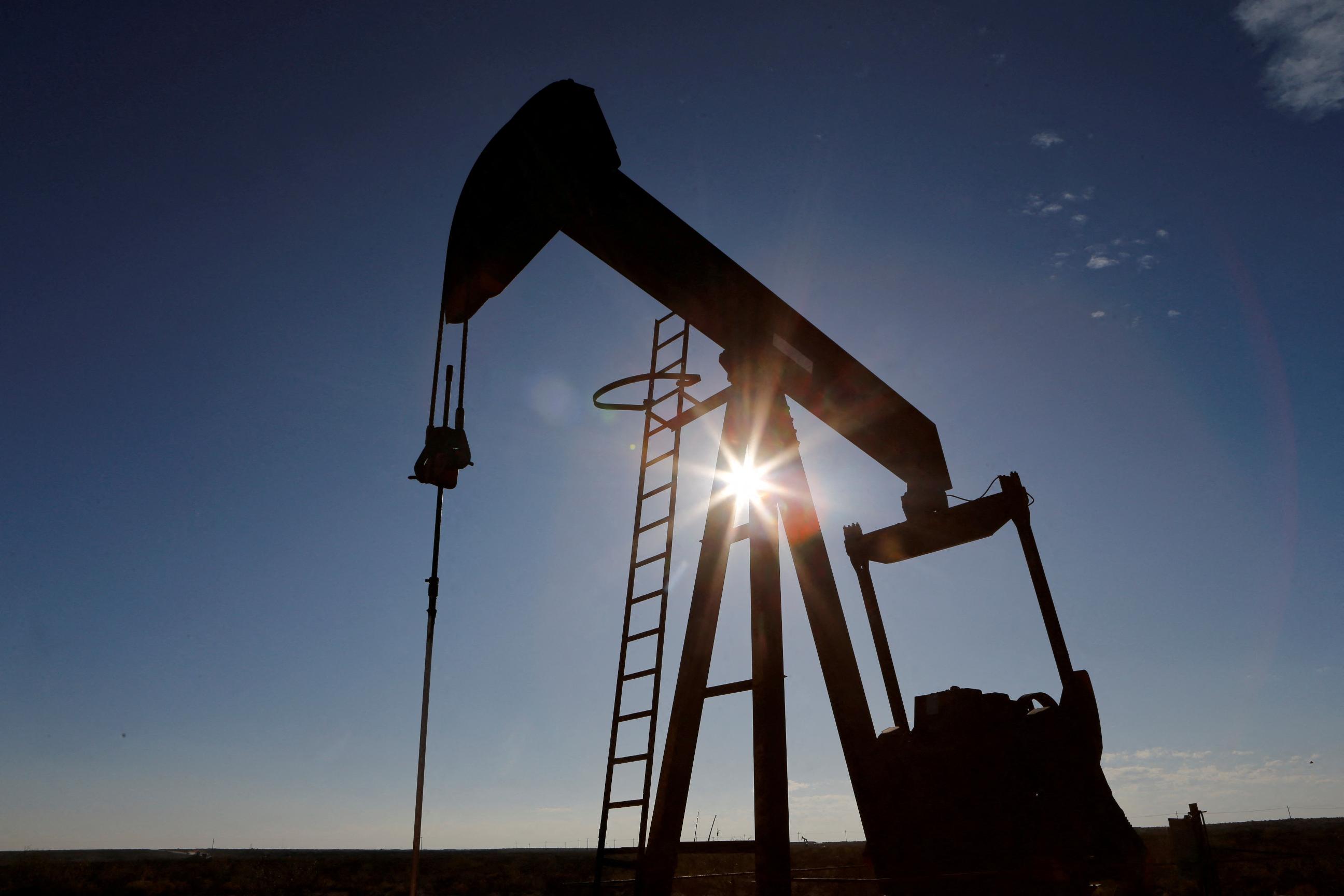
Benchmarks fall 1% in the week, in fourth weekly loss OPEC+ considers additional oil supply cuts US oil rig count rises in biggest weekly hike since February NEW YORK, Nov 17 (Reuters) - Oil prices jumped more than 4% on Friday, rebounding from a four-month low hit in the previous session, as investors who had taken short positions took profits and while U.S. sanctions on some Russian oil shippers lent support. Brent crude futures settled up $3.19, or about 4.1%, at $80.61 a barrel, while West Texas Intermediate crude (WTI) rose $2.99, or 4.1%, at $75.89. "You're getting a natural profit-taking rebound and short covering, to a degree," said John Kilduff, partner at Again Capital LLC in New York. Some of the losses were offset after the U.S. imposed sanctions this week on maritime companies and vessels for shipping Russian oil sold above the Group of Seven's price cap. Still, both benchmarks ended the week more than 1% lower, their fourth straight weekly decline, mostly weighed down by a rise in U.S. crude inventories and sustained record high production. China's deepening property crisis and slowing industrial growth also weighed. "Demand growth from China has been falling short of expectations," said Andrew Lipow, president of Lipow Oil Associates. U.S. oil producers have been cutting the number of active drilling rigs for nearly a year due to weaker prices. The oil rig count, however, this week rose by six, the most since February, energy services firm Baker Hughes (BKR.O) said. "When you have a sharp drop in price, the producers think twice about moving ahead with capital spending and projects," said Phil Flynn, an analyst at Price Futures Group. Some analysts said Thursday's sharp sell off may have been overdone, particularly in light of escalating tensions in the Middle East that could disrupt oil supplies and the U.S. vowing to enforce sanctions against Hamas-backer Iran. With Brent below $80, many analysts expect OPEC+, principally Saudi Arabia and Russia, to extend output cuts into 2024. The OPEC+ group, comprising of the Organization of the Petroleum Exporting Countries and its allies, is set to consider whether to make additional oil supply cuts when the group meets later this month, three sources told Reuters. "Oil prices are down slightly this year despite demand exceeding our optimistic expectations," Goldman Sachs analysts said in a note. "Non-core OPEC supply has been much stronger than expected, partly offset by OPEC cuts." For 2023, the U.S., which makes up two-thirds of non-OPEC+ growth, is forecast to deliver annual gains of 1.4 million barrels per day (bpd), according to the International Energy Agency (IEA). Meanwhile, inflation in the euro zone appears to be thawing. On Friday, the EU's statistics office confirmed annual inflation slowed sharply. https://www.reuters.com/business/energy/oil-prices-track-fourth-straight-week-decline-2023-11-17/
2023-11-17 05:48
NEW YORK/LONDON, Nov 17 (Reuters) - The dollar posted its second-steepest weekly decline versus other major currencies this year on Friday, while the yen strengthened sharply, and the dollar traded below 150 yen, as concerns grow about the weakening global economic outlook. Cooler-than-expected U.S. inflation data on Tuesday and Wednesday hastened market expectations for how soon the Federal Reserve will cut rates. Such a move would weaken a major dollar support and could come as early as next year's first quarter. The dollar index , which measures the greenback against six other major currencies, slid to lows last seen on Sept. 1, while the yield on benchmark 10-year Treasury notes fell to a two-month low of 4.379%. Data that showed U.S. single-family homebuilding increased marginally in October briefly supported the dollar, but with inflation the main market driver it remained lower on the day. "The spate of recent data points towards progress being made on the inflation front," said Bipan Rai, North America head of FX strategy at CIBC Capital Markets in Toronto. "It really feels like the initial momentum now is for the dollar to move lower." The dollar index fell 0.49% on the day, hitting a low of 103.85 that increased the greenback's decline over the past five days to almost 1.8% - its biggest weekly drop since mid-July. "Everything is pointing towards a fourth-quarter slowdown in the United States," said Thierry Wizman, global FX and interest rate strategist at Macquarie in New York, adding that a key signal would be companies guiding growth expectations lower. "They're not seeing the pricing power they saw in Q3 and they're not seeing the kind of enthusiasm on the part of customers that they were seeing in Q3 either," Wizman said. The euro rose 0.52% to $1.0906 after Eurostat data confirmed year-on-year inflation in the euro zone slowed sharply in October. The yen - punished broadly this year by dollar strength - broke the 150 mark for the first time in nearly two weeks, gaining 0.69% to 149.68 to the dollar. The U.S. currency is down about 1.4% versus the Japanese currency since Monday. Japanese authorities do not have specific exchange-rate levels in mind when deciding when to intervene in the currency market, Deputy Finance Minister Ryosei Akazawa told parliament on Friday. The yen's strength reflected the fact that "contracting growth concerns are rising" globally, said Lee Hardman, currency analyst at MUFG, adding that Japanese terms of trade were less impacted by falling energy prices. Weaker-than-expected retail sales figures in Britain added to a slew of negative readings this week, but sterling nudged higher to $1.2458, up 0.42% on the day. Sluggish data globally has raised concerns about economic prospects, but also suggests central banks may be winning in their fight against soaring prices. Futures markets are pricing 93 basis points (bps) of cuts in the Fed's overnight lending rate by December 2024, market bets that have contributed to dollar weakness. Money markets have also nearly fully priced 100 bps of rate cuts in the euro zone next year. Nonetheless, European Central Bank (ECB) policymakers Robert Holzmann and Joachim Nagel said on Friday the bloc must stand ready to raise interest rates again if necessary. ECB President Christine Lagarde said earlier in the day that the EU needs a capital markets union, adding that neither heavily indebted governments nor banks can come up with the money needed to make the bloc more productive and independent. (This story has been corrected to say that the dollar, not the yen, traded below 150, in paragraph 1) https://www.reuters.com/business/energy/yen-eyes-best-week-four-months-dollar-heads-weekly-decline-2023-11-17/
2023-11-17 05:36
Nov 17 (Reuters) - A look at the day ahead in European and global markets from Wayne Cole. Asia has been in a contemplative mood so far on Friday after another week of wild swings in bonds, equities and commodities. The oil market was the latest to be visited by volatility as prices slid almost 5% overnight, in part due to concerns about oversupply and diminishing demand. Speculation also played a part as algos, CTAs, and trend following funds took to selling when Brent broke $80 a barrel, with the drop from $80.70 to $78.40 coming in a single hour of trade. It was idling around $77.60, after finding support at $76.60. That's a long way from the September peak of $97.69 and comes despite wars in Ukraine and the Middle East. Presumably OPEC+ will have something to say about this ahead of their next meeting on Nov. 26. The drop bodes well for a further decline in headline inflation globally and should go down well with U.S. consumers where confidence is closely correlated to the price of gas. Talking of disinflation, Walmart (WMT.N) executives on Thursday noted prices of general merchandise goods such as apparel and home goods had fallen between 3% and 6%, and it was planning on cutting further for the holiday season. The spectre of margin compression, however, took 8% off its share price. All of this, plus a rise in weekly jobless claims, was a balm for bonds and two-year Treasury yields are down 21 basis points for the week at 4.85%, their best weekly performance since March. Fed fund futures have priced out almost any risk of another rate hike from the Federal Reserve and a 34% probability it might ease as early as March. The market now implies 98 basis points of cuts next year, compared with 73 basis points a week ago. Interestingly, analysts at Westpac note U.S. economic data has been exhibiting a pattern of residual seasonality post-pandemic where the news is strong mid-year and through Q3, only to soften into year's end. If that holds, the bond rally will likely have further to run. Key developments that could influence markets on Friday: - Data on EU final CPI inflation for Oct and Sept current account. UK retail sales for Oct - Appearances by ECB President Christine Lagarde, ECB officials De Cos, Holzmann and Cipollone - BoE's Greene and Ramsden speak - Fed speakers include Barr, Daly, Collins and Goolsbee. U.S. data on housing starts for Oct https://www.reuters.com/markets/europe/global-markets-view-europe-2023-11-17/
2023-11-17 05:24
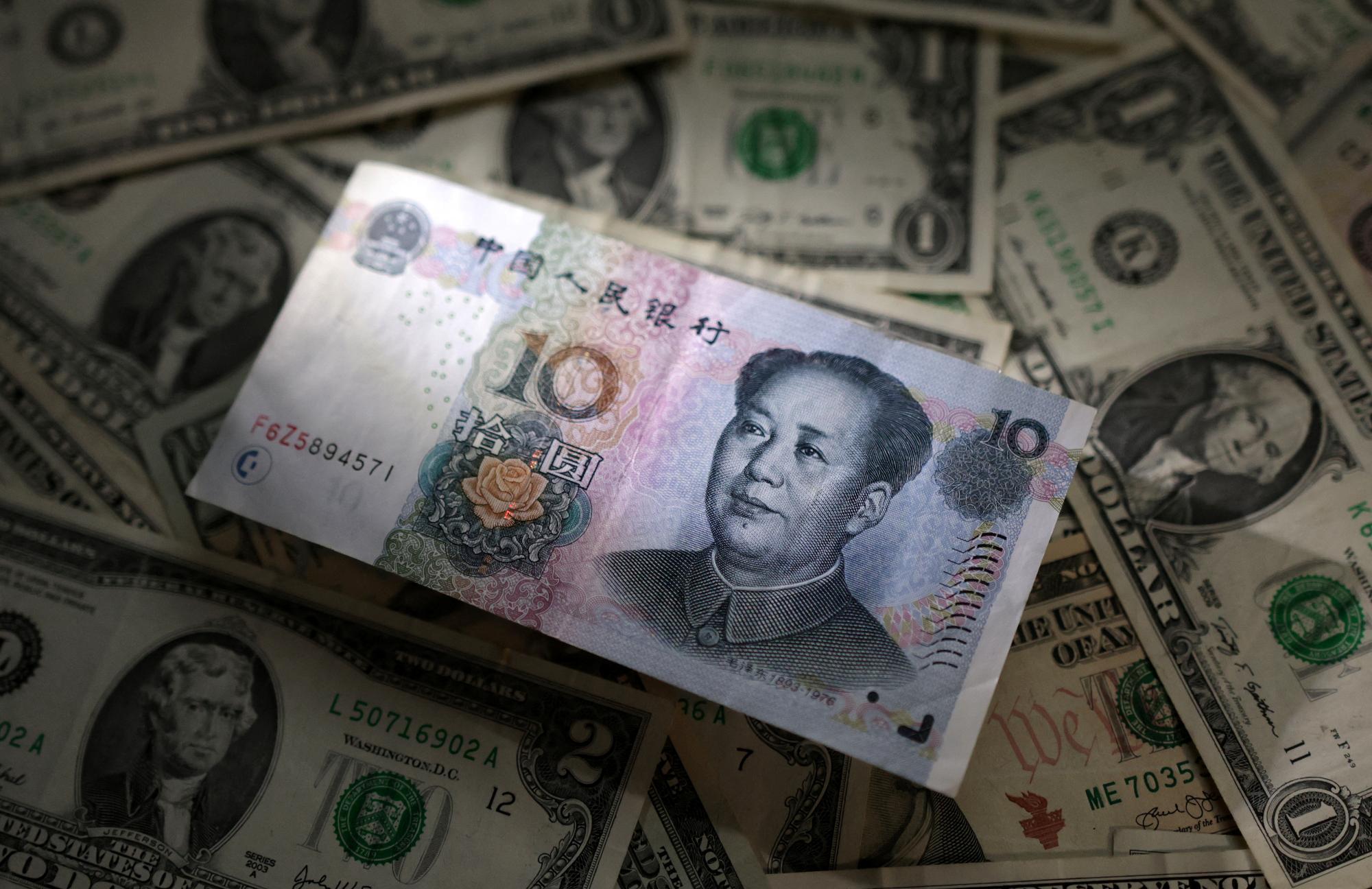
SHANGHAI/SINGAPORE, Nov 17 (Reuters) - Global companies are making a beeline for China's debt markets, issuing record amounts of yuan-denominated bonds and borrowing heavily from mainland banks, capitalising on rock-bottom yuan interest rates as funding costs elsewhere jump. Companies and banks are raising record amounts of cash through yuan bonds issued in mainland China and in Hong Kong, known as panda and dim sum bonds, respectively. The surge in their borrowing from Chinese banks has catapulted the yuan past the euro into becoming the second-biggest currency used in global trade finance, providing a fillip to Beijing's ambitions to internationalize the yuan. The global rush to borrow from China is counterintuitive, coming as international investors are shunning the world's second-biggest economy out of concerns about geopolitical tensions and weak growth, says Fiona Lim, senior FX strategist at Maybank. "While the fundamental story is not compelling for Chinese investors looking for growth, the depreciation of the yuan as well as the rate cuts result in a much cheaper cost of borrowing," Lim said. Foreign companies such as German carmaker BMW (BMWG.DE) and Crédit Agricole S.A (CAGR.PA) as well as overseas units of Chinese firms raised a record 125.5 billion yuan ($17.33 billion) selling panda bonds during the January-October period, a 61% jump from the same period last year. The National Bank of Canada (NA.TO) raised 1 billion yuan from the sale of a three-year panda bond at a coupon of 3.2% late last month, a bargain compared to rates of 4.5% at home. The issuance of dim sum bonds in Hong Kong also hit a record high, surging 62% from a year ago to 343 billion yuan during the first eight months. Issuance of yuan-denominated loans in the city also soared. For China, the growing share of yuan in global financing ticks one of its main internationalisation priorities, though the recent burst of activity appears to have been overwhelmingly for domestic use. "Panda bonds are steadily promoting the renminbi's function as a funding currency", the People's Bank of China (PBOC) said a report last month. It has been motivating banks to lend to offshore firms and allowed broader use of yuan outside China. The yuan's share as a global currency in trade finance jumped to 5.8% in September from 3.91% at the start of the year, trumping the euro for the first time, according to SWIFT. The international payments system dominates the traffic of letters of credit - a form of short-term financing that facilitates trade. Regardless, it barely scrapes the dollar's dominance at 84.2%. Several gauges of yuan internationalisation -- including a Standard Chartered Bank tracker measuring the global use of the yuan, and Bank of China's Cross-border RMB Index (CRI) -- all hit record highs this year. TOO EARLY TO CELEBRATE However, analysts point to the limited use and circulation of international yuan bond proceeds so far, and say it’s premature to trumpet internationalisation. German automaker Volkswagen Group (VOWG_p.DE) told Reuters it will use its inaugural 1.5 billion yuan panda bond proceeds only for its onshore China business. The Mercedes-Benz Group (MBGn.DE) also plans to use its panda bond proceeds to support a car leasing business in China. Yuan internationalisation "isn't going as well as the headline figures might suggest," said Mark Williams, chief Asia economist at Capital Economics. "It's still the case that more than half of cross-border transactions using the yuan are between the mainland and Hong Kong. This is a very local form of internationalisation." Maybank's Lim concurs. "We should be discerning of the cross-border transactions that are between China and Hong Kong versus China and the rest of the world." Within trade finance and payments, the yuan's use is largely limited to developing countries friendly to China, such as those joining its Belt and Road initiative. "There has been a surge in use of the yuan to settle trade, but only within specific bilateral channels: countries like Russia, Argentina, Pakistan and Nigeria," Williams said. Countries that are geopolitically aligned with the U.S. "are showing no willingness to switch over to using the yuan. That suggests that global use of the yuan in trade will hit a low ceiling." ($1 = 7.2421 Chinese yuan renminbi) https://www.reuters.com/markets/currencies/cheap-yuan-catapults-china-second-biggest-trade-funding-currency-2023-11-17/