2023-11-14 04:47
BOJ dismantled YCC in Oct, laying groundwork for next move Service prices already rising, BOJ just waiting for evidence BOJ must keep hiking once short-term rates at zero - Hayakawa TOKYO, Nov 14 (Reuters) - The Bank of Japan is expected to end its negative interest rate policy in April and keep raising short-term borrowing costs next year on heightening prospects of sustained wage growth, its former top economist Hideo Hayakawa said on Tuesday. With inflation already exceeding the BOJ's 2% target for more than a year, the central bank tweaked yield curve control (YCC) in October to allow long-term rates to rise more - a move seen by markets as a step toward phasing out its huge stimulus. While the BOJ maintains its 0% target for the 10-year bond yield under YCC, Hayakawa said the bank "effectively dismantled" the framework in October by re-defining what was a rigid 1% cap for the yield to a loose reference. As the next step, the BOJ will likely raise short-term rates to around zero from -0.1% in April, when more data becomes available on next year's spring wage negotiations, he said. "Service prices are already rising and prospects of seeing solid wage growth next year are heightening. But the evidence (on wage growth) isn't available yet," Hayakawa told Reuters in an interview. "The BOJ is just waiting for more evidence" that inflation will sustainably hit 2%, Hayakawa said. "Once that's available, BOJ will end negative rates." When exiting negative rates, the BOJ can maintain YCC in its current form and use it as a backstop to deal with any abrupt spike in long-term rates, he added. "With the tweak in October, YCC has become something similar to exchange-rate intervention, in that the BOJ can intervene only when needed to arrest abrupt rises in long-term yields." The BOJ's ultra-loose monetary policy, made up of YCC and negative short-term rates, has drawn criticism from analysts and some politicians for causing sharp yen falls that boost import prices and the cost of living for households. While the BOJ revised up its inflation forecasts last month, it has stressed the need to keep ultra-easy policy until the recent cost-driven inflation turns into price rises underpinned by solid domestic demand, and accompanied by higher wages. Hayakawa disagreed with the BOJ's view that recent price rises are driven predominantly by cost-push factors, saying its projections are underestimating already mounting inflationary pressures from domestic demand and service prices. "The BOJ has intentionally been behind-the-curve" in addressing inflation as it awaits evidence of sustained price rises, Hayakawa. "That means once it ends negative rates, it needs to keep hiking at a faster pace than markets expect." After exiting negative rates, the BOJ will likely need to keep raising short-term rates at a pace of around once every quarter throughout next year, he said. "The BOJ doesn't necessarily have to hike as quickly as the U.S. Federal Reserve. But it does need to communicate to markets that once short-term rates are moved up to zero, it won't keep them there for too long." https://www.reuters.com/markets/rates-bonds/boj-seen-ending-negative-rates-april-keep-hiking-next-year-ex-cbank-economist-2023-11-14/

2023-11-14 04:13
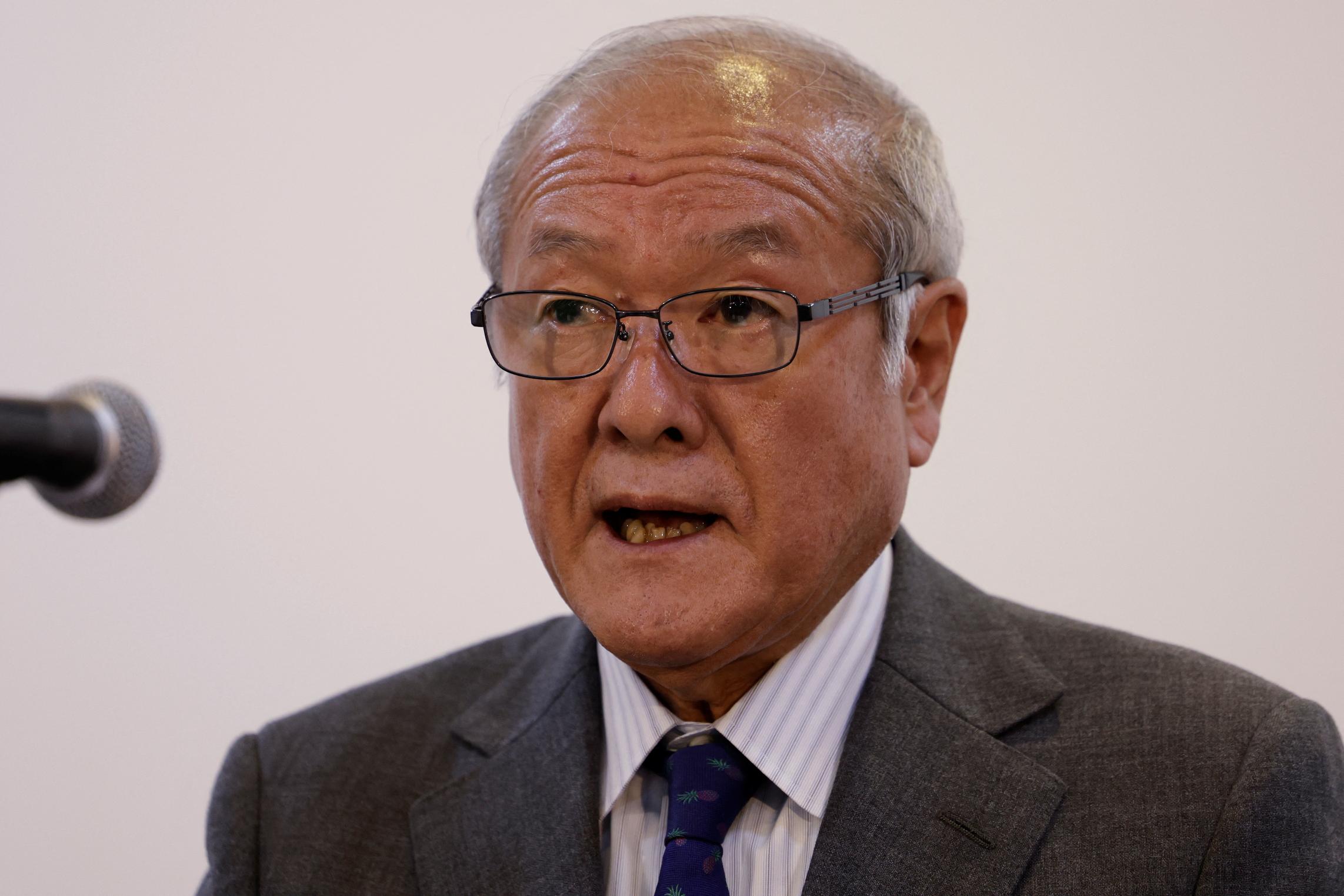
TOKYO, Nov 14 (Reuters) - Japanese Finance Minister Shunichi Suzuki said on Tuesday that the government would take all possible steps necessary to respond to currency moves, repeating his usual mantra that excessive swings were undesirable. Suzuki made the remarks when asked about impacts from the weak yen on households which have been pressured by rising living costs due to higher import prices for fuel and food. The Japanese currency has fallen to near 152 yen versus the dollar, its lowest in more than a year, which helps boost profits at exporters and firms doing business abroad while burdening other companies and consumers with rising import bills. "What's important is to maximise positive effects from the weak yen while mitigating negatives," Suzuki told reporters. The government is already taking steps to ease the burden on households through a proposed economic package for this fiscal year ending in March 2024, Suzuki said, but made no mention of further measures including whether Japan would intervene in the currency market. The yen has been under relentless selling pressure this year, weighed down by the Bank of Japan's pledge to maintain its ultra-easy monetary settings even as other developed economies have sought to keep rates higher for longer. Many in the market are focusing on interest rate differentials, with the prolonged monetary tightening in the U.S. a factor in the recent forex moves, Bank of Japan's deputy governor Shinichi Uchida told lawmakers at the parliament. Japan last intervened in the currency market - selling dollars and buying yen - in October last year. Intervention data released last month showed the authorities have steered clear of further such action since then. https://www.reuters.com/markets/currencies/japan-finmin-suzuki-will-continue-take-necessary-steps-forex-moves-2023-11-14/
2023-11-14 04:09
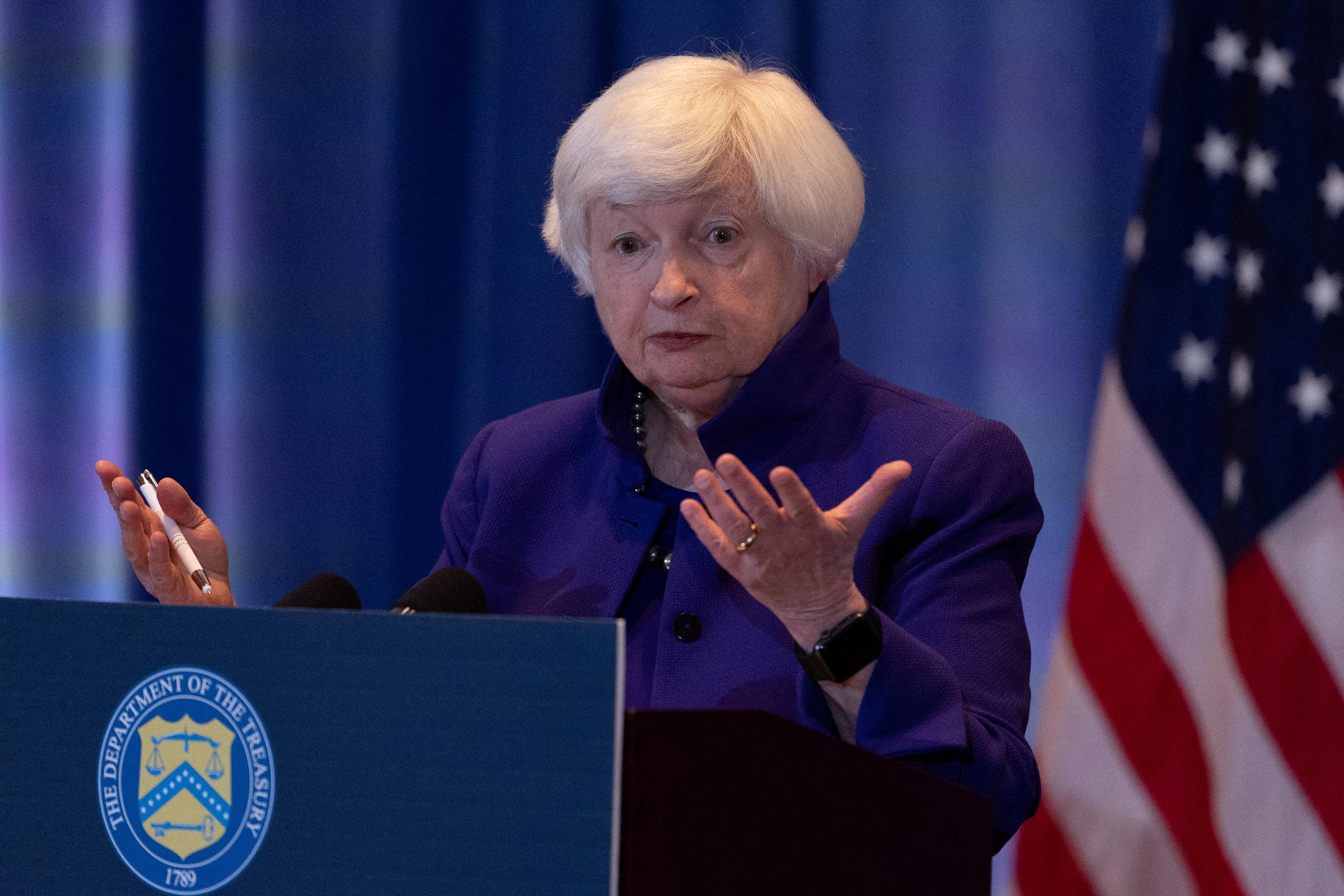
SAN FRANCISCO, Nov 13 (Reuters) - U.S. Treasury Secretary Janet Yellen on Monday said negotiations on the trade section of the Indo-Pacific Economic Framework will need further work, a setback for the Biden administration which had hoped to announce substantial outcomes this week. Yellen told a news conference there has been "very substantial progress" on three of the four areas under discussion by the 14 IPEF member countries, but there are "remaining issues" on trade. A centerpiece of the Biden administration's efforts to deepen economic ties with Asian nations and counter China's rising dominance in the Pacific, the IPEF is a forum for multilateral talks aimed at forging agreements in a range of areas, including trade. She said there had been "significant progress" on the trade pillar, "but it looks not to be complete, like something that is likely to require further work." "My understanding is that very substantial progress has been made on three of the four pillars," she said, referring to talks on supply chains, the climate transition, and anti-corruption. Yellen's comments were in line with those of people familiar with the talks, who told Reuters that talks on improving labor and environmental standards, and ways to enforcement compliance have run into resistance from some member countries. The Biden administration had hoped to announce some outcomes on the trade pillar this week as leaders of Asia Pacific Economic Cooperation (APEC) countries gather in San Francisco. U.S. President Joe Biden is eager to portray IPEF as producing meaningful outcomes to member countries, which are mostly APEC members, as he seeks to offer Asia a U.S.-led alternative to deeper economic ties to China. The IPEF negotiations were never aimed at reducing tariffs or improving market access for members, many of who were signatories to the Trans-Pacific Partnership trade deal that former President Donald Trump abandoned in 2017. People familiar with the talks said that an announcement of outcomes is more likely on clean energy cooperation and anti-corruption pillars of the IPEF. Only one of the four IPEF "pillars," on strengthening supply chains, has a completed text, with deals reached in May on an early warning system for potential supply disruptions like those experienced after the pandemic, as well as a council to consult on supply chain issues such as those involving national security or critical economic sectors. CHINA INVESTMENT CONCERNS Yellen said she was concerned about China's excess industrial capacity that could lead to global markets being flooded with goods as Beijing seeks avenues to boost flagging economic growth, issues that she said were discussed with Chinese Vice Premier He Lifeng last week in San Francisco. "We did talk about issues of oversupply that have arisen and could arise in the future in industries that China is investing in very heavily. And I do consider that a risk," Yellen said. Both agreed that the U.S. and China should seek fair trade relations and a level playing field on which their companies can compete, Yellen added. China targeted industries such as advanced semiconductors, aircraft, electric vehicles, farm equipment and other sectors in its recent industrial plans and has more recently sought to become self sufficient in technology sectors. https://www.reuters.com/business/yellen-indo-pacific-trade-talks-need-further-work-2023-11-14/
2023-11-14 03:14
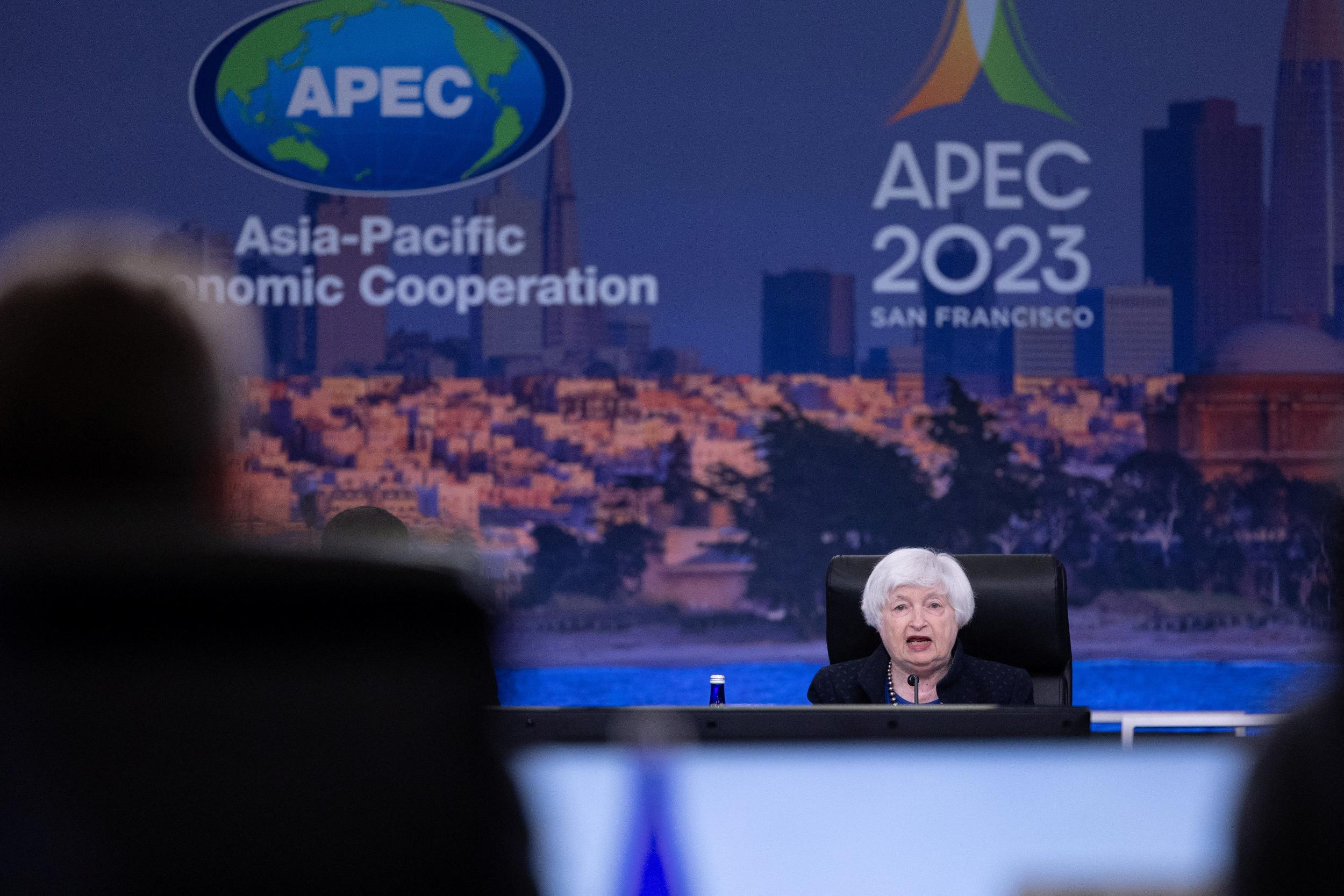
SAN FRANCISCO, Nov 13 (Reuters) - U.S. Treasury Secretary Janet Yellen on Monday pushed back on Moody's decision last week to cut its outlook on U.S. debt, saying the U.S. economy is strong and the Treasury market is both safe and liquid. "This is a decision I disagree with," she said at a news conference at the close of the APEC Finance Ministers' Meeting in San Francisco, California. The ratings agency on Friday lowered its outlook on the U.S. credit rating to "negative" from "stable," citing large fiscal deficits and a decline in debt affordability. The rise in long-term interest rates would create a challenge to debt sustainability if it lasts, Yellen acknowledged. However, the Biden administration is "completely committed to a credible and sustainable fiscal path," she said, citing plans to reduce the deficit and investments in the Internal Revenue Service, which collects taxes. Yellen also called on House Republicans to work to avoid a partial government shutdown that could come as soon as the end of this week. It is the third fiscal showdown this year, following a months-long spring standoff that brought the federal government to the brink of default. The possibility of a government shutdown is "an unnecessary economic headwind in a moment when the U.S. economy is doing well and moving in the right direction," Yellen said. The U.S. Treasury on Monday said the federal budget deficit in October shrank by nearly a quarter from a year earlier, as revenues climbed to a record for the month because of the influx of delayed tax payments from disaster-stricken areas. Data last month showed the deficit in fiscal 2023, which ended Sept. 30, was the largest outside the COVID-19 era at nearly $1.7 trillion. https://www.reuters.com/markets/us/yellen-says-she-disagrees-with-moodys-outlook-us-debt-2023-11-14/
2023-11-14 02:30
NEW YORK/LONDON, Nov 14 (Reuters) - World stocks soared on Tuesday after U.S. inflation data came in cooler than forecast in October, fuelling investor bets that an era of interest rate rises is over and borrowing costs may even soon start to fall. Data showed U.S. consumer prices were unchanged in October as gasoline prices fell, while underlying inflation showed signs of slowing. Excluding volatile food and energy components, the CPI increased 0.2% as rental housing costs rose. Analysts polled by Reuters had expected a 0.3% gain. By the end of the session in New York, the MSCI World Equity index (.MIWD00000PUS) had surged 1.9%. Stocks also rallied across the board on Wall Street. The S&P 500 index (.SPX) leapt 1.9%, the Dow Jones Industrial Average (.DJI) jumped 1.4%, and the Nasdaq Composite Index (.IXIC) advanced 2.4%, its best day since April 27. "You can say goodbye to the rate hiking era," said Brian Jacobsen, chief economist at Annex Wealth Management in Wisconsin. He said investors will now turn to bets on when U.S. Federal Reserve policymakers, led by Chair Jerome Powell, might start to cut rates. "If the Powell Pause began in July, we'll have to see how long he can hold rates here. In the soft landing of 1994-1995, the pause only last five months." Powell and other policymakers said before the latest U.S. inflation data that they were still not sure that interest rates were high enough to tame inflation. The pan-European STOXX 600 also jumped after the benign U.S. inflation report, and was last up 1.3%. In line with expectations that U.S. rates might have peaked, Treasury yields dropped on Tuesday. U.S. two-year yields , which reflect interest rate expectations, slid to two-week lows of 4.8318%, the biggest one-day drop since May 4. The benchmark 10-year yield fell to 4.4320%, a low not seen in nearly eight weeks. Lower yields dragged the U.S. dollar index down 1.47%. A softer dollar boosted the euro 1.7% to $1.08765 . Dollar weakness gave the yen, which has been stuck near its lowest level in three decades against the dollar, a little reprieve. The pair hovered around 150.325 , with the yen recovering slightly from Monday's 151.92. "We expect the Bank of Japan to move very, very gradually out of yield curve control and eventually out of negative rate policy, but this is unlikely to happen anytime soon," Pictet Wealth Management's macroeconomics chief Frederik Ducrozet said. Meanwhile, the pair is more likely to be driven by anything that moves the dollar, Ducrozet added. Euro zone government bond yields were also down. The benchmark 10-year German yield was at 2.596% . The Israel-Hamas war turned traders risk-averse in October, but world stocks have recovered almost 5% so far this month as investors bet major central banks have ended a lengthy run of rate hikes. Asked how long rates would have to stay high to beat inflation, European Central Bank President Christine Lagarde said in an interview over the weekend that no change should be expected in the "next couple of quarters." Wages in Britain grew slightly less quickly in the three months to September, official data on Tuesday showed. Wages previously rose at a record pace, leaving the Bank of England on alert for inflation. The euro zone economy contracted marginally quarter-on-quarter in the third quarter, a new estimate confirmed, underlining expectations of a technical recession if the fourth quarter turns out equally weak, but employment still rose. Oil prices were unchanged, paring gains eked out after the International Energy Agency (IEA) raised its demand growth forecasts. Brent crude futures stood at $82.47 a barrel, and WTI crude futures finished at $78.26 . https://www.reuters.com/markets/global-markets-wrapup-1-2023-11-14/
2023-11-14 02:12
BENGALURU, Nov 14 (Reuters) - The European Central Bank will hold interest rates steady well into next year, with a majority of economists polled by Reuters sticking to forecasts the first cut will have to wait until at least July despite expectations of a euro zone recession. Last month, the ECB left its deposit rate at a record high of 4.00% after raising rates for 10 consecutive meetings, and all 72 economists in a Reuters Nov. 8-13 poll agreed there would be no more hikes in the current cycle. While financial markets currently expect an April rate cut, the latest Reuters poll suggests that is unlikely, especially after ECB President Christine Lagarde said last month "even having a discussion on a cut is totally, totally premature." Around a 55% majority, 40 of 72, predicted rates would stay at current levels though the middle of next year. The remaining 45% saw a cut sometime before the ECB Governing Council meets in July. The results are similar to a survey last month where 58% expected no cut before the July meeting. "It seems that not much has to happen to push the eurozone into recession," wrote Peter Vanden Houte, chief euro zone economist at ING, noting that ECB has acknowledged growth has been weaker than it expected. "But that doesn't mean that the ECB is in a hurry to cut rates... We don't expect any rate cuts before the summer of 2024." An earlier than expected rate reduction would likely require a recession deep enough to prompt easing even if inflation remains above the ECB's 2% target. Over 40%, 15 of 35 economists, predicted another contraction this quarter after a flash estimate showed the 20-member bloc's economy shrank 0.1% in Q3, fulfilling the official definition of a recession. But the weakest GDP forecast provided for coming quarters was a modest -0.3%. Indeed, asked what type of recession the euro zone might enter, a strong majority, 24 of 29 respondents, said it would be short and shallow. Three said long and shallow, one said long and deep and another said short and deep. For now, the U.S. Federal Reserve is forecast to ease policy a little earlier than the ECB, by end-Q2, although most economists say the greater risk to their forecasts is that it moves later. The ECB, which began raising rates several months later than the Fed, could weaken the euro and introduce unwanted imported inflation if it moved before the Fed. In the meantime, price pressures were expected to remain sticky. Headline inflation, which the ECB targets at 2.0%, fell to a more than two-year low of 2.9% last month from a peak of 10.6% in October 2022. It was forecast to remain around where it is now in the first half of next year and average 2.7% in 2024. Core inflation - stripped of volatile food and energy prices and a better gauge of underlying demand - was seen averaging 5.0% this year and 2.6% next. The jobless rate was expected to rise only slightly to 6.7% from the current 6.5% by end-2024, the poll showed. https://www.reuters.com/markets/europe/ecb-hold-rates-through-mid-2024-despite-stalling-economy-2023-11-14/