2023-11-06 11:49
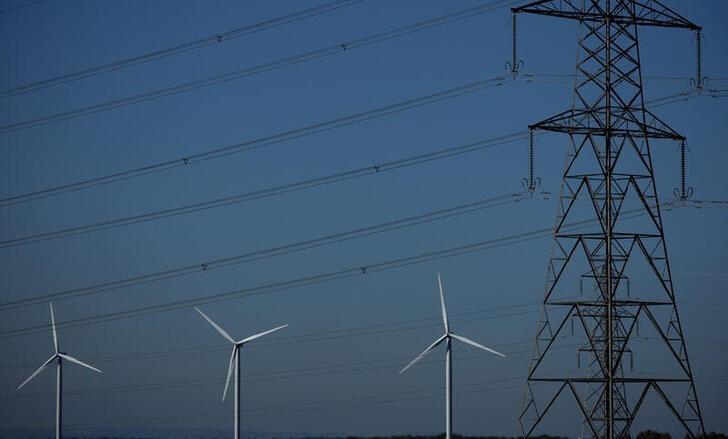
Nov 6 (Reuters) - National Grid (NG.L) said on Monday it was speeding up the connection of up to 20 gigawatts (GW) of clean energy projects to its electricity transmission and distribution networks in England and Wales. The company, which runs Britain's energy systems, said 19 battery energy storage projects worth around 10 GW on its transmission network would be offered dates to plug in, averaging four years earlier than current agreements. A further tranche of clean energy projects – primarily batteries and hybrids (batteries co-located with wind or solar projects) – will be offered accelerated transmission connections as part of another phase anticipated in the new year, which could bring forward another 10 GW, it said in a statement. Britain has a target to reach net zero emissions by 2050, which will require a huge scale-up of renewable power generation. The new policy is part of National Grid’s connections reform initiative targeting transmission capacity, spearheaded by National Grid’s Electricity System Operator (ESO). The 20 GW equates to the capacity of six Hinkley Point C nuclear power stations and follows months of work and engagement with industry, the statement said, referring to a major nuclear project being built in southwest England. "Bringing these battery projects forward is one of a range of actions that our electricity transmission business is delivering alongside the system operator and wider industry to unlock clean energy capacity in England and Wales," said Alice Delahunty, president of National Grid Electricity Transmission. https://www.reuters.com/sustainability/uks-national-grid-speed-up-connection-20-gw-clean-energy-projects-2023-11-06/
2023-11-06 11:45
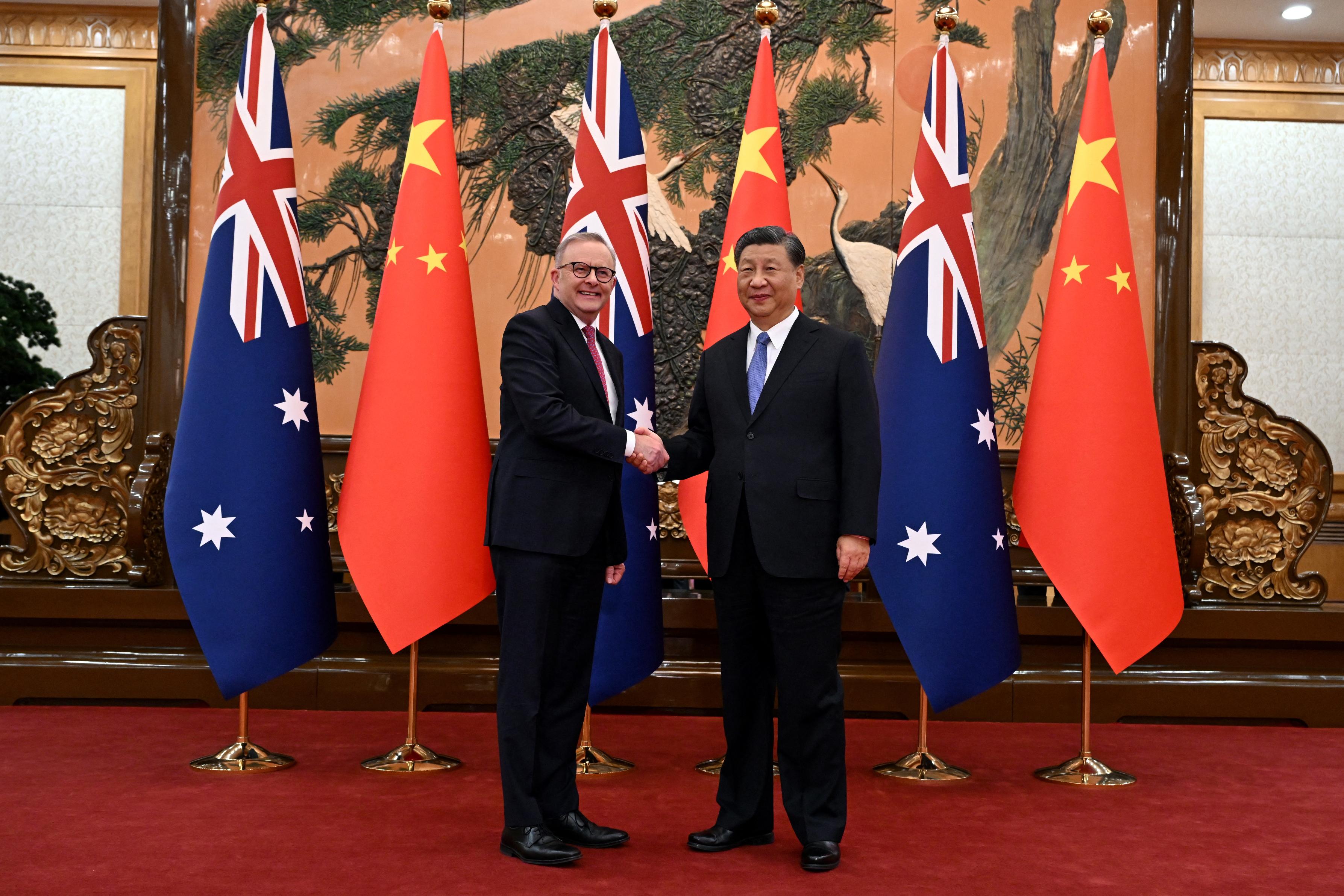
BEIJING, Nov 6 (Reuters) - Chinese President Xi Jinping said on Monday that a "healthy and stable" relationship with Australia served each country's interests, and that it was important to move forward with strategic ties. Mutual benefit is what China wants, Xi told Australian Prime Minister Anthony Albanese, the first Australian leader to visit Beijing since 2016, as both men met at the Great Hall of the People in the heart of the Chinese capital. A strong relationship between China and Australia "will be beneficial into the future," Albanese told Xi in their second face-to-face talks in a year. On his visit, Albanese is seeking to mend relations between the trading partners after disputes in recent years - over issues ranging from security concerns to the origin of COVID-19 - triggered Chinese blocks on Australian products including wine, barley and beef. Earlier on Monday, Albanese stopped by Beijing's Temple of Heaven, following in the footsteps of the first Australian leader to visit China five decades ago as diplomatic relations were being established. At the historic landmark, Albanese posed for a photograph at the circular Echo Wall, the spot where Australia's then prime minister, Gough Whitlam, stood in 1973, a year after the two countries established ties. "In China we often say that when drinking water, we should not forget those who dug the well," Xi said. "The Chinese people will not forget Prime Minister Whitlam for digging the well for us." For decades, China and Australia built a relationship on trade, with Beijing becoming Canberra's biggest commercial partner with purchases of Australian food and natural resources. But ties soured after Australia in 2017 accused China of meddling in its politics. The following year, Australia banned equipment from Chinese tech giant Huawei Technologies Co (HWT.UL) for its 5G network out of national security fears. An Australian call in 2020 for an international inquiry into the origin of the COVID pandemic, which emerged in the Chinese city of Wuhan in late 2019, infuriated Beijing, which responded with blocks on various Australian imports. As relations deteriorated, China warned its students against studying in Australia, citing racist incidents, threatening a multi-billion-dollar education market. 'PROMISING SIGNS' But Albanese took steps to stabilise relations after he became prime minister in May last year and met Xi on the sidelines of a G20 summit in Indonesia in November. China soon began lowering trade barriers, allowing imports of coal in January and ending tariffs on barley in August. Last month, Beijing agreed to review dumping tariffs of 218% on Australian wine. "I think there are promising signs," Albanese told reporters earlier on Monday. "We've already seen a number of the impediments to trade between our two nations removed and an uplift already, substantial uplift, in the trade between our two nations in issues like barley already restarting." China's January-September imports from Australia increased 8.1% from a year earlier to $116.9 billion, Chinese customs data show. In 2022, imports plunged 12.7% to $142.1 billion. But obstacles remain with Beijing's projection of power among Pacific island nations alarming Australia, while its security alliance with the United States and Britain in the Indo-Pacific has stoked China's worries about containment. Australian backing of a U.N. ruling rejecting China's territorial claims in the South China Sea has also angered Beijing, which has told Canberra the issue is not its concern. Australia says the South China Sea is an important passageway for its trade with Japan and South Korea. "What I've said is that we need to cooperate with China where we can, disagree where we must and engage in our national interest," Albanese said. https://www.reuters.com/world/asia-pacific/australias-albanese-retraces-historic-beijing-walk-visit-mend-ties-2023-11-06/
2023-11-06 11:37
A look at the day ahead in U.S. and global markets from Mike Dolan After its best week of 2023 on optimism about peaking interest rates, Wall Street's S&P500 (.SPX) looks set to record its longest winning streak since June as a key Federal Reserve loan report may well sustain the rates buzz. A below-forecast national payroll gain last month, a tick higher in the unemployment rate and moderating wage growth all catapulted stocks and bonds higher on Friday after a week brimming with hope the rate hiking campaign of the major central banks is over at last and a relatively soft landing beckons. The Fed's latest quarterly senior loan officer survey is due for release later on Monday and should reinforce the point that rate rises to date are taking effect on shrinking credit growth. For Fed futures markets, the game is up. No further rate rises are now priced into the market and more than 90 basis points of cuts are now seen by the end of the year. Ten-year U.S. Treasury yields have fallen about 50bps from October's peaks and the drop last week was the biggest recoil since March. Although they nudged back up about 3bps on Monday, they retained the vast bulk of last week's move with 3, 10 and 30-year bond auctions due on Tuesday, Wednesday and Thursday. Ebbing oil prices over the past week underscored the renewed bid in rates and bond markets, with the year-on-year decline in U.S. crude prices now tracking almost 12% - its biggest annual fall since August and encouraging for inflation watchers. Weekend developments on the Gaza conflict did little to change that picture, though confirmation of Saudi and Russian supply cuts stopped the spot price decline. If the Fed - which had been indicating that tightening financial conditions were doing some of its work for it - wants to protest the sudden loosening of the bond and equity markets, then chair Jerome Powell is due to speak again on Wednesday. But that easing of market conditions may well be warranted if signs of slowing activity in the real economy mount from here. For now, S&P500 futures are pointing to further slight gains on Monday - which if realized on the cash market later would make for the sixth straight gain and the longest daily run since June. The VIX (.VIX) volatility gauge, which on Friday fell below 15 for the first since September, tried to get a toehold back above that level today. Undermined by the retreat in Treasury yields, the dollar (.DXY) slipped back to the lowest since Sept 20. The backdrop of an easier dollar and Treasury yields provides significant relief for emerging markets, with MSCI's emerging market stock index (.MSCIEF) hitting its highest since Sept 20 too. Ahead of a full slate of Chinese economic updates later in the week, the offshore yuan also hit its highest in more than six weeks. However, China recorded its first-ever quarterly deficit in foreign direct investment, according to balance of payments data out on Monday, underscoring Beijing's challenge in wooing overseas firms amid "de-risking" moves by Western governments. U.S. Treasury Secretary Janet Yellen will meet with Chinese Vice Premier He Lifeng in San Francisco this week to try to deepen a fledgling economic dialogue between the world's two largest economies ahead of a summit of Pacific Rim leaders. But it was South Korean shares (.KS11) that outperformed all Asia markets. Seoul's Kospi index surged 5.6% after a weekend decision by regulators to re-impose a ban on short-selling shares at least until June - ostensibly to promote a "level playing field" for retail and institutional investors. In Europe, stock indexes (.STOXXE) gave back a little of last week's rally - but Ryanair (RYA.I) soared 6% after Europe's largest airline by passenger numbers forecast a record annual profit and promised a regular dividend payout. Key developments that should provide more direction to U.S. markets later on Monday: * Federal Reserve's Senior Loan Officer Opinion Survey on bank lending (SLOOS), U.S. Oct employment trends * U.S. corporate earnings: TripAdvisor, Goodyear Tire & Rubber, Vimeo, Aspen, Telesat, Realty Income, Conterra Energy, Constellation Energy, Diamondback Energy, Celanese, Vertex Pharmaceuticals, NXP Semiconductors, International Flavors & Fragrances, etc * Federal Reserve Board Governor Lisa Cook speaks; Bank of England Chief Economist Huw Pill speaks * U.S. Treasury auctions 3-, 6-month bills https://www.reuters.com/markets/global-markets-view-usa-2023-11-06/
2023-11-06 11:25
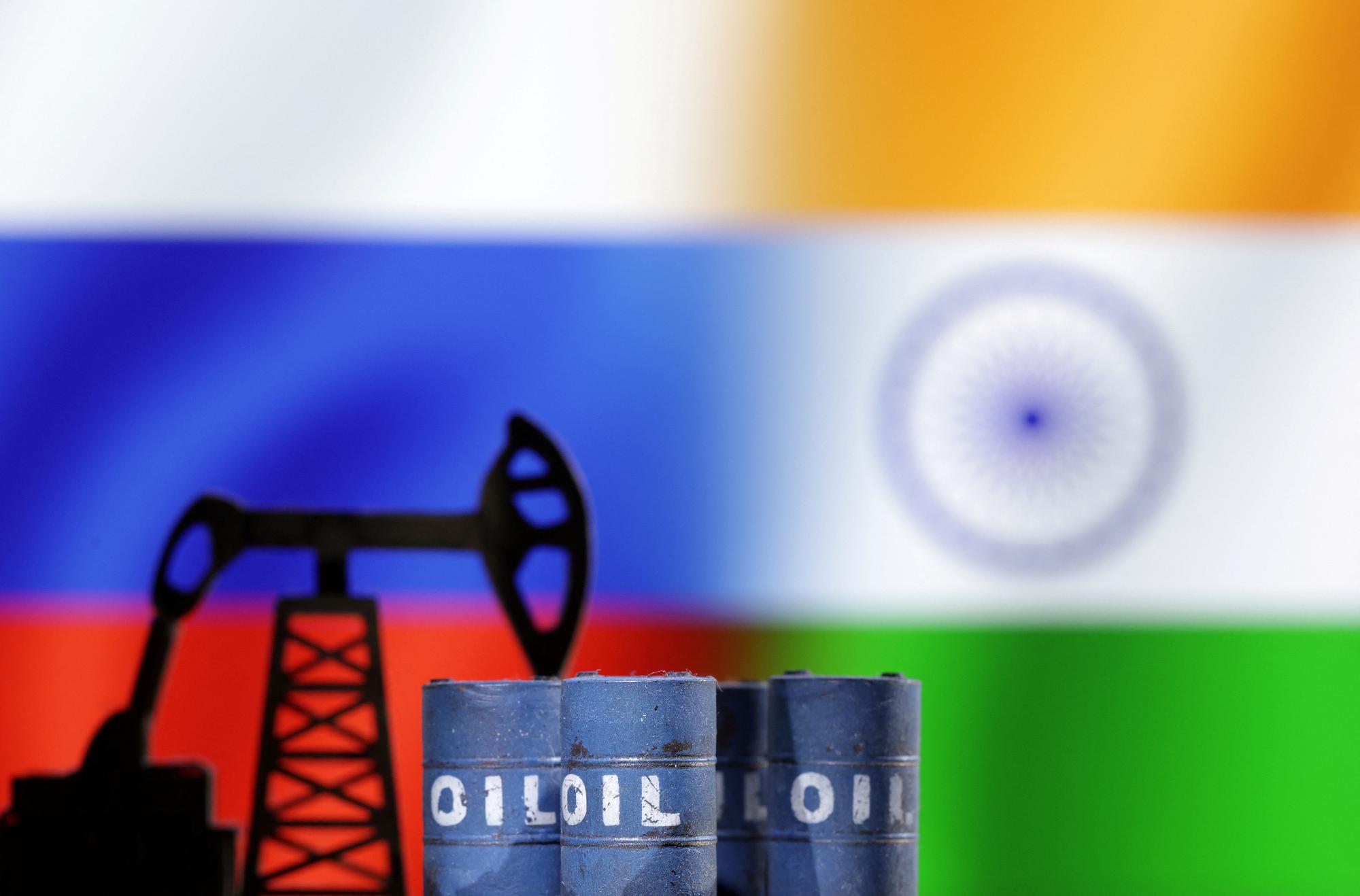
NEW DELHI, Nov 6 (Reuters) - The average landed price of Russian oil for Indian refineries in September eased from August, according to Indian government data, indicating widening discounts. Spot discounts for Russian crude in September started to widen as Indian refiners reduced purchases due to high prices and maintenance outages, Reuters reported in August. India bought Russian oil at an average price of about $81.7 per barrel, compared to about $86 per barrel in August, according to Reuters' calculations based on the latest data posted on the Indian Trade Ministry's website. Refiners in India mostly buy Russian oil on a delivered basis, with sellers arranging for shipping and insurance. India depends on imports to meet more than 80% of its overall oil needs and rarely bought Russian oil in the past due to high transportation costs. But it has become the biggest buyer of seaborne Russian crude as western nations shunned purchases from Moscow over its invasion of Ukraine in February 2022. The data does not specify freight, insurance and other charges paid by the refiners but the purchase price is significantly above the $60 per barrel price cap imposed by G7 nations. Russian oil has mostly traded above the price cap since mid-July, as discounts narrowed due to output cuts by OPEC+ producers, including Saudi Arabia and Russia. The average price paid by India for Russian oil in September was lower than for barrels from Iraq and Saudi Arabia, which averaged $83.56 and $96.16, respectively, the data showed. India imported about 1.42 million barrels per day (bpd) of Russian oil in September, down around 9% from August, while imports from Iraq rose by about 8% to 918,000 bpd, the data showed. https://www.reuters.com/markets/commodities/russian-oil-price-india-eased-september-vs-aug-govt-data-2023-11-06/
2023-11-06 11:23
Nov 6 (Reuters) - German chemicals maker Lanxess (LXSG.DE) trimmed its annual earnings guidance by 100 million euros ($107.50 million) on Monday on lower demand and continuing destocking by agriculture industry customers. The firm will also propose a reduced dividend of 0.10 euros per share for 2023 and plans to use saved cash for debt reduction. In 2022, it paid 1.05 euros per share to stockholders. This is the second time this year that Lanxess has cut its outlook. It now expects to reach earnings before taxes, interests, depreciation and amortization (EBITDA) pre-exceptionals within a range of 500-550 million euros. This is down from a previous range of 600-650 million euros and below market expectations for 2023 EBITDA of 571 million euros, according to a consensus by Vara research. The chemical group's shares dropped 4% on the news. Lanxess is due to report full third-quarter results on Nov. 8. Lanxess, which had initially managed to pass rising raw material and energy costs onto customers, is part of a string of German chemical companies that have slashed their forecasts over the year on the back of still high energy prices and lagging demand. ($1 = 0.9302 euros) https://www.reuters.com/markets/commodities/lanxess-trims-guidance-dividend-lower-demand-destocking-weigh-2023-11-06/

2023-11-06 11:13
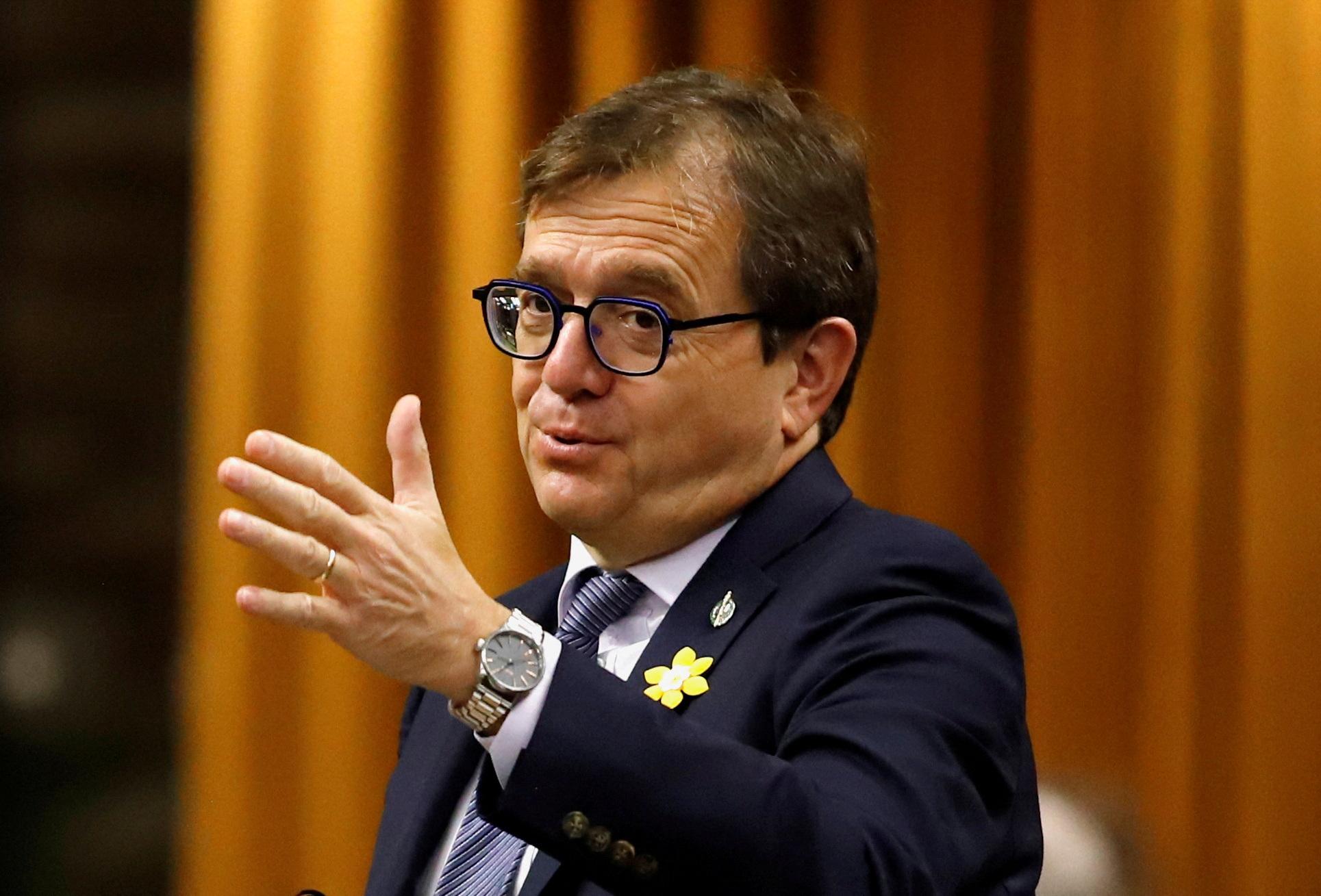
OTTAWA, Nov 6 (Reuters) - Canadian Prime Minister Justin Trudeau's decision to grant a three-year carbon tax exemption for heating oil is meant to provide targeted relief to rural and low-income households, the country's energy minister told Reuters, while defending the overall need for carbon pricing to meet climate goals. But critics have argued that Trudeau's surprise move last month will dilute the government's signature climate policy since 2019, which survived a challenge by right-leaning provincial premiers in Canada's Supreme Court. The reversal has been a political boost for Conservative Party leader Pierre Poilievre, who has opened a wide lead against the Liberal prime minister in opinion polls, though an election is not due until 2025. Poilievre, who has yet to outline his own climate policy, has vowed to "axe" the carbon tax if elected. "Heating oil is two- to four-times more expensive than natural gas. It went up by 75% in 2022," Energy and Natural Resources Minister Jonathan Wilkinson said in a recent interview. "If you look at the people who typically are using heating oil, it is people who generally are less well off." According to official data, only about 3% of Canadians use heating oil, with most of them concentrated on the Atlantic Coast, where Liberals have a strong contingent of parliamentarians. Trudeau's political legacy is tied to the success of the carbon tax and he has ruled out any further exemptions, despite calls by the provincial premiers to extend the exemption to natural gas, which would allow the whole country to benefit. But advocates say the carbon pricing scheme has been undermined by the move. "Framing this as an affordability issue is playing into the misperceptions of carbon pricing," said Dale Beugin, executive vice president of the Canadian Climate Institute. 'MAJOR CAPITAL INVESTMENTS' Canadians who pay the federal carbon tax receive quarterly rebates, irrespective of how much they reduced emissions, and 70%-80% of people received more money through rebates than they paid out in carbon taxes, he said. "It creates a sliver of expectation that the policy will change again, and if you make a big enough noise, the government will recant," Beugin said. Wilkinson said carbon pricing is "an effective way to address climate change" and a significant chunk of the emissions reductions associated with the government's climate plan are associated with the price on pollution. Around 50 countries have some form of carbon pricing, double the number 10 years ago, yet they are politically controversial. In Canada, the carbon tax has two levels: one for consumers when they pay for fuel and another for industrial emitters based on their output. Industry makes up some 40% of Canada's emissions, said Michael Bernstein, executive director of Clean Prosperity, a climate policy advocacy group. Trudeau has signed on to the Paris climate accords and is targeting net-zero emissions by 2050. When contacted for this story, Poilievre's office did not say whether the Conservative leader was in favor of scrapping industrial carbon pricing nor whether he had a net-zero target. "Trudeau is desperate to distract from the failure of his carbon tax chaos and is now unfairly punishing families who don't live in Liberal-held ridings," said Sebastian Skamski, a spokesperson for Poilievre. "Common-sense Conservatives will focus on technology, not taxes." Wilkinson said Poilievre's lack of a climate plan is hurting Canada as companies planning billions of dollars of clean tech investments need policy certainty. There are "a number of companies that are reflecting on major capital investments in the absence of having some certainty in a number of different areas. Carbon pricing is one," the minister said. https://www.reuters.com/sustainability/climate-energy/canadas-energy-minister-defends-carbon-tax-carve-out-heating-oil-2023-11-06/