2023-11-06 05:53
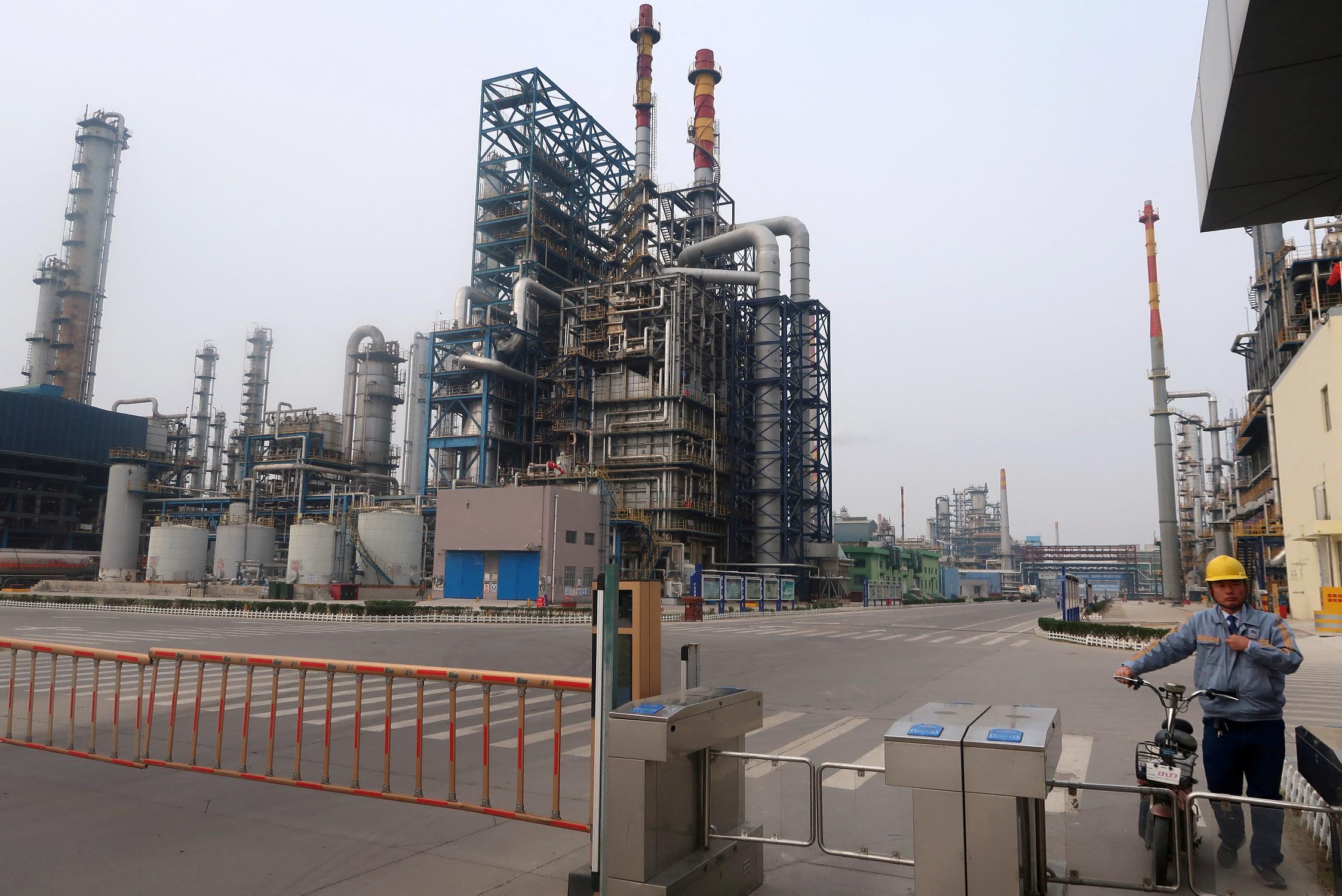
SINGAPORE, Nov 6 (Reuters) - China's oil refinery utilisation rates are easing from record third-quarter levels as thinning margins and a shortage of export quotas discourage plants from raising output for the rest of 2023, according to traders and industry consultancies. The drop in refining output could reduce crude demand from the world's top importer and cap global oil prices, pushing up China's crude inventories and dampening prices from top supplier Russia. China is expected to process 15.1 million barrels per day (bpd) in November, down from 15.37 million bpd in October, consultancy FGE said, primarily because of run cuts at small independents, known as teapots, and state refiners. "Refineries should be mulling marginal run cuts due to limited export quotas left for the remainder of this year," Mia Geng, FGE's head of China oil analysis, told Reuters, referring to state refiners. "On top of that, we are already seeing stockbuilds for transportation fuels on weakening demand." State refiners, which cashed in on lucrative fuel exports earlier in the year, see little incentive to boost throughput as Beijing is unlikely to release more fuel export permits this year. "Margins are almost disappearing as we're processing higher-priced crude while demand for refined fuel is weakening," said an official at a Sinopec (600028.SS) refinery, declining to be named, adding his plant is trimming runs by about 20,000 bpd this month to the lowest level this year. "Poor industrial demand for petrochemicals is not helping." Consultancy Energy Aspects trimmed its forecast for China refining runs in November and December by 100,000 bpd to average 15.65 million bpd in the fourth quarter. "Our Q4 runs forecasts are facing more downward pressures given recent teapots runs cuts driven by both plunging margins and crude import shortage," analyst Sun Jianan told Reuters in an email reply. CUT AT INDEPENDENTS Utilisation rates at teapots in the refining hub of Shandong province are averaging about 57%, down from about 65% in early October, according to China-based consultancy Longzhong, marking the lowest level since May 2022 when activity was crimped by China's COVID-19 curbs. The reduction came after refining margins slumped to about 200 yuan ($27.33) per metric ton in October, a 2023 low, and as Russian oil became more expensive. Consultancy JLC forecast independents, including teapots and large private refiners like Zhejiang Petrochemical and Hengli Petrochemical, to lower runs by 5%-10% in November versus October, to 4.5 million to 4.75 million bpd, and subsequently a further 3% reduction in December. The slowdown has seen China's overall crude inventory rise by 2 million barrels over the past two weeks to 958 million barrels, data from analytics firm Vortexa showed. In Shandong, crude inventories are at about 220 million barrels, off an early-August peak of about 230 million barrels but above the about 150 million barrels at the beginning of the year. Prices for December-arrival Russian ESPO crude retreated to par with, or a few cents a barrel below, ICE Brent on a delivered-ex-ship (DES) basis in China, three market sources said, down from a premium of about $1 a barrel last month - the first month-on-month price decline since February. "Teapots are more price sensitive now than a few months ago and are in no rush to stock up more oil," said another China-based oil trader. ($1 = 7.3191 Chinese yuan renminbi) https://www.reuters.com/markets/commodities/china-refiners-cut-oil-output-thin-margins-quota-shortage-bite-2023-11-06/
2023-11-06 05:34
Nov 6 (Reuters) - A look at the day ahead in European and global markets from Wayne Cole. It's been an upbeat start to the week in Asia as markets cast aside concerns about rate hikes, and go straight to pricing in early cuts. All the major equity indices are well into the green with South Korea (.KS11) surging 4%, helped by the re-imposition of a short-selling ban. U.S. equity futures and Treasuries have steadied after last week's big gains, with everyone waiting to see if yields can extend their bull rally or sellers re-emerge once more. The omens would seem to be positive given how benign the payrolls report was on almost every measure. Perhaps just as important was the strength of productivity that suggests unemployment does not need to rise as much as in the past to keep inflation restrained. Analysts already note that unemployment has climbed to 3.9%, from a trough of 3.4%, and similar-sized increases in the past have sometimes preceded recessions. Markets are clearly more confident inflation will continue to slow and that means central banks will have to ease just to stop policy becoming more restrictive in real terms. Fed fund futures imply around an 85% chance the Federal Reserve is done, and an 80% chance it will start cutting in June. Futures imply an 80% probability the ECB will begin easing as soon as April, and the first BoE rate cut is almost fully priced for August. Going the other way is the Bank of Japan, albeit at a sedentary pace. BOJ chief Ueda on Monday indicated they were creeping closer to their inflation target, but it was still too soon to abandon super-easy policy altogether. An outlier here is the Reserve Bank of Australia (RBA) which might well resume hiking on Tuesday after four months of steady policy outcomes. Analysts are almost all-in for a rise to 4.35%, but the market implies it could be a coin toss, setting the stage for some fireworks whatever happens. Note that at least nine Fed speakers are out this week to generate headlines, including two appearances by Chair Jerome Powell - the second of which on Thursday includes a Q&A session. There are also plenty of ECB speakers on the card, including President Christine Lagarde on Friday. As for the dollar, the payrolls report has stirred talk that the days of U.S. economic exceptionalism are numbered and the currency could be entering a downtrend. Bears will note the Atlanta Fed's usually reliable GDPNow measure is signalling a sharp Q4 slowdown to just 1.2% annualised. That is not to say Europe is faring any better, many analysts look for the EU to enter recession this quarter. But expectations were already so low that it's the dollar that has all the downside in the disappointment stakes. Key developments that could influence markets on Monday: - Data on German industrial orders, PMIs from across Europe - Virtual Q&A with Bank of England Chief Economist Huw Pill - Federal Reserve Board Governor Lisa Cook speaks https://www.reuters.com/markets/europe/global-markets-view-europe-2023-11-06/
2023-11-06 05:24
MUMBAI, Nov 6 (Reuters) - The Indian rupee strengthened on Monday after the U.S. treasury yields fell and the dollar ceded ground on bets that the U.S. Federal Reserve is likely done hiking rates in the current cycle. The rupee was at 83.1850 against the U.S. dollar as of 10:40 a.m. IST, compared with its close at 83.2850 in the previous session. Asian currencies were up sharply, led by the Malaysian ringgit and Korean won, but the rupee was a laggard amid persistent U.S. dollar demand from importers, traders said. U.S. treasury yields fell, after data released on Friday signalled that the country's labour market was cooling. The 10-year U.S. treasury yield was at 4.57% in Asia, well below last month's multi-year peak above 5%. The odds of a Fed rate hike at the December meeting are now at just 7%, down from 20% a week earlier, according to . The developments are "slightly positive for rupee," said Dilip Parmar, a foreign exchange research analyst at HDFC Securities. But foreign fund outflows are likely to weigh on the local unit and keep the prevailing range intact, Parmar added. The rupee has been range-bound between 83.0225 and 83.2950 for over one month. Overseas investors have been net sellers of Indian equities since September, selling shares worth $5.1 billion. "If it (USD/INR) doesn't break the range on the higher side in the next 2 weeks, it will fall to 82.80," a foreign exchange trader at a foreign bank said. While the current week is relatively light on economic data, investors will be eagerly awaiting the comments of Fed officials slated to speak at various forums. https://www.reuters.com/markets/currencies/rupee-rises-drop-us-yields-lags-rally-asian-peers-2023-11-06/
2023-11-06 05:16
Nov 5 (Reuters) - Barclays said it now expects the U.S. Federal Reserve to deliver a 25 basis point interest rate increase in January instead of an earlier expectation for a December hike. The brokerage cited softer-than-expected October employment data and dovish Fed commentary for the forecast push to next year. The Labor Department's closely watched employment report on Friday showed that the unemployment rate rose to 3.9% last month, the highest level since January 2022, from 3.8% in September. "We continue to think the FOMC (Federal Open Market Committee) will need to proceed with additional tightening and will have to maintain a higher rate path than expected by the market, with no rate cut prior to September 2024," economists at Barclays said in a note dated Nov. 3. https://www.reuters.com/markets/us/barclays-sees-fed-raising-rate-january-instead-december-2023-11-06/
2023-11-06 05:12
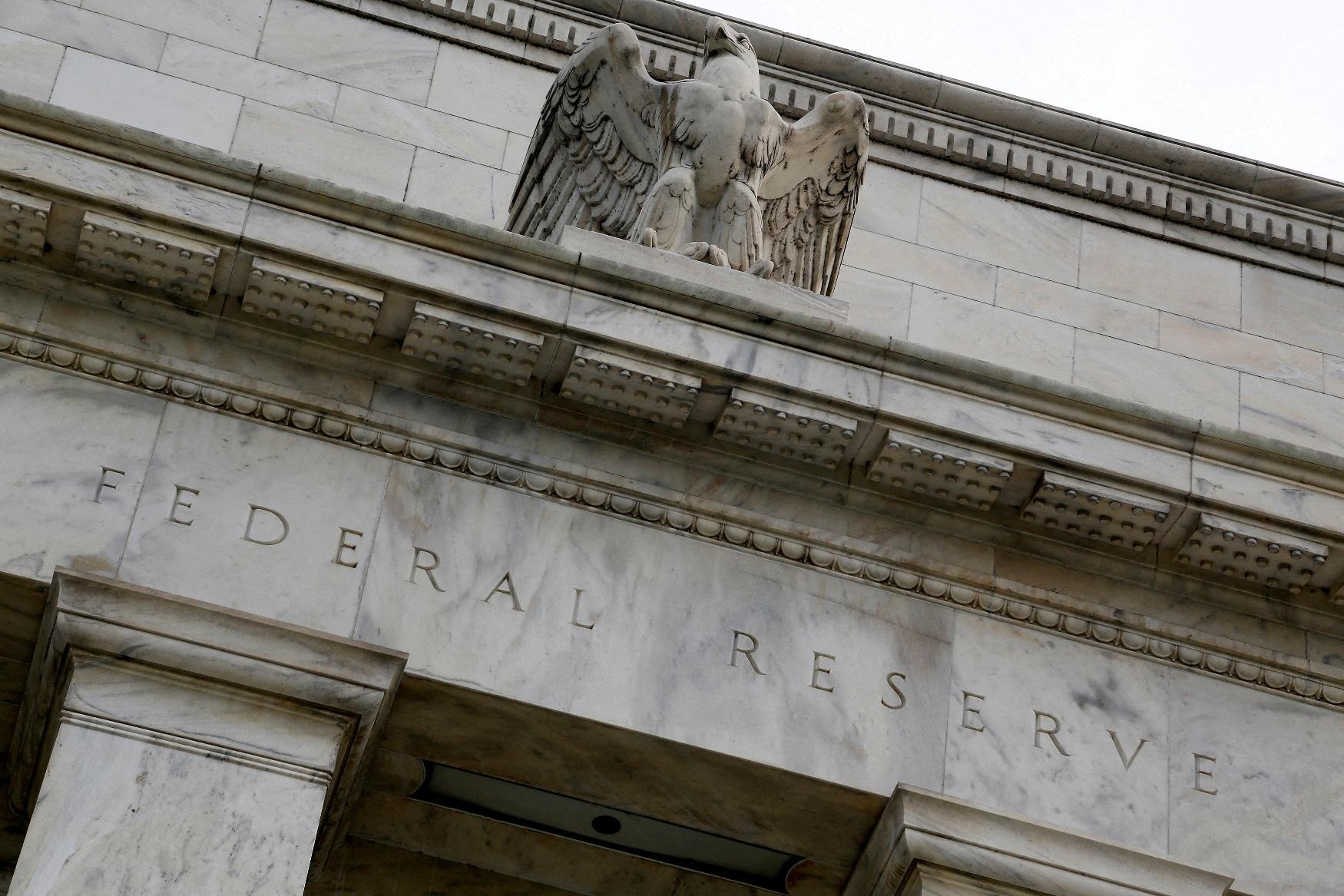
Stocks on Wall Street edge up; Europe lower Bond yields rise as rate cut hopes fade a bit Dollar hovers near six-week lows NEW YORK/LONDON, Nov 6 (Reuters) - A gauge of global equities rose and Treasury yields rebounded on Monday after last week's big rally in stocks and bonds on hopes that interest rates will soon be cut faded, with markets assessing an improving but still uncertain outlook for growth and inflation. The three main stock indices on Wall Street eked out gains, while major European equity indices closed down. The yield on 10-year Treasuries rose 9.1 basis points (bps) to 4.649%, reversing some of the 29 bps decline last week when the benchmark note posted its biggest weekly drop since March. A benign U.S. payrolls report on Friday and upbeat productivity numbers suggested the American labor market was cooling enough for the Federal Reserve to halt the need for further rate increases. But the drop in market yields is a double-edged sword as they could increase corporate loans and spur economic growth, said Gennadiy Goldberg, head of U.S. rates strategy at TD Securities in New York. "The markets are in wait-and-see mode," Goldberg added, as traders assess whether the economy slows further or in fact proves to be more resilient than the Fed would like to see. The U.S. central bank could even be forced to raise rates to ensure the pace of inflation remains on a downward trajectory and does not bounce back, Goldberg said. Futures now see the Fed's overnight lending rate staying above 5% through next June instead of July, and have priced in almost 85 bps of rate cuts by the end of 2024, or more than the 50 bps of cuts envisioned recently by policymakers. MSCI's gauge of stocks across the globe (.MIWD00000PUS) closed up 0.4% to post its sixth consecutive session of gains. But the pan-European STOXX 600 index (.STOXX) lost 0.16% as the major stock indices for France (.FCHI), Germany (.GDAXI), Italy (.FTMIB) and Spain (.IBEX) all fell. On Wall Street, the Dow Jones Industrial Average (.DJI) rose 0.1%, the S&P 500 (.SPX) gained 0.18% and the Nasdaq Composite (.IXIC) added 0.3%. 'SOME EQUILIBRIUM' "You need to see some equilibrium and some stabilization in rates to give more confidence that we have plateaued in terms of market rates," said Anthony Saglimbene, chief market strategist at Ameriprise Financial in Troy, Michigan. Stabilization can provide a little bit of bounce for equities and a little bit of price appreciation for the bond market, Saglimbene added. "Then investors can start pricing for what's the cost of capital as a business, what's the outlook for refinancing that debt?" Saglimbene said. "We're just not there yet." Markets also imply about an 80% probability that the European Central Bank (ECB) will cut rates by April, while the Bank of England (BoE) is seen easing in August. Central bankers have their own chance to weigh in on this dovish outlook, with at least nine Fed members speaking this week, including Chair Jerome Powell. Also on the docket are speakers from the BoE and ECB. An outlier is Australia's central bank, which is considered likely to resume raising rates at a policy meeting on Tuesday as inflation there stays stubbornly high. The Bank of Japan is also on the road to tightening, albeit at a glacial pace. The head of the central bank said on Monday it was closer to achieving its inflation target, but it was still not enough to end ultra-loose policy. Hopes for lower borrowing costs overnight helped shares in Asia, which missed out on Friday's rally that was inspired by the U.S. jobs data. MSCI's broadest index of Asia-Pacific shares outside Japan (.MIAPJ0000PUS) gained 2.1% on Monday. South Korea (.KS11) stood out, climbing 5.66% as authorities re-imposed a ban on short-selling to mid-2024. Germany's bund yield, the euro zone benchmark, rose 0.8 bps to 2.746% after seven sessions of declines. The recent retreat in Treasury yields stymied the dollar last week. The dollar index, a measure of the U.S. currency against six others, rose 0.12% at 105.19 after sliding 1.4% last week. The euro slipped 0.05% to $1.0723 after earlier hitting an eight-week high of 1.0756 following 1% surge on Friday. The dollar has lost ground in recent sessions even to the ailing yen to stand at 149.975 yen , a bit off from its recent top of 151.74. The drop in the dollar and yields has helped underpin gold, as investors have cautiously turned back to riskier assets. U.S. gold futures settled 0.5% lower at $1,988.60 an ounce. Oil prices edged higher after top exporters Saudi Arabia and Russia reaffirmed their commitment to extra voluntary oil supply cuts until the end of the year. Brent crude futures settled 29 cents higher at $85.18 a barrel, while U.S. West Texas Intermediate crude settled up 31 cents at $80.82. https://www.reuters.com/markets/global-markets-wrapup-1-2023-11-06/

2023-11-06 05:11
SINGAPORE, Nov 6 (Reuters) - Saudi Aramco has kept its December Arab Light grade official selling price (OSP) for Asian customers unchanged from the prior month, pausing a five-month price hike cycle, a company statement showed on Monday. The Middle Eastern oil kingpin set the OSP for Arab Light at $4 a barrel over the Oman/Dubai average, the same premium as November. The price change for the Saudi flagship grade is in line with market expectations, as refiners weighed weak oil processing margins and supply uncertainties. Top oil exporters Saudi Arabia and Russia confirmed on Sunday they would continue with additional voluntary oil output cuts until the end of the year as concerns over demand and economic growth continue to weigh on markets. Both countries said their cuts would be reviewed next month to consider extending, deepening or increasing them. On December OSPs, Saudi Aramco raised Arab Extra Light (AXL) crude price to Asia by 70 cents to $4.05 a barrel over Oman/Dubai quotes, a third monthly increase, underpinned by strong light sour crude prices in the spot market. "Such big price hike on AXL is really unexpected," said a Singapore-based oil trader. Saudi Aramco typically takes cues from the structure of light sour benchmark Murban when setting prices for AXL. Last month, spot premiums for Murban averaged at $3.88 a barrel over the Dubai quotes, up 45 cents from September. Market participants expect Middle Eastern light sour grades to face growing competition from arbitrage cargoes in Atlantic Basin and America, following a narrower spread between Brent- and Dubai-pegged crude. For other regions, Saudi Aramco cut its December Arab Light OSP to northwest Europe by $2.30 a barrel to $4.90 a barrel above ICE Brent. Meanwhile, the OSP of Arab Light to the United States was unchanged at $7.45 versus ASCI in December. https://www.reuters.com/markets/commodities/saudi-arabia-keeps-dec-arab-light-crude-oil-price-asia-steady-nov-2023-11-06/