2023-11-21 13:06
cpurl://apps.cp./cms/?pageId=stock-index-poll poll data NEW YORK, Nov 21 (Reuters) - The S&P 500 will end next year only about 3% higher than its current level, with a possible U.S. economic slowdown or recession among the biggest risks for the market in 2024, according to strategists in a Reuters poll released Tuesday. The benchmark index (.SPX) will finish next year at 4,700, according to the median forecast of 33 strategists polled by Reuters during the last week and a half. That is 3.4% higher than Monday's close of 4,547.38. Nine of 13 strategists who also answered a question on whether U.S. stocks will hit a record high in the coming six months said yes, and most of them said they expect it to happen in the early part of 2024. Wall Street stocks have rallied strongly in recent weeks, boosted by the view the Federal Reserve is done hiking interest rates and may begin to cut them at some point next year. Investors cheered benign October inflation data last week as Americans paid less for gasoline. The S&P 500 is up about 18% for 2023 to date. The Fed earlier in November held rates steady, but, since 2022, the U.S. central bank has hiked its policy rate 525 basis points in an effort to curb inflation. Worries persist the economy could fall into a recession next year or at least slow. "We see the economy weakening further into 2024, and, at some point the consumer will break," said Paul Christopher, head of global investment strategy at Wells Fargo Investment Institute. But, he said the firm thinks the U.S. economy could quickly switch to recovery mode in the second half of the year. WFII sees the S&P 500 ending next year between 4,600 and 4,800. Markets are anticipating inflation will decelerate and are currently pricing in a greater than 50% chance of a rate cut of at least 25 basis points by May, according to CME's FedWatch Tool on Monday. Still, Goldman Sachs's economic team wrote in a recent note the Fed will hold off cutting rates until the fourth quarter of next year, with stronger-than-expected economic growth helping to forestall a recession. Geopolitical problems are among other risks to the market heading into 2024, strategists said, with investors closely watching the war between Israel and Hamas militants in Gaza. Ten of the 13 strategists who responded to a question on the U.S. corporate profit outlook said they expect earnings to grow in the next six months. Overall S&P 500 earnings growth for 2023 is estimated at 2.3% after a weak first half of the year, according to LSEG data. Analysts expect earnings to rise 11.2% in 2024 over the previous year. But valuations have risen with recent market gains. The S&P 500 index's forward 12-month price-to-earnings ratio is now at 19.1, up from 17 at the end of 2022 and its long-term average of about 16, based on LSEG data. For some strategists, technology (.SPLRCT), which is up 52% for the year so far and S&P 500's best-performing sector, is still a favorite going into 2024. "The technology revolution continues," said Tim Ghriskey, senior portfolio strategist at Ingalls & Snyder in New York. Based on the poll, the Dow Jones industrial average (.DJI) will finish next year at 38,000, up about 8% from Monday's close. The Dow is up 6% so far in 2023. (Other stories from the Reuters Q4 global stock markets poll package:) https://www.reuters.com/markets/us/sp-500-see-small-gain-2024-us-economic-risks-rise-2023-11-21/

2023-11-21 12:15
LONDON, Nov 21 (Reuters) - Saudi Arabia, Russia and other members of OPEC are scheduled to meet in Vienna on Sunday and could make further changes to an agreement that already limits supply into 2024, according to analysts and OPEC+ sources, to support the market. Saudi Arabia, Russia and other members of the OPEC+ group of oil-producing countries have already pledged oil output cuts of about 5 million barrels per day (bpd), or about 5% of daily global demand, in a series of steps that started in late 2022. This figure includes a 1 million bpd voluntary reduction by Saudi Arabia and a 300,000 bpd cut in Russian oil exports, both of which last until the end of 2023. WHAT IS AGREED ALREADY FOR 2024? OPEC+ at its last meeting in June extended oil output cuts of 3.66 million bpd, amounting to 3.6% of global demand, until the end of 2024. That figure comprises a 2 million bpd cut agreed in 2022, and a further 1.66 million bpd in voluntary cuts from nine OPEC+ countries agreed earlier this year. The group also cut its overall production targets from January 2024 by a further 1.27 million bpd versus current targets to a combined 40.58 million bpd, including a later adjustment made to Russia's 2024 target. Including the additional voluntary cuts, which the nine participating countries extended to the end of 2024, this results in an even lower implied target in 2024 according to Reuters calculations (see table). In real terms though, this is around 740,000 bpd higher than OPEC+'s October 2023 production compared with International Energy Agency (IEA) figures, given the impact of the 1 million bpd Saudi voluntary cut being in place. Targets for several African members were reduced to bring them in line with declining production levels. The agreement also allows the United Arab Emirates, which has been boosting its production capacity, to increase output in 2024. WHAT MORE COULD THEY AGREE ON SUNDAY? Three OPEC+ sources told Reuters last week OPEC+ is set to consider whether to make additional oil supply cuts when the group meets. OPEC+ could further revise 2024 targets for Nigeria, Angola and Congo after reviews by outside analysts, it said in June. Angola and Congo are pumping below their 2024 targets due to falling capacity, while Nigeria has moved closer to or surpassed its 2024 target in recent months according to some assessments. Some analysts, including Energy Aspects, expect Saudi Arabia to extend its 1 million bpd voluntary cut to at least the first quarter of 2024. The following table shows OPEC+ production and targets in 2023-2024 in million barrels per day: * IEA figures ** Excludes Saudi Arabia's additional 1 million bpd voluntary cut from July 2023 to December 2023. . *** Russia's 500,000 bpd voluntary cut is from March 2023 to December 2024 to around 9.5 million bpd, according to Deputy Prime Minister Alexander Novak. Russia's 2024 target is based on a revision announced by OPEC on June 13. **** Figure is total for Bahrain, Brunei, Malaysia, Sudan and South Sudan ^ Includes extra voluntary cuts when announced https://www.reuters.com/markets/commodities/opec-oil-policies-what-cuts-are-already-place-what-could-change-2023-11-21/
2023-11-21 12:14
MOUZAKI, Greece, Nov 21 (Reuters) - Dimitris Kouretas, elected governor of Greece's central province of Thessaly last month in the wake of calamitous floods, struggles to sleep at night. The flooding in September - Greece's worst on record - devastated the fertile region, swept away agricultural land, roads and railways, and killed 16 people. It was the second major flood in three years to hit Thessaly, part of a pattern of worsening extreme weather in Europe. Kouretas reels off a list of flood protection projects left unfinished by previous governments, including reservoirs to retain water in the mountains, the dredging of riverbeds, and the removal of debris from previous floods. Some have been stalled for as long as two decades, he said. "Can I have a magic wand to solve the problem?" asked the 61-year-old, who is due to take office in January. Kouretas knows that his administration will be judged on its ability to cope with the next flood: "If you don't plan based on climate change adaptation ... then you will be exposed." Reuters conducted interviews with twelve disaster experts, government officials and environmentalists, and reviewed Greek court documents and EU reports, which showed that Greece's response is failing to keep pace with a rapid increase in extreme weather, held back by factors including bureacracy, inaction and ineffective climate adaptation techniques. Following the previous major storm that flooded Thessaly in 2020, Greece's conservative government promised to prevent a repeat of the disaster. Greece has made significant progress with reducing its greenhouse emissions and boosting renewables for electricity production. But, with its public finances still recovering from a decade-long debt crisis, Greece - like many countries around the world - is struggling to find the multi-billion-dollar funds needed to build resilience against extreme weather events. The United Nations Environment Program (UNEP) concluded in a report last month that insufficient investment and planning was leaving the world vulnerable as climate-related hazards grew, including in the eastern Mediterranean. Global funding shortfalls for adaptation are of the order of $194-366 billion, it estimated. "The climate crisis is coming faster than predicted," Environment Minister Theodore Skylakakis said, adding the scale of the issue had been underestimated at a European level. "These are pan-European questions... We are the first to experience them. But sooner or later we will all face them." Climate adaptation is a theme of this year's edition of the annual U.N. Climate Change Conference (COP 28) that opens on Nov. 30 in Dubai. SHORTCOMINGS Storm Daniel dumped the equivalent of 18 months of rain on Thessaly between Sept. 4 and 7, briefly transforming its fertile plain - bordered to the north by Mount Olympus, home of Greece's mythological Gods - into a lake. The floods covered more than 1,100 sq km, an area roughly the size of Los Angeles. It marked the end of a heatwave, one of Greece's longest in decades, which had already wreaked havoc with deadly wildfires. Neither floods nor fires are new to Greece but with climate change, they are becoming a frequent disruptor to an economy dependent on tourism and farming. The damage caused by Storm Daniel - estimated at over 2 billion euros according to a report by Dutch post-disaster advisors HVA International - has sparked an investigation into whether authorities did enough to prevent the disaster. A Sept. 13 prosecutor's order, reviewed by Reuters, showed judges in Thessaly are investigating local authorities' actions in 2020-2023 for potential violations, including mismanagement of funds, that could have aggravated the storm's impact. Former Thessaly governor Kostas Agorastos, who suffered a shock defeat in last month's election amid anger over the flooding, said that since 2020 around 70 projects have been undertaken worth 164 million euros, including cleaning up streams and reinforcing embankments. Some of them have not been finished. He did not comment on the investigation. Greece's multiple layers of bureaucracy can delay or derail projects. Just the permissioning for clearing a river can take years, says Giorgos Stasinos, head of the Technical Chamber of Greece, an engineers' association that acts as an advisor to the state on engineering and construction practices. "It could be two years in red tape for a project that takes two or three months to complete," he said, noting that local opposition on environmental grounds can result in lengthy court battles. Lack of government capacity has been another challenge. Greece's national meteorological service (EMY) does not have the equipment to issue real-time flood alerts, Greece's emergency plan issued in October 2022 says. Greece has launched a 2 billion euro programme which includes the purchase of meteorological radars and a so-called 'nowcasting' system that will help forecast floods. Opposition parties have accused Prime Minister Kyriakos Mitsotakis' government of lacking the political will to implement national plans for flood risks. "They are all left in a drawer," the head of the leftist Syriza party parliamentary group, Sokratis Famellos, said this month at an environmental conference. The European Commission decided on Nov. 16 to refer Greece to the EU Court of Justice for failing to provide updated flood maps after Athens missed a 2020 deadline. The environment ministry said it aims to deliver them by Nov. 30 and would include data on the worsening extreme weather of recent years, without which the maps risked being misleading. "We have to change our prediction methods," Skylakakis said, acknowledging the rapid pace of climate change. "Instead of focusing on the past, we must look at the future." DUTCH MODEL A building frenzy in Greece that started in the 1950s - amid a post-war economic boom - led to chaotic urban development. It is not uncommon to see buildings on dried-up river beds which turn into torrents in heavy rain. The buildings dotting the banks of Thessaly's Pamisos river, whose riverbed has been narrowed near the town of Mouzaki by as much as 70%, is a case in point. A medical care unit in Mouzaki partially collapsed into the river in 2020; another two-storey building was swept away this year. Thanos Giannakakis, WWF's Nature-Based Solutions Coordinator, said extreme weather made it vital to restore the natural environment around Greece's rivers': "the only way out is to give rivers space, to reconnect them with flood plains". The restoration of riverside forests, natural meanders in waterways and weirs in the mountains would all help diminish flooding, he said. Greece plans to devote 3.2 billion euros of state and EU funds on climate resilience by 2027, Deputy Finance Minister Nikos Papathanasis told Reuters. Netherlands, a leading adopter of "nature-based" solutions, spent a roughly equal amount of about $2.8 billion dollars to encompass 30 projects in 2007-2022 for its "Room for the River" programme. It gave four rivers in the Dutch delta space to flood safely. Measures included relocating dykes inland, lowering of floodplains and groynes, creating high-water channels and water storage areas. Following Storm Daniel, Greece sought help from Netherlands-based HVA International, an agricultural firm that offers post-disaster advice. HVA teams found poor dyke maintenance, uncleaned riverbeds and overlapping roles in flood defence management, its CEO Miltiadis Gkouzouris told Reuters. According to HVA's mission report, all flood defense infrastructure has to be rebuilt while protocols for crisis management, clearly stipulating responsibilities and actions to be taken, are needed. "There is a clear momentum and need for fundamental change," said the report, released last week. EUROPE'S HELP NEEDED Greece, the most indebted nation in the euro zone in terms of share of GDP, approved an additional 600 million euros for disaster relief measures this year. The government announced in September a doubling of the annual funds set aside for natural disasters from 2024 to 600 million euros, though officials acknowledge it will not be enough. Mitsotakis has urged the EU to top up its solidarity fund and help countries tackle the impact of climate change. With the government unable to cover all the risks, Mitsotakis said in September it plans eventually to make private flood insurance mandatory and will, in the meantime, offer tax incentives from next year to people who insure their homes. Greece's central bank warned in 2011 the economic cost of climate change will hit 700 billion euros by 2100, equivalent to more than three years of economic output, if the country does not act. Adaptation measures worth 67 billion euros could reduce that loss to 510 billion euros, the country's leading economic think tank IOBE said in a February report. But officials say there is only so much the country can do. "No country in the world is planning for once-in-1,000-year rain water levels because it wouldn't be drowning in rain water, it would be drowning in debt much sooner," said Petros Varelidis, Secretary General for Water Management at the Environment Ministry. https://www.reuters.com/world/europe/greek-floods-fires-expose-europes-frail-climate-defences-2023-11-21/

2023-11-21 11:46
OSLO, Nov 21 (Reuters) - The global oil market will see a slight surplus of supply in 2024 even if the OPEC+ nations extend their cuts into next year, the head of the International Energy Agency's (IEA) oil markets and industry division told Reuters on Tuesday. At the moment, however, the oil market is in a deficit and stocks are declining "at a fast rate", Toril Bosoni said on the sidelines of a conference in Oslo. "Global oil stocks are at low levels, which means that you risk increased volatility if there are surprises on either the demand side or the supply side," she added. OPEC+ is set to consider whether to make additional oil supply cuts when the group meets later this month, three OPEC+ sources have told Reuters after prices dropped by some 16% since late September. Oil has slid to around $82 a barrel for Brent crude from a 2023 high in September of near $98. Concern about demand and a possible surplus next year has pressured prices, despite support from the OPEC+ cuts and conflict in the Middle East. Saudi Arabia, Russia and other members of OPEC+ have already pledged total oil output cuts of 5.16 million barrels per day (bpd), or about 5% of daily global demand, in a series of steps that started in late 2022. The cuts include 3.66 million bpd by OPEC+ and additional voluntary cuts by Saudi Arabia and Russia. At its last policy meeting in June, OPEC+ agreed on a broad deal to limit supply into 2024 and Saudi Arabia pledged a voluntary production cut for July of 1 million bpd that it has since extended to last until the end of 2023. Brent crude futures fell 34 cents, or 0.4%, to $81.98 a barrel by 1134 GMT. https://www.reuters.com/markets/commodities/iea-sees-surplus-oil-supply-2024-even-if-opec-extends-current-cuts-2023-11-21/
2023-11-21 11:44
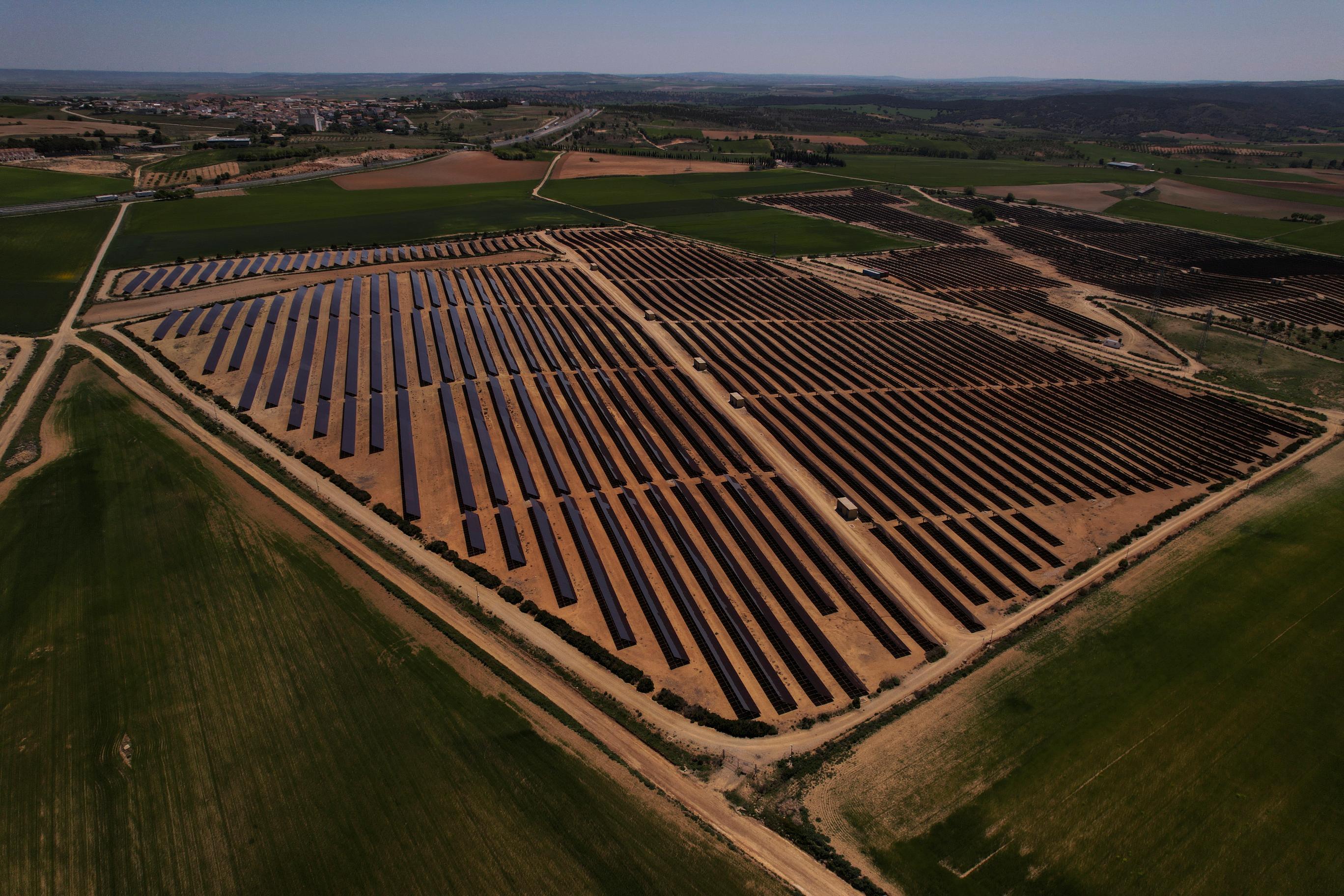
MADRID, Nov 21 (Reuters) - Spain's Grenergy (GREG.MC) plans to more than double its U.S. solar power generation and battery storage projects pipeline in the next three years under a 2.6 billion euro ($2.84 billion) investment strategy. Spain's energy firms such as renewables giant Iberdrola and oil major Repsol have increased their focus on the United States as they try to take advantage of massive subsidies included in the Inflation Reduction Act (IRA). "The U.S. is the future," Grenergy operations chief Pablo Otin said during its first capital markets day on Tuesday. "The U.S. is, right now, the most desirable market to be in...It's predictable, it's stable and it gives you long-term visibility," he said, with reference to the IRA. Grenergy has yet to be built renewable projects in the U.S. with potential for 4.7 gigawatts (GW) of capacity, and wants to increase its pipeline to more than 10 GW by 2026. Of this, roughly 1.1 GW will be in operation or under construction. Overall, U.S. projects will account for around 30% of its installed capacity in 2026, net of sales. Grenergy's expansion is part of a growth strategy aimed at raising its installed solar capacity to 5 GW by 2026, while renewable energy storage capacity would reach 4.1 GWh. Excluding assets earmarked for sale, the targets are 3.5 GW and 3 GWh respectively. Like other energy companies, Grenergy will raise cash to fund new projects with disposals. It plans to sell 350-450 megawatts (MW) of solar capacity every year and 1 GWh of storage, netting more than 600 million euros by 2026. "M&A is something we have been doing every single year from our inception and it is intensifying," Chief Executive David Ruiz de Andrés said. "We have plenty more projects to build and rotate," he said. Grenergy is aiming for earnings of between 250 million euros and 300 million euros in 2026 from its energy business. "The strategy ... has moved from a solar model towards solar plus batteries where the company could sell electricity during the more expensive hours of the day and be less impacted by solar price cannibalisation and curtailments with more stable long term cash flows," RBC analyst Fernando Garcia said. ($1 = 0.9168 euros) https://www.reuters.com/sustainability/spains-grenergy-invest-26-bln-euros-through-2026-2023-11-21/
2023-11-21 11:41
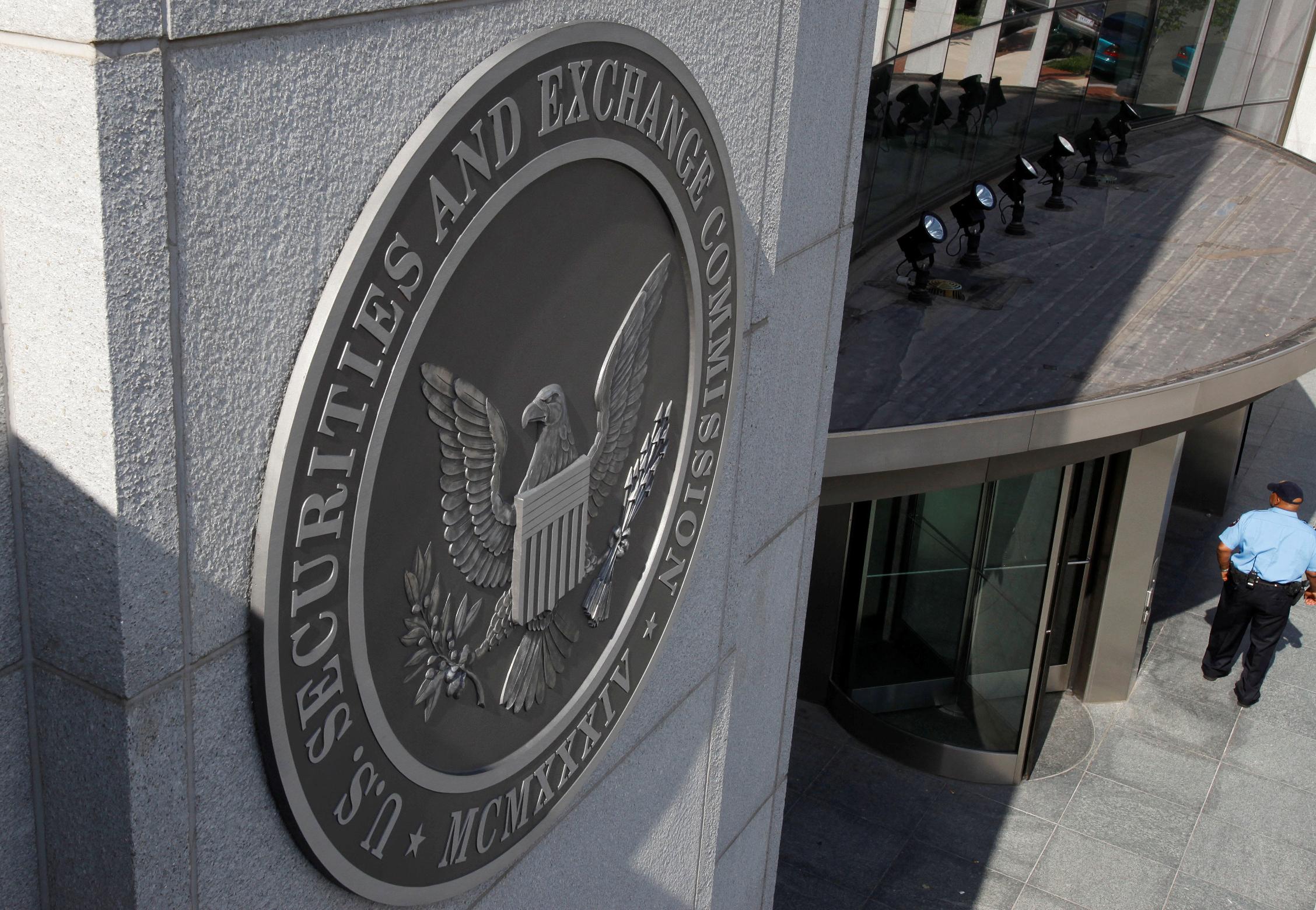
WASHINGTON, Nov 21 (Reuters) - Facing a wave of new rules and encouraged by a sympathetic judiciary, U.S. financial firms and their trade groups are growing bolder about fighting Democratic President Joe Biden's regulators in court. From fair lending requirements and increased investor disclosures, to bank capital hikes, a slew of new rules aimed at lenders, funds and at other companies threaten to increase compliance costs and dent profits. Biden's regulatory appointees were given a mandate to take on perceived corporate profiteering, bolster rules relaxed by the Republican former President Donald Trump's administration, and address Democratic priorities such as income inequality and climate change. This year's bank failures have only bolstered their cause. Multiple industry executives said firms are more willing to litigate than in the past because the regulations are frequently ill-conceived and rushed, and will ultimately hurt consumers, investors and the economy. Over the past 18 months, more than 30 companies and trade groups representing banks, funds and other firms have brought at least 15 suits against financial regulators over major rules, policies and supervision issues, according to a Reuters tally. Historical litigation data was not immediately available. Most of the suits allege violations of the Administrative Procedure Act (APA) which requires regulators to justify rules and allow time for, and fully consider, public feedback. "The regulatory agencies are more willing to cut corners. They're giving industry short comment periods and they're not going through the APA process," said Tom Quaadman, an executive vice president at the U.S. Chamber of Commerce. The group usually has one active case against financial regulators, but currently has two against the Securities and Exchange Commission (SEC) and one against the Consumer Financial Protection Bureau (CFPB), he said. Others are suing for the first time. In September, six industry groups including the Managed Funds Association (MFA) and Alternative Investment Management Association (AIMA) alleged in a filing with the Fifth Circuit Court of Appeals that SEC private fund rules violated the APA, the pair's first suit against a regulator. "Ordinarily, litigation against a national regulator is not a course of action we would seek to pursue," said AIMA CEO Jack Inglis, but the group felt "compelled to" because the SEC overstepped its authority and didn't account for legitimate industry concerns. Spokespeople for the MFA and CFPB declined to comment. The SEC "undertakes rulemaking consistent with its authorities and laws governing the administrative process, and we will vigorously defend challenged rules in court," an SEC spokesperson said. "These rules are incredibly important to protecting consumers, investors, and financial stability," said Dennis Kelleher, CEO of nonprofit Better Markets. "Knowing their every action is under a litigation microscope, the regulators are being very careful to follow the letter and spirit of the laws." To be sure, the financial regulators have been sued many times during previous administrations, including by pro-reform advocacy groups. But some executives said the industry is also emboldened by a more conservative judiciary wary of regulatory overreach. Trump appointed 54 judges to the U.S. appeals courts, where many suits against federal agencies are filed. He also pushed the Supreme Court to a 6-3 conservative majority. The majority of the suits were filed in conservative leaning courts, including seven in the Fifth Circuit's jurisdiction, which has become a magnet for litigation against Biden regulators. Last year's Supreme Court decision curbing the Environmental Protection Agency's powers, which raised doubts over whether other federal agencies have the authority to tackle major policy questions, was also a positive development for the industry, executives said. The Chamber, American Bankers Association and others in September won a case against the CFPB over changes to the agency's exam manual partially on the "major questions" grounds. Crypto companies have also cited the major questions doctrine when disputing the SEC's authority to regulate them. Speaking at an industry event last month, Eugene Scalia, Gibson Dunn partner who has sued the government many times and is representing the industry in the private funds case, noted the judiciary, including the Supreme Court, is very focused on addressing abuses by the administrative state. "Part of what you're seeing is regulated entities recognize that and are more comfortable now coming to the courts when they think something's been done that's unfair or wrong," he said. "There are some financial regulators that are walking right into it," he added. Scalia, former Labor Secretary and son of the late Supreme Court Justice Antonin Scalia, did not respond to a comment request. Some plaintiffs said the political leaning of the courts was not a motivating factor and pointed out that the Fifth Circuit Court of Appeals last month upheld the SEC's approval of Nasdaq's board diversity rule. " You still have to make the arguments," said Quaadman. 'LAST RESORT' Traditionally, banks and investors have been reluctant to sue and risk souring relations with regulators they work with daily, or drawing adverse public scrutiny. Many prefer to sue through trade groups and it's not a decision taken lightly. "It's our last resort," said Rebeca Romero Rainey, CEO of the Independent Community Bankers of America, which in August joined a lawsuit challenging a CFPB data collection rule. "The hope would be that we could resolve these issues through other means." But as agencies increasingly ignore industry concerns, firms feel they have little to lose, executives said, adding more litigation is being considered. In September, for example, bank groups accused regulators including the Federal Reserve of violating the APA with a new capital rule. At the same event, Scalia said he saw flaws in the way regulators were handling feedback on the rule which, if not rectified, "will be a vulnerability when litigation does occur." According to research by Wharton School professor David Zaring, neither industry groups nor individual lenders have filed more than one suit over the past decade challenging Fed policymaking. The Fed declined to comment, but officials say they welcome input and have given the industry more time to feed back. "With this many judges in courts biased in favor of the industry, it would be irrational for the industry not to sue," said Kelleher. https://www.reuters.com/markets/us/wall-street-heads-court-fend-off-bidens-regulators-2023-11-21/