2023-11-21 11:32
AMSTERDAM, Nov 22 (Reuters) - The Dutch will elect a new parliament on Nov. 22 in an election that will bring the Netherlands its first new prime minister in over a decade, and determine how conservative the country's new cabinet may be. WHY WAS THIS ELECTION CALLED? Outgoing Prime Minister Mark Rutte's centre-right government collapsed in July over differences in how to reduce the flow of asylum-seekers entering the country. Rutte, the country's longest-serving prime minister, has lost popularity and promised not to stand again. WHAT ARE KEY VOTER ISSUES? The Dutch campaign has centred on three issues: immigration, living standards and climate change. With unemployment below 4%, key social issues include a housing shortage, failures of the healthcare system, and resentment that the gap between rich and poor has been increasing in the famously egalitarian Dutch society. Immigration has been a problem in the Netherlands since the early 2000s, and restricting asylum seekers and labour migrants remain important themes. Voters motivated by the climate crisis say the country needs to accelerate investment in green infrastructure, and end subsidies that benefit fossil fuel companies. WHAT CHANGES COULD A NEW DUTCH GOVERNMENT BRING? A majority of voters support right-leaning parties, but no party is on track to take more than 20% of the vote. That means difficult coalition talks and compromises lie ahead. A hard right coalition could approve building new nuclear plants, as well as new strategies to restrict immigration, and tweaking plans to reduce livestock and fertilizer use, which are strongly opposed by farmers. Conservative parties have not ruled out seeking exemptions from European Union rules to achieve those goals. A more centrist coalition would likely continue an ongoing build-out of renewable energy, notably wind farms in the North Sea, bar drilling for natural gas, follow through on plans to cut livestock, and increase social spending, including raising the minimum wage. Virtually all parties say they want to address a housing shortage. WHO'S IN THE RUNNING TO REPLACE RUTTE? There are four candidates with a shot at replacing Rutte. Dilan Yesilgoz, who leads Rutte's conservative VVD Party, herself a Turkish immigrant who would be the Netherlands' first woman prime minister. Frans Timmermans, the EU's former climate chief who is leading a combined ticket for the Labour and Green Left Parties. Pieter Omtzigt, a former Christian Democrat who has launched his own protest party called "New Social Contract", focused on reforming the Dutch political system. Geert Wilders, the long-time anti-Islam politician, who has positioned his Freedom party as more moderate lately in hopes of entering government. THE VOTE AND AFTERWARD Voting booths are open from 7:30 am and close at 9 p.m. (2000 GMT), when national broadcaster NOS will announce its first exit poll. Late in the evening, party leaders will respond, though vote counting will not be completed until Nov. 23. The old parliament is expected to convene on Dec. 5 and new parliament to sit for the first time on Dec. 6. Jockeying to form a new government begins fairly quickly after the vote, but the process has many steps. The party that emerges as largest traditionally takes the lead by naming a first negotiator. Talks typically take months as parties consider what compromises they are willing to make, as well as which combinations would also command a majority for policies in the Senate (which vets laws and is not affected by the Nov. 22 election) or whether a minority cabinet could work. Rutte and his current team will remain in a caretaker role until the new government is installed, likely in early 2024. https://www.reuters.com/world/europe/whats-stake-netherlands-nov-22-election-2023-11-20/
2023-11-21 11:25
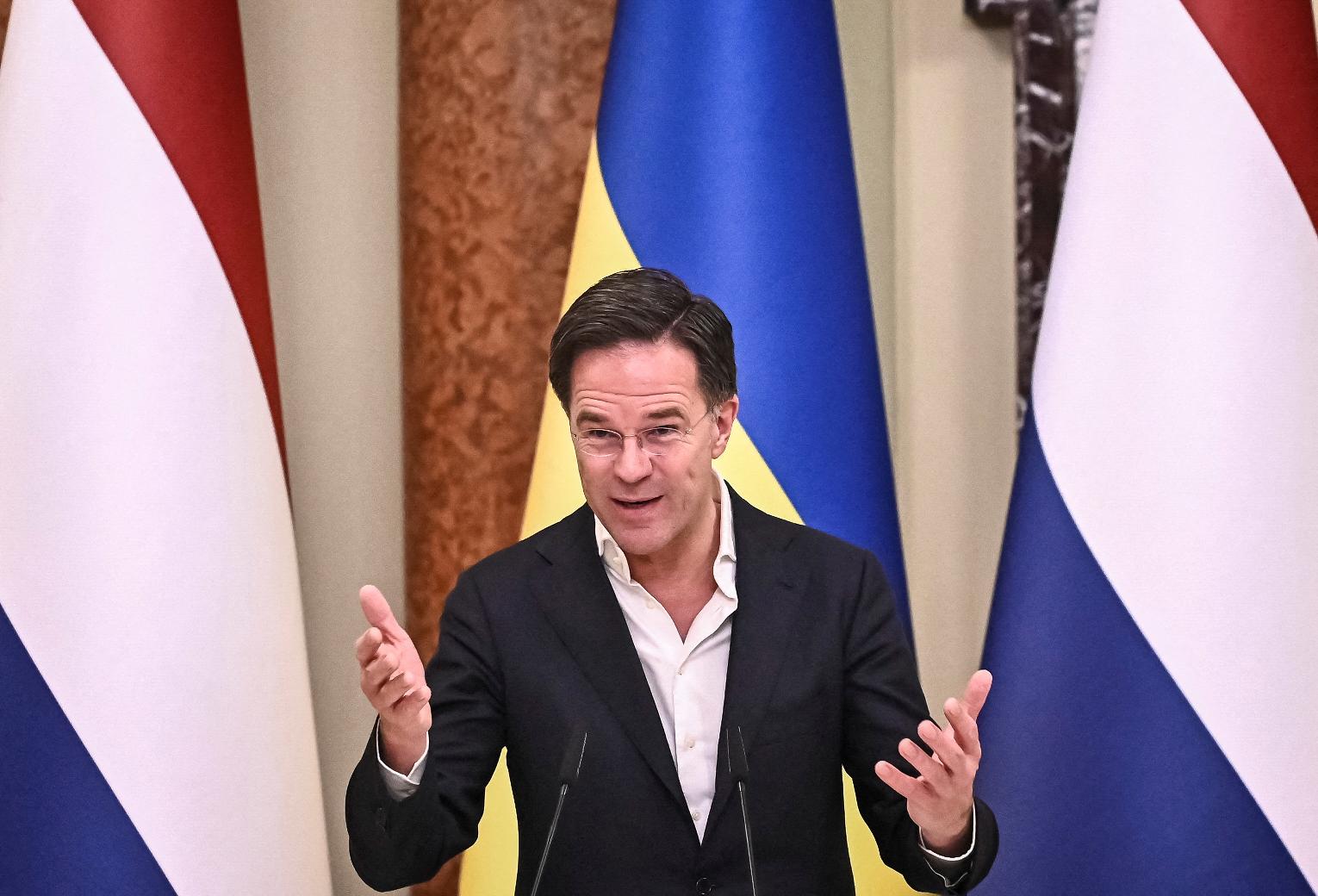
A look at the day ahead in U.S. and global markets from Mike Dolan A cocktail of renewed AI excitement, Nvidia's (.NVDA) imminent earnings update, an impressive 20-year Treasury auction and a leveling off of crude oil prices has invigorated the holiday week. Intrigue and speculation over this year's artificial intelligence craze has gone up several gears since Friday's ouster of Sam Altman as boss of ChatGPT-developer OpenAI and his subsequent defection to the firm's biggest sponsor Microsoft (.MSFT) - fueling talk Big Tech will hoover up all the talent in the area. While the OpenAI boardroom row seems to center on the speed and openness of further AI development, amid some regulatory disquiet, the shift in key players lifted Microsoft and the other megacap tech names 1.5% on Monday (.NYFANG). And with semiconductor giant Nvidia expected to report another blockbuster earnings report after the bell on Tuesday - as the AI boom has seen explosive growth in demand for its high-end chips - Wall St stocks (.SPX), (.IXIC) powered to their highest close since Aug. 1. Nvidia is expected to report a nearly 173% jump in revenue for the third quarter, according to analysts polled by LSEG, and Wall Street estimates it will forecast a more than 195% rise in revenue for the current quarter. Its stock, which is up 240% this year, was up modestly ahead of Tuesday's open. The S&P500's rally to almost four month highs on Monday - marking an 11% surge in less than four weeks and tracking year-to-date gains of some 18.5% - struggled for air in the futures market, where there was a slight downtick overnight. But the other, only slightly more prosaic, craze around peak borrowing rates remained cause for optimism. Decent demand for the $16 billion auction of often-unloved 20-year U.S. Treasury bonds on Monday saw long-term yields take another leg down, with 20-year yields themselves down almost 10 basis points since Friday to their lowest since Sept. 22. Benchmark 10-year year yields nudged lower too toward recent two-month lows. Helping keep the disinflation fires burning was a leveling off of the latest crude oil price bounce - with crude markets now focused on the weekend OPEC+ meeting. Still down 19% in less than two months, oil prices remain in the red year-on-year. As to Federal Reserve thinking, the central bank is expected to issue minutes of its November meeting and will be scoured for clues to next steps as always. Even though the Fed stance is clearly evolving, there's a dearth of new data on the diary this week and the Thanksgiving holiday puts a hold on events. The dollar (.DXY) continued to fall, however, with its DXY index down for the fourth day to its lowest since August. Dollar losses were broad based, but China's yuan appeared to lead the way to its strongest level since July 27. Markets were surprised the People's Bank of China continued to support the yuan via its daily fixing despite the currency's sharp gains over the past week. Aside from speculation on peak U.S. interest rates, Chinese exporters' year-end hedging flows, some easing of Sino-U.S. tensions and increased China economic stimulus were all cited as bolstering the yuan. Overseas stocks, however, were relatively tame compared to the renewed fizz on Wall St. In Europe, sterling pushed higher ahead of expected tax cuts at Wednesday's budget speech from UK finance minister Jeremy Hunt. Britain borrowed less than predicted by its budget forecasters in the first seven months of the financial year, data showed on Tuesday - pointing to some fiscal loosening into what's likely to be an election year. Italy on Monday sold a 25% stake in bailed-out Monte dei Paschi di Siena (BMPS.MI), raising 920 million euros ($1 billion) and advancing plans to re-privatise the world's oldest bank two years after a failed first attempt. Its stock fell. Key developments that should provide more direction to U.S. markets later on Tuesday: * Philadelphia Federal Reserve's service sector survey, Chicago Fed's Oct business index; Canada Oct inflation * Fed releases minutes from the most-recent Federal Open Market Committee meeting; European Central Bank President Christine Lagarde and ECB board member Isabel Schnabel both speak * U.S. Treasury auctions $15 billion in 10-year inflation-protected notes, 2-year floating rate notes * U.S. corporate earnings: Nvidia, Best Buy, Lowes, Autodesk, Analog Devices, Medtronic, Jacobs Solutions ($1 = 0.9168 euros) https://www.reuters.com/markets/us/global-markets-view-usa-2023-11-21/
2023-11-21 11:24
Argentina domestic stock market rallies after Monday holiday Int'l bonds, US-listed stocks had surged in post-election rally Black market peso slides on devaluation, dollarization fears LONDON/BUENOS AIRES, Nov 21 (Reuters) - Argentina's black market peso fell 12% on Tuesday to 1,045 per dollar, in the first trading day after libertarian Javier Milei won the country's presidential election, while stocks and bonds jumped on hopes of a more market-friendly economic policy. Argentina's local markets reopened after a Monday holiday, with investors focusing on Milei's call to slash spending after he won the weekend's presidential election. The local S&P Merval stock index (.MERV) rose 23%, led by a near 39% surge in shares of state energy firm YPF (YPFD.BA), catching up with a sharp rise in its U.S.-listed stock on Monday. Milei has hinted he could privatize the company. Milei's dollar plans, however, which may include a sharp devaluation or even a parallel use of the peso and U.S. dollar, put pressure on the embattled local currency. The official exchange rate is near 356 per dollar, held by tight capital controls. A move to the 1,045 black market rate would imply a devaluation of close to 66%. Milei has promised to deliver economic shock therapy to the long-troubled economy, with the peso's overvaluation seen at the heart of the country's economic strife. "Argentina is facing significant policy change, which reinforces its track record of deep swings in policy alongside changes in government," S&P Global Ratings analysts said in a note on Tuesday. Milei had also heavily criticised China and Brazil, two of Argentina's main trading partners, in the run-up to the elections. Morgan Stanley analysts on Monday said they expected the peso to drop 80% over the next six weeks. Milei, in the run-up to the election, said he wanted to ditch the currency altogether in favor of the dollar, though he has walked that back. "The big question is obviously what happens to the currency now given Milei's comments before the elections," said Viktor Szabo, an emerging markets portfolio manager at Abrdn in London. "The black market is far away from the official rates so some adjustment needs to happen. The issue is how quickly that happens." Milei, who will take office on Dec. 10, did not refer to "dollarization" in his first speech, raising questions about how quickly he might pursue scrapping the peso. He has pledged wholesale economic change for the battered economy, with inflation at 143% and set to spiral as the peso devalues. International bonds rose on Tuesday for a second straight day, marking gains of as much as 1.7 cents on the 2029 note . All six restructured dollar bonds traded above 30 cents and up to 35 cents on the dollar. On equities, the Global X MSCI Argentina ETF dipped 0.4% after jumping over 11% on Monday. The 22.8% gain in the local Merval was the largest daily percentage increase on record, according to LSEG data. U.S.-listed shares of Argentine banks held onto most of their Monday gains. https://www.reuters.com/markets/argentina-markets-buckle-up-reopening-after-milei-election-triumph-2023-11-21/

2023-11-21 11:20
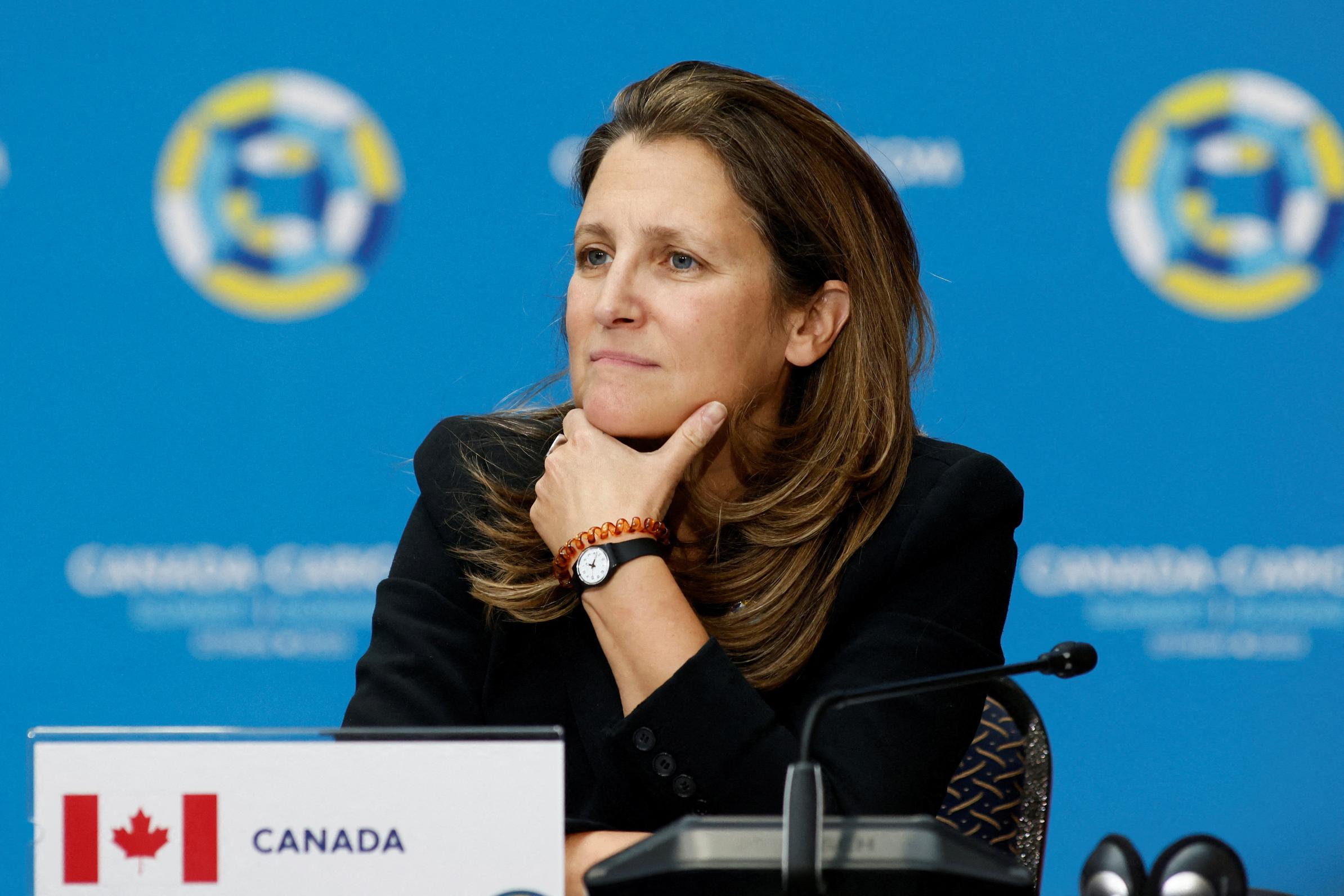
OTTAWA, Nov 21 (Reuters) - Canada's deficit spending will be much higher than forecast in March and its debt will come down more slowly, the finance ministry said on Tuesday in its mid-year fiscal update, as it pledged new measures to boost housing supply. With interest rates at a two-decade high and inflation still elevated, Prime Minister Justin Trudeau's Liberal government is under pressure to curb spending, which the central bank warned is stoking inflation. While analysts said the spending on housing and on green-tech subsidies would ultimately be disinflationary, they expressed concern that the government was not showing enough restraint as debt servicing costs skyrocket. The fiscal year 2024/25 and 2025/26 deficits will be much higher than had been forecast. The deficit is seen at C$38.4 billion in 2024/25 and C$38.3 billion in 2025/26, compared with March estimates of C$35.0 billion and C$26.8 billion respectively. The federal debt-to-GDP ratio will rise for a second consecutive year in 2024/25 before it begins declining, a year later than had been previously forecast. "They're pushing back the beginning of the debt decline," said Robert Asselin, senior vice president of policy at the Business Council of Canada. "That suggests to me they're not on a sustainable fiscal track and they need to rein in their spending." The finance ministry has said it targets a declining federal debt-to-GDP ratio in the medium term as a fiscal anchor. In the Fall Economic Statement (FES), the government pledged to ensure the ratio stayed on a downward track after 2024/25. "The government recognizes it is constrained in how much it can spend, but it's spending up to that line all the time," said Randall Bartlett, senior director of Canadian economics at Desjardins Group. "To me, that doesn't speak to prudence." On the growth side, the government uses a median of market forecasts from September, which do not project a recession, but they do see real GDP growth next year at just 0.4%, much lower than the March budget projection of 1.5%. The Bank of Canada hiked rates to a 22-year high of 5.00% between March of last year and July of this year. It has since held them steady, but warned that they could go higher if inflation - at 3.1% in October - does not come down to its 2% target. The FES sees debt servicing costs in 2024/25 at C$52.4 compared with C$46.0 billion forecast in the March budget, and in 2025/26 they will total C$53.3 versus C$46.6 in the budget. As Canadians struggle with higher living costs, housing affordability has emerged as the main criticism against the government. That is one of the reasons opinion polls show Trudeau badly trailing his main rival, Conservative leader Pierre Poilievre. An election is not due until 2025. Finance Minister Chrystia Freeland said she understood that after three tough years that Canadians were worn out and frustrated. "What Canadians deserve today is for us to address the very real pain that so many are feeling," she told legislators after presenting the FES. The FES includes a number of measures aimed at boosting housing supply, including C$15 billion in new loan financing from 2025/26 to spur apartment construction, an extra C$1 billion over three years to fund dedicated to building affordable housing, and new mortgage rules for lenders dealing with homeowners at risk amid high interest rates. It also commits to clamping down on short-term rental companies like Airbnb by denying income tax deductions incurred to make money from short-term rentals in provinces where such the practice is illegal. "Today's economic update is a move in the right direction, but we must continue act urgently to address the housing crisis and keep up with population growth," said Mike Moffatt, Founding Director, PLACE Centre at the Smart Prosperity Institute, a clean housing advocate. The FES commits to a timeline for promised investment tax credits (ITCs) for clean energy and technologies, as previously reported by Reuters. The government will send legislation to parliament this month to start paying subsidies for carbon capture and net-zero energy projects, part of a plan to help the country spur green investment and compete with the United States. Legislation to fund the remaining ITCs will be sent to parliament during the course of 2024. ($1 = 1.3718 Canadian dollars) https://www.reuters.com/markets/canada-add-spending-housing-amid-slow-growth-high-debt-payments-2023-11-21/
2023-11-21 11:16
FRANKFURT, Nov 21 (Reuters) - The euro zone's sinking commercial property sector could struggle for years, the European Central Bank said on Tuesday, posing a threat to the banks and investors which financed it. An ECB report which examines threats to financial stability underscored heightened concern over a property boom that is now unravelling in countries such as Germany and Sweden. Commercial property prices have been hit by economic weakness and high interest rates over the last year, challenging the sector's profitability and business model, the ECB said. The sector is not big enough to create a systemic risk for lenders, but could increase shocks across the financial system and greatly impact the financial firms, from investment funds to insurance firms, collectively known as shadow banks. "While the relatively limited size of bank commercial real estate portfolios implies that they are unlikely on their own to lead to a systemic crisis, they could play a significant amplifying role in the event of broader market stress," the ECB said in a Financial Stability Review report. The ECB issued its report as deep cracks emerged in the property market of the euro zone's top economy, Germany. The sudden reverse in interest rates has forced some developers into insolvency and put deals and construction on hold. The construction of one of Germany's tallest buildings has suddenly halted midway after the developer stopped paying its builder, in yet another ominous sign. Signa Group, the Austrian property giant and owner of New York's Chrysler Building, had been making steady progress this year on the planned 64-story Elbtower skyscraper in Hamburg but the company, founded by René Benko, fell behind on payments. Banks in Austria had 2.2 billion euros ($2.4 billion) in exposure in mid-2023 to Signa Group, a person with knowledge of the matter told Reuters. Raiffeisen Bank International (RBIV.VI) and UniCredit's (CRDI.MI) Bank Austria accounted for two-thirds of this, said the person, who spoke on condition of anonymity. In its report, the ECB said that residential mortgages make up about 30% of bank loan books, while commercial real estate (CRE) accounts for about 10%. "A negative outcome of this type would also drive large losses in other parts of the financial system which are significantly exposed to CRE, such as investment funds and insurers," it added. Commercial real estate transactions were down 47% in the first half of 2023, compared with the same period in 2022. That makes it hard to say how far prices have dropped, but the bloc's largest listed landlords are trading at a discount of over 30% to net asset value, their largest such discount since 2008, the ECB said. It said a sample of bank loans to real estate firms implies the recent rise in financing costs may cause the share of loans extended to loss-making firms to double to as much as 26%. If the tighter financing conditions persist for two years as markets expect, and firms are required to roll over all maturing loans, this number would increase to 30%. "There are substantial vulnerabilities in this loan book, particularly when considering that it is expected that both higher financing costs and reduced profitability will persist for a number of years," the ECB said. "Business models established on the basis of pre-pandemic profitability and low-for-long interest rates may become unviable over the medium term." ($1 = 0.9168 euros) https://www.reuters.com/markets/europe/commercial-real-estate-market-could-struggle-years-ecb-says-2023-11-21/
2023-11-21 11:16
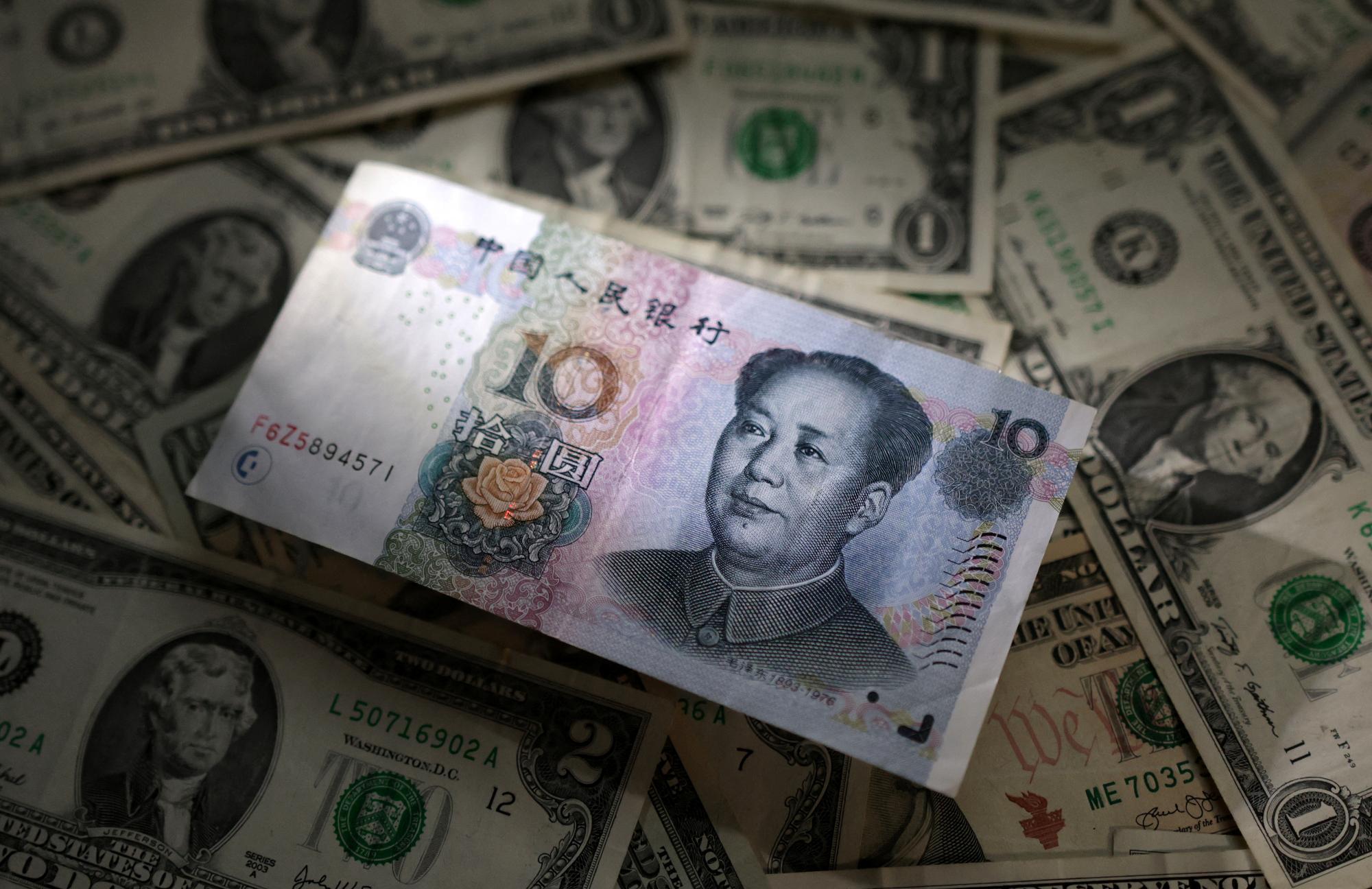
SHANGHAI, Nov 21 (Reuters) - China's major state-owned banks were seen exchanging yuan for U.S. dollars in the onshore swap market and selling those dollars in spot currency markets this week, two sources told Reuters on Tuesday. The yuan has gained 2% in the past week, to stand at levels of around 7.13 to the dollar - its highest in nearly 4 months - and the big state banks have continued to sell dollars for yuan this week, the sources said. Both sources spoke on condition of anonymity as they were not authorised to speak to media about the matter. State banks are often suspected of stepping into the currency market on behalf of the authorities, but the timing is unusual as they would usually sell dollars when the yuan was under pressure to depreciate. Their action over the past week came amid broad dollar weakness. The dollar index , which measures the currency's value against major trading partners, has retreated more than 3% in November, as U.S. yields succumb to signs of a peak in Federal Reserve monetary tightening. Some market participants said state banks might be trying to speed the yuan's gains and spur exporters to convert more of their FX receipts into yuan. The Chinese currency is still down more than 3% against the dollar this year. The selling of dollars by state banks caused the onshore spot yuan to briefly touch 7.1296 per dollar, firmer than its daily official guidance for the first time in four months. The People's Bank of China (PBOC) has also been lowering the dollar-yuan daily fixing rate this week. On Tuesday, it set the midpoint at a 3-1/2-month low of 7.1406 per dollar. "It is surprising to see they keep lowering the fixing at this rate. To me, it looks like they are doing preparatory work ahead of a policy rate cut," said Kiyong Seong, lead Asia macro strategist at Societe Generale. "When the external environment is favourable, they appear to strengthen the CNY as much as possible." Recent data shows the recovery in the world's second-largest economy remains uneven and bumpy with industrial output and retail sales surprising on the upside in October, while manufacturing activity and consumer prices continued to fall. While the economy still needs more policy stimulus, analysts say further monetary easing could add downside pressure on the Chinese currency, given the wide differential between interest rates in China and other economies, particularly the United States. The PBOC has been injecting cash through its medium-term lending facility (MLF) loans into the banking system, but has of late kept the rate on those loans unchanged. "Some volatilities around this level could be likely at this time, unless there are more further significant downside dollar moves or additional major sentiment positive events," said Zhi Xiaojia, chief China economist at Credit Agricole. "Indeed, the yield gap remains quite wide, and we are still expecting more policy easing, including PBOC rate and reserve requirement ratio (RRR) cut." Zhi said she was "relatively constructive" on the yuan into the end of the year and in 2024. https://www.reuters.com/markets/currencies/chinas-state-banks-seen-swapping-selling-dollars-yuan-sources-2023-11-21/