2023-11-21 19:04
Nov 21 (Reuters) - U.S. officials said on Tuesday seven energy companies have been impacted by an oil discharge near Main Pass Oil Gathering Co's (MPOG) pipeline system in the Gulf of Mexico that is estimated to have released more than a million gallons of crude oil. The 67-mile long pipeline was closed by MPOG on Thursday morning after crude oil was spotted around 19 miles offshore of the Mississippi River delta, near Plaquemines Parish, southeast of New Orleans. "Seven producers affected and those producers are currently shut in," Bryan Domangue of the Bureau of Safety and Environmental Enforcement said during a press briefing. Officials said investigations and surveys were ongoing to determine the source of the discharge, but added that there were no reported injuries or shoreline impacts so far. There has been no impact on vessels and the waterway remains open to all commercial and recreational vessel traffic, officials said. While the exact volume of discharged oil was not known, the Coast Guard, which was leading the clean up, said initial calculations placed the volume of the leak at 1.1 million gallons or 26,190 barrels. "We're not saying that was the exact amount. We are not going to know the exact amount of oil that was discharged into the Gulf of Mexico until we find the source," said Captain Kelly Denning, deputy commander, sector New Orleans. The officials also said it was yet to be established if Third Coast Infrastructure, which owns MPOG, is responsible for the spill. "They're suspected responsible party but we won't know until we find the source which is why we keep referring to them as the responding party," said Denning. Talos (TALO.N), W&T Offshore, Occidental (OXY.N) and Australia's Byron Energy (BYE.AX), which operate in the area, did not respond to Reuters' requests for comments on the spill. https://www.reuters.com/business/energy/several-producers-impacted-by-oil-spill-gulf-mexico-officials-2023-11-21/

2023-11-21 19:00
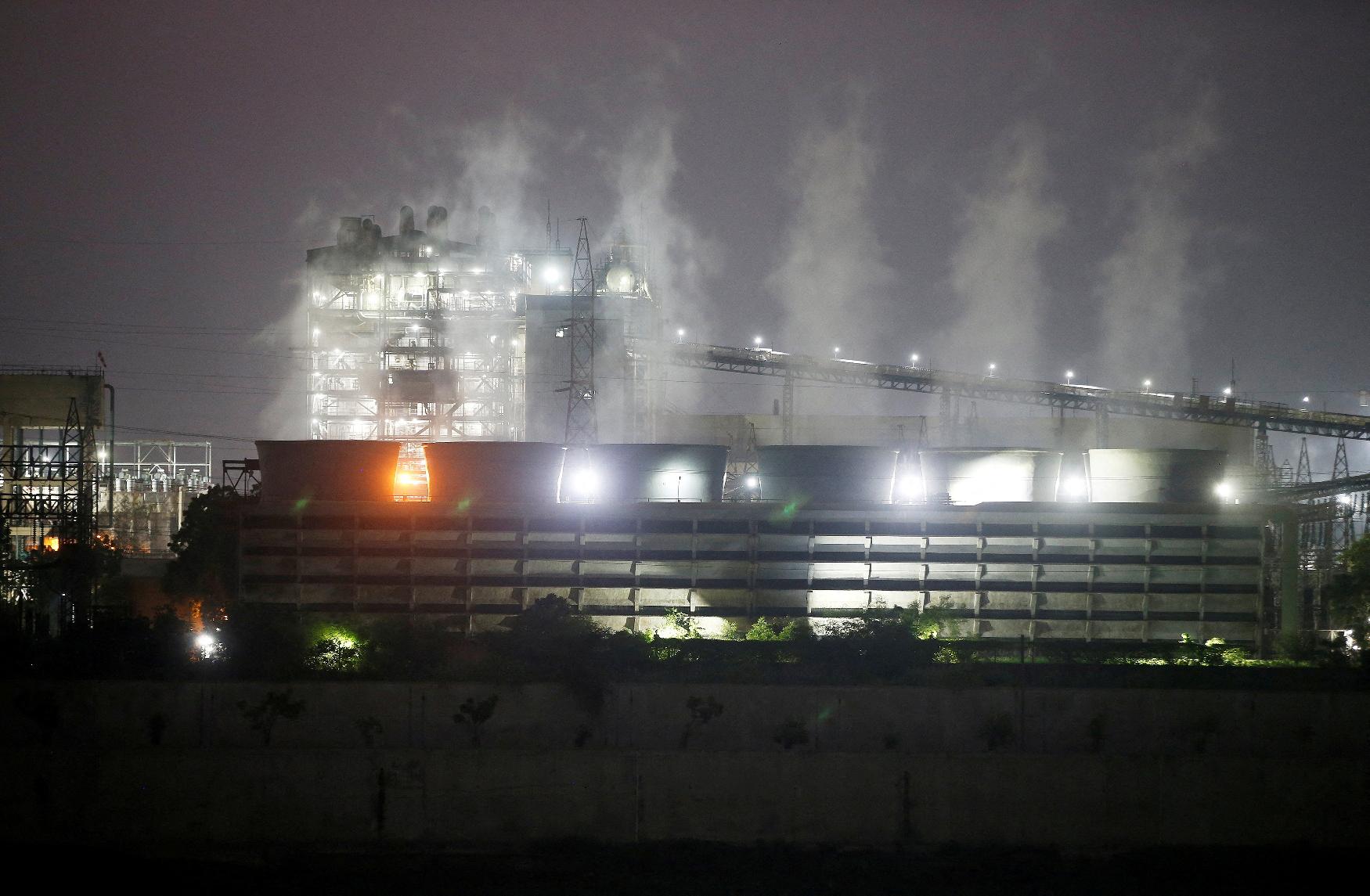
NEW DELHI, Nov 22 (Reuters) - India on Tuesday asked private firms to ramp up investments in new coal-fired power plants to meet a dramatic rise in electricity demand and bridge nearly 30-gigawatts of additional requirement by 2030, despite international pressure to stop building such facilities. India's power and renewable energy minister R K Singh in New Delhi asked private companies to invest in coal projects and "not miss the growth opportunity," according to three sources present in the meeting. The Indian government meeting with private investors comes weeks before the U.N. climate conference, at which France, backed by the United States, plans to seek a halt to private financing for coal-based power plants, according to a Reuters report. India's power ministry did not immediately respond to requests for comment. The private investment share in the Indian power sector started dwindling after 2018, when it was more than, or at par with, government investments. Currently, it stands at 36% of the country's total installed capacity. Most of the coal-based capacity under development is being set up by state-owned companies, with Adani Power (ADAN.NS) and JSW Energy (JSWE.NS) the only private companies building such plants. Many private companies stopped building new coal-based plants in India over a decade ago due to a lack of financing in the absence long-term power supply bids from consumers. In recent years, however, energy demand has outpaced expectations in India, the world's most populous country, as economy activity picked up. Since August, the South Asian nation's energy demand rose 18% to 20% year-on-year. The government expects it to rise by at least 6% annually till end of this decade. During the meeting, Singh said new estimates see India's peak power demand reaching 335-gigawatts by 2030 versus the present 240-gigawatts, according to the three sources. Private power companies were told that the majority of the peak-hour electricity demand in India can be met by coal-based power stations, since storage technologies are costlier to support solar and wind-based energy generation, officials said. A total coal-based capacity addition of 58 gigawatts is in the pipeline, leaving an expected gap of over 30-gigawatts, they said. "The Minister assured that the government may look at funding support to such projects (from private firms) from state-run financiers such as Power Finance Corp and REC Ltd," one of the sources said. All three sources at the meeting asked not to be identified as they were not authorized to speak to media. Singh told the meeting that despite adding coal-based capacity, India will still meet its climate goals of shifting to 50% non-fossil-based power capacity since the country is also adding renewable energy projects. https://www.reuters.com/world/india/india-wants-private-money-coal-fired-plants-despite-western-opposition-2023-11-21/
2023-11-21 18:19
NEW YORK, Nov 21 (Reuters) - Binance Holdings chief Changpeng Zhao will admit violating U.S. laws as part of a deal to resolve a U.S. probe into illicit finance breaches, according to a source familiar with matter. The deal between a number of U.S. agencies and the world's largest crypto exchange will also involve charges against Binance's former compliance chief Samuel Lim, the source said. The deal will include penalties on the firm of over $4 billion, including $3.4 billion from U.S. Treasury's Financial Crimes Enforcement Network and another $968 million from the Office of Foreign Assets Control, another source familiar with the matter said. https://www.reuters.com/technology/binance-chief-will-admit-violating-us-laws-part-4-billion-deal-resolve-probe-2023-11-21/

2023-11-21 18:02
NEW YORK, Nov 21 (Reuters) - As U.S. regulators ready rules that would push more trading in Treasuries to a central clearing venue, the industry's focus is turning on a key question: how much collateral should hedge funds and others put up to trade there. At issue is whether imposing minimum requirements for collateral, called margin or haircuts, would raise trading costs and curb market liquidity versus the need to guard against a painful collapse in the world's biggest bond market. Industry practice suggests that a large share of hedge funds trading in repo markets put up zero collateral, meaning they are fuelling activity using enormous amounts of cheap debt. That has raised concerns among regulators that too much risk has built into the system and market stress could lead to a disorderly unwind of positions by such highly leveraged traders and threaten financial stability. In recent weeks, there has been increased focus on the pros and cons of a standard margin imposed on all such trades. "Over time competitive forces have driven haircuts down to zero," said Christopher Clarke, head of North America Sovereign Financing Trading at J.P. Morgan Securities, at a Treasury market conference held at the Federal Reserve Bank of New York last week. "Ultimately what does it mean from my perspective, a dealer? What does it mean for my costs and risks?" A looming rule by the U.S. Securities and Exchange Commission would expand the use of central clearing in the cash Treasury and repo market. Central clearing would require market participants to deposit margins, at a level possibly established by the Fixed Income Clearing Corporation (FICC), to protect against the risk of a counterparty's default. SEC chair Gary Gensler recently promoted the benefits of central clearing and pointed to data showing high levels of repo trades transacted at zero haircuts. The stakes are high. Imposing a hypothetical 200 basis point minimum haircut on trades would mean funds would need to put up an extra $12.4 billion in capital to support trades, reducing their leverage levels, a recent paper by U.S. Federal Reserve economists showed. Some in the industry are in favor of the regulators' push. James Tabacchi, CEO of South Street Securities, called zero haircuts a "race to the bottom" and not healthy for markets. Tabacchi argued that large banks have the opportunity to not charge their clients haircuts, which has driven out smaller dealers. However, some market participants have voiced concerns that some of the proposed reforms could be a hurdle for some investors, potentially undermining the goal to improve liquidity and resilience in the Treasury market. "A total centrally cleared model, while it has its benefits ... will increase the cost of trading and will create barriers to enter the Treasury market," said Richard Chambers, global head of repo trading and global co-head of short macro trading at Goldman Sachs. https://www.reuters.com/markets/us/us-treasury-market-debate-around-hedge-fund-collateral-intensifies-2023-11-21/

2023-11-21 16:38
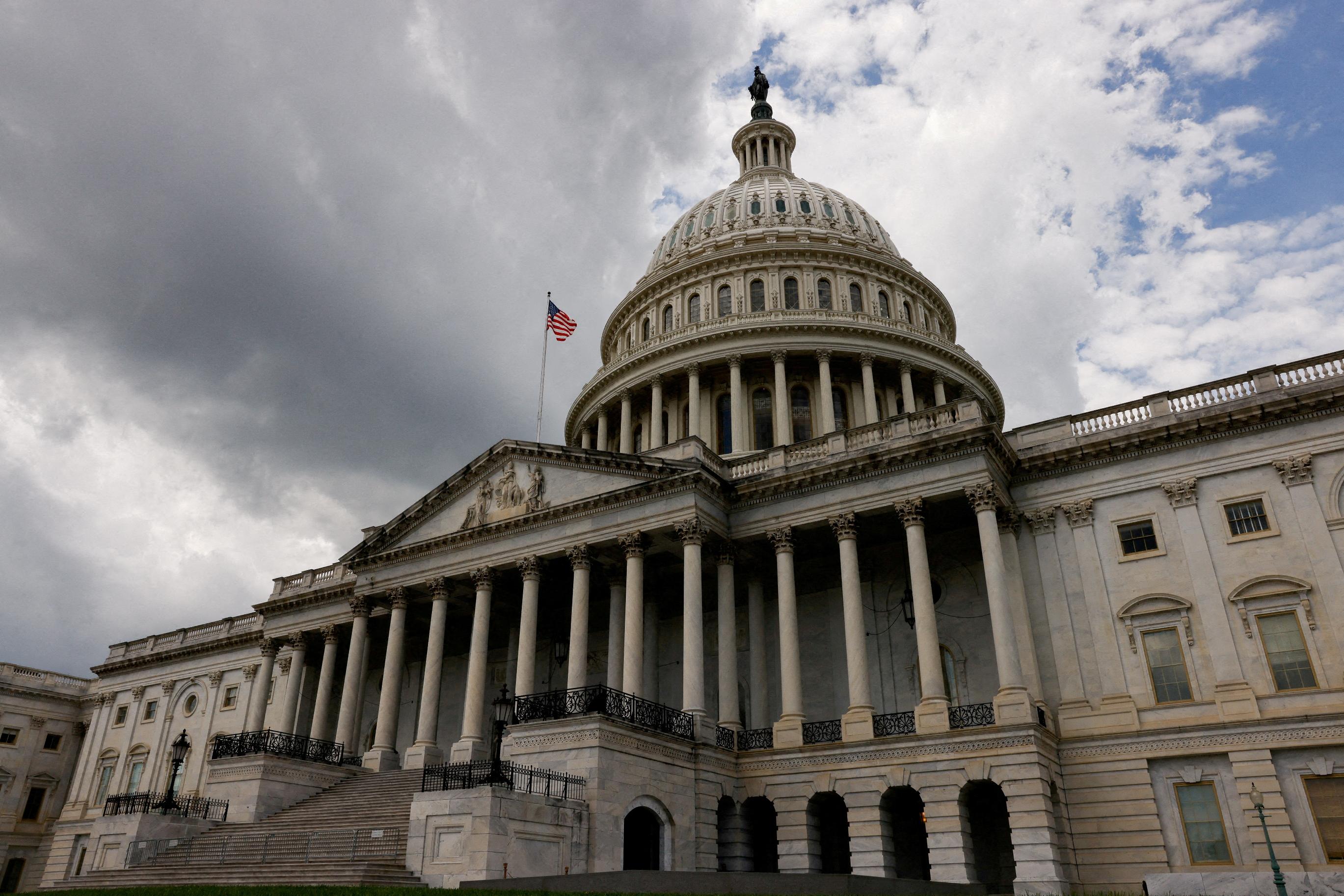
WASHINGTON, Nov 21 (Reuters) - The U.S. Congress is facing growing calls to find a way to stem rising budget deficits and debt following this month's warning by Moody's that political dysfunction could lead it to lower the federal government's credit rating. There is no rocket science to the three basic choices for grappling with a national debt that has doubled in just the last decade and stands at $33.7 trillion, around 124% of GDP: raise taxes, cut spending or do a combination of the two. That has led some lawmakers to call for a commission to do the heavy lifting of coming up with realistic approaches to addressing the ballooning debt, a growing concern now that interest rates have risen, producing a jaw-dropping $659 billion in payments just on the national debt in fiscal year 2023, according to the Treasury Department. "A fiscal commission is direly needed," Republican Senator Mike Braun, a Budget Committee member, said in an interview. Braun said deficits and debt could become an important issue in the 2024 elections, especially as "the heavy weight of paying interest will start crowding out all the other things," referring to the cost of federal programs ranging from defense to homeland security. Since 2013, the national debt has more than doubled from $16.7 trillion. During that time, Republicans have enacted a major bill to cut taxes that has reduced revenues, while both parties have backed higher spending, in part in response to the COVID-19 pandemic. Democrats have also worked to expand social safety net programs. The result is that Moody's ratings agency this month lowered its credit rating outlook on the U.S. to "negative" from "stable." High interest rates would keep driving borrowing costs higher, Moody's said. That followed Fitch ratings agency, which in August downgraded the U.S. government's top credit rating to AA+ from AAA, citing the standoff in Congress that brought the government close to defaulting on its debts. "Our fiscal challenges are serious but also solvable and a bipartisan commission is the best approach," said Michael Peterson, CEO of the Peter G. Peterson Foundation, a non-partisan group that works to raise awareness of long-term U.S. fiscal problems. It circulated ideas from a dozen experts on how a commission could offer up solutions for taming deficits and debt. For example, Mark Zandi, chief economist of Moody’s Analytics, which operates independently from its parent company's ratings business, pitched a new tax on greenhouse gas emissions and changing the government's formula for determining cost-of-living adjustments for federal benefit programs. Economists Dana Peterson and Lori Esposito Murray of the Conference Board, a non-profit business research group, suggested a 2043 goal of reducing debt-to-GDP to 70% through tax increases and spending cuts. Other recommendations included subjecting high-income earners to more Social Security taxes and gradually raising the age for full retirement benefits to 69 from the current 67. BIPARTISAN BILLS Democratic Senator Joe Manchin and Republican Senator Mitt Romney, both of whom are due to retire from Congress at the end of next year, have sponsored a bill that would create a bipartisan commission that would likely conclude work in 2025. A similar bipartisan bill is pending in the House of Representatives. On Oct. 19, the House Budget Committee had a hearing on the legislation. On Tuesday, in a statement to Reuters, Manchin said the creation of a commission "is our best hope in our highly-polarized environment to address our swelling national debt." He added that he was "encouraged" by House Speaker Mike Johnson, shortly after being elected to the top job in late October, embracing the idea of creating a commission. Congress has been consumed for much of the year by fights over the approximately $1.6 trillion in annual spending on "discretionary" programs, such as defense, homeland security and some social safety net benefits. This comprises only about one-third of overall government spending. That ignores the biggest drivers of spending, "mandatory" programs such as Social Security and Medicare. But the idea raises red flags to progressives. A commission, said independent Senator Bernie Sanders, who caucuses with Democrats, would simply be "a backdoor way to get into cutting Social Security." Sanders embraced lifting the cap on taxable income to extend the life of the Social Security trust fund. Several lawmakers said a commission could succeed only if it had the power to force Congress to act on its recommendations, which could in turn make Republicans either go along or scrap their long-held opposition to tax hikes, if such measures are suggested. https://www.reuters.com/markets/us/rising-us-debt-stokes-calls-congress-special-fiscal-commission-2023-11-21/
2023-11-21 15:59
Nov 21 (Reuters) - Broadcom (AVGO.O) said it planned to close its $69 billion acquisition of cloud computing firm VMWare (VMW.N) on Wednesday, wrapping up one of the biggest takeover deals in the technology industry that was closely scrutinized by regulators globally. The chipmaker has now received all regulatory approvals for the purchase after China approved the acquisition with additional restrictive conditions earlier on Tuesday, it said. VMWare server software should work with local hardware and the deal should not restrict customers from purchasing and using Broadcom's hardware products such as storage adapters, the Chinese regulator said in a statement. Some investors in the companies had feared about the outcome of the deal after reports said last month that rising Sino-U.S. tensions could lead China's regulator to scuttle the deal. Tensions between Beijing and Washington had mounted after the Biden administration introduced tougher controls on exports of high-end chips to China in October. Broadcom shares were down more than 1%, while VMware was down 4.6%. The deal was previously expected to close by Nov. 26. Brokerage Bernstein attributed the share moves to some technical impacts from arbitrage trades around the deal. https://www.reuters.com/markets/deals/broadcom-plans-close-69-billion-vmware-deal-wednesday-2023-11-21/