2023-11-02 11:41
Starbucks targeting $3 billion in cost savings over next 3 years Tops Q4 results estimates, sees 2024 profit above estimates Starbucks continues to defy the skeptics - Wells Fargo analyst Nov 2 (Reuters) - Starbucks (SBUX.O) leaned on the hype around its Pumpkin Spice Latte and other fall-themed drinks in North America to surpass Wall Street targets for fourth-quarter results, as demand for its pricey coffees defied sticky inflation. The company's shares closed 9.5% higher on Thursday, adding nearly $10 billion to Starbucks' market capitalization, after the coffeehouse giant also delivered an upbeat annual profit forecast. The seasonal return of the Pumpkin Spice Latte (PSL) in August, coupled with new menu items such as the Iced Pumpkin Cream Chai Tea Latte and apple-flavored Espressos and croissants, helped drive U.S. same-store sales up 8% in the quarter. Placer.ai data showed a 20% surge in visits on the day of the PSL launch. Starbucks also said the fall-season launch led to record average weekly sales. Traffic at the coffee chain has also benefited from its younger, more affluent customer base prioritizing their morning coffee fix even as the wider U.S. restaurant industry grapples with an inflation-driven slowdown. "Customer demand for us remains strong. We're not really seeing any change in the sentiment," CEO Laxman Narasimhan said on a post-earnings call. Separately, the company executives said at a conference that Starbucks expects to save $3 billion in costs over the next three years through store efficiencies and improved manufacturing and sourcing. It also unveiled plans to grow its global store count to 55,000 by 2030 - from more than 38,000 currently - and expects to double the hourly income of baristas from 2020 levels over the next two years through increased working hours and higher pay. Starbucks forecast fiscal 2024 per-share profit growth of 15% to 20%, above analysts' estimates of 15.1%, according to LSEG data. It expects fiscal 2024 global comparable sales to grow between 5% and 7%, with China sales also projected to rise 4% to 6% in the last three quarters. Sales in China would be higher than that range in the first quarter, it said. "The consumer is stressed, but they're going to go to ... those affordable luxuries ... and Starbucks does a great job with that," Stephens analyst Joshua Long said. Global comparable sales at Starbucks climbed a better-than-expected 8% in the quarter ended Oct. 1. Adjusted per-share profit of $1.06 surpassed estimates of 97 cents. https://www.reuters.com/business/retail-consumer/starbucks-beats-quarterly-sales-estimates-us-demand-holds-strong-2023-11-02/

2023-11-02 11:41
Nov 2 (Reuters) - Japan's Nippon Steel said on Thursday it had dropped lawsuits against Toyota Motor and Mitsui & Co over electrical steel sheet patents, but continues to seek damages from China's Baoshan Iron & Steel. Nippon Steel's (5401.T) lawsuits, which were filed in 2021, sought compensatory damages from Toyota (7203.T), Baoshan (600019.SS), Mitsui (8031.T) and Mitsui & Co. Steel, alleging infringement of patents on non-oriented electrical steel sheets. The Japanese steelmaker said it had terminated the lawsuits against Toyota and Mitsui by waiving claims against them. Nippon Steel said in a statement it will continue its case against Baoshan and "firmly protect its intellectual property rights as the fruits of its technological development". Baoshan was not immediately available for comment. "Continuing the dispute with Toyota is not in the best interests of strengthening Japan's industrial competitiveness," a Nippon Steel spokesperson said, adding that Japan's automobile and steel industries needed to join forces even more firmly amid intensifying global competition on decarbonisation. "We will further strengthen our efforts with Toyota in various fields, including automobile electrification and decarbonisation initiatives," he added. Nippon Steel's patent infringement lawsuit against its key and long-standing customer Toyota was a first. Having two of Japan's manufacturing giants, its biggest steelmaker and automaker, locked in a rare court battle signified the high stakes involved in materials production as the global low-carbon revolution took hold. Nippon Steel has said electrical steel sheets are indispensable materials for automobile electrification and are one of its key products aimed at helping decarbonisation for cars, electrical products and power plants. "Nippon Steel has decided to drop its lawsuits over electrical steel sheet patents against Toyota brought in 2021," Toyota said in a statement. https://www.reuters.com/business/autos-transportation/nippon-steel-drops-patent-lawsuits-against-toyota-mitsui-2023-11-02/
2023-11-02 11:22
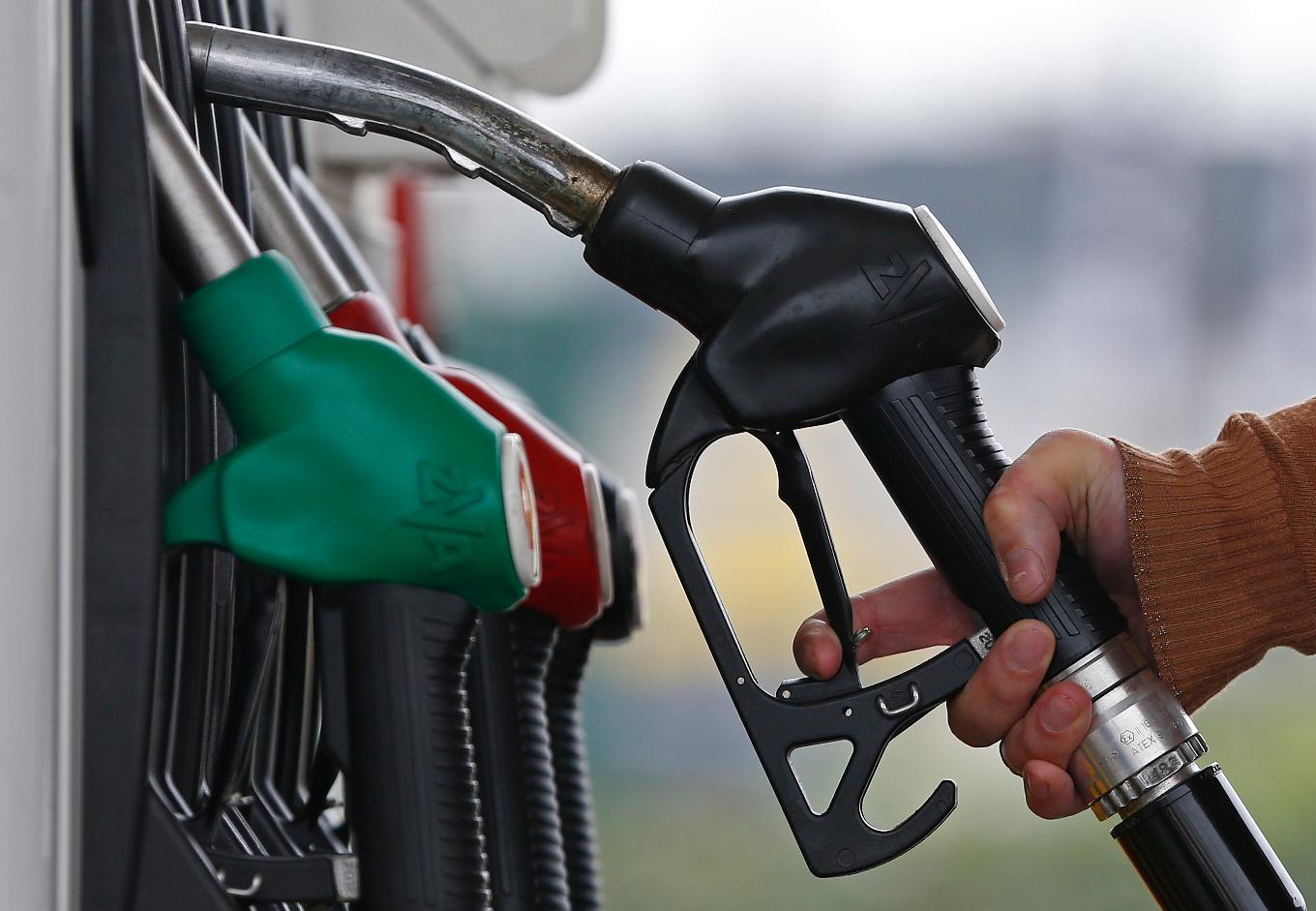
LONDON, Nov 2 (Reuters) - Belgium's environment and energy ministries are planning to submit draft legislation to tighten the quality of exported fuels, its officials told Reuters, mirroring a similar move by the Netherlands earlier this year. The draft is expected to be ready within two weeks and, barring any major political hurdles, could become law by February next year, the environment ministry told Reuters. The Amsterdam-Rotterdam-Antwerp (ARA) hub is the world's leading gasoline exporting region, LSEG data shows, and hosts some of Europe's largest oil refiners. https://www.reuters.com/business/energy/belgium-drafting-new-fuel-quality-law-targeting-african-exports-2023-11-02/
2023-11-02 11:11
LONDON, Nov 2 (Reuters) - Chevron (CVX.N) is negotiating contracts to supply liquefied natural gas (LNG) into Europe for up to 15 years as buyers expect the region to rely on imports for longer than previously thought, an executive at the U.S. oil and gas company said. The new willingness by buyers to agree on long-term supply deals comes after several European governments rolled back some green policies citing higher costs and economic concerns. European imports of the super-chilled fuel surged after Russia halted pipeline gas exports in the wake of Moscow's invasion of Ukraine last year. Buyers initially sought short-term LNG supply of up to 5 years due to the uncertainty in the market and countries' ambitions to reduce their reliance on fossil fuels. But that has changed as the focus on securing energy supplies grew, Colin Parfitt, head of Chevron's trading, shipping and pipeline operations, told Reuters on Wednesday. "There's been an evolution over the past 18 months from short-term and spot supply deals to longer term commitment," Parfitt said. "After Russia-Ukraine, the initial thoughts we were getting out of Europe were 'we only want LNG for a short period of time because of the energy transition'. What I've seen happening in the last year is that lengths of contracts customers are willing to sign have been extended," Parfitt said. "European customers want medium-term deals in the up to 15 years space and we're working on some commercial deals." Last month, Shell (SHEL.L) and TotalEnergies (TTEF.PA) agreed on two separate 27-year LNG supply deals into Europe with Qatar, one of the world's top producers. Chevron will supply most of the LNG from the United States, which has become a major LNG exporter following the shale boom in recent years. U.S. LNG exports hit their second highest level on record in October, with Europe remaining the principal buyer. In the short term, Parfitt said the European market looked well supplied ahead of winter. "In the short term European gas looks well supplied, softer than last year but with risk of volatility if you get a cold winter in Europe, cold winter in Asia, risks to supply as well as geopolitics." https://www.reuters.com/business/energy/chevron-talks-15-year-lng-supply-contracts-into-europe-2023-11-02/
2023-11-02 11:06
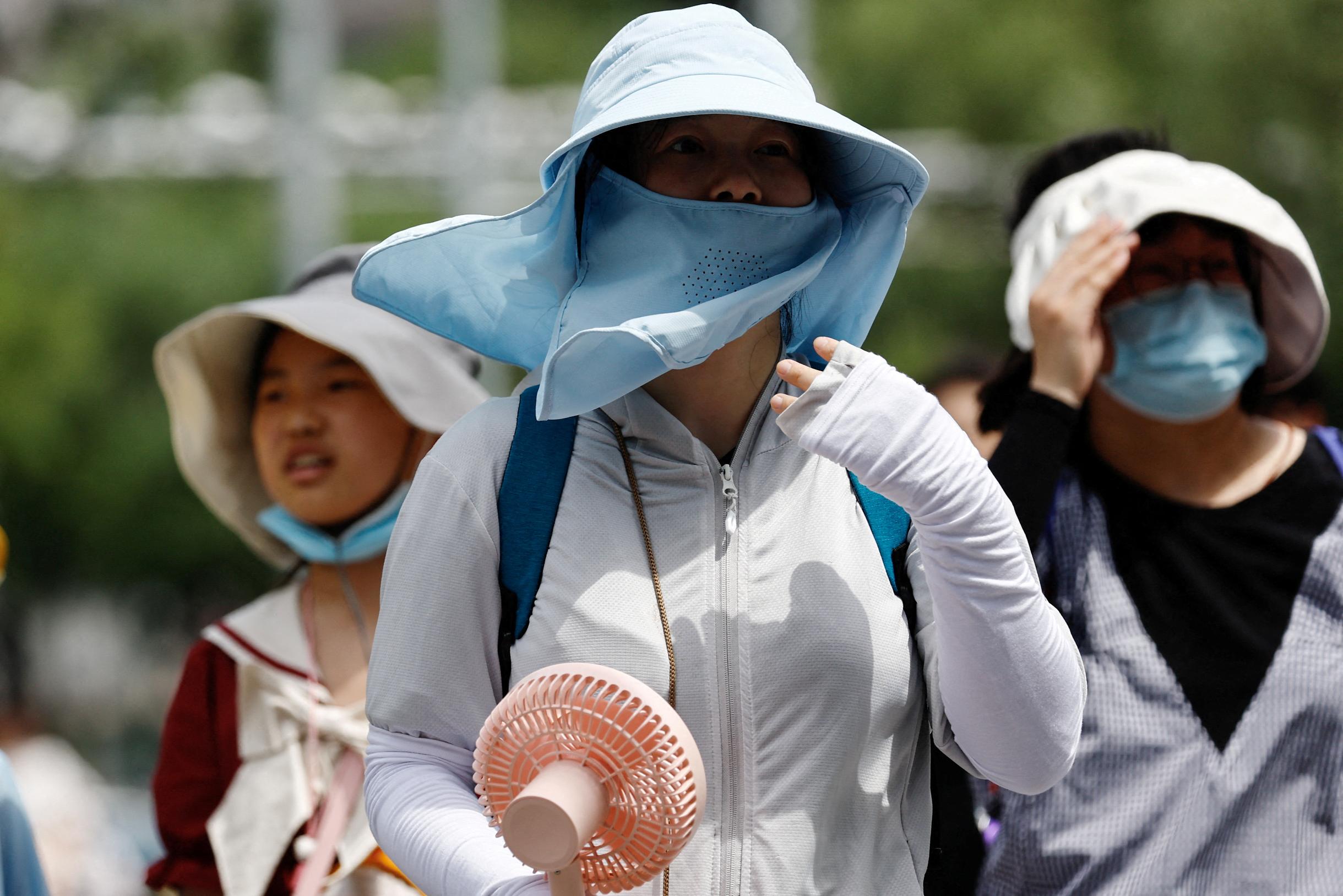
Nov 2 (Reuters) - Air pollution, a global scourge that kills millions of people a year, is shielding us from the full force of the sun. Getting rid of it will accelerate climate change. That's the unpalatable conclusion reached by scientists poring over the results of China's decade-long and highly effective "war on pollution", according to six leading climate experts. The drive to banish pollution, caused mainly by sulphur dioxide (SO2) spewed from coal plants, has cut SO2 emissions by close to 90% and saved hundreds of thousands of lives, Chinese official data and health studies show. Yet stripped of its toxic shield, which scatters and reflects solar radiation, China's average temperatures have gone up by 0.7 degrees Celsius since 2014, triggering fiercer heatwaves, according to a Reuters review of meteorological data and the scientists interviewed. "It's this Catch-22," said Patricia Quinn, an atmospheric chemist at the U.S. National Oceanic and Atmospheric Administration (NOAA), speaking about cleaning up sulphur pollution globally. "We want to clean up our air for air quality purposes but, by doing that, we're increasing warming." The removal of the air pollution - a term scientists call "unmasking" - may have had a greater effect on temperatures in some industrial Chinese cities over the last decade than the warming from greenhouse gases themselves, the scientists said. Other highly polluted parts of the world, such as India and the Middle East, would see similar jumps in warming if they follow China's lead in cleaning the skies of sulphur dioxide and the polluting aerosols it forms, the experts warned. They said efforts to improve air quality could actually push the world into catastrophic warming scenarios and irreversible impacts. "Aerosols are masking one-third of the heating of the planet," said Paulo Artaxo, an environmental physicist and lead author of the chapter on short-lived climate pollutants in the most recent round of reports by the Intergovernmental Panel on Climate Change (IPCC), completed this year. "If you implement technologies to reduce air pollution, this will accelerate – very significantly – global warming in the short term." The Chinese and Indian environment ministries didn't immediately respond to requests for comment on the effects of pollution unmasking. The link between reducing sulphur dioxide and warming was flagged by the IPCC in a 2021 report which concluded that, without the solar shield of SO2 pollution, the global average temperature would already have risen by 1.6 degrees Celsius above preindustrial levels. That misses the world's goal of limiting warming to 1.5C, beyond which scientists predict irreversible and catastrophic changes to the climate, according to the IPCC, which pegs the current level at 1.1C. The Reuters review of the Chinese data provides the most detailed picture yet of how this phenomenon is playing out in the real world, drawing on previously unreported numbers on changes in temperatures and SO2 emissions over the past decade and corroborated by environmental scientists. Reuters interviewed 12 scientists in total on the phenomenon of unmasking globally, including four who have acted as authors or reviewers of sections on air pollution in IPCC reports. They said there was no suggestion among climate experts that the world should let-up on fighting air pollution, a clear and present danger that the World Health Organization says causes about 7 million premature deaths a year, mostly in poorer countries. Instead they stressed the need for more aggressive action to cut emissions of climate-warming greenhouse gases, with reducing methane seen as one of the most promising paths to offset pollution unmasking in the short term. XI BATTLES 'AIRPOCALYPSE' President Xi Jinping pledged to tackle pollution when he took power in 2012 following decades of coal-burning that had helped turn China into "the factory of the world". The following year, as record smog in Beijing inspired "Airpocalypse" newspaper headlines, the government unveiled what scientists called China's version of the U.S. Clean Air Act. On March 5, 2014, a week after Xi went on a walkabout during another extreme bout of smog in the capital, the government officially declared a war on pollution at the National People's Congress. Under the new rules, power plants and steel mills were forced to switch to lower-sulphur coal. Hundreds of inefficient factories were shuttered, and vehicle fuel standards toughened up. While coal continues to be China's largest power source, smokestack scrubbers now strip out most SO2 emissions. China's SO2 emissions had decreased from a 2006 peak of at nearly 26 million metric tons to 20.4 million tons in 2013 thanks to more gradual emissions restrictions. But with the war on pollution, those emissions had plummeted by about 87% to 2.7 million metric tons by 2021. The drop in pollution was accompanied by a leap in warming - the nine years since 2014 have seen national average annual temperatures in China of 10.34C, up more than 0.7C compared with the 2001-2010 period, according to Reuters calculations based on yearly weather reports published by the China Meteorological Administration. Scientific estimates vary as to how much of that rise comes from unmasking versus greenhouse gas emissions or natural climate variations like El Nino. The impacts are more acute at a local level near the pollution source. Almost immediately, China saw big warming jumps from its unmasking of pollution near heavy industrial regions, according to climate scientist Yangyang Xu at Texas A&M University, who models the impact of aerosols on the climate. Xu told Reuters he estimated that unmasking had caused temperatures near the cities of Chongqing and Wuhan, long known as China's "furnaces", to rise by almost 1C since sulphur emissions peaked in the mid-2000s. During heatwaves, the unmasking effect can be even more pronounced. Laura Wilcox, a climate scientist who studies the effects of aerosols at Britain's University of Reading, said a computer simulation showed that the rapid decline in SO2 in China could raise temperatures on extreme-heat days by as much as 2C. "Those are big differences, especially for somewhere like China, where heat is already pretty dangerous," she said. Indeed, heatwaves in China have been particularly ferocious this year. A town in the northwestern region of Xinjiang saw temperatures of 52.2C (126F) in July, shattering the national temperature record of 50.3C set in 2015. Beijing also experienced a record heatwave, with temperatures topping 35C (95F) for more than four weeks. INDIA AND MIDDLE EAST The effects of sulphur unmasking are most pronounced in developing countries, as the U.S. and most of Europe cleaned up their skies decades ago. While the heat rise from sulphur cleanup is strongest locally, the effects can be felt in far-distant regions. One 2021 study co-authored by Xu found that a decrease in European aerosol emissions since the 1980s may have shifted weather patterns in Northern China. In India, sulphur pollution is still rising, roughly doubling in the last two decades, according to calculations by NOAA researchers based on figures from the U.S.-funded Community Emissions Data System. In 2020, when that pollution plummeted due to COVID lockdowns, ground temperatures in India were the eighth warmest on record, 0.29 C higher than the 1981-2010 average, despite the cooling effects of the La Nina climate pattern, according to the India Meteorological Department. India aims for an air cleanup like China's, and in 2019 launched its National Clean Air Programme to reduce pollution by 40% in more than 100 cities by 2026. Once polluted regions in India or the Middle East improve their air quality by abandoning fossil fuels and transitioning to green energy sources, they too will lose their shield of sulphates, scientists said. "You stop your anthropogenic activities for a brief moment of time and the atmosphere cleans up very, very quickly and the temperatures jump instantaneously," added Sergey Osipov, a climate modeller at the King Abdullah University of Science and Technology in Saudi Arabia. OFFSETTING WITH METHANE? As the implications of the pollution unmasking become more apparent, experts are casting around for methods to counter the associated warming. One proposal called "solar radiation management" envisions deliberately injecting sulphur aerosols into the atmosphere to cool temperatures. But many scientists worry that the approach could unleash unintended consequences. A more mainstream plan is to curb methane emissions. This is seen as the quickest way to tame global temperatures because the effects of the gas in the atmosphere last only a decade or so, so cutting emissions now would deliver results within a decade. Carbon dioxide, by comparison, persists for centuries. As of 2019, methane had caused about 0.5C in warming compared with preindustrial levels, according to IPCC figures. While more than 100 countries have pledged to reduce methane emissions by 30% by the end of the decade, few have gone further than drawing up "action plans" and "pathways" to cuts. China - the world's biggest emitter - has yet to publish its plan. By targeting methane, the world could mitigate the warming effect of the reduction in pollution and potentially avert catastrophic consequences, said Michael Diamond, an atmospheric scientist at Florida State University. "This doesn't doom us to going above 1.5 degrees Celsius if we clean up the air." https://www.reuters.com/sustainability/cop/climates-catch-22-cutting-pollution-heats-up-planet-2023-11-02/
2023-11-02 11:05
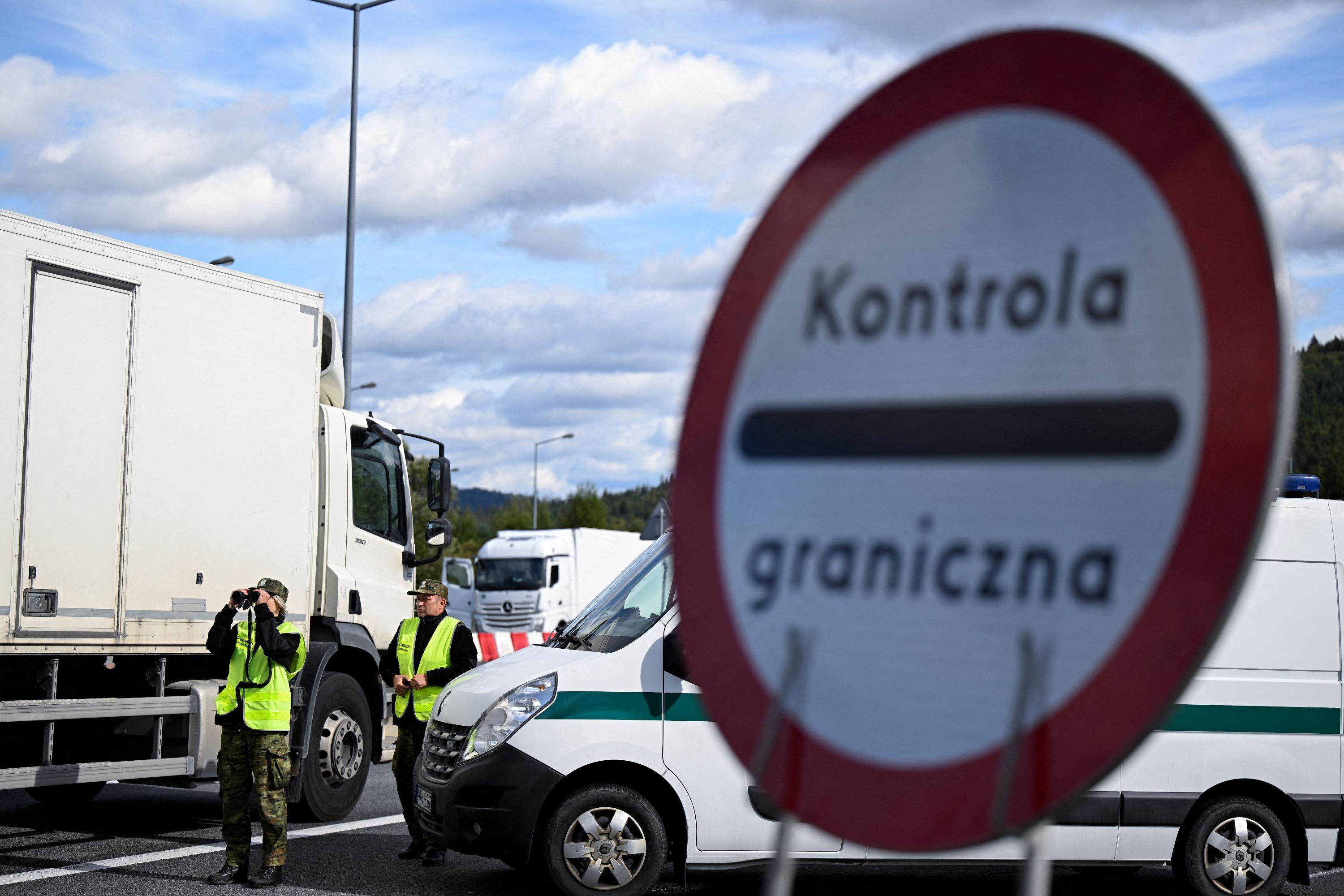
WARSAW, Nov 2 (Reuters) - Poland has extended temporary controls on its border with Slovakia until Nov. 22 in an apparent response to continuing efforts by migrants to enter from Slovak territory. The number of migrants arriving in Slovakia, mostly from the Middle East and Afghanistan, has risen 11-fold to nearly 40,000 this year, according to Slovak government data published in October. "Border controls ... are extended for the period from November 3, 2023 to November 22, 2023," a regulation issued by Poland's Ministry of Internal Affairs and Administration said. Temporary controls on the border with Slovakia were introduced on Oct. 4, with Warsaw citing "a serious threat of illegal immigration on the Polish-Slovak section of the state border." The measure was later extended to Nov. 2. According to the latest regulation, the border can be crossed through eight road and three railway crossings and eleven pedestrian crossings. Poland, Slovakia, the Czech Republic, Hungary, Austria and and Germany are part of the European Union's Schengen open-border zone. In September, Germany introduced checks on borders with its peers as countries face increasing migration and the EU carves out a new migration pact that will overhaul rules for handling irregular arrivals. https://www.reuters.com/world/europe/poland-extends-slovakia-border-controls-amid-migration-concern-2023-11-02/