2023-11-02 20:12
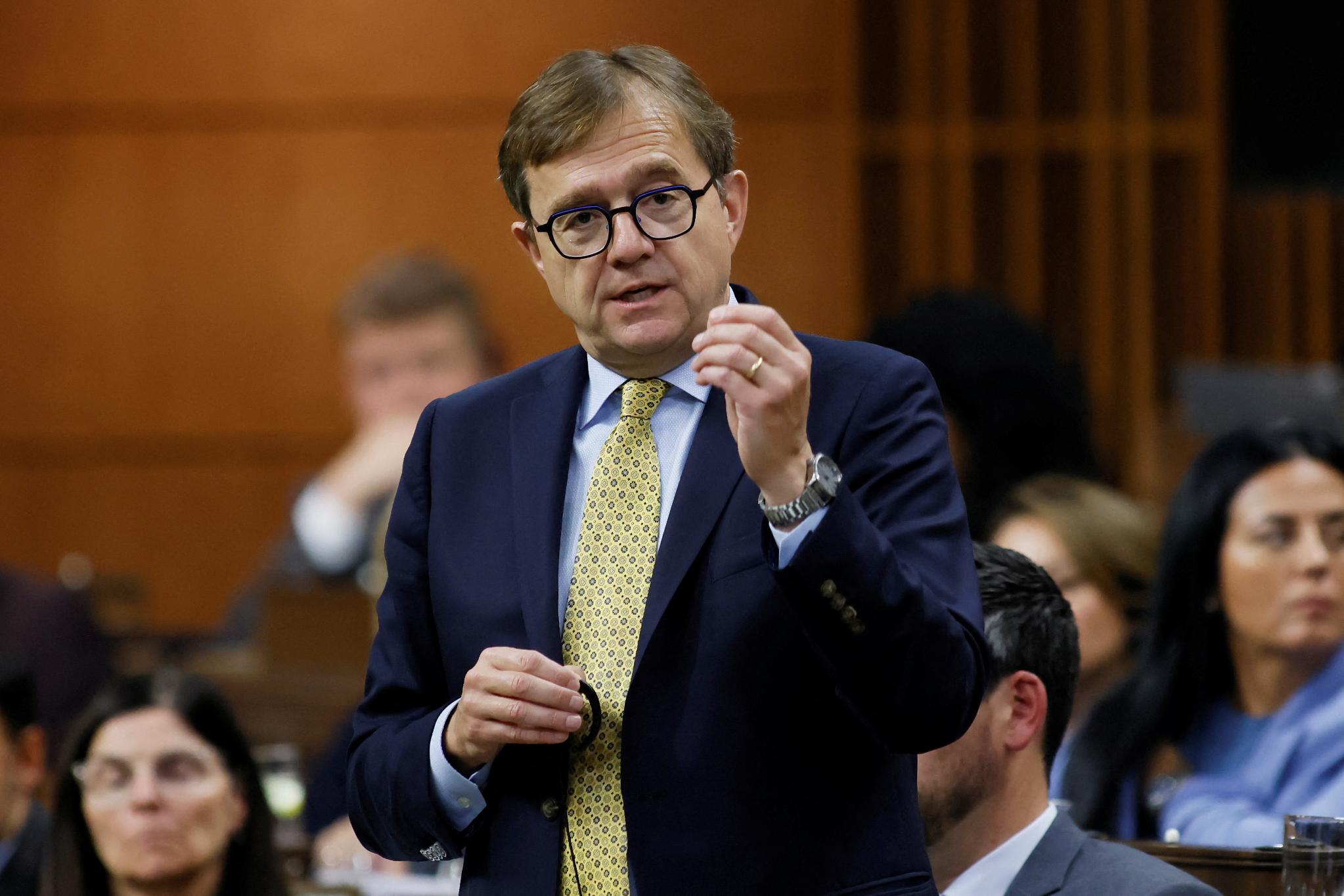
OTTAWA, Nov 2 (Reuters) - A vow by the energy-producing province of Saskatchewan not to collect a federal carbon tax on some homes is irresponsible, Canada's energy minister said on Thursday in comments that added to a mounting dispute between Ottawa and the provinces. Prime Minister Justin Trudeau, under pressure over environmental policies that critics say are driving up the price of energy, last week said the government would suspend the carbon tax on home heating oil in rural areas for three years. Although Trudeau said there would be no other exemptions, Saskatchewan Premier Scott Moe said the move was unfair and threatened to stop collecting the tax on homes heated with natural gas. "If the government of Saskatchewan wants to create that kind of a barrier, then we will have to figure out how best to respond," Energy and Natural Resources Minister Jonathan Wilkinson said in an interview. "I don't think it's a reasonable thing for any provincial premier to be saying ... they're going to flout the laws of land ... that's just an irresponsible position to take." Saskatchewan and the neighboring oil-rich province of Alberta say Trudeau's environmental policies will cripple their energy industries. Moe reiterated on Thursday that the provincial natural gas supplier would "absolutely not" be collecting the tax starting next year. Polls show that if an election were held now, Trudeau's Liberals would lose to the opposition Conservatives, who vow to "axe" the carbon tax. Canada, the world's fourth-largest oil producer, aims to cut emissions 40% to 45% below 2005 levels by 2030. A rising carbon price that will hit C$170 a tonne by 2030, from C$65 a tonne currently, is part of their plan. https://www.reuters.com/sustainability/sustainable-finance-reporting/saskatchewan-leaders-vow-not-collect-canada-carbon-tax-irresponsible-minister-2023-11-02/
2023-11-02 19:35
Nov 2 (Reuters) - U.S. electric and gas utility Southern Co (SO.N) on Thursday increased its cost estimates for its Georgia Power utility's share of two nuclear reactors but stuck with the previously announced timeline. The Vogtle two-unit expansion project is billions of dollars over budget and years behind schedule. Unit 3, one of the two reactors at Vogtle, became the newest reactor in the United States to enter commercial service in July. Unit 4 is slated for completion in the first quarter of 2024. In an investor presentation, Southern Co forecast Georgia Power's costs to be at around $10.75 billion. In April, the company estimated the project to cost around $10.59 billion. The company discovered a "motor fault" in one of the four reactor coolant pumps in Unit 4 during pre-operational testing, which will be replaced with one from its spare parts inventory, CEO Christopher Womack said during the presentation. "After successful installation of the spare pump, we will recommence with start-up and pre-operational testing with a projected in-service date during the first quarter of 2024," he added. The company beat third-quarter profit estimates on Thursday, helped by electricity demand surge and lower operating expenses. Customer additions also helped Southern Co post a 2.1% rise in total retails sales at 42,364 kilowatt-hour during the quarter. Its operating expenses fell about 21% to $4.87 billion in the three months ended Sept. 30, compared to a year earlier, primarily due to lower fuel costs. Southern Co's shares rose 2.9% after its earnings release on Thursday. Peers CMS Energy (CMS.N) and Xcel Energy (XEL.O) also posted a rise in their third-quarter profits. Southern Co serves more than 9 million customers. Its electricity segment caters to the states of Alabama, Georgia and Mississippi. The gas segment provides services in the states of Illinois, Georgia, Virginia and Tennessee. https://www.reuters.com/business/energy/southern-company-beats-third-quarter-profit-estimates-higher-demand-2023-11-02/
2023-11-02 19:27
JOHANNESBURG/LONDON, Nov 2 (Reuters) - Fitch downgraded Ethiopia deeper into junk territory on Thursday to CC from CCC-, citing gaps in the country's external financing that it said increased its likelihood of a default. Ratings in the CC bracket are seen as at imminent risk of default. Fitch cut the rating for the country's foreign currency debt, also citing the "probable risk of a default" as it pursues debt relief under the G20's "Common Framework" agreement. "The material decline in external liquidity and significant external financing gaps have increased the likelihood of a default event," the ratings agency said in a statement. Africa's second most populous country has struggled with debt, which government figures pegged at $28.2 billion at the end of March, following a punishing two-year civil war that ended last year. It requested a debt restructuring in early 2021 under the Common Framework deal set up during the COVID-19 pandemic to help low-income countries navigate debt crises. Fitch said that delays to that Common Framework process, which includes China, and slow movement on a requested bailout from the International Monetary Fund, meant the country was desperately short of cash. "Fitch expects bilateral liquidity relief to be insufficient to address the large financing gaps and improve debt sustainability in the medium term, in the absence of renewed financing from international financial institutions," it said. https://www.reuters.com/world/africa/fitch-downgrades-ethiopia-rising-default-risk-2023-11-02/

2023-11-02 17:16
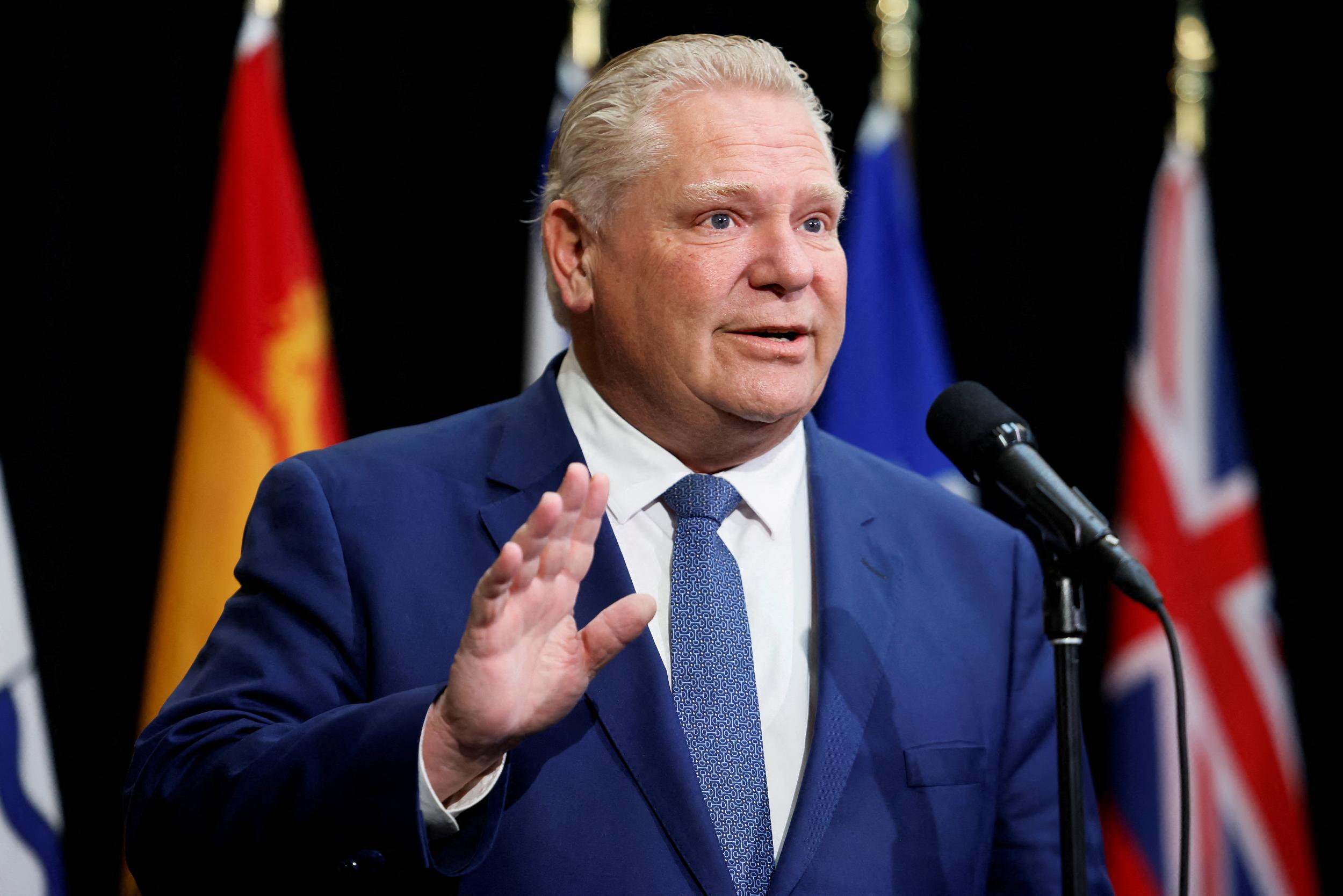
TORONTO, Nov 2 (Reuters) - Ontario on Thursday projected a wider budget deficit for the current fiscal year than previously expected and said it would launch an infrastructure bank to fund projects in Canada's most populous province, a fiscal update showed. The province, one of the world's biggest sub-sovereign borrowers, said it expected a budget deficit of C$5.6 billion ($4.1 billion) for the 2023-24 fiscal year, compared to the C$1.3 billion deficit forecast in March's budget. The fiscal year ends on March 31. The wider deficit was down to lower than expected taxation revenues as well as a C$2.5 billion increase in the contingency fund, the province said. "We are not immune to the risk of an economic slowdown," Ontario Finance Minister Peter Bethlenfalvy said in a statement. "The impacts of high inflation and the Bank of Canada's rapid interest rate increases are weighing on Ontario's economic outlook for the remainder of this year, and into next." Growth is projected to slow to 1.1% in 2023 from 3.7% in 2022 and then to 0.5% in 2024. Canada's economy likely slipped into a shallow recession in the third quarter, data on Tuesday showed. A C$5.3 billion deficit is projected in 2024-25 before a return to surplus in 2025-26, one year later than previous expected. The province proposes investing C$3 billion in a new infrastructure bank which would be responsible for attracting institutional investors for large-scale infrastructure projects, including in energy, transportation and affordable housing. Like the rest of Canada, Ontario's population is growing rapidly due to high immigration, raising the need for more infrastructure. Other measures include steps to remove the 8% provincial portion of the sales tax on rental housing construction projects and extending gas and fuel tax rate cuts through to June 30, 2024. On Wednesday, Bank of Canada Governor Tiff Macklem said federal and provincial government spending will start feeding into inflation next year if current spending plans are maintained. The net debt-to-GDP ratio is projected to edge up to 38.4% in the current fiscal year from 38.3% in 2022-23 and then climb to 39.1% in 2024-25. Long-term borrowing by the province is expected to be C$34.7 billion in 2023-24, C$7.2 billion more than expected in March. ($1 = 1.3794 Canadian dollars) https://www.reuters.com/markets/ontario-raises-deficit-forecast-plans-infrastructure-bank-launch-2023-11-02/
2023-11-02 17:10
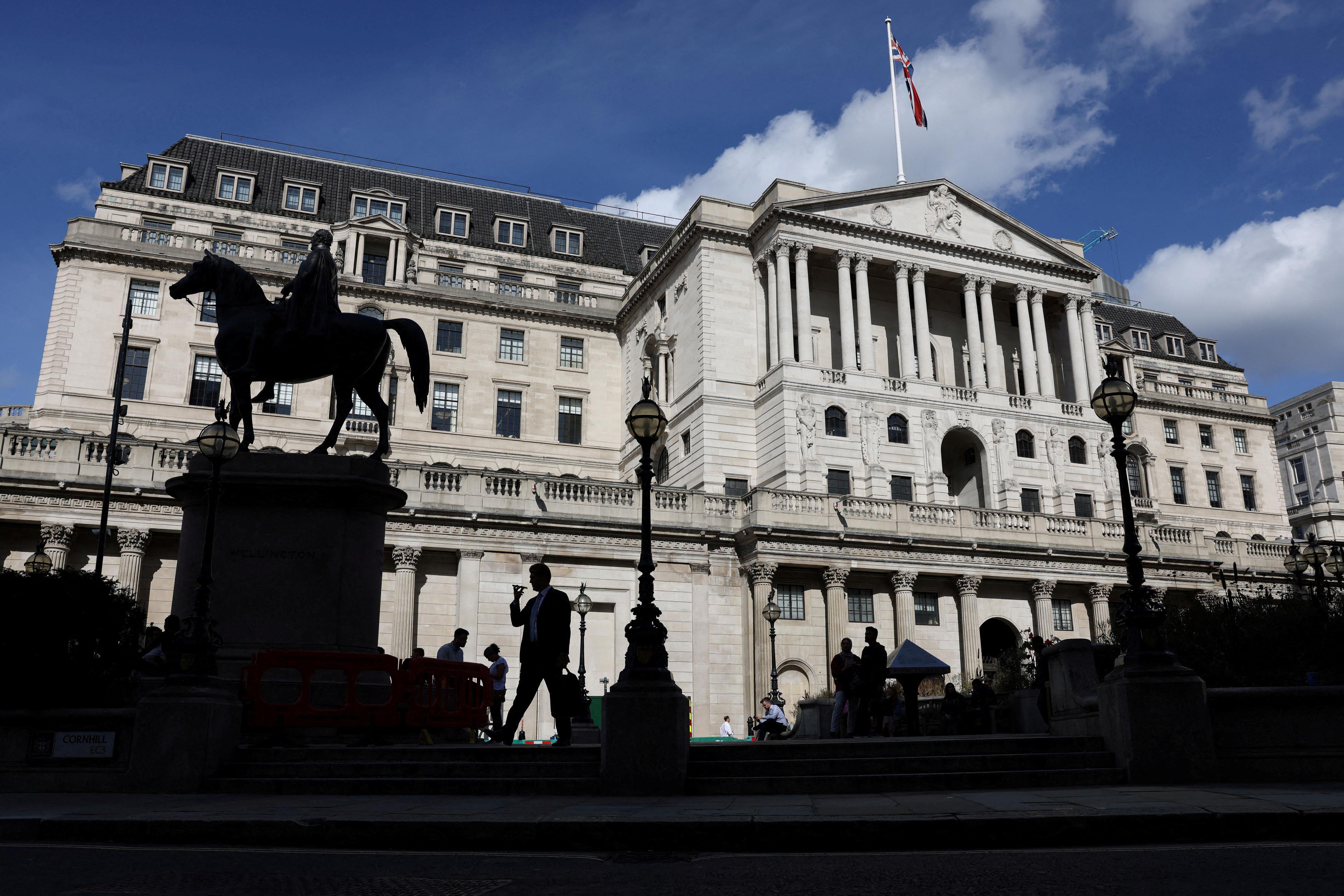
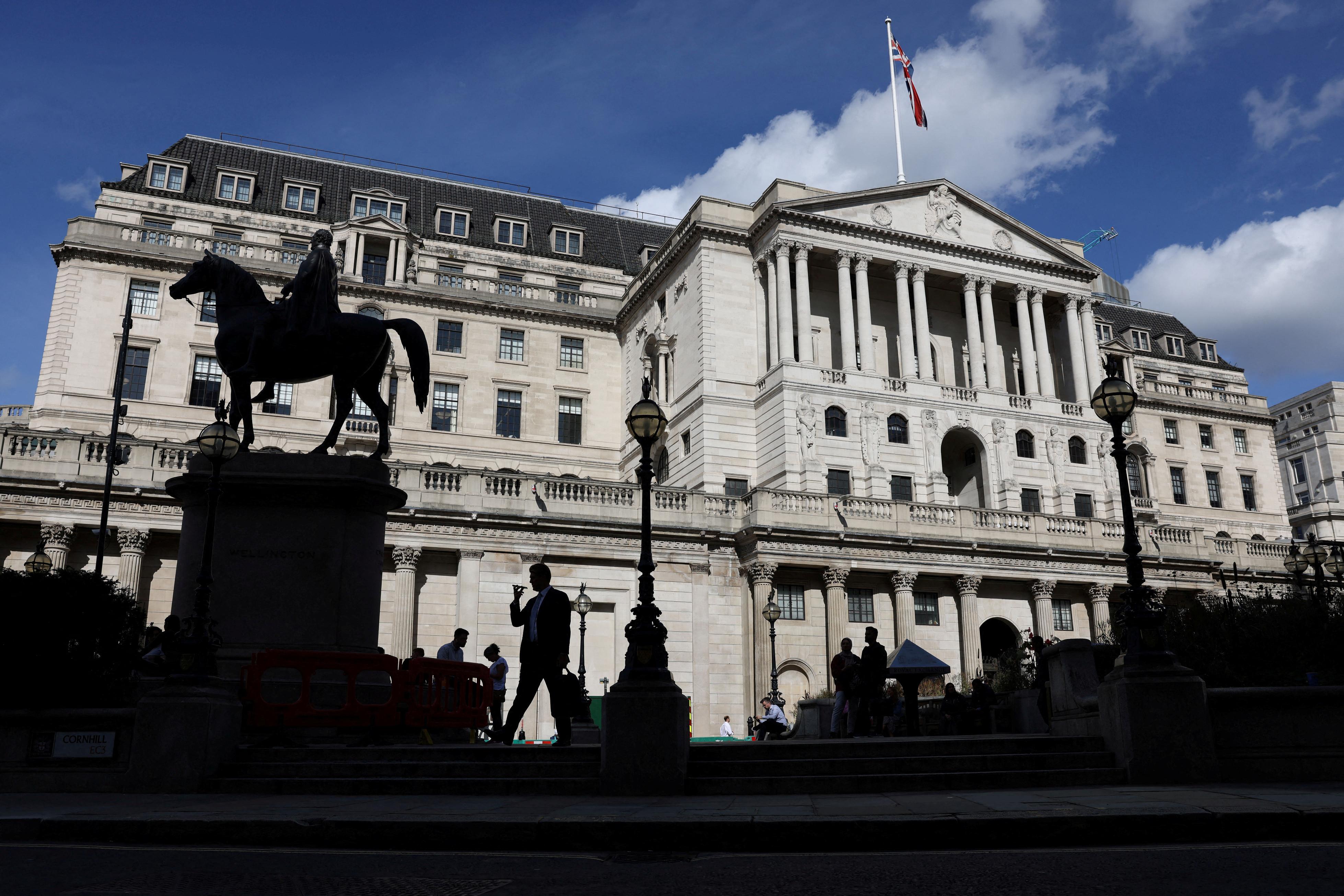
LONDON, Nov 2 (Reuters) - The Bank of England held interest rates at a 15-year peak on Thursday and ruled out cuts any time soon as it fights to "squeeze out of the system" the highest inflation of the world's big rich economies. Despite saying the economy was close to a recession and would have no meaningful growth in the coming years, the BoE reinforced its message that it would keep borrowing costs high. The Monetary Policy Committee (MPC) voted 6-3 to keep Bank Rate at 5.25%, repeating its September decision after 14 back-to-back increases, as expected in a Reuters poll of economists. "The MPC's latest projections indicate that monetary policy is likely to need to be restrictive for an extended period of time," the British central bank said. Britain's economy is already under strain from the run-up of interest rates between December 2021 and August this year, with about half of the impact of those rate hikes yet to be felt. Warning against complacency, Governor Andrew Bailey said inflation was still too high and that the BoE was determined to get it all the way back to its 2% target. "We will be watching closely to see if further increases in interest rates are needed," he said. "But even if they are not needed, it is much too early to be thinking about rate cuts." British government bond yields were down sharply as investors looked at the gloomy economic picture painted by the BoE and decided its next move in rates was likely to be lower. The BoE will keep monetary policy restrictive only for long enough to "squeeze inflation out of the system", Bailey said. The European Central Bank and the U.S. Federal Reserve have similarly decided to keep rates on hold in recent days as they wait to see if their strong dose of rate hike medicine will curb the world's worst outbreak of inflation in decades. Ellie Henderson, an economist with Investec, said central bankers on both sides of the Atlantic were avoiding the kind of guidance that proved misplaced early in inflation's rise. "In an extremely uncertain world – including on what exactly would constitute a 'neutral' level of interest rates – there is little to gain from central banks calling the end and putting their credibility on the line should a resumption of rate rises become necessary after all," she said. Bailey acknowledged that the conflict in the Middle East created a risk of higher energy prices that could feed through into inflation, but said that had not happened so far. MPC members Megan Greene, Jonathan Haskel and Catherine Mann voted to raise rates to 5.5%. Sarah Breeden voted to keep rates on hold at her first meeting since replacing Jon Cunliffe. FLAT-LINING ECONOMY Although inflation has fallen from 11.1% - its highest since the 1980s - just over a year ago to 6.7% in the most recent data, it remains more than three times the BoE's 2% target. The central bank said it expected no growth in Britain's economy in July-September, before expansion of just 0.1% in the fourth quarter. It forecast zero growth in 2024 and an expansion of just 0.25% in 2025. Even so, inflation would only return to 2% at the end of 2025, roughly six months later than previously forecast. Markets continued to bet that the BoE would keep interest rates on hold until at least August next year, when it would probably start to lower them. The BoE showed no sign that it was challenging those expectations in its forecasts. Economists were split on when Bank Rate might fall. Investec's Henderson pointed to the second quarter of 2024 as inflation cools. Allan Monks at JP Morgan predicted rates would stay on hold throughout next year. The BoE said the inflation rate was likely to drop to 4.8% in October, almost two full points lower than in September, as the impact of last year's gas price surge fades. It is still keeping a close eye on strong wage growth, however, which it fears could keep price pressures simmering. The central bank said there were "increasing uncertainties" about official labour market data, which has been hampered by low survey response rates, but jobs growth was likely to have been weaker than it previously thought. It also expected worryingly strong growth in wages would cool off. One detail in the BoE's otherwise downbeat assessment of the economy is likely to be welcomed by Prime Minister Rishi Sunak. It predicted inflation of 4.6% in the fourth quarter of 2023, which would mean Sunak meets his pledge to voters to have price growth this year, ahead of an election expected in 2024. https://www.reuters.com/markets/rates-bonds/bank-england-keep-rates-15-year-high-rules-out-quick-cuts-help-economy-2023-11-02/
2023-11-02 16:47
LONDON, Nov 2 (Reuters) - The Bank of England held interest rates at a 15-year peak on Thursday, as it kept up its fight against the highest inflation among the world's big rich economies, and stressed that it did not expect to cut them any time soon. The Bank Rate was held at 5.25% for the second meeting in a row after 14 back-to-back rate increases and the BoE published forecasts showing the British economy is now skirting close to a recession. MARKET REACTION: STOCKS: Britain's benchmark FTSE 100 index held onto its earlier gains and was last up 1.26% on the day (.FTSE). FOREX: Sterling was up around 0.5% at $1.2208. It was trading around 0.35% higher before the BoE decision at $1.2193 . It dropped versus the euro, which was 0.37% higher at 87.31 pence . Bonds: Benchmark 10-year UK bond yields were last down 16 basis points (bps) on the day at 4.33%, extending earlier falls . MONEY MARKETS: Markets moved to fully price in a 25 basis point BoE rate cut by August 2024, earlier they had seen around a 80% chance. COMMENTS: GEOFF YU, SENIOR EMEA MARKET STRATEGIST, BNY MELLON, LONDON: "The BoE is probably along the path that it expected and probably slightly frustrated that it is not further along." "If you want to take just one key phrase from the BoE's Monetary Policy Report it's judgement three - 'Second-round effects in domestic prices and wages are expected to take longer to unwind than they did to emerge'. That means that the path down will be slow." "The moves in bond markets yesterday did a lot of work for them already. People are talking about getting back into bonds, including longer dated bonds, and that's fair enough, the UK is probably in an OKish place there." ALTHEA SPINOZZI, SENIOR FIXED INCOME STRATEGIST, SAXO BANK, COPENHAGEN: "Regarding the Bank of England, the projections paint a picture of stagflation, and signal the next move to be a cut in the base rate rather than a hike. However, investors will need to deal with the fact that inflation will not revert to 2% until 2025. That means that the long part of the yield curve will remain vulnerable to a bull steepening, as the BoE is forced to remain on hold." "The risk the BoE is running into is that, if at the next projections there is the need to revise inflation up again, that will need to be brought together with another interest rate hike. That would kill the central bank's credibility at the cost of sterling." ED HUTCHINGS, HEAD OF RATES, AVIVA INVESTORS, LONDON: "With no change but close to 0.75 (percentage points) of cuts priced for 2024, the BoE seems keen to push back on markets getting carried away with cuts." "With the lagged effects of past interest rate hikes still to feed through to the economy, weaker growth should well be expected going forward. This should largely be supportive for the currency, but elsewhere, the direction of travel on gilt yields in the near-term is more unclear." DARIO PERKINS, MANAGING DIRECTOR, GLOBAL MACRO, TS LOMBARD, LONDON: "I think all central banks are sort of desperate to stop. The tightening cycle is basically over as far as I can see. If you look globally, you can see that some central banks have already started to ease so that sort of synchronized tightening that we had, has ended and now it's just a question of when and if they cut interest rates." "I think the Fed is in quite a comfortable position, I’m not sure you can say the same about the Bank of England and the ECB." SAMUEL ZIEF, HEAD OF GLOBAL FX STRATEGY, J.P. MORGAN PRIVATE BANK, LONDON: "The BoE told us that further tightening requires fresh evidence of inflation persistence. Data since the last meeting has not met that threshold." "They’ll likely be sitting on ‘Table Mountain’ for a while, but in our view the next move for the BoE will be to lower rates. The BoE evidently doesn’t disagree; its forecasts see inflation returning to target in 2025 if rates remain unchanged into next year and then gradually decline." "With the BoE in hand after the Fed yesterday and the ECB last week, all of the major central banks are now on hold in our view. At the same time, growth and inflation – particularly in Europe – are both moving in the same direction: lower. That’s a strong backdrop for fixed income; we like owning European bonds across the curve and funding tactical FX trades out of euro and sterling." CHRIS BEAUCHAMP, CHIEF MARKET ANALYST AT IG GROUP, LONDON: "The BoE has struck a similar tone to the Fed, and today's 6-3 result shows that caution is spreading to central banks outside the U.S. While it’s still clear that rate cuts are off the table for the foreseeable, it seems the bar for another rate hike has been raised a little today". MICHAEL FIELD, SENIOR EQUITY STRATEGIST AT MORNINGSTAR, AMSTERDAM: "This will come as some small relief for markets, but any positivity coming from this announcement today has been lost in the euphoria on the news that the U.S. Federal Reserve is likely finished with rate increases, which should buoy the global economy." "That the Bank (of England) could also be finished with rate rises, and may even start cutting early next year, is something to be celebrated, both by businesses and cash-strapped mortgage holders. But at the same time, it is easy to forget how quickly and strongly rates rose. At 5.25%, base rates stand at their highest level since before the financial crisis." JEREMY BATSTONE-CARR, STRATEGIST, RAYMOND JAMES, FRANCE: "Soft economic activity and inflationary pressures persist, but the fact that these are no worse than forecast contributed to today's conclusion to hold the rate steady. The rise in longer dated government bond yields, in large part the consequence of global factors, has served to tighten financial conditions and done a share of the MPC's (Monetary Policy Committee) work for it." "The question going forward is how long this standstill will last for – with financial markets expecting it to be a considerable period of smooth sailing. The door for future rate hikes still sits ajar, and the MPC will likely remain vigilant for further fluctuations and risks in the months ahead." PETER DOHERTY, DIRECTOR, HEAD OF INVESTMENT RESEARCH, ARBUTHNOT LATHAM, LONDON: "Of all the major central banks, the BoE has the toughest path forward. Economic data is cooling, the labour market is tight, but inflation is still sticky." "In the short to medium term the ability of the (U.S.) Federal Reserve to hike relative to the BoE constrains the pound against the dollar." "When you look back a couple of months, what was priced in was continued hikes from the BoE and cuts next year from the Fed. What might turn out could be very much the opposite of that." GEORGINA TAYLOR, FUND MANAGER AND HEAD OF MULTI-ASSET STRATEGIES, INVESCO, LONDON: "Given we are probably at peak rates, we have to line up the central banks in terms of who might move to cuts and we think probably the Bank of England will need to be the one major central bank that moves first. They need to focus on the growth-inflation mix and the fact the economy is deteriorating." "Across bond markets, gilts are the place where there is probably most value coming through so we have added some exposure." https://www.reuters.com/world/uk/view-bank-england-keeps-rates-15-year-high-2023-11-02/