
2023-11-01 14:27
Nov 1 (Reuters) - The U.S. Treasury Department on Wednesday said it plans to "gradually" increase the size of most of its debt auctions in the November 2023 to January 2024 quarter and expects it will need one more additional quarter of increases after this to meet its financing needs. MARKET REACTION: U.S. Treasury yields fell after the refunding announcement. The 10-year yield was recently around 4.79% COMMENTS: STEVE SOSNICK, CHIEF STRATEGIST, INTERACTIVE BROKERS, GREENWICH, CT “We’re certainly seeing a well-deserved relief rally in bonds this morning. There were fears that the refunding would be more weighted to the long end of the curve than what was eventually announced. That is helpful for two reasons: first, because the concerns about excess supply had been weighing more on the long end; and second, because the long end is more volatile than the short end, good news has a bigger impact.” “It is also reasonable to think that fixed income markets are thinner than normal ahead of today’s FOMC announcement, so good news might be getting rewarded a bit more than normal.” TOM DI GALOMA, CO-HEAD OF GLOBAL RATES TRADING, BTIG, NEW YORK "This will make it problematic for the primary dealers to find excess buyers. The last auctions that we saw were really quite well bid, but there seemed to be on average a smaller takedown by the primary dealers." "I think the refunding is a result of the higher deficit we're seeing. It seems like the U.S. budget deficit continues to grow, and they need to finance that." STEVEN ZENG, US RATES STRATEGIST, DEUTSCHE BANK, NEW YORK "We thought the Treasury would slow the pace of increases to the 10-year, 20-year and 30-year, and that’s what they delivered. The long-end rallied after refunding announcement … which is consistent with smaller increases than the market expected." "Most dealers expected a repeat of the increase from August, the Treasury delivered slightly less … and the market rallied slightly on the back of that. Definitely not a repeat of the panic after the August announcement." BRIAN JACOBSEN, CHIEF ECONOMIST, ANNEX WEALTH MANAGEMENT, MENOMONEE FALLS, WISCONSIN "It wasn’t as bad as feared. The guidance that there may be only one more quarter where it increases was somewhat comforting. Leave it to the Treasury to not refinance when yields were historically low and instead extend duration when yields are unusually high. The Treasury is a horrible trader." BRUCE CLARK, MACRO STRATEGIST, INFORMA GLOBAL MARKETS, NEW YORK The Treasury has lowered its bond issuance in the long-end of the curve compared to August in an effort to calm the panic in bond markets. They lit a fire in the bond markets in August with the last refunding announcement and now they are attempting to put it out. STUART COLE, CHIEF MACRO ECONOMIST, EQUITI CAPITAL, LONDON “The $112 billion it has announced it will sell this quarter will raise some $9 billion in extra cash compared to the last quarter, which I guess is symptomatic of the fact that the US government's fiscal deficit is growing ever larger.” “I am a little surprised that the Treasury did not want to issue more longer dated stuff, given the growing fiscal deficit and the extra funding security such longer term borrowing provides. My hunch is that the already higher yields we are seeing in the longer dated section of the curve tied its hands a little.” STEVEN RICCHIUTO, U.S. CHIEF ECONOMIST, MIZUHO SECURITIES USA LLC, NEW YORK “The Treasury took a little bit of the borrowing out of the longer end and put it into the belly of the curve. There’s a lot of fear into how much additional increases you were going to get. There was discussion that the refunding itself would be substantially larger than we had anticipated. We just don’t see that. They would just have to expand the duration of the debt over time, it’s not like it has to be done ASAP." "I think the market got ahead of itself in terms of how big and how bad they thought the fancy numbers would be in terms of the actual projected issue sizes and the size for the refunding itself.” ART HOGAN, CHIEF MARKET STRATEGIST AT B. RILEY WEALTH, NEW YORK "The Treasury is going to auction 112 billion in debt next week and that starts Tuesday and works its way through the week and along the curve, but that is modestly above expectations coming into this." "The ongoing supply of treasury issuance likely puts upward pressure on yields and that presents a headwind for equity investors." https://www.reuters.com/markets/us/view-us-treasury-increases-size-most-its-debt-auctions-2023-11-01/

2023-11-01 13:33
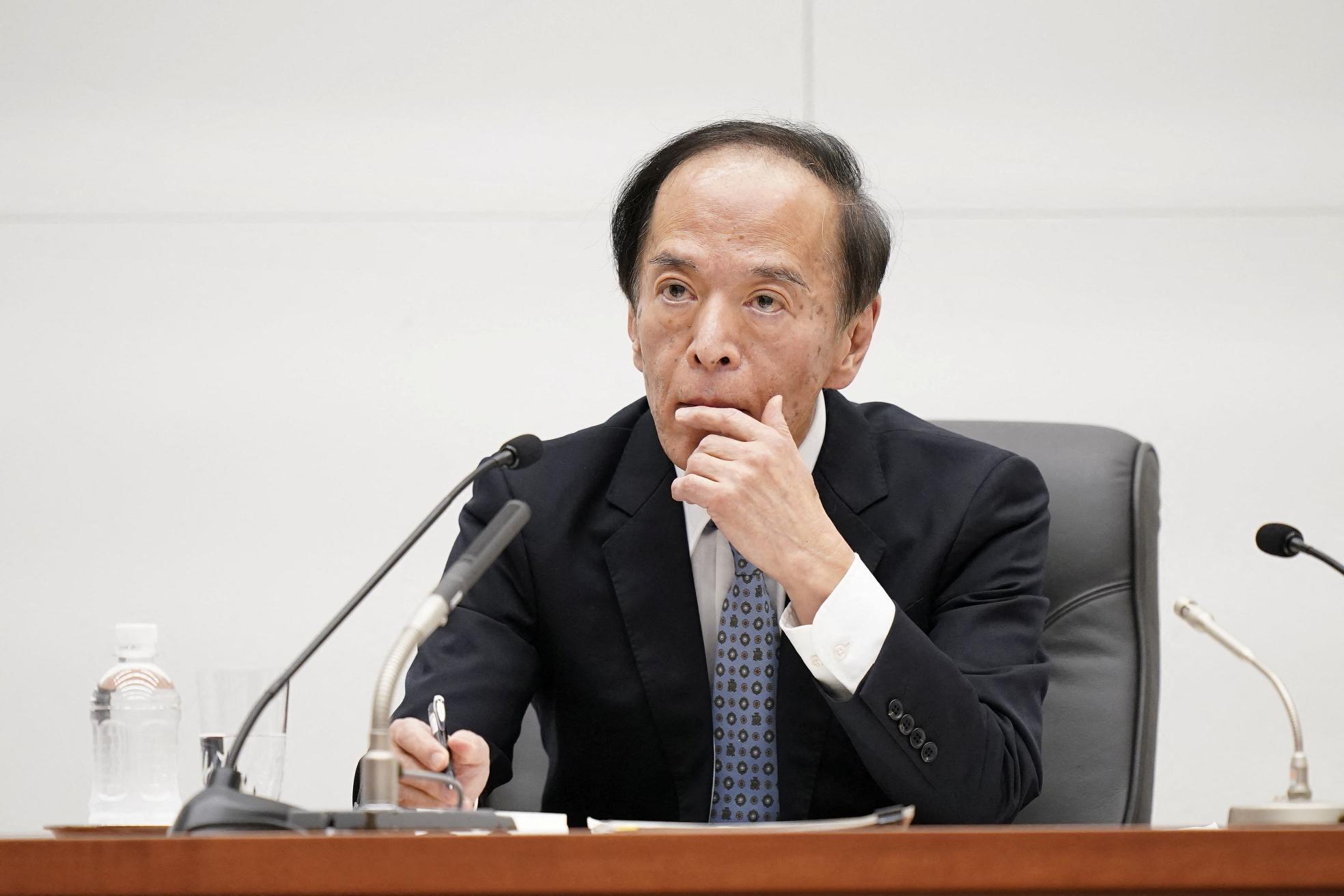
ORLANDO, Florida, Nov 1 (Reuters) - In scrapping its hard 10-year bond yield ceiling of 1%, the Bank of Japan has taken a huge step towards dismantling a widespread assumption at the heart of G10 monetary policy for decades - the idea of a central bank 'put'. Justified or not, a perception had built up among investors since the days of former Fed Chair Alan Greenspan that the Federal Reserve - and later, other central banks - would always eventually ease credit to support wobbling asset markets when price falls threatened to snowball. Perhaps that thinking was more myth, as former St. Louis Fed President William Poole outlined in 2007. The line between preserving financial stability and propping up asset markets blurred tremendously in the following years, understandably so since the Great Financial Crisis. But for most of the time since the late 1980s, when Greenspan became Fed chair, central banks were tooled mostly to fighting against the risk of deflation rather than inflation - and the likes of the Bank of Japan and Swiss National Bank were in the thick of that battle. With many economists arguing that world is now gone - as even Japan is now battling to rein in above-target inflation - the notion that central banks will automatically ease policy to backstop financial markets looks a bit fanciful. "Markets didn't realize that the 'central bank put' was a luxury good, which only really existed when inflation was under control, below target, and the risks were to the downside," says Steven Englander, head of global G10 FX research at Standard Chartered in New York. "It's fair to say all of these policies that were aimed at generating asset market strength by pumping liquidity into the market have basically been withdrawn." The idea of central banks riding to investors' rescue with lower interest rates in times of trouble took root early in Greenspan's tenure as Fed chief. Policymakers began putting greater store on the wealth effects from stock prices on consumption, and therefore wider economic growth. A National Bureau of Economic Research working paper in March 2020 noted: "The statistical fact is that, since the mid-1990s, the Fed has tended to lower rates by an average of about 1.2 percentage points in the year after a 10% stock market decline." In addition, interest rate changes were asymmetric — Fed rate hikes following stock market recoveries were usually muted compared with the initial cuts. FINANCIAL STABILITY As near-zero interest rate policies (ZIRP) emerged after 2008, transmission of easier money - and the notion of a central bank put - spread to government bond buying or exchange rates, as in the case of Switzerland. The SNB for years fought against market pressure to drive up the Swiss franc, capping it at 1.20 per euro in September 2011 until January 2015 when it simply stepped back, unleashing intense volatility and a rapid 30% revaluation. This was an explicit, open-ended policy to hold the currency at a set level and flood the Swiss economy and markets with oceans of liquidity, but essentially still a central bank put. Since the post-COVID-19 surge in inflation to 40-year highs in many developed economies, policymakers have moved even further away from those extremes, tightening policy via unprecedented rate hikes, shrinking balances sheets, or both. With its history of deflation, Japan was always going to be the last to move. Public debt is the highest in the world at more than 250% of GDP and the BOJ owns around half of the entire government bond market. Although it kept the benchmark policy rate at -0.10% on Tuesday, the significance of downgrading the 1% yield on 10-year JGBs to a "reference" rate from a hard cap should not be underestimated. The cap was set only three months ago, and the speed with which it was abandoned suggests the BOJ under Governor Kazuo Ueda means business. Given that the BOJ now sees inflation well above its 2% target next year, could the BOJ go up through the gears and perhaps even raise rates in the coming months? That may be too much, too soon. And underscoring the BOJ's difficulty in managing its bumpy rather than immediate exit, the BOJ was intervening in the bond market again on Wednesday. Policymakers will be aware of the damage rapidly rising borrowing costs could do to countless Japanese banks, financial firms and companies which have gorged on free and easy money for decades - the so-called zombie firms. As Marc Chandler at Bannockburn Global Forex points out, it is financial stability that is ultimately - and rightly - at the heart of the so-called central bank put. "There is a perception or myth that has built up around the central bank put. It doesn't really exist, not in relation to market prices or levels. It is misunderstood. It is about financial instability," Chandler says. (The opinions expressed here are those of the author, a columnist for Reuters) https://www.reuters.com/markets/asia/japan-calls-time-g10-central-bank-put-mcgeever-2023-11-01/
2023-11-01 13:29
Nov 1 (Reuters) - The U.S. Treasury Department on Wednesday said it will slow the pace of increases in its longer-dated debt auctions in the November 2023 to January 2024 quarter and expects it will need one more additional quarter of increases after this to meet its financing needs. Treasury yields fell after the announcement on relief the increases were not as large as some had feared. It comes after the U.S. government on Monday cut its borrowing estimate for the quarter to $776 billion, $76 billion less than its forecast in July. "There was discussion that the refunding itself would be substantially larger than we had anticipated. We just don’t see that," said Steven Ricchiuto, U.S. chief economist at Mizuho Securities USA in New York. “The Treasury took a little bit of the borrowing out of the longer end and put it into the belly of the curve," he added. In July, the U.S. government said it expected to borrow $1.007 trillion in the July-September quarter, $274 billion more than it had predicted in May, sparking a large bond sell-of. The Treasury said on Wednesday it plans to increase the size of its two-year and five-year note auctions by $3 billion per month, and to increase the size of its 3-year and 7-year note auctions by $2 billion and $1 billion per month, respectively. It will increase the size of its 10-year new issue and reopenings by $2 billion, down from $3 billion at the last refunding, and raise its $30-year bond new issue and reopenings by $1 billion, down from the prior increase of $2 billion. The 20-year bond auction sizes will remain unchanged. The Treasury plans to sell $112 billion in its quarterly refunding next week, which will raise $9.8 billion in new cash and refund $102.2 billion in securities. This will include $48 billion in three-year notes, $40 billion in 10-year notes and $24 billion in 30-year bonds. The government will also increase the size of its two-year floating rate note new issue and reopenings by $2 billion. Some Treasury Inflation-Protected Securities (TIPS) auction sizes will also be increased, with a $1 billion increase in the December 5-year TIPS auction and January 10-year TIPS auction. The Treasury also said it expects to implement "modest reductions" to short-dated bill auctions by early December, which are expected to be maintained through mid- to late-January. The bill auctions will be held at current levels through late in November. It is also considering changing its regular 6-week cash management bill to a benchmark, and will announce this decision at the next refunding. The Treasury added that it continues to make "significant progress" on its plans to launch a regular buyback program in 2024. https://www.reuters.com/markets/us-treasury-increases-size-most-its-debt-auctions-2023-11-01/

2023-11-01 13:10
Governors debated matter last week Put off any move fearing it may backfire FRANKFURT, Nov 1 (Reuters) - European Central Bank policymakers are reviewing the interest the bank pays on government cash deposits, including a potential cut, to try and rein in mounting losses resulting from its fight against inflation, two sources told Reuters. The ECB and the 20 central banks of the countries that share the euro have started reporting large losses after raising interest rates on deposits to a record high in a bid to curb lending and price growth in the euro zone. Looking to reduce those interest payments, the euro zone's central bankers revived a debate on the remuneration of government deposits at their policy meeting last Thursday, the two sources close to the matter said. But they put off any decision after last week's preliminary discussion, fearing any change might backfire, the sources added. Governors worry that slashing the interest they pay on public cash would simply cause governments to switch to commercial banks, which would then park that money back at the ECB for even higher remuneration, according to the sources. An ECB spokesperson declined to comment. Policymakers will likely revisit the topic next year, the sources said, when the ECB is also due to tackle the broader issue of the excess cash sloshing around the banking system. The ECB earlier this year set a ceiling on the remuneration on deposits held by governments at euro zone central banks to equal the Euro Short-Term Rate (€STR), currently at 3.9%, minus 20 basis points. The Bundesbank, traditionally a magnet for public funds due to Germany's perceived safety, and some others of the euro zone's national central banks have already lowered their own rates to zero. Governments have in the meantime whittled down their deposits at central banks in the bloc from 647 billion euros ($683 billion) in July 2022 to 205 billion euros at the latest count. FINANCING STATES? Traditionally governments did not earn any interest on their cash balances at the central bank, in line with an ECB ban on financing public coffers. But years of ECB purchases of government bonds and the more recent surge in interest rates have complicated that picture. The ECB pushed its rate on commercial banks' deposits above zero in September 2022. Fearing "an abrupt outflow" of public cash into the money market, which had been deprived of vital collateral by the ECB's own bond purchases, the central bank started remunerating government deposits too. The issue may now turn out to be political as well as financial. Commercial banks have seen their profits soar thanks to the ECB's high interest rates, attracting public criticism and even taxes from governments in Lithuania, Spain and Italy. Euro zone governments have only enjoyed part of that bonanza but may foot the full bill if their central bank needs a bailout, as the Dutch National Bank warned it might one day. Euro zone commercial banks earn 4.0% on the excess cash they park at their central bank, which is a whopping 3.5 trillion euros after the ECB flooded the system with money over the past decade, when it was trying to boost too-low inflation via massive bond purchases. On the other hand, governments enjoyed rich dividends from their central banks in recent years from the proceeds of those same purchases. ECB President Christine Lagarde said last week the central bank does "not have as a purpose to show profits or to cover losses", adding policymakers had not discussed raising the share of banks' unremunerated reserves. But the issue is plaguing central banks across rich countries. The Swiss National Bank decided on Monday to reduce the amount of interest it pays commercial banks and the Federal Reserve and Bank of England are also posting losses. ($1 = 0.9472 euros) https://www.reuters.com/markets/europe/ecb-reviews-interest-government-deposits-curb-losses-sources-2023-11-01/
2023-11-01 12:51
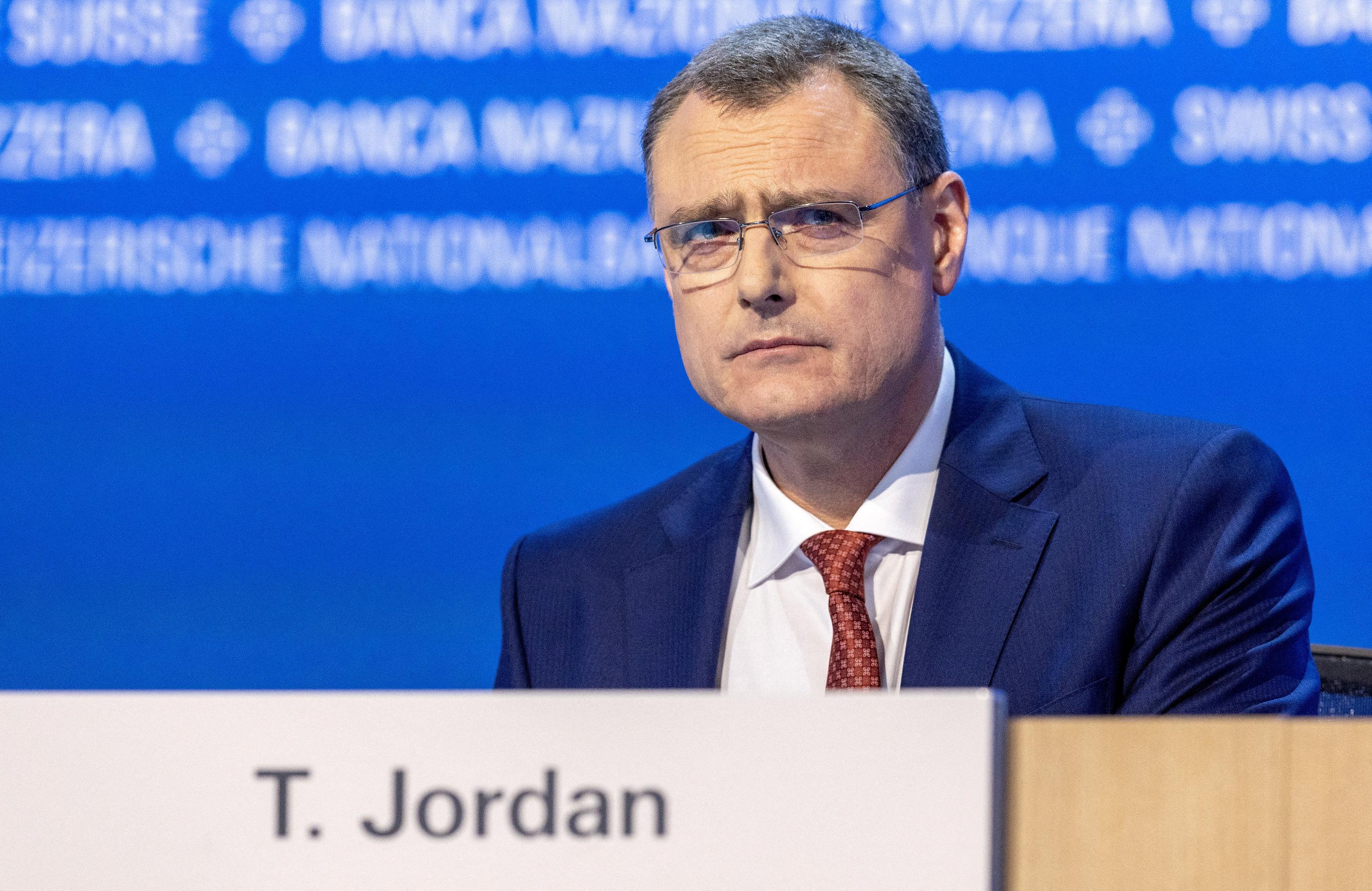
BERN, Nov 1 (Reuters) - Swiss National Bank (SNB) Chairman Thomas Jordan on Wednesday defended the central bank's handling of the Credit Suisse crisis including handing out emergency cash to the stricken lender contrary to its normal rules. The SNB bought time for a solution by providing massive liquidity for Credit Suisse before UBS (UBSG.S) bought the bank in March, Jordan told an event in Bern. The acquisition of the fallen 167-year-old lender prevented a global financial crisis, he said. "The SNB's willingness and ability to provide liquidity was crucial in managing the acute crisis at Credit Suisse and thus in avoiding a financial crisis with serious economic consequences for Switzerland and the rest of the world," Jordan said. The SNB provided 168 billion Swiss francs ($185 billion) in emergency liquidity after Credit Suisse suffered massive outflows as rattled customers withdrew their funds in March. "Never before had a central bank provided such a large amount of liquidity to a single bank," Jordan told the SNB and its Watchers event. Some of the cash was provided via an emergency scheme called ELA+, or emergency liquidity assistance. The money was secured only via preferential rights in bankruptcy proceedings and not against collateral like mortgages which is usually demanded by the SNB. "Without ELA+ Credit Suisse would have been in jeopardy of being unable to meet its financial obligations ... entailing substantial risks for financial stability," Jordan said. But while the SNB played a key role in resolving the situation, there were limits to what the central bank could do and important lessons to be learned, he said. Liquidity regulations must be adapted in the light of faster and larger outflow of customer deposits, Jordan said. It was also crucial for banks to prepare sufficient collateral to transfer to central banks to obtain emergency liquidity in a crisis. There also needed to be an effective public liquidity backstop to enable the SNB to provide liquidity to lenders that do not have sufficient collateral and which was covered by a state guarantee. "ELA+ should not become part of the SNB's regular set of instruments," Jordan said. ($1 = 0.9098 Swiss francs) https://www.reuters.com/markets/europe/swiss-national-bank-chairman-defends-handling-credit-suisse-crisis-2023-11-01/
2023-11-01 11:48
NEW YORK, Nov 1 (Reuters) - Entergy Corp (ETR.N) beat third-quarter profit estimates on Wednesday, as retail volume boosted by warmer-than-usual weather. New Orleans, Louisiana-based Entergy said effects of weather on retail volume, certain regulatory actions across its operating companies in the quarter, along with lower operating and maintenance costs and higher income from investments drove profit and helped offset other costs. The company reported a 4.9% year-on-year increase in retail sales volume to 35,790 GWh for the third quarter. The company supplies power to about 3 million customers in Arkansas, Louisiana, Mississippi and Texas. It posted earnings of $3.27 per share on an adjusted basis, beating an analysts' consensus of $3.02, LSEG data showed. The firm narrowed its 2023 adjusted earnings per share guidance to a range of $6.65 to $6.85. https://www.reuters.com/business/energy/entergys-third-quarter-profit-beat-estimates-2023-11-01/


