2023-11-01 06:45
ANKARA, Nov 1 (Reuters) - Turkey will move to inflation-adjusted accounting, but financial institutions may be excluded from the practice, Finance Minister Mehmet Simsek said late on Tuesday. Turkish companies' end-2023 balance sheets will be inflation adjusted, with the practice expected to continue until 2026 due to current inflation forecasts, the Treasury told Reuters last week, a change analysts said would most affect the country's banks. "We will move to inflation accounting. Maybe there'll be an exception for financial institutions, and we'll not include them to the practice. But apart from that, we will move into that practice," Simsek told a parliamentary commission. The Treasury's revenue administration published a draft regulation this month detailing a move to inflation accounting. Turkish annual consumer price inflation climbed to 61.53% in September, the most recently available data. In the last two years, companies have sought to protect themselves from high inflation by purchasing fixed assets rather than leaving money in bank accounts. Those that have turned to non-monetary fixed assets are expected to receive higher profits and pay correspondingly higher taxes in 2024. Turkish banks, which saw their average profit increases slow to 50% in the first half of this year following a 366% surge in 2022, would be among those affected most negatively by the move to inflation-adjusted accounting, analysts said. "Banks will report perhaps a quarter of the profits they used to report," Soner Gokten, assistant professor for accounting and finance at Turkey's Baskent University, said last week. https://www.reuters.com/world/middle-east/turkey-may-exclude-banks-inflation-adjusted-accounting-minister-2023-11-01/

2023-11-01 06:38
KYIV, Nov 1 (Reuters) - Russia launched a score of drones and a missile in an overnight attack that targeted military and critical infrastructure, Ukraine's air force said on Wednesday, while regional officials said the Kremenchuk oil refinery was hit. On the Telegram messaging app, the air force said 18 of the 20 Russian-launched kamikaze Shahed drones were destroyed before reaching their targets, as was the missile. But a repeated target of earlier Russian attacks, the Kremenchuk oil refinery in the central region of Poltava, was struck, setting it ablaze, according to Filip Pronin, head of the region's military administration. "(The fire) has been extinguished. The situation is under control," he said on Telegram, adding that there were no reports yet of casualties as officials sought to gather more details of the destruction. It was not immediately clear how the refinery was hit. The refinery, which Pronin said was not operating, has been attacked repeatedly since Russia launched its full-scale invasion of Ukraine 20 months ago. Reuters could not independently verify the reports. There was no immediate comment from Russia. https://www.reuters.com/world/europe/russian-attack-hits-oil-refinery-drones-missile-shot-down-ukraine-says-2023-11-01/

2023-11-01 06:30
As climate change hits crops, villagers start to diversify Farmers try new activities and plant hardier varieties Biofortified beans used to combat malnutrition and drought CHIQUIMULA, Guatemala, Nov 1 (Thomson Reuters Foundation) - On a steep terraced slope in the mountains of eastern Guatemala, Gloria Diaz and a group of fellow farmers punch holes in the soil with wooden spades to plant bean seeds that they pray will yield a bumper harvest. Sufficient production of beans, which most Guatemalan villagers eat daily, is no longer guaranteed in Chiquimula, a poor rural province in the drought-prone Dry Corridor - a belt of land stretching across Central America. "You just can't rely on the rain coming when you need it, and for beans you don't want too much rain," community leader Diaz said, standing beneath a cloudless sky in the town of Ipala about 200 km (124 miles) east of the capital, Guatemala City. As climate change causes more frequent and severe droughts, as well as torrential and erratic rains, farmers are struggling to cope with dwindling crop yields that mean less food to eat, and in the worst cases, hunger. In Chiquimula and other areas, they are turning to drought-resistant bean varieties bred to contain more zinc and iron to stem malnutrition, and are learning to grow other vegetables, raising chickens and pigs, and even becoming fish farmers and beekeepers to have alternative sources of food and income. Two years ago, Diaz switched to a new bean variety, known as Chorti, which is touted for its drought and pest resilience. Chorti is named after one of the Indigenous Mayan peoples in the region. "This bean can tolerate many days of no rain. Last year, it didn't rain for 24 days straight and the seedlings survived," said Diaz, who heads Amuprocaj, an association of 234 small-scale women farmers in Ipala. "Chorti beans grow quicker than traditional beans ... and they taste good," said Diaz, as women beat dry weeds with sticks to turn them into an organic fertilizer left in the soil alongside trees planted to provide shade from the dry heat. Due to its increased content of micronutrients, the Chorti bean is also being promoted as a way to help tackle high rates of anemia and malnutrition among Guatemalan women and children. In Guatemala, rates of stunted growth in children aged from 6 months to 59 months caused by chronic malnutrition are among the world's highest, according to the U.N. World Food Programme (WFP). BIOFORTIFIED BEANS Through a crop breeding process called biofortification, micronutrient-enriched crops contain higher amounts of iron, zinc, and vitamin A that help to tackle malnutrition caused by a lack of vitamins and minerals in the diet. U.S.-based HarvestPlus, part of CGIAR, a global group of agriculture research centers that works to scale up the production and consumption of biofortified staple crops, has released 77 varieties of iron-rich beans across Africa and Latin America, including in Guatemala since 2016. From high-iron beans in Rwanda to vitamin A-rich maize in Zambia and iron-rich pearl millet in India, research shows that biofortified crops are a "cost-effective and scalable innovation" to improve nutrition and health outcomes among poor farming communities, according to HarvestPlus. So far, HarvestPlus says all its biofortified crops have been developed with conventional breeding, not genetic modification (GM). It says, however, that GM has "strong potential" for improving crops. In Guatemala, numerous U.N. and international aid agencies, some funded by the U.S. Agency for International Development (USAID) and the European Union, donate biofortified seeds to bean farmers, who usually also grow maize crops in rotation. New biofortified varieties of bean, maize and potato are continuously being developed, first requiring testing and certification by Guatemala's national agricultural research institute (ICTA) before they can be released on the market. But a backlog of approvals exists and the government needs to ramp up efforts to roll out the Chorti bean to more farmers, said Herlindo Morales, a Guatemalan agricultural engineer. "Better coordination is needed nationwide to introduce biofortified seeds across the country so that all farmers can get access to them. There isn't a government policy on biofortified crops," said Morales, who works at the International Centre of Tropical Agriculture (CIAT), a CGIAR research center, which helped develop the Chorti bean. CIAT provides technical support and training to Ramirez's group and about 7,000 other farmers across the Dry Corridor. "It's still a drop in the ocean," he added. It can also be difficult to convince farmers to switch from seeds used by their ancestors to new biofortified varieties that often require different growing techniques. "The biggest problem is cultural, getting people to accept a fortified product particularly if it looks different and has a different taste and texture," said Guatemalan Edwin Castellanos, science director at the Uruguay-based Inter-American Institute for Global Change Research (IAI). SCHOOL MEALS Diaz's group sell their beans to seven local schools, along with cherry tomatoes and coriander grown on a communal patch of land, as part of a government school meals program introduced in 2017. It aims to ensure more school children eat nutritious meals and requires at least 50% of food on school menus, including beans, to be purchased from local farmers at a fixed price. Despite the difficulty in getting farmers connected to schools and other administrative challenges, along with high transport costs paid by farmers to move their produce, schools provide a crucial market and source of income for farmers. "In our group, we don't have a child with malnutrition," said Maria Mendez, an Amuprocaj member. "You can see the difference in children's eyes, their skin color. They are more active, they have more energy," she said. Ultimately, the success of farmer associations depends on community willingness and committed leadership backed by long-term technical and financial assistance that is largely coming from U.N. agencies, USAID and international aid groups. "You need a community that wants to participate and learn, a leader who cares and is responsible, and who wants to develop their community. Not all do," said Diaz, who receives support from the U.N.'s Food and Agriculture Organization (FAO) and CIAT but says she has received no government help. RISING COSTS An hour's drive away, along unpaved narrow mountain roads overlooked by a volcano, Amilcar Ramirez grows Chortí beans alongside maize crops with his wife and teenage son, selling seeds to local farmers and in markets. Like many small-scale farmers, the Ramirez family do not own the land they work on. Farmers usually rent land or work on plots owned by big landowners as payment-in-kind. Despite belonging to ADEGO, a local farmer association, which provides technical assistance and buys the bean seeds farmers produce, the family's profits are being squeezed. The increased cost of fertilizer and day laborers, caused by a shortage of labor as rising numbers of young men migrate from rural areas to the United States, is hitting yields. "It's harder to find laborers to help with the harvest, and because the price of fertilizer has doubled in the past year, we're using less fertilizer and producing less," said Ramirez. Across Guatemala, one of the world's poorest and most unequal countries with jarring contrasts of wealth, tens of thousands of small-scale farmers struggle to subsist without support from farming cooperatives or the government. Two thirds of Guatemala's population of 17 million live on less than $2 a day, with Indigenous rural communities the poorest, according to the WFP. "One poor harvest can push people towards a tipping point. Many live on survival mode, on top of the impact of climate change. More people need to be reached," said Castellanos. Despite recurring severe droughts, rainwater collection and drip irrigation systems are a rare sight in Chiquimula. "Many small-scale farmers don't have water irrigation systems and depend on erratic rainfall to harvest crops," he added. NEW OPTIONS To become more resilient to climate shocks by having a back-up plan, bean farmers are having to grow other food crops to have new sources of income and food as relying on just two bean harvests a year is no longer viable due to extreme weather. In Chiquimula's Camotan municipality, about 30 women are learning how to grow herbs, sweet potatoes, tomatoes, okra, cucumbers, and other vegetables using organic fertilizer at a community farm school. "You can no longer just be a bean farmer. You have to look for new options," said Olga Villeda, who attends the farm school set up three years ago with funds from the WFP and EU. "We never imagined anything could grow here on these dry steep slopes. It was hard at first. We've learnt new ways to take care of our crops," she said. At the farm school's plot of land used as a teaching tool, neat rows of vegetable crops are protected from pests and diseases by white sheeting. Terraces, stones and tall lemon grass plants act as barriers to stop rain washing away soil, and a small pond surrounded by recycled tires has been built to store rainwater. Farmers are given tools, seeds and apply the skills learnt on their own small plots of land at home. The project, which includes 50 farms schools set up in three provinces helping 6,000 families, allows participants to earn extra income by selling the vegetables produced, with some farmers earning about 1,200 quetzals ($153) a year. "Before we only ate beans, now I can give my children more variety. I can buy eggs," said Francisca Aldana, a mother-of-seven, who supplements her income by selling hand-made hammocks. In another part of Chiquimula in the hamlet of Marimba, bean and maize farmer Irma Janeth Raymundo is now raising chickens to earn cash after her harvests and some farmland were destroyed last year by landslides caused by heavy rains. "You have to have the will and love for animals to look after chickens. This isn't for everyone ... but I know that in about six weeks' time they'll be fat enough to sell," said Raymundo, who built a pen in a spare room housing 40 chicks with the help of aid group Oxfam. She will use the proceeds to feed her family and pay for her daughter to travel to school an hour away. "Farmers have to keep learning and changing, if not we won't eat," Raymundo said. ($1 = 7.8300 quetzals) https://www.reuters.com/sustainability/cop/forced-diversify-guatemalan-farmers-plant-climate-hardy-beans-2023-11-01/
2023-11-01 06:28
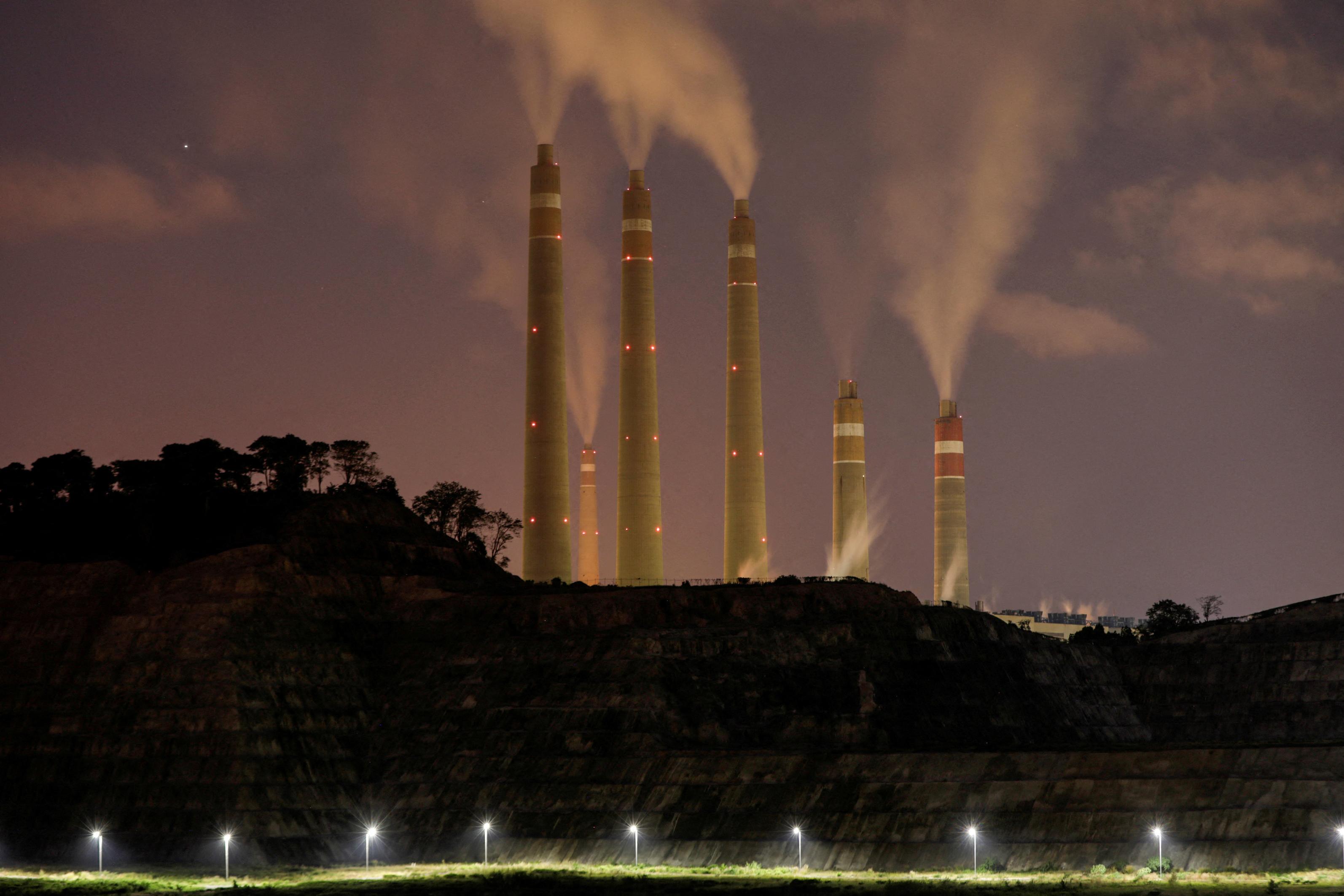
$20 bln pledged under Indonesia's JETP, the biggest of its kind About $153 mln identified as grant funding Indonesia aims for 2030 emission at 250 mln tons under JETP JAKARTA, Nov 1 (Reuters) - Indonesia aims to cut carbon emissions to 250 million metric tons for its on-grid power sector in 2030 and increase its share of renewable energy generation to 44% under a Just Energy Transition Partnership (JETP), its plan showed on Wednesday. The partnership, a financing scheme of equity investments, grants and concessionary loans from Group of Seven (G7) members, multilateral banks and private lenders, is aimed at helping developing countries shift to cleaner energy in the power sector. Indonesia's comprehensive investment and policy plan (CIPP) for the partnership was made public to lay out a path for the Southeast Asian country to secure $20 billion in funding under the programme. Indonesia and a group of investors, led by United States and Japan, had initially agreed to peak emissions from the power sector of 290 million tonnes by 2030, and to increase the renewable share of power generation to 34%, but the scope of the off-grid power system was not fully mapped out at the time. The CIPP released on Wednesday does not include so-called captive power plants, off-grid systems developed and managed by industries for their use. Captive coal power stations with 13.74 gigawatt (GW) of capacity are operating in the Southeast Asian archipelago and 20.48 GW are being planned. The recent surge is due to the expansion of the metal processing sector, according to a July report that the Asian Development Bank commissioned. The coal-fired power plants operated by industries are being excluded from the plan because authorities need more time to work out how to protect the nickel smelting sector, an official involved with the programme said earlier. "While the off-grid captive power systems are outside of the scope of the current CIPP, Indonesia and IPG share a strong commitment to identifying and implementing viable solutions going forward," Indonesia's JETP Secretariat said in the plan. Without this plan, Indonesia's greenhouse gas emissions are expected to reach more than 350 million tons in 2030. FUNDING While the plan is aimed at securing $20 billion in G7 funding, with $10 billion of public funding pledged and $10 billion due from private lenders, the Secretariat said in its plan it had identified more than 400 priority projects that would require at least $67.4 billion of investment. The plan showed that $153.8 million of the $20 billion pledged had been identified as grants. The rest of the public financing could include concessional loans at below-market rates, the Secretariat said. Indonesia's JETP office would match projects with appropriate financing terms and structures, based on priorities, it said. Private financing may come in the form of commercial loans that carry market rates, equity investment or other structures, according to the plan. Coal power early retirement will be carried out for 1.7 GW of capacity by 2040, the plan showed. Three other countries have negotiated a JETP. G7 members have offered Vietnam 2% of its total $15.5 billion JETP financial package in grants, while the biggest chunk of its loans will carry market-determined interest rates, documents reviewed by Reuters showed. South Africa secured the inaugural JETP deal with a $8.5 billion financing pledge but the plan has drawn criticism from trade unions worried about job losses in its coal belt. In June, Senegal announced a JETP worth 2.5 billion euros under which it aims to increase its share of renewable energy in its installed capacity to 40% by 2030. Experts have said ensuring the success of Indonesia's JETP is important not just because it is the biggest but also because it is a test of G7 commitment to work with developing nations. Indonesia has also turned to China for help to develop renewable energy. https://www.reuters.com/sustainability/climate-energy/indonesia-publishes-energy-transition-plan-g7-funding-2023-11-01/
2023-11-01 06:17
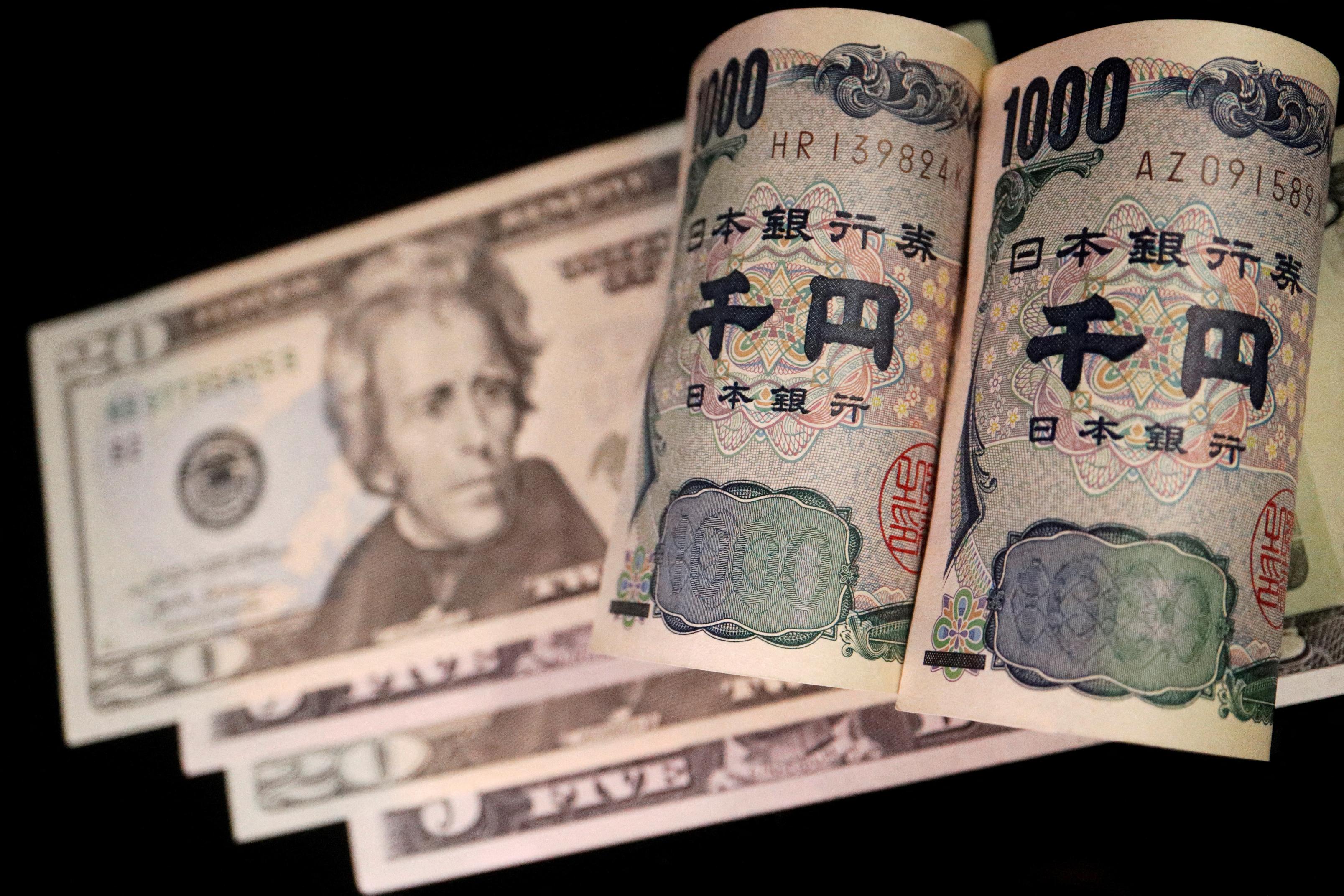
Fed's Powell leaves door open for another rate increase But Powell also points to tightening of financial conditions U.S. rate futures price in Fed is done NEW YORK, Nov 1 (Reuters) - The U.S. dollar fell against most currencies on Wednesday as investors perceived that Federal Reserve Chairman Jerome Powell's statements after its two-day policy meeting suggested the U.S. central bank may be done raising interest rates. The policy-setting Federal Open Market Committee (FOMC), as expected, left rates in the 5.25%-5.50% range where they have been since July. The Fed did not rule out another hike as it acknowledged the economy's unexpected resilience despite its aggressive tightening launched more than a year ago. But Powell's remarks in his press briefing were laced with mixed messages that left investors doubtful that the Fed will raise interest rates again. Powell said the Fed has a long way to go to get inflation to 2%, noting the resilience of economic data and demand for labor that could warrant further rate hikes. But he noted financial conditions have clearly tightened, and cited plenty of risks. "The most notable takeaway from his comments was that the risks around whether policy is 'sufficiently restrictive' are much more balanced," said Charlie Ripley, senior investment strategist for Allianz Investment Management in Minneapolis, by email. "This signals that while there is a potential risk for the Fed to do more, the bar has become higher for rate hikes, and we are clearly seeing this play out with two consecutive meetings of no policy action from the Fed." The dollar index, which initially rose after the Fed statement, was last slightly down at 106.64 . It has traded sideways since hitting an almost one-year high of 107.34 in early October on the back of a sharp rise U.S. bond yields driven by strong economic growth. The Fed's latest statement noted that with job gains still "strong" and inflation still "elevated," the central bank continues to consider "the extent of additional policy firming that may be appropriate to return inflation to 2% over time." That said, U.S. rate futures have added to bets that the Fed is done raising its policy rate and will start cutting rates by June. Bets on a rate hike in December and January have been pared back to 19% and 30%, respectively, from 28% and 39% late on Tuesday. "Powell had several opportunities to threaten another rate hike, but passed on most of them," wrote Tom Simons, U.S. economist, in a research note after the Fed meeting. "The answers to the questions from the press were consistent with the high level of uncertainty about the outlook, and about how much lagged tightening is still in the pipeline from previous moves." Against the yen, the dollar dropped 0.6% to 150.89 . The currency pair typically tracks movements in U.S. two-year Treasury yields, which fell 11.5 basis points to 4.958. The struggling yen has also gained, rising from a one-year low against the U.S. dollar and a 15-year trough versus the euro on threats of intervention from Japanese authorities, with more pointed-than-normal remarks from Japan's top currency diplomat, Masato Kanda. Wednesday's data also showed slowing momentum for the world's largest economy, putting the dollar on the defensive for parts of the session. U.S. manufacturing contracted sharply in October after improving in prior months as new orders and employment slumped. Data on U.S. private payrolls increased less than expected in October and wage growth moderated. Private payrolls rose by 113,000 jobs last month after gaining 89,000 in September, the ADP National Employment report showed. In other currencies, the euro was last flat at $1.0570. The dollar fell 0.3% versus the Swiss franc to 0.9079 francs . ======================================================== Currency bid prices at 4:38PM (2038 GMT) https://www.reuters.com/markets/currencies/yen-languishes-focus-turns-fed-2023-11-01/
2023-11-01 06:10
Wall Street stocks end sharply higher Treasury Department increases auction sizes Yen up vs dollar; oil falls NEW YORK, Nov 1 (Reuters) - Global stock indexes rose sharply while benchmark 10-year Treasury yields fell to two-week lows on Wednesday after the U.S. Federal Reserve left interest rates steady and Fed Chair Jerome Powell nodded to the tighter financial conditions faced by businesses and households. The U.S. central bank in a policy statement also left the door open to a further increase in borrowing costs, and it acknowledged the American economy's surprising strength. The Fed announced that it had decided to hold the policy rate steady in its current 5.25% to 5.50% range for now. Powell in a press conference said that market borrowing costs would need to be sustainably higher for that to bear on future central bank monetary policy choices. "In the press conference, Powell notes that the risks are becoming increasingly balanced; that's a tick for slightly dovish," said Amo Sahota, director at Klarity FX in San Francisco. The Dow Jones Industrial Average (.DJI) rose 221.71 points, or 0.67%, to 33,274.58, the S&P 500 (.SPX) gained 44.06 points, or 1.05%, to 4,237.86 and the Nasdaq Composite (.IXIC) added 210.23 points, or 1.64%, to 13,061.47. The pan-European STOXX 600 index (.STOXX) rose 0.67% and MSCI's gauge of stocks across the globe (.MIWD00000PUS) gained 0.94%. Benchmark 10-year note yields fell to 4.766%, the lowest since Oct. 17. Two-year yields dropped to 4.942%, the lowest since Oct. 10. Earlier, Treasury yields slipped on Treasury Department plans to "gradually" boost the size of its debt auctions to meet financing needs. The Treasury Department said the size of most auctions from November to January 2024 will increase and that it will need one additional quarter of increases to meet its funding plans. The U.S. dollar index was firmer following the Fed statement but was last nearly flat . Against the yen, the dollar dropped 0.4% to 151.09 . The Japanese yen fell sharply on Tuesday, when the Bank of Japan tweaked its bond yield control policy, loosening its grip on long-term rates and pushing the currency to a one-year low against the dollar. That was followed by a fresh and sterner warning from Japan's top currency diplomat Masato Kanda on Wednesday that authorities stood ready to respond to recent "one-sided, sharp" moves in the currency. Oil prices fell to a three-week low after the Fed decision. Brent futures fell 39 cents, or 0.5%, to settle at $84.63 a barrel. U.S. West Texas Intermediate (WTI) crude fell 58 cents, or 0.7%, to $80.44. https://www.reuters.com/markets/global-markets-wrapup-1-2023-11-01/