2023-11-01 10:42
ASTANA, Nov 1 (Reuters) - French President Emmanuel Macron arrived in Kazakhstan on Wednesday on the first leg of a trip to Central Asia, a region long regarded as Russia's backyard which has drawn fresh Western attention since the war in Ukraine began. Oil-rich Kazakhstan has already emerged as a replacement supplier of crude to European nations turning off Russian supply and an important link in the new China-Europe trade route bypassing Russia. In addition to oil, Kazakhstan is a major exporter of uranium, and France's Orano already operates a joint venture with its state nuclear firm Kazatomprom. At a meeting with President Kassym-Jomart Tokayev, Macron complimented Kazakhstan for refusing to side with Moscow on Ukraine and said the two countries signed business deals, including a declaration of intent for a partnership in the much-sought area of rare earths and rare metals. "I don't underestimate by any means the geopolitical difficulties, the pressures ... that some may be putting on you," Macron told Tokayev, who called the visit "historic." "France values ... the path you are following for your country, refusing to be a vassal of any power and seeking to build numerous and balanced relations with different countries." Russia has voiced concern at the West's growing diplomatic activity in former Soviet Central Asian nations. While on Wednesday, Kremlin spokesman Dmitry Peskov said Kazakhstan as a sovereign state was free to develop ties with any countries, Foreign Minister Sergei Lavrov said last week the West was trying to pull Russia's "neighbours, friends and allies" away from it. Kazakhstan and Uzbekistan, where Macron goes next, have refused to recognise Russia's annexation of Ukrainian territories and have pledged to abide by Western sanctions against Moscow, while calling both Russia and Western nations such as France their strategic partners. "We respect our friends, we are here when they need us and we respect their independence," Macron said. "And in a world where major powers want to become hegemons, and where regional powers become unpredictable, it is good to have friends who share this philosophy." Asked about Macron's visit, Kremlin spokesman Dmitry Peskov said Russia valued its relations with Kazakhstan "very highly." "In our turn, we have historical ties, ties of strategic partnership with Kazakhstan, they are our allies and our interests are united in many international bodies," Peskov told reporters. https://www.reuters.com/world/kazakhstan-welcomes-frances-macron-under-moscows-disapproving-gaze-2023-11-01/

2023-11-01 10:18
NEW YORK, Nov 1 (Reuters) - FTX founder Sam Bankman-Fried's defense lawyer told jurors on Wednesday that prosecutors in his fraud trial sought to portray him as a "villain" and a "monster" because they could not prove he stole billions of dollars from the cryptocurrency exchange's customers. Attorney Mark Cohen's closing argument in Bankman-Fried's trial in Manhattan federal court came after the prosecution urged the 12 jurors to convict Bankman-Fried, arguing he stole $8 billion out of simple greed in one of the biggest financial frauds in U.S. history. Cohen said prosecutors elicited testimony about Bankman-Fried's sex life and appearance - the former billionaire was known for his unkempt mop of curly locks and wearing shorts and T-shirts - to try to get the jury to dislike him. "Time and again, the government has sought to turn Sam into some sort of villain, some sort of monster," Cohen said. "And let's face it, an awkward high school math nerd doesn't look particularly villainous. So what did they do? They wrote him into the movie as a villain." In his closing argument, prosecutor Nicolas Roos said Bankman-Fried directed other FTX executives to alter the exchange's computer code to allow a hedge fund he owned, Alameda Research, to siphon customer money. "This was a pyramid of deceit built by the defendant on a foundation of lies and false promises, all to get money," Roos said. "He had the arrogance to think he could get away with it." Jurors are expected to begin deliberations on Thursday after prosecutors give a rebuttal argument, meaning Bankman-Fried may learn his fate just shy of one year after FTX filed for bankruptcy in a swift corporate meltdown that shocked financial markets and wiped out what had been his estimated $26 billion fortune. The defense rested its case on Tuesday after Bankman-Fried underwent a second day of tough cross-examination by the prosecution - the risk he ran by opting to testify in this own defense. Bankman-Fried, who pleaded not guilty to two counts of fraud and five counts of conspiracy, tried over three days of testimony to convince the 12 jurors of his innocence. In all, the jury heard 15 days of testimony. Three of Bankman-Fried's former close confidantes, testifying for the prosecution after entering guilty pleas, said he directed them to commit crimes, including helping Alameda loot FTX and lying to lenders and investors about the companies' finances. Alameda used that money to pay off its lenders and to lend to FTX executives so they could make speculative investments and donate to U.S. political candidates, prosecutors say. Under questioning from Cohen, Bankman-Fried portrayed himself as a busy CEO who left operational nuts and bolts to subordinates. He made mistakes that harmed customers and employees, Bankman-Fried admitted, but never defrauded anyone or stole money. "Poor risk management is not a crime," Cohen said on Wednesday. "The question of whether Sam's business judgment was reasonable, even if it later turned out to be mistaken, is not a criminal one." Roos argued Bankman-Fried's digital fingerprints undermined the argument that he acted in good faith. Roos said Bankman-Fried had looked at a document as far back as June 2022 showing that Alameda had a large negative balance on FTX, as well as a spreadsheet Alameda's CEO Caroline Ellison - a prosecution witness - planned to send to lenders that hid its debts to FTX. "As a result of sending out those fake balance sheets they got new loans," Roos said, adding that the financial statement hid the "crime-y, fraud-y parts" of Alameda's balances. Bankman-Fried could face decades in prison if convicted on all counts. He has been jailed since August after Kaplan revoked his bail, having concluded he likely tampered with witnesses. https://www.reuters.com/legal/sam-bankman-frieds-trial-ftx-fraud-charges-heads-closing-arguments-2023-11-01/

2023-11-01 10:02
A look at the day ahead in U.S. and global markets from Mike Dolan Investors wishing to put a dark October behind them first need to negotiate Wednesday's Fed policy decision, Treasury's debt sale plans and the beginnings of a slew of labor market updates. As world markets kick off a new month in better spirits that they were for most of the last one, overseas drama centred on Japan's yen - which plummeted close to last year's three-decade low of 151.94 on Tuesday after the Bank of Japan made only a minor tweak to its yield control policy. Masato Kanda, Japan's top currency diplomat, protested the move on Wednesday, saying authorities were on "standby" to respond to the currency's "one-sided, sharp" slide - ramping up the rhetoric around yen-buying intervention. But that lifted the currency only slightly and it hovers about 151.27 first thing. The problem is the BOJ may have loosened its 10-year bond buying target rate of 1% - but it's still committed to capping yields around there and did so yet again on Wednesday in another emergency operation that dragged yields back to 0.95%. The weak yen and yield cap cheered Japan's Nikkei (.N225) stock index, which surged more than 2% earlier - helped by news of a more than doubling of Toyota's profits that lifted the auto giant's shares (7203.T) almost 5%. Does the yen drama matter for U.S. markets? At the margin at least, the concern is that protracted yen intervention and dollar sales by Japan may also cut its demand for U.S. Treasuries at a sensitive time - while higher yields there drag Japanese bond investors back home. Despite the U.S. Treasury forecasting a lower fourth-quarter borrowing need than previously flagged, the tension in the bond market remains ahead of its detailed future refinancing plans due later on Wednesday. Key will be the amount of this year's whopping $1.6 trillion of bill sales it will have to roll into longer-term debt securities through 2024. With the Federal Reserve widely expected to hold policy rates steady again on Wednesday, the Treasury plans may end up getting more bond market attention. Ten-year yields nudged back higher to 4.89% overnight ahead of the two events. Fed officials will cast a wary eye over data released on Tuesday showing employment cost inflation picking up during the last quarter alongside accelerating house price rises in September. But U.S. consumer confidence has softened, oil prices are falling again and the overseas demand picture is weakening. Despite all the handwringing about the impact on energy prices from the Middle East conflict, U.S. crude prices fell to their lowest since August on Tuesday - to just above $80 per barrel and clocking year-on-year declines of some 7% that are the deepest since August too. With euro zone GDP numbers showing a contraction of the bloc's economy in the third quarter - in stark contrast to the boom in the United States - China's economy again showed signs of faltering on Wednesday. Chinese factory activity unexpectedly contracted in October, a private survey showed on Wednesday, adding to a downbeat official manufacturing purchasing managers' index on Tuesday. The property bust smoulders, meantime. China Evergrande (3333.HK) proposed a new debt restructuring plan for offshore bondholders, offering to swap debts into 30% equity stakes in each of the developer's two Hong Kong-listed subsidiaries. The gloom was only partly offset by hopes for an easing of political tensions as the White House confirmed President Joe Biden and his Chinese counterpart, Xi Jinping, now aim for a "constructive conversation" on the sidelines of the Asia Pacific Economic Cooperation forum in San Francisco this month. Beyond Tokyo, stocks elsewhere were more mixed and Wall Street futures pulled back slightly after the S&P500 (.SPX) recorded its first consecutive daily gains in three weeks. The new month saw a big retreat in the Vix (.VIX) volatility gauge to below 18. Another heavy day of U.S. corporate earnings is topped by big insurers and the likes of PayPal and Kraft Heinz. On Tuesday, shares in heavy-machinery maker Caterpillar (CAT.N) sank almost 7% as signs of slowing demand overshadowed a quarterly earnings beat. But Pinterest (PINS.N) shares surged almost 20% after the image-sharing platform beat estimates. Key developments that should provide more direction to U.S. markets later on Wednesday: * Federal Reserve policy decision and press conference * U.S. Treasury quarterly refunding details * U.S. Oct ADP private sector payrolls, Sept JOLTS job openings data, ISM and S&P Global Oct manufacturing surveys * U.S. corporate earnings: PayPal, Edison, AIG, Prudential Financial, MetLife, Qualcomm, Mckesson, Airbnb, Estee Lauder, Kraft Heinz, Marathon, Allstate, Congnizant Technology, Ingersoll Rand, Boston Properties, American Water Works, ETSY, ANSYS, Albermarle, Garmin, CVS, IDEXX, Yum! Brands, Humana, etc https://www.reuters.com/markets/us/global-markets-view-usa-graphics-2023-11-01/
2023-11-01 08:25
TOKYO, Nov 1 (Reuters) - The Bank of Japan may prefer to go slow in ending ultra-low interest rates, but the weak yen and risks of an inflation overshoot could prod it to act before year-end, former central bank official Hiromi Yamaoka told Reuters on Wednesday. Under pressure to phase out years of massive monetary stimulus amid rising inflation, the BOJ on Tuesday loosened its grip on long-term interest rates by tweaking its controversial bond yield control policy. The yen tumbled after the decision as the move, as well as dovish comments from Governor Kazuo Ueda, confounded market expectations for bolder steps toward an exit. The BOJ's yield curve control (YCC) policy, which pegs the 10-year bond yield around 0%, is inherently difficult to exit as ending the programme could cause an abrupt spike in yields that would inflict huge losses on bond holders, Yamaoka said. "The BOJ must tread carefully towards a soft-landing. As such, it probably wants to move very slowly towards any exit," said Yamaoka, who has experience overseeing the BOJ's market operations and retains close ties with incumbent policymakers. Yamaoka worked under Ueda when he was BOJ board member from 1998 to 2005, a period which predates the aggressive easing that began in 2013 under former governor Haruhiko Kuroda. The BOJ's dovish language and focus on next year's wage negotiations may give markets the impression any exit from ultra-easy policy won't come until around spring 2024, he said. "But the BOJ may not afford to wait that long because the situation surrounding inflation could change sharply," Yamaoka said, pointing to the risk of Japan's inflation staying high for longer than expected. The yen's downtrend may also pile pressure on the BOJ to exit ultra-low rates sooner than it wants, he added. "The BOJ doesn't have much time left, a point governor Ueda is probably mindful of," said Yamaoka. "I wouldn't rule out the possibility of the BOJ acting by year-end." As part of efforts to fire up inflation to its 2% target, the BOJ has capped the 10-year bond yield around zero since 2016 under YCC. It also applies a 0.1% charge on excess reserves parked with the central bank under its negative rate policy. With inflation exceeding its 2% target for more than a year, many market players are betting on the chance of an end to YCC and negative rates next year. Ueda has played down the chance of a near-term exit on the view the BOJ must wait until there is more evidence that inflation will sustainably hit 2% backed by solid demand. The central bank chief's cautious stance underscores worries that a premature end to easy policy could undo the bank's decade-long efforts to pull Japan permanently out of economic stagnation. Yamaoka said the BOJ must end negative rates sometime in the near future as the cost of the policy, such as causing sharp yen falls, exceeds the benefits. While the BOJ will likely continue relaxing its control on long-term rates, it won't remove YCC altogether as doing so would cause too much disruption in a country where the public, markets and the government are accustomed to years of near-zero borrowing costs, he said. The fate of negative rates and YCC will likely be debated as a single package as the two policies form the BOJ's broader stimulus programme, Yamaoka said. "An successful exit from these policies is a narrow path," Yamaoka said. "But it's something the BOJ needs to tackle as soon as it possible." https://www.reuters.com/markets/asia/weak-yen-inflation-overshoot-may-prod-boj-phase-out-stimulus-by-year-end-ex-boj-2023-11-01/

2023-11-01 08:18
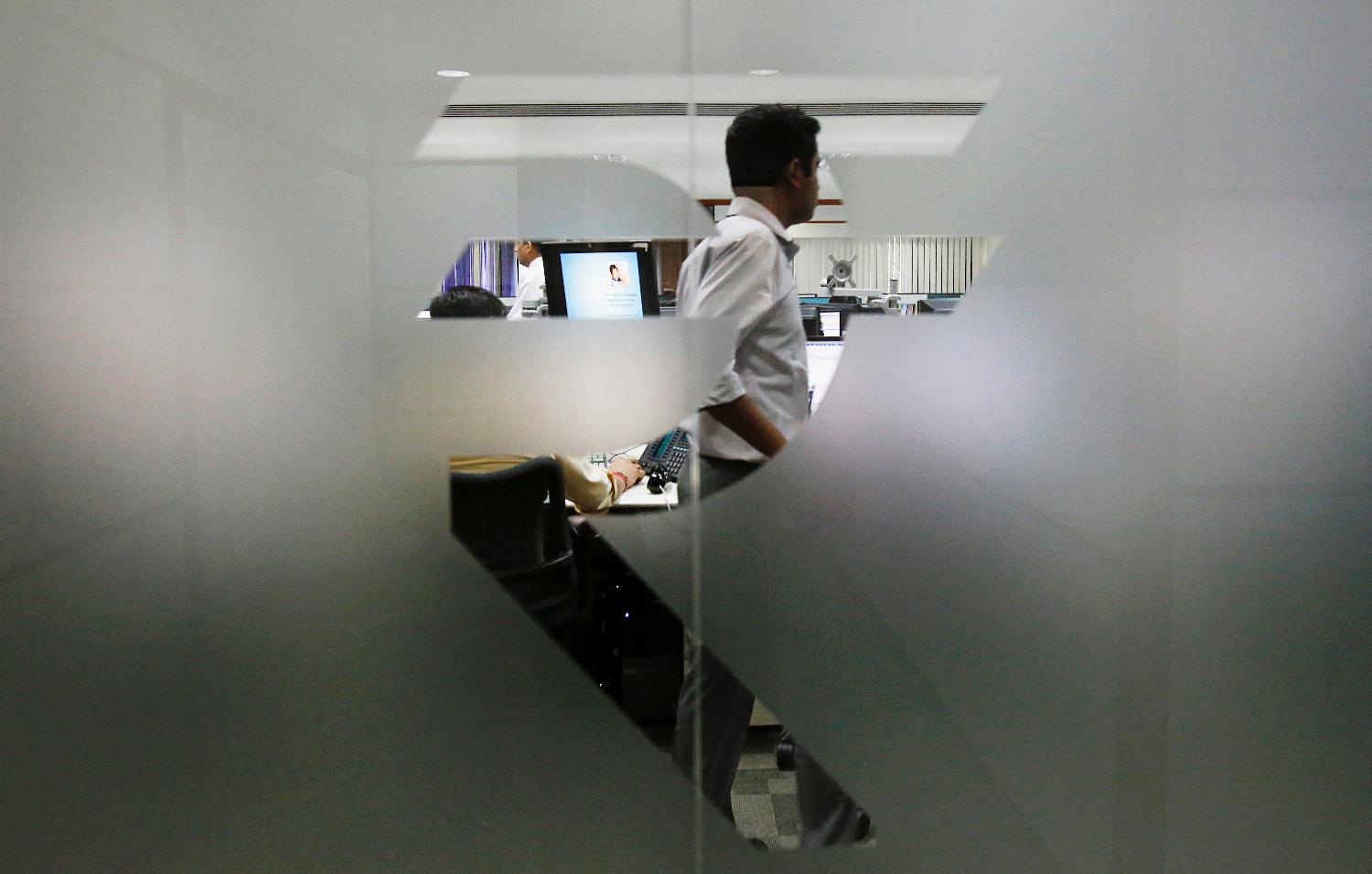
MUMBAI, Nov 1 (Reuters) - The Indian rupee, already under pressure from high U.S. Treasury yields and volatile oil prices, is now having to contend with a drop in forward premiums, owing to worries over dollar liquidity. The rupee is quoting at 83.2825 to the U.S. dollar, having avoided succumbing to its lifetime low of 83.29 over the past several sessions likely due to, say traders, the Reserve Bank of India's regular intervention. The weeks-long jump in U.S. yields to multi-year highs and the volatility in oil prices since the Middle East conflict broke out has forced the RBI to intervene almost on a daily basis, according to traders. Now, the fall in forward premiums over the past month is being seen as another worry for the rupee and the RBI. "Theoretically, low premiums make the RBI's job in managing the rupee a bit more difficult. Importers may be more willing to hedge and betting against the rupee costs less," said Dhiraj Nim, a forex strategist and economist at ANZ. "Having said that, for that dynamic to play out, the market has to believe that the RBI will not keep the rupee at a particular level." The fall in forward premiums has been largely fuelled by concerns over the dollar's liquidity. That is evident in the rupee/dollar cash swap market, which banks use to manage their daily rupee and dollar liquidity mismatches. The depressed dollar/rupee cash swap rate prevailing in this market implies high demand for cash dollar. The imputed rupee interest rate from the swap rate has consistently been below that of the domestic call money market, according to a treasury asset-liability manager at a private bank. It is the near premiums that have felt the biggest impact of the depressed swap rate. The 1- and 2-month dollar/rupee forward premiums are at over a decade-low. The far forwards, however, have fared relatively better, with the 1-year premium at its lowest since August. "The fall in premiums provides one more factor for USD/INR to move higher," said Kunal Kurani, associate vice president at forex advisory firm Mecklai Financial. Kurani pointed out that a large part of importer activity is for less than three months. https://www.reuters.com/markets/currencies/fall-forward-premiums-adds-indian-rupees-challenges-2023-11-01/
2023-11-01 08:13
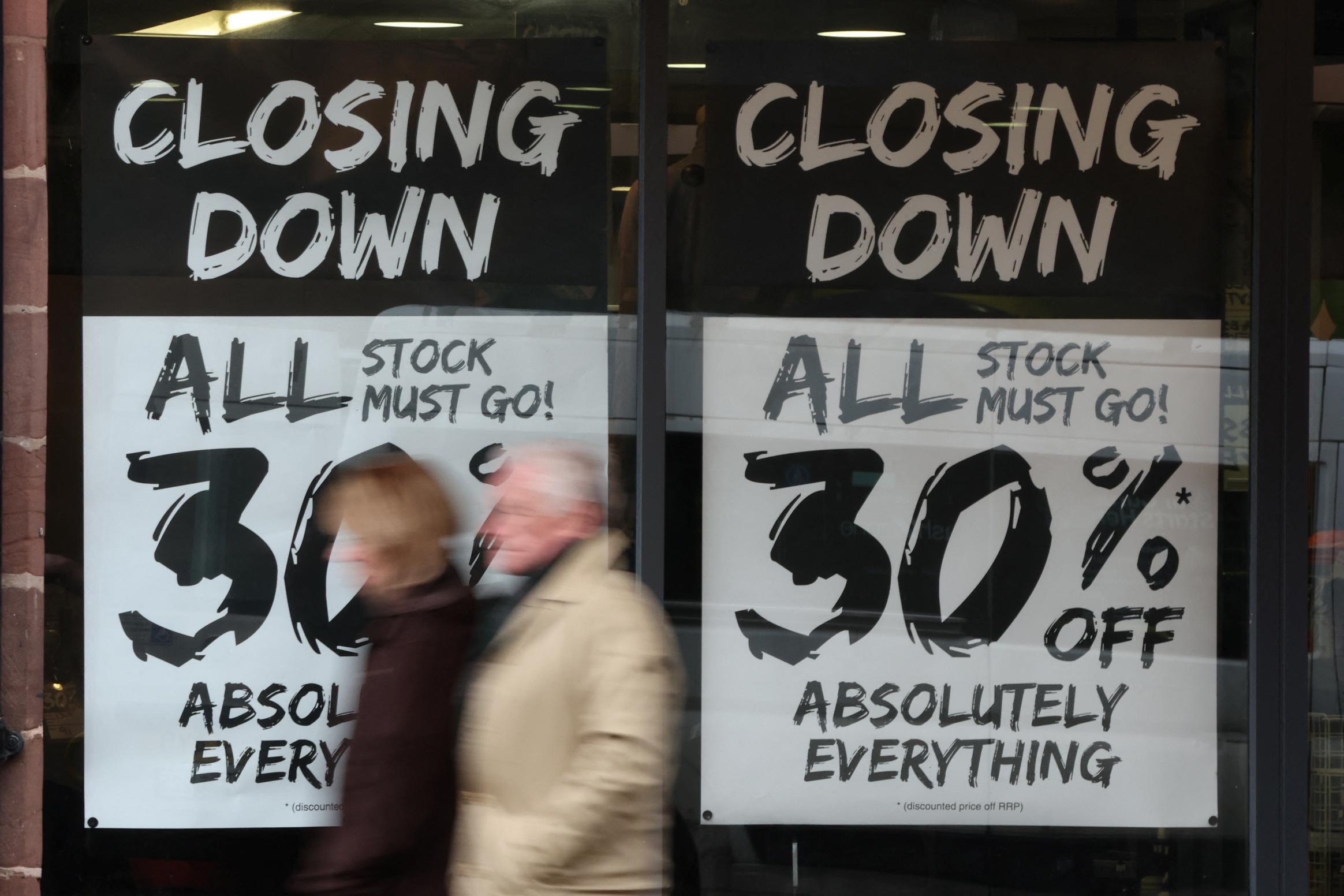
LONDON, Oct 31 (Reuters) - The number of companies in England and Wales declared insolvent during the three months to the end of September remained close to levels seen after the 2008 financial crisis and was down only slightly from the previous quarter's 14-year high. The Insolvency Service, a government agency, said the number of insolvencies fell 2% to 6,208 on a seasonally adjusted basis, but was 10% higher than in the same period a year earlier. Many businesses and households have come under increased pressure from rising interest rates as well as and a jump in the cost of energy and other necessities such as food. "The last two quarters saw the highest quarterly insolvency numbers since Q2 2009," the Insolvency Service said. Most of the increase has been driven by a surge in creditors' voluntary liquidations - a form of insolvency where directors and creditors agree to wind up a struggling business, which is now the most common since records began in 1960. There were also 735 compulsory liquidations, a similar level to before the COVID-19 pandemic but up by 46% on a year earlier. Until the end of March 2022, there were restrictions on courts winding up businesses affected by the pandemic. The Bank of England raised interest rates 14 times between December 2021 and August 2023, lifting benchmark borrowing costs from 0.1% to 5.25%. Most economists think the central bank will keep rates on hold on Thursday after its latest rate meeting, but do not expect a rate cut until the second half of next year. "Escalating interest rates have added to the cost of servicing the already increased debt burden of some firms, made refinancing impossible or punitively expensive for others, and generally made access to funding difficult," said Mark Ford, a restructuring partner at professional services firm Evelyn Partners. https://www.reuters.com/markets/europe/england-wales-insolvencies-hold-near-14-year-high-2023-11-01/