2023-11-01 05:15
WASHINGTON, Nov 1 (Reuters) - Major U.S. airlines and aviation companies joined ethanol companies to send a letter to the Biden administration on Wednesday backing a regulatory change that would make it easier for sustainable aviation fuel (SAF) made from corn-based ethanol to qualify for federal subsidies. The Inflation Reduction Act, President Joe Biden's signature climate law, requires SAF producers to use an emissions model developed by the International Civil Aviation Organization (ICAO), or a "similar methodology", to show their fuel cuts emissions over gasoline by 50% to secure the subsidies. Airlines including Delta (DAL.N), JetBlue (JBLU.O), and Southwest (LUV.N), and companies like GE Aerospace (GE.N) and Boeing (BA.N), said in the letter to Treasury Secretary Janet Yellen that the administration should allow the use of the Department of Energy's Greenhouse Gases, Regulated Emissions and Energy Use in Technologies (GREET) model in addition to the one developed by ICAO, echoing a request from the ethanol industry. The ethanol industry believes the GREET model is more likely than the ICAO model to bear out the required climate benefits to secure IRA subsidies. Environmental groups argue, however, that the GREET model underestimates ethanol's emissions, particularly those associated with clearing land to grow the crops required to make ethanol. "With the right market signals, we can de-carbonize aviation and spur a new wave of U.S. innovation and clean energy jobs. However, modeling uncertainty today is a multiyear development problem," said the letter, which was also signed by ethanol companies including Poet and Archer-Daniels-Midland Co (ADM.N) . The letter comes the same day Biden and his administration kick off a two-week focus on rural America, starting with a visit to Minnesota on Wednesday. The final decision on the modeling question sits with Treasury, though the agriculture, environment and energy departments have also weighed in and the White House has stepped in to mediate, according to prior Reuters reporting. The USDA said in September that it updating the GREET model to ensure that ethanol is eligible as an SAF feedstock. A decision from Treasury is expected in December, according to prior Reuters reporting. https://www.reuters.com/sustainability/us-airlines-back-ethanol-industry-position-aviation-fuel-credit-2023-11-01/
2023-11-01 04:15
SYDNEY, Nov 1 (Reuters) - Mining companies in the West are facing two overarching challenges in trying to produce enough metals to enable the energy transition, and at the same time build alternative supply chains to lessen their dependence on China. The problem is that there is a vast gulf between the scale of the ambition and the reality of what's actually happening, and what's likely to happen in the next few years. This gap was the hidden theme at this week's International Mining and Resources Conference (IMARC) in Sydney, the industry's largest gathering in Asia that brings together miners, investors and government policymakers. There is little doubt that Australia is a country well-placed to play a major role in supplying many of the metals vital to the energy transition. It is already the world's largest producer of lithium and iron ore, the key raw material for steel. It is also a top supplier of copper, nickel and zinc and has proven reserves of other critical minerals such as cobalt and rare earths. The challenge is developing the resources, building new mines and perhaps developing downstream processing, rather than merely exporting ores as has happened in the past. The previous models for developing mines appear no longer effective, and even if some projects do progress, they are nowhere near enough to provide enough material for the energy transition. In the past junior miners raised equity capital, conducted exploration and proved up a resource. At this point they could try and raise more capital, seek big-pocketed partners or hope that a large mining company would buy them out. While this happens to some extent, the story at IMARC is largely one of dozens of small mining companies seeking financing, and most ending up with little to show for it. Raising equity capital is hard given the absence of deep pools of retail investor funds and the reluctance of institutional investors to fund risky, long-term projects. The major miners have pulled back on acquisitions in recent years, preferring to run operations leanly and return cash to shareholders, and if they do invest it's largely been brownfield expansions of existing operations. LIMITING CHINA The irony is that in seeking cash to try and reduce reliance on China's dominant role in the energy transition supply chains, the mining industry in the West has been exposed as lacking capital and motivation to invest. Michael Willoughby, global head of metals, mining and transition materials at HSBC, told a forum at IMARC that there is capital available for mining, but it's located in developing countries such as China, Indonesia and Saudi Arabia. These countries also tend to have governments that are prepared to offer deeper support, such as 1% loans and tax holidays for mining and processing investments, Willoughby said. Australia's federal government last week doubled its funding for critical minerals to A$4 billion ($2.52 billion), but this is largely viewed as a small amount by the industry. To put the funding in perspective, a junior mining company seeking to develop a cobalt mine in New South Wales will need about A$1 billion to build and commission a mine. If the government were to fund that project, it would take a quarter of the total money available and deliver a relatively small volume of just one of the metals deemed vital to the energy transition. Even the U.S. Inflation Reduction Act, which offers around $369 billion in support to de-carbonise the economy, is unlikely to be enough to build an entire supply chain for critical minerals that lessens dependence on China. It's likely that Western governments will have to increase support to develop new mines and processing industries, as well as reform policies so that private capital is encouraged to invest. In addition governments will have to improve on the time taken to approve new mines, while juggling the need to ensure that they are as environmentally friendly as possible. But if Western countries and companies are serious about building new mines and processing facilities and reducing their reliance on China, the total bill is likely to be measured in trillions of dollars, rather than the billions currently being committed. At the same time, Western countries are attempting to move from fossil fuels in electricity generation and transportation to renewable alternatives such as hydrogen, solar, wind and battery storage. Once again, these supply chains are dominated by China, and once again reducing dependence is possible, but costly. What's not being talked about is how all the new mines, mineral processing and renewable energy equipment is going to be funded. The opinions expressed here are those of the author, a columnist for Reuters. https://www.reuters.com/markets/commodities/mining-faces-gulf-between-ambition-reality-energy-transition-china-russell-2023-11-01/

2023-11-01 02:57
MUMBAI, Nov 1 (Reuters) - The Indian rupee is expected to struggle on Wednesday in the wake of a rise in U.S. Treasury yields and weakness in Asian currencies. Non-deliverable forwards indicate the rupee will open at around 83.26-83.2650 to the U.S. dollar, compared with 83.25 in the previous session. "We will have one more day in which it (USD/INR) will find a lot of buyers. That buying will not amount to much until the RBI (Reserve Bank of India) allows 83.30 to be taken out," a spot currency trader at a bank said. The RBI has been persistently intervening to make sure the rupee does not slip below the 83.29 record low, according to traders. The 10-year U.S. yield rose in Asia and the dollar index inched higher. Asian currencies were mostly lower, down between 0.2% and 0.6%. The Federal Reserve later in the day is widely expected to keep the policy rate at 5.25-5.50%. The central bank is not likely to update the economic or rate forecasts. Some analysts expect that the Fed may soften its guidance on the need for additional rate hikes on the back of the tightening of financial conditions prompted by the rise in long maturity U.S. yields. "We expect the Federal Open Market Committee to soften forward guidance on policy from "In determining the extent of additional policy firming that may be appropriate" to "In determining the extent of policy firming ..." - taking out the word "additional"," Morgan Stanley said in a note. At Fed Chair Powell's press conference, Morgan Stanley anticipate a similar tone to what he said at speech recently. "(That of) balanced risks to the outlook, little appetite for near-term rate hikes amid tighter financial conditions," Morgan Stanley said. The Fed decision is "highly unlikely" to pull the rupee out it recent range, the spot trader said. KEY INDICATORS: ** One-month non-deliverable rupee forward at 83.33; onshore one-month forward premium at 5.25 paisa ** Dollar index up at 106.75 ** Brent crude futures up 0.3% at $85.3 per barrel ** Ten-year U.S. note yield at 4.92% ** As per NSDL data, foreign investors sold a net $203.8mln worth of Indian shares on Oct. 30 ** NSDL data shows foreign investors bought a net $8mln worth of Indian bonds on Oct. 30 https://www.reuters.com/markets/currencies/rupee-wrestles-with-rise-us-yields-dollar-before-fed-outcome-2023-11-01/

2023-10-31 23:46
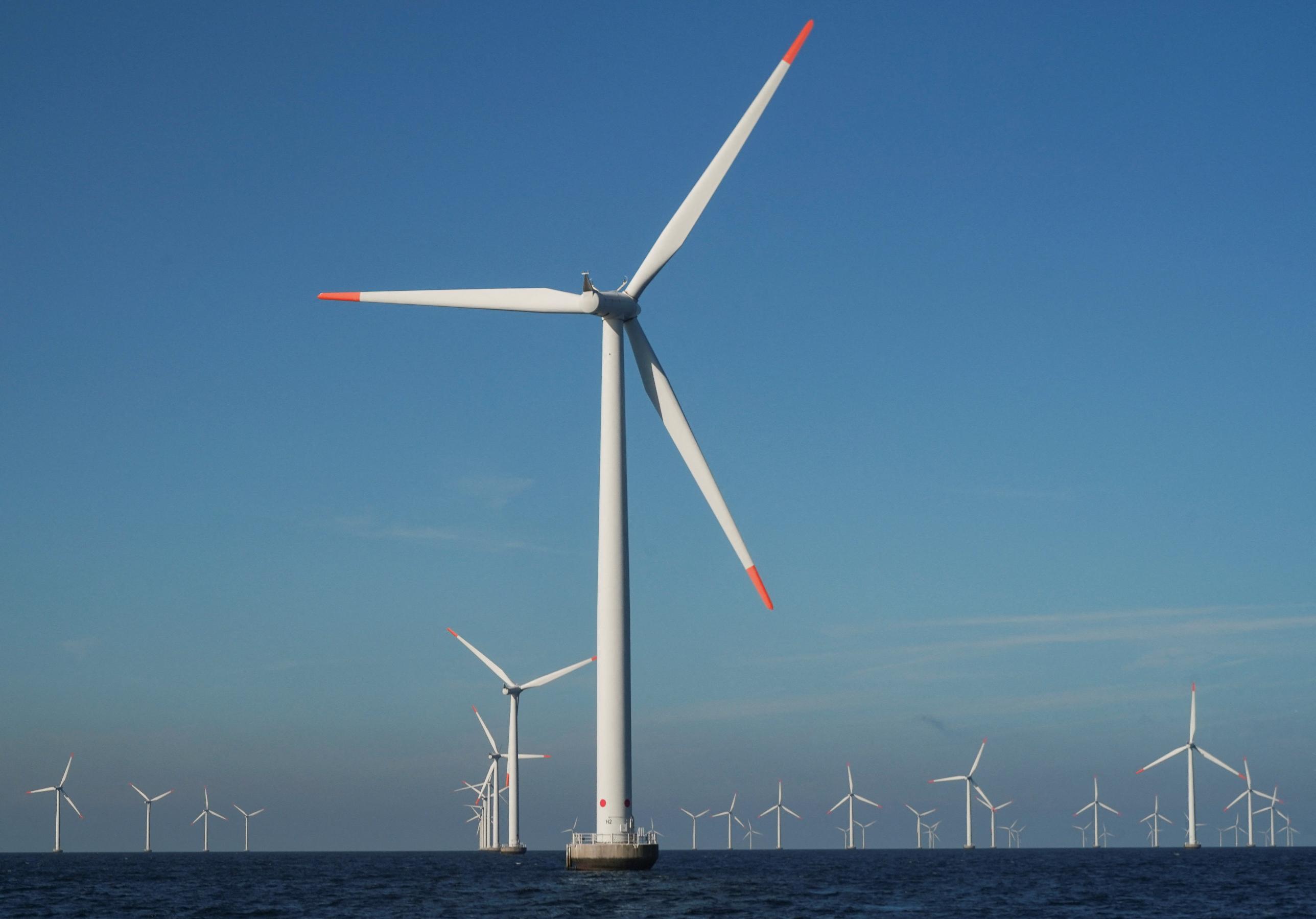
Company halts development of 2 US offshore wind projects Wind firms hit by higher interest rates, supply chain problems Shares drop as much as 22% Nov 1 (Reuters) - Renewable energy firm Orsted (ORSTED.CO) on Wednesday halted the development of two U.S. offshore wind projects and said related impairments had surged above $5 billion, as the industry grapples with supply chain delays and higher costs. Orsted, the world's largest offshore wind developer, said it would stop developing its 2,248-megawatt (MW) Ocean Wind 1 and 2 projects in New Jersey. Related impairments could amount to as much as 39.4 billion Danish crowns ($5.58 billion). Its stock plunged as much as 22% to a six year low of 265 crowns. The offshore wind industry has found itself in a perfect storm of rising inflation, interest rate hikes and supply chain delays, casting doubt on plans by U.S. President Joe Biden and several states to use offshore wind to replace fossil fuels in energy production to fight climate change. On Tuesday, energy major BP (BP.L) booked a third-quarter writedown of $540 million on wind projects after officials in New York state rejected a request for better terms to reflect what BP called "inflationary pressures and permitting delays". Norway's Equinor (EQNR.OL), BP's partner on those New York offshore wind developments, booked a $300 million impairment on the projects on Friday. The White House on Wednesday said it is committed to supporting the nascent U.S. offshore wind industry despite the recent challenges, and cited billions of dollars worth of incentives included in the administration's signature climate law, the Inflation Reduction Act, last year. "While macroeconomic headwinds are creating challenges for some projects, momentum remains on the side of an expanding U.S. offshore wind industry," White House spokesperson Michael Kikukawa said. Orsted flagged in August it could see U.S. impairments of 16 billion crowns due to supply chain issues, soaring borrowing costs and a lack of new tax credits. On Wednesday, the Danish company raised that number to 28.4 billion crowns and said provisions relating to the cancellation of the two projects would amount to between 8 billion and 11 billion in the fourth quarter. The company said it had invested significantly at an early stage in Ocean Wind 1, the most advanced of the two projects. "It is without a doubt proven that this was the wrong decision," Chief Executive Mads Nipper told journalists. "I want to be absolutely clear that we are taking away all learnings from this into future project development and timing for capital commitments," he said. Wind developers have said the electricity price on offer at auctions has been too low for them to embark on new projects given the industry's problems with rising costs. "This perfect storm hinges on mostly one thing, namely to ensure that there is a reset of what offshore power needs to cost right now," Nipper said. Orsted, which in June announced plans to invest 475 billion crowns by 2030, said it was in the process of reviewing its investments and could introduce cost-saving initiatives. The company's writedowns were in line with expectations, according to Bernstein analyst Deepa Venkateswaran. Orsted's share price has tumbled 52% since an August profit warning, cutting its market value to 112 billion crowns from 235 billion. "You can say the market has punished them," said Venkateswaran. "I think there is a worry that things could get worse and spread to other parts of the portfolio, as well as a lack of confidence in the management team." Still, she said, halting the development of Ocean Wind 1 sends "a positive signal that they are committed to only proceeding with valuable projects." ($1 = 7.0641 Danish crowns) https://www.reuters.com/business/energy/orsted-cease-development-some-us-offshore-wind-projects-2023-10-31/
2023-10-31 22:19
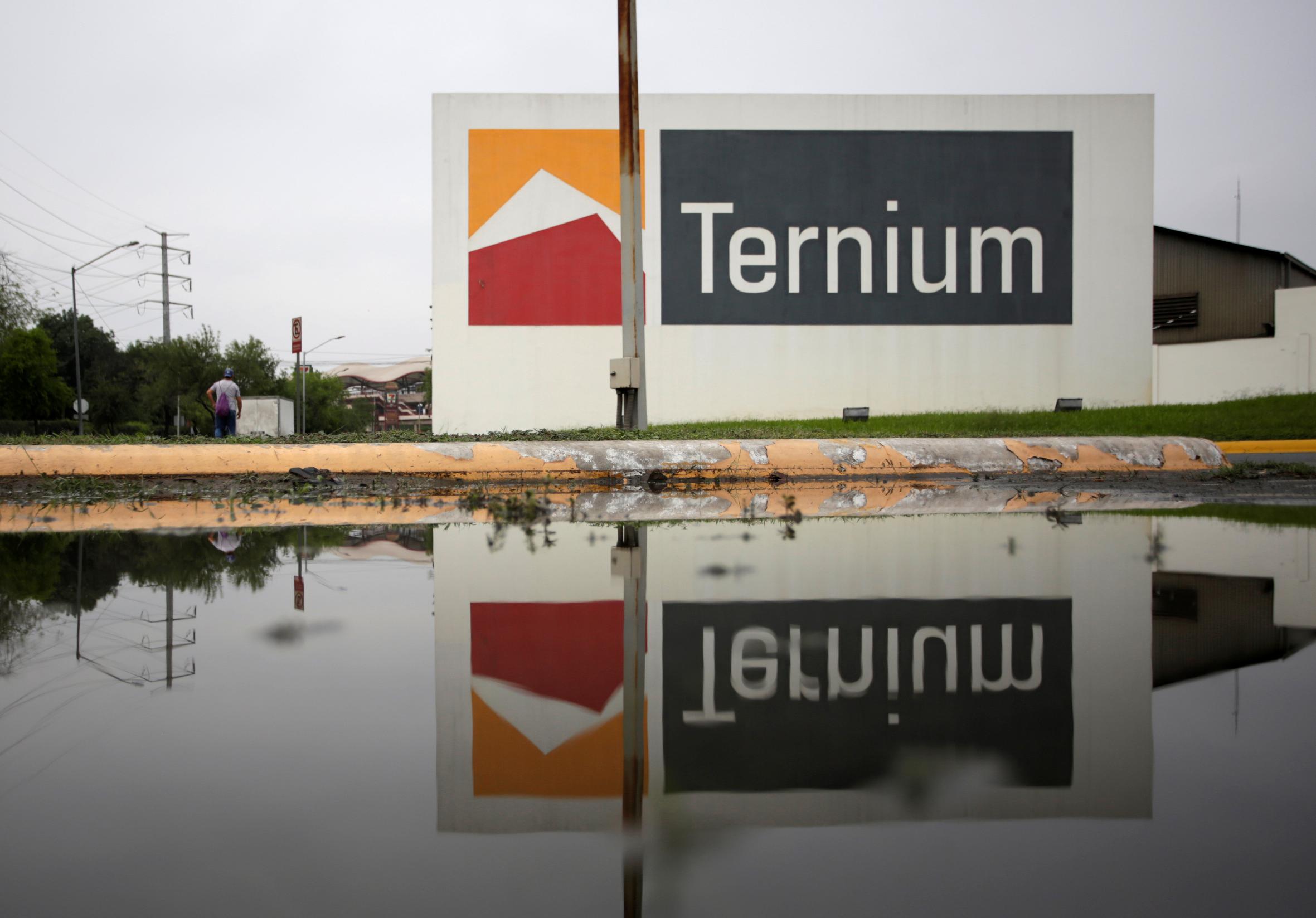
Oct 31 (Reuters) - Steelmaker Ternium (TX.N) reported on Tuesday a third-quarter adjusted net income of $271 million, up more than 77% from the $153 million net income posted during the same period last year. In a statement, the company said steel shipments during this year's third quarter shot up nearly 40% to total 4.1 million metric tons. The company also disclosed a non-monetary loss of $1.1 billion from the cost of its expanded stake in Brazil's Usiminas (USIM5.SA), which when factored in yields a net loss of $739 million for the quarter. Ternium's revenue, meanwhile, rose by about a quarter to reach $5.2 billion during the July-to-September period. The quarter's adjusted earnings before interest, tax, depreciation and amortization (EBITDA) stood at $698 million, up 2% from the $679 million reported in the year-ago period. A leading regional producer of flat steel products for a range of industries, Ternium is controlled by Argentina's Techint Group. The company operates in Mexico, Brazil, Argentina, Colombia, the United States and Central America. Ternium added that it anticipates steel revenue per metric ton to decrease in the fourth quarter, which it said reflects lower prices in Mexico and Brazil. Mexico's steel prices are expected to drop on delayed impact of lower contract prices, while prices for local finished products of the key industrial metal are expected to fall in Brazil. Shipments to Argentina are also seen falling in the fourth quarter, due to expected seasonal factors but also to government-imposed restrictions on imports. Uncertainty in Argentina ahead of next month's decisive run-off presidential election makes the market hard to predict given questions over how the country's next government will approach macroeconomic policies, the company added. Ternium reported a breakthrough at the start of the third quarter in July when it restarted operations at an iron ore mine in western Mexico following a more than five-month hiatus sparked by the disappearance of two environmental activists. https://www.reuters.com/markets/commodities/ternium-posts-77-quarterly-income-boost-steel-shipments-jump-2023-10-31/
2023-10-31 22:16
Oct 31 (Reuters) - European energy companies, including Denmark's Orsted (ORSTED.CO), will likely write down more of their U.S. offshore wind investments this week after BP (BP.L) and Equinor (EQNR.OL) booked $840 million in impairments in recent days. Orsted, the world's largest offshore wind developer, said in August it may see impairments of 16 billion Danish crowns ($2.3 billion) on its U.S. offshore developments due to supply chain problems, soaring interest rates and a lack of new tax credits. Orsted, which was not immediately available for comment, will post its third quarter earnings on Wednesday. Soaring costs from rising inflation, interest rate hikes and supply chain delays have cast doubt on plans by U.S. President Joe Biden and several states to use offshore wind to replace fossil fuels in energy production and reduce carbon emissions. Analysts said Orsted has already warned it will write down at least 5 billion Danish crowns and noted that those impairments could reach as much as 16 billion Danish crowns if interest rates in the U.S. are above a certain level. "You could say it looks pretty certain that they (Orsted) won't be able to stick to the 5 billion" Danish crowns in impairments, Jacob Pedersen, senior analyst at Sydbank, a Danish bank, told Reuters. On Tuesday, energy major BP wrote down $540 million in the third quarter on wind projects after officials in New York state rejected a request for better terms to reflect what BP referred to as "inflationary pressures and permitting delays." Norway's Equinor (EQNR.OL), BP's partner on those New York offshore wind developments, booked a $300 million impairment on the projects on Friday. BP paid Equinor $1.1 billion in 2020 for a 50% stake in the venture to develop the Empire and Beacon wind projects off New York, which have a combined capacity of 3,300 megawatts (MW), capable of powering about 2 million homes. Analysts said BP, Equinor and Orsted will likely cancel some contracts to sell power in New York, like other offshore wind developers have already done in Massachusetts and Connecticut. Orsted has a contract to sell power in New York from its 924-MW Sunrise Wind project off Rhode Island and Massachusetts. In Massachusetts, two offshore wind developers, SouthCoast Wind and Commonwealth Wind, agreed to pay local utilities to terminate deals that would have delivered around 2,400 MW of energy. SouthCoast is owned by units of Shell (SHEL.L), which will report earnings on Thursday, and Ocean Winds. Ocean Winds is owned by units of Portuguese energy company EDP Energias de Portugal (EDP.LS) majority-owned EDP Renovaveis (EDPR.LS) and France's ENGIE (ENGIE.PA). Commonwealth is a unit of Avangrid (AGR.N), which is majority owned by Spanish energy company Iberdrola (IBE.MC). Avangrid also canceled a contract to sell power in Connecticut from its proposed 804-MW Park City offshore wind farm. "Avangrid only lost our guarantees of $48 (million) and $16 million before taxes to terminate the respective contracts for Commonwealth Wind and Park City Wind - before making material investments in the projects," a spokesperson from Avangrid said in an emailed statement. Avangrid avoided billions in write-offs and preserved the significant value of its lease areas, the spokesperson said, adding the company still expects to deliver the first power from its Vineyard Wind 1 project in 2023. https://www.reuters.com/business/energy/us-offshore-wind-writedowns-seen-soaring-with-orsted-earnings-2023-10-31/