2023-11-09 09:43
LONDON, Nov 9 (Reuters) - The Bank of England expects monetary policy will need to remain restrictive for an extended period, but it cannot make hard and fast promises on the outlook for interest rates, BoE Chief Economist Huw Pill said on Thursday. "We need a persistent level of restriction over the next extended period ... that's not to say that's a promise that we will deliver that type of interest rate profile," Pill told the Institute of Chartered Accountants in England and Wales. "There's no promise here and we are responsive to events. And every time we meet, we look at all events. Events in the Middle East are a clear focus at the moment for reasons that I think are obvious," he added. Last week the BoE held its benchmark rate at a 15-year high of 5.25% and said it was not thinking about cutting it as it continued to focus on bringing down inflation which stood at 6.7% in September, more than three time's the BoE's 2% target. Pill said on Monday market pricing pointing towards a first interest rate cut in August 2024 "doesn't seem totally unreasonable". https://www.reuters.com/world/uk/bank-england-isnt-making-promises-rates-pill-says-2023-11-09/
2023-11-09 06:55
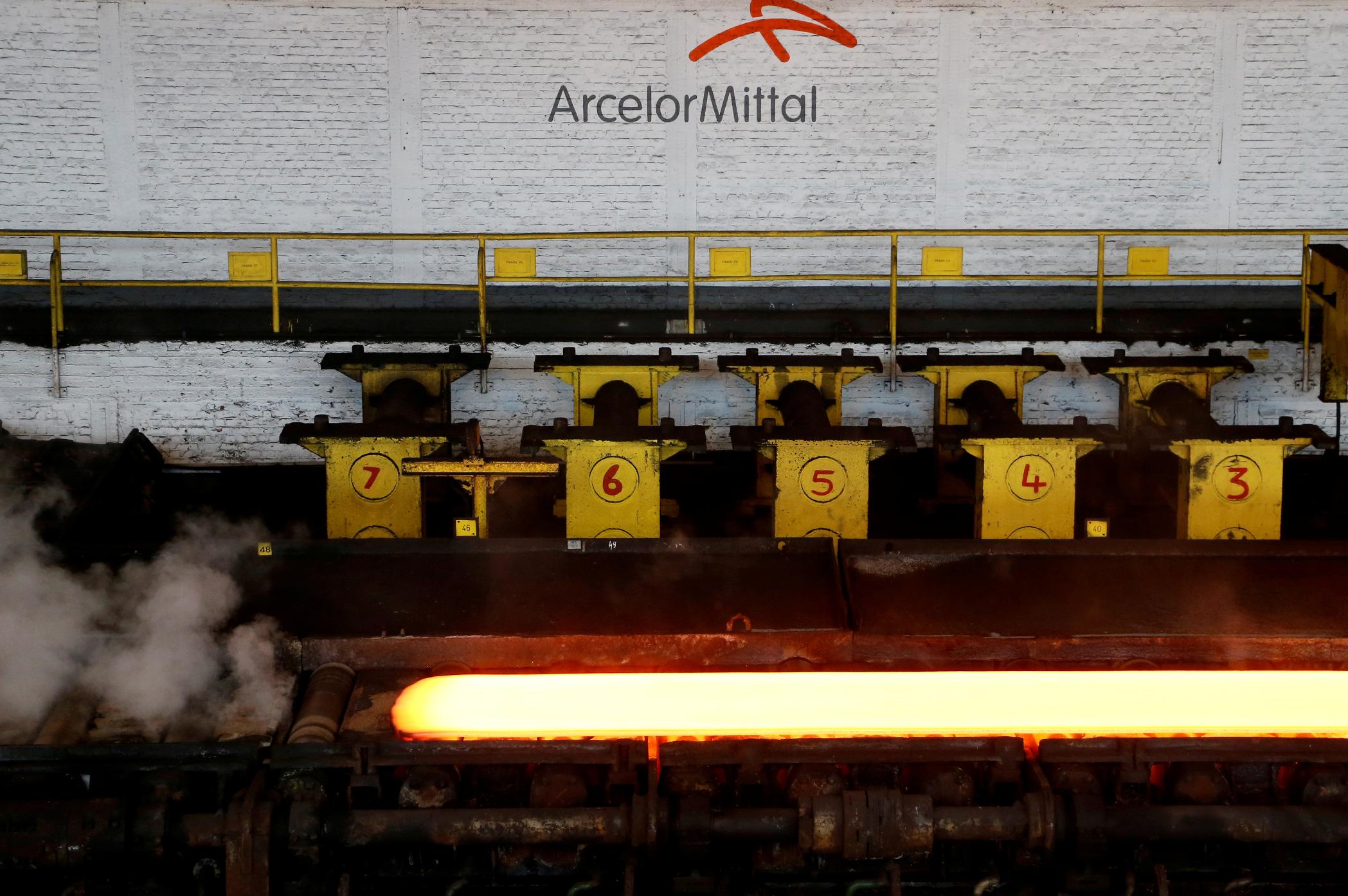
BRUSSELS, Nov 9 (Reuters) - ArcelorMittal, the world's second-largest steelmaker, "continued to demonstrate structurally improved profitability," it said on Thursday after reporting higher-than-expected third-quarter earnings. The group said it still expected global steel demand excluding China to grow by between 1% and 2% this year, but sees demand in Europe below previous guidance of -0.5% due to weak construction activity there. The Luxembourg-based company said third-quarter core profit (EBITDA) was $1.87 billion, higher than the average analyst forecast of $1.8 billion in a company poll. https://www.reuters.com/markets/commodities/arcelor-mittal-reports-higher-than-expected-q3-profit-2023-11-09/
2023-11-09 06:09
NEW YORK, Nov 9 (Reuters) - Falling Treasury yields helped launch an explosive rebound in stocks and lifted U.S. government bonds from 16-year lows. Now some investors worry that further declines in yields could keep the Federal Reserve in a hawkish stance for longer, potentially hurting asset prices over the longer term. The paradox highlights how the relationship between yields and financial conditions - factors that reflect the availability of funding in an economy and are watched closely by central bankers - has come into focus in recent months. Surging Treasury yields sapped investors’ risk appetite and weighed on stocks over the last few months by helping tighten financial conditions as they raised the cost of borrowing for companies and households. That relationship has reversed in recent weeks. U.S. 10-year yields - which move inversely to bond prices - have fallen nearly 50 basis points from their highs, while the S&P 500 has rebounded about 6.5% in that period. But some investors believe financial conditions could become too loose for the Fed’s comfort if yields keep falling, forcing the central bank to keep rates higher for longer in order to prevent inflation from rebounding. Evidence of the dynamic between yields and financial conditions could be seen in last week’s 0.5% decline in the Goldman Sachs Financial Conditions Index, its sixth biggest weekly drop since 1990. That move came as the benchmark Treasury 10-year Treasury yield fell to a low of 4.48%, from just above 5%. Average rates on 30-year mortgages, which move together with Treasury yields, fell by 25 basis points last week, the largest weekly tumble in nearly 16 months. "The Fed may not want the 10-year Treasury to go much above 5%, but they probably don’t want it to go much below 4.5% either," said Brian Jacobsen, chief economist at Annex Wealth Management. "Their tune will modulate with rates to perhaps keep us in this range." Jacobsen remains bullish on bonds, betting that the Fed will keep rates elevated for too long and push the economy into recession. Some Fed officials last month said rising yields could substitute for further rate hikes by the central bank as they tightened financial conditions. Policymakers have largely refrained from verbally pushing back on the easing in financial conditions during a flurry of appearances by policymakers this week. Fed Chair Jerome Powell speaks on Thursday in a panel at the International Monetary Fund. Analysts at TD Securities, however, believe further easing in Treasury yields will eventually become a "double-edged sword." "If the market reads the Fed as being dovish by continuing to push potential rate hikes into the future, financial conditions will ease. That will be responded to with a more hawkish stance by the Fed," they wrote earlier this month. Futures markets are now pricing in a roughly 90% chance that the Fed holds rates steady at its December meeting, up from a 57.6% chance seen a month ago, and anticipate that the central bank will begin to rate cuts in May, 2024, according to CME's FedWatch Tool. Meanwhile, the S&P 500 on Wednesday continued its longest streak of positive gains in two years with its eighth straight close in the green. The index is up 14.2% year-to-date. Other factors are also contributing to the easing in financial conditions, include a nearly 20% decline in U.S. oil prices from their recent highs on concerns of waning demand in the United States and China. To be sure, not every scenario sees the Fed in a higher-for-longer posture if Treasury yields continue falling. Yields falling in the context of a slowing economy, for instance, could suggest that the Fed is achieving its goal of tamping down growth, said Sameer Samana, senior global market strategist at the Wells Fargo Investment Institute. "If the economy slows meaningfully and that’s the reason why rates are falling, the Fed will view it as confirming their overarching plan," he said. Samana is buying longer-duration bonds when their prices dip, expecting yields to settle in the low 4% range over the next six months as the economy continues to weaken. Investors are awaiting next week’s U.S. consumer price data, which is expected to show a 0.1% monthly rise for October. "If inflation were to come in lower than expected next week and the next round of payrolls is also muted ... the Fed would start to see this is a job well done," Samana said. https://www.reuters.com/markets/rates-bonds/falling-treasury-yields-could-turn-fed-hawkish-if-financial-conditions-ease-2023-11-09/
2023-11-09 05:56
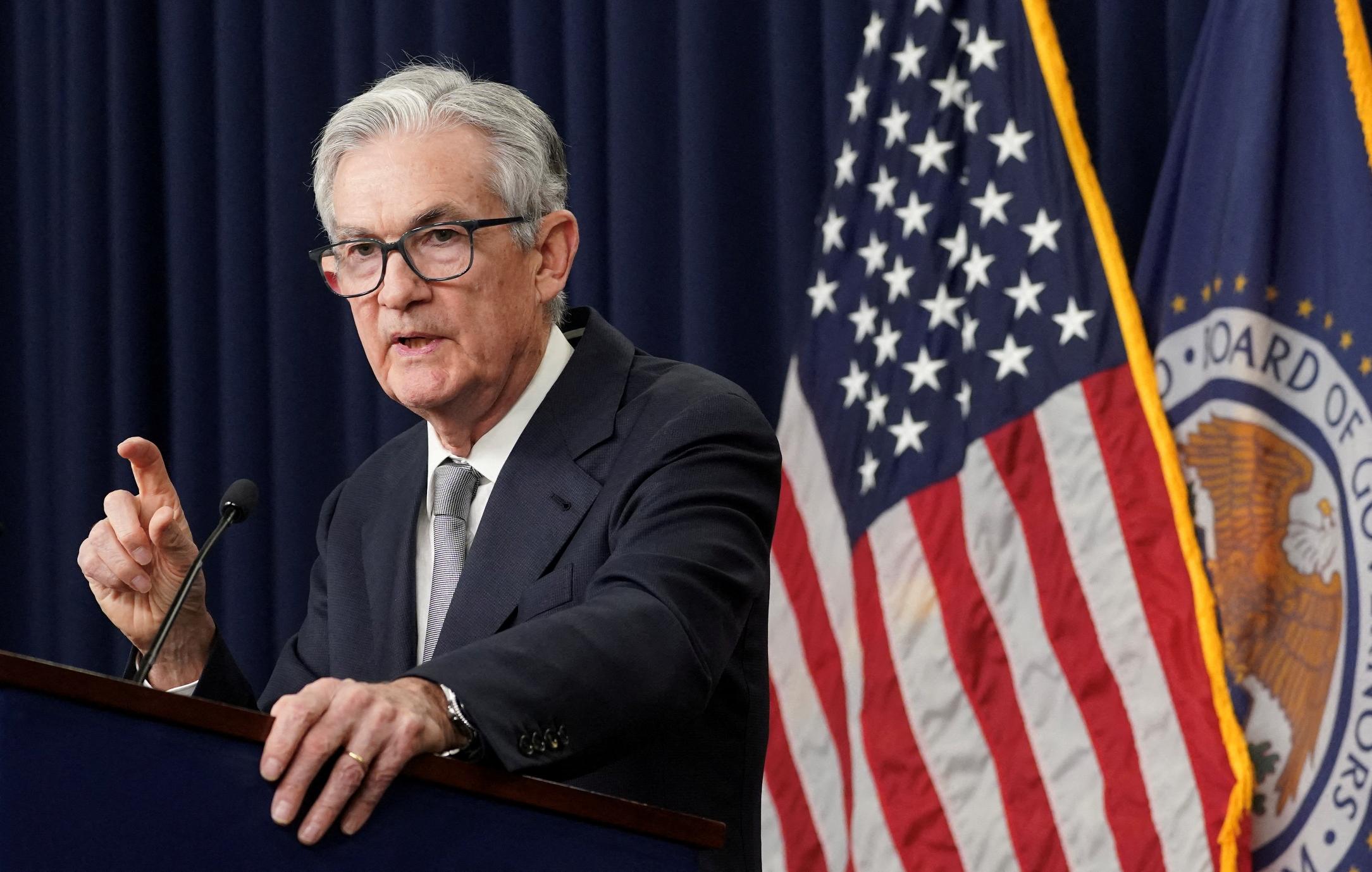
Wall St falls after Powell comments, Treasury auction US yields surge after Powell, 30-year auction disappoints Brent ends at over $80/bbl after this week's sell-off NEW YORK, Nov 9 (Reuters) - Treasury yields jumped and a measure of global stocks fell on Thursday after Federal Reserve Chair Jerome Powell said policymakers "are not confident" interest rates are high enough to bring inflation down to the U.S. central bank's 2% target. The fight to restore price stability "has a long way to go," Powell said in comments that delved into how he sees the final phase of fighting inflation unfold, with possibly more "disinflation" needing to come from an economic slowdown. For some, Powell's comments were no different from last week when the Fed held interest rates steady, leading many in the market to surmise the rate hiking cycle was over. But some Fed officials have signaled otherwise as the economy remains strong. Data showed the number of Americans filing new claims for unemployment benefits edged down last week, signaling layoffs remain low even as the jobs market shows some signs of cooling. Richmond Fed President Thomas Barkin said on Thursday that while there has been "real progress" on inflation, he is still unsure if the Fed will need to push its policy rate higher to finish the job. "The economy is not buckling under the current cost of capital, and if it's not, then what's the point?" said Phillip Colmar, global strategist at MRB Partners in New York, referring to expectations the Fed would ease policy after last week's jobs data. "There's no real case for the Fed to cut here." The yield on 10-year notes rose 12.4 basis points (bps) to 4.632% and the two-year's yield, which reflects interest rate expectations, rose 9.9 bps to 5.035%. Futures pushed the likelihood the Fed will keep its overnight lending rate above 5% through to next July from June, and reduced the size of rate cuts by year-end 2024 after Powell's comments. A weak auction of $24 billion in 30-year Treasuries pushed yields higher before Powell's comments, and helped stocks on Wall Street move lower. "The market was oversold before non-farm payrolls and the FOMC meeting (last week) and it was overbought before the auction," said Steven Ricchiuto, U.S. chief economist at Mizuho Securities USA LLC in New York. "Basically, investors looked at where the pricing was and said I'm not as interested," Ricchiuto said about the auction. The three major U.S. stock indices tumbled and snapped the longest winning streaks for the Nasdaq and S&P 500 in two years as market optimism over looser monetary policy faded. MSCI's gauge of global stock performance (.MIWD00000PUS) closed down 0.31% after earlier trading almost 0.4% higher. The Dow Jones Industrial Average (.DJI) fell 0.65%, the S&P 500 (.SPX) lost 0.81% and the Nasdaq Composite (.IXIC) dropped 0.94%. Earlier in Europe, the pan-regional STOXX 600 index (.STOXX) closed up 0.84%. The dollar rose after yields moved higher. Germany's benchmark 10-year borrowing cost rose 0.8 bps (bps) to 2.661%, up from a two-month low of 2.606% on Wednesday. In Asia, Japan's Nikkei raced up 1.5% (.N225), thanks to solid earnings from Super Mario maker Nintendo (7974.T) and calculator and watch firm Casio and broad-based gains in the oil sector. China's property sector woes boomeranged back, though, with the main Hong Kong listed real estate index down 4% (.HSMPI) as embattled property giant Country Garden (2007.HK) plunged nearly 10% on a blow to its rescue hopes. Chinese inflation figures for October also showed a 0.1% decline compared with September and a 0.2% year-on-year fall, pointing to still fragile demand in the world's second biggest economy. The dollar gained 0.26% at 151.35 yen and the euro fell 0.40% at $1.0667. The dollar index , which tracks the greenback against a basket of currencies of major trading partners, rose 0.39% lower at 105.89. The Brent crude oil benchmark closed above $80 a barrel after demand concerns and a fading war-risk premium had triggered a sell-off earlier this week. Brent crude futures settled at $80.01 a barrel, a gain of 47 cents. U.S. West Texas Intermediate (WTI) crude futures settled at $75.74 a barrel up 41 cents, or 0.54%. Gold rose as the dollar eased. U.S. gold futures settled up 0.6% at $1,969.80 an ounce. https://www.reuters.com/markets/global-markets-wrapup-1-2023-11-09/
2023-11-09 05:44
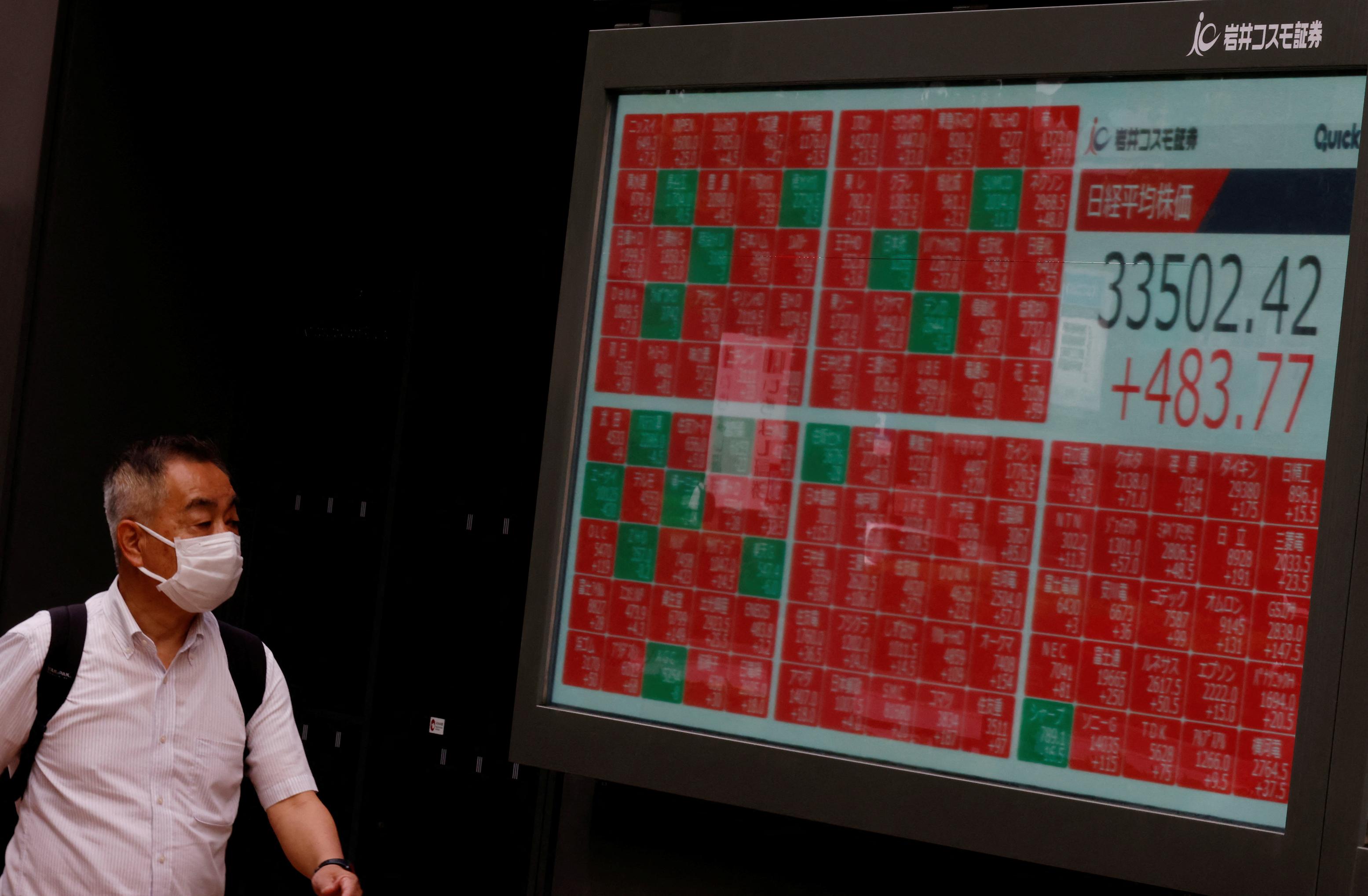
A look at the day ahead in European and global markets from Ankur Banerjee An uneasy calm prevailed during Asian trade as investors digested a flurry of comments from central bank officials to look for signs of whether global interest rates have peaked, with Fed Chair Jerome Powell yet again to take centre stage. Powell on Wednesday did not comment on monetary policy in opening remarks at the U.S. central bank statistics conference, but is scheduled to speak at another conference on Thursday with traders ready to scrutinise every word. At a separate event on Wednesday, European Central Bank chief economist Philip Lane said his bank needs to see further progress in dampening inflationary pressure, and companies along with governments need to chip in to prevent more policy tightening. U.S. Federal Reserve Bank of Philadelphia President Patrick Harker at yet another event said the Fed's recent decision to hold rates steady was the right choice, and cautioned market participants to not get ahead of themselves. "A decrease in the policy rate is not something that is likely to happen in the short term," he said. The ECB's Lane will take the stage again on Thursday while Bank of England Chief Economist Huw Pill will also speak at a another event, with any comments likely to influence the market given a bare economic calendar. Futures hint at a moderately lower open in European stock markets. Investors also will keep an eye on shares of Europe's most valuable company, Novo Nordisk (NOVOb.CO), after U.S. and British regulators both gave the thumbs up to Eli Lilly's (LLY.N) weight-loss treatment Zepbound on Wednesday. The approval paves the way for a powerful rival to blockbuster drug Wegovy in addressing record obesity rates. In Asia, China's property stocks are back in the spotlight. They rose late on Wednesday after Reuters reported China's State Council had instructed the local government of Guangdong province to help arrange a rescue of Country Garden by Ping An Insurance Group (601318.SS), . Ping An subsequently said in a statement to Reuters it had "not been asked by (the) Government to take over Country Garden". On Thursday, shares of Ping An extended declines. Country Garden (2007.HK) and other property stocks gave up some gains from a day earlier. Meanwhile, data on Thursday showed China's consumer prices fell and factory-gate deflation persisted in October, indicating pressure on demand has picked up as the world's second-largest economy struggles to emerge from a post-pandemic slump. Elsewhere, Hollywood actors reached a tentative agreement with major studios on Wednesday to resolve the second of two strikes that have rocked the entertainment industry this year as workers demanded higher pay in the streaming TV era. Key developments that could influence markets on Thursday: Earnings: AstraZeneca, Merck KGaA, Deutsche Telekom Speakers: ECB chief economist Philip Lane and BOE chief economist Huw Pill in separate events; Fed Chair Powell later in the global day https://www.reuters.com/markets/europe/global-markets-view-europe-2023-11-09/
2023-11-09 05:35
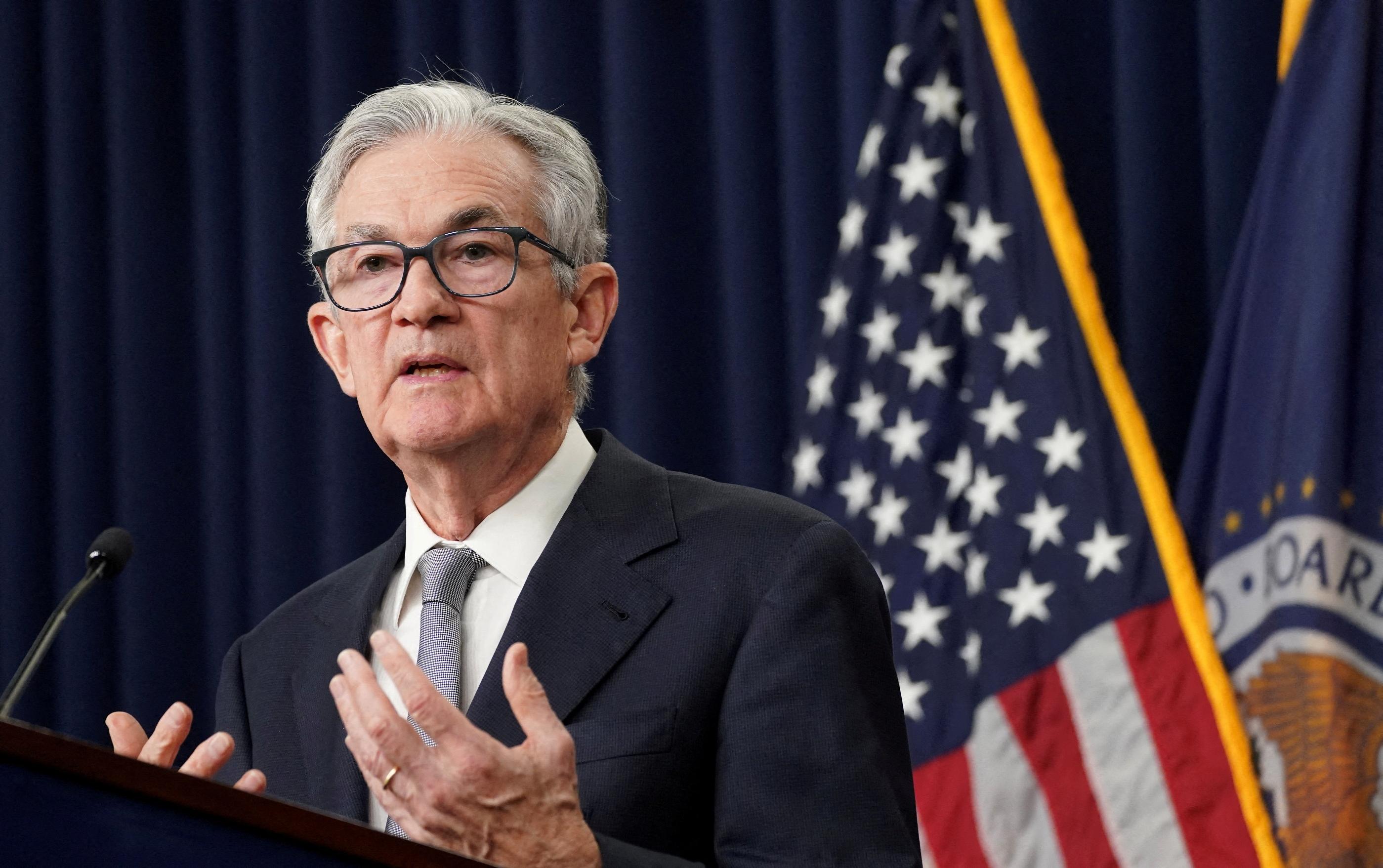
NEW YORK, Nov 9 (Reuters) - The dollar gained on Thursday and hit a one-week high against the Japanese yen after Federal Reserve Chair Jerome Powell said that Fed policymakers are "are not confident" that interest rates are yet high enough to finish the battle with inflation. The dollar index was last up 0.35% on the day at 105.86. The euro fell 0.37% to $1.0671. The dollar gained 0.21% to 151.29 Japanese yen , the highest since Nov. 1. Traders remained on alert for potential intervention to shore up the struggling Japanese currency, which is near a one-year low of 151.74 reached last week. The dollar’s rally in the wake of Powell’s comments also came after a brief spike higher on the back of a weak auction of 30-year Treasury bonds, which sent yields higher across Treasury maturities. “I don’t think Powell said anything significantly new, but I think the markets took his comments as somewhat hawkish. But I also think the rates market was still somewhat jittery after the auction so higher yields was the path of least resistance,” said Vassili Serebriakov, an FX strategist at UBS in New York. The dollar benefited from the run-up in Treasury yields over the past few months, but dropped last week as yields also fell sharply. This came after Powell was interpreted as striking a dovish tone after the Fed’s two-day meeting, with softer-then-expected jobs data on Friday adding to a belief that the Fed has finished hiking interest rates. Some Fed officials this week have adopted a more hawkish outlook and stressed that further rate hikes remained on the table if inflation doesn’t continue to come down closer to the Fed’s 2% annual target. “They don’t think their job in inflation is done. I think there is some divergence of opinion in terms of whether they should hike more. It seems that the base case is that they don’t, they want to be patient and assess how the impact of hikes has translated into the economy,” said Serebriakov. Richmond Fed President Thomas Barkin said on Thursday said that while there's been "real progress" on inflation, he is still unsure if the U.S. central bank will need to push its policy rate higher to finish the job. Fed Bank of St. Louis acting leader Kathleen O’Neill Paese also said Thursday she's concerned those watching the central bank may not be fully taking on board its commitment to lowering inflation. Fed funds futures traders are now pricing in a 25% chance of an additional hike by January, up from 19% on Thursday morning but down from 28% a week ago, according to the CME Group’s FedWatch Tool. Traders are weighing whether the greenback is likely to weaken against other major currencies if the U.S. economy slows as expected, or if even more dour outlooks for growth in other regions will keep the dollar bid. “The market is increasingly looking at growth rather than interest rate differentials as the driver in the currency market and increasingly the market is concluding that it’s only the U.S. that can continue to grow with rates in the 5% range,” said Adam Button, chief currency analyst at ForexLive in Toronto. Meanwhile traders will remain focused on the Japanese yen as it holds above the 150 level against the U.S. dollar where Japanese authorities are seen as possibly stepping in. Concerns over a possible intervention in the currency pair has also led some investors to bet on further yen weakness against the euro instead of the greenback. The single currency reached a 15-year top of 161.80 on Thursday. The Australian dollar fell to a one-week low of $0.6364 on Thursday. It has tumbled since the Reserve Bank of Australia on Tuesday raised interest rates to a 12-year high but played down the probability of further increases. In cryptocurrencies, Bitcoin reached $37,978, the highest since May 2022, before falling back to $36,326. ======================================================== Currency bid prices at 3:06PM (2006 GMT) https://www.reuters.com/markets/currencies/forex-euro-finds-footing-hawkish-policy-remarks-lower-energy-prices-2023-11-09/