2023-10-31 11:23
PRAGUE, Oct 31 (Reuters) - French utility EDF, South Korea's KHNP and U.S. group Westinghouse Electric have submitted final bids in a tender run by Czech electricity producer CEZ (CEZP.PR) to build a new nuclear power unit at its Dukovany plant, CEZ said on Tuesday. CEZ, which is 70% owned by the Czech state, invited bids from the companies for the multi-billion dollar project earlier this year. "We are happy to confirm the strong interest of all three bidders in constructing a new nuclear power plant in Czechia," CEZ said in a statement. CEZ will evaluate the bids and send them to the government for final approval, it said, with contracts expected to be signed next year. "After the final signing of the contracts, the project documentation will be thoroughly prepared so that the new unit will be ready for trial operation in 2036," CEZ said. The government said in 2020 the project would cost around 6 billion euros ($6.39 billion) excluding inflation, a figure that has likely risen. EDF said it had submitted its bid to build one EPR1200 reactor at Dukovany, along with more potential units as part of the tender. "We believe that the long-term strategic partnership we are proposing will set a precedent for our continent and serve as the backbone for a more resilient and independent European nuclear industry," EDF Chairman Luc Remont said in a statement. Westinghouse, which supplies nuclear fuel to the Czech Republic and also delivered a control system for the Czech Temelin plant in the 1990s, said it was offering its AP1000 reactor which has been chosen by fellow EU members Poland and Bulgaria. The Czech state has been looking at ways to restructure CEZ to limit the risks of the high-cost project and as part of plans to take more control over energy infrastructure, possibly including a full takeover of its nuclear operations. The Czech Republic has been a strong backer of nuclear energy as a carbon-free power source for the future, unlike European Union neighbours Germany and Austria, and is planning new plants in addition to new gas-fired and renewable resources. Any new nuclear units will come too late to immediately fill a gap caused by closure of coal-fired plants in the coming years, meaning the country is likely to turn from electricity exporter to importer for at least some period. The Dukovany project would initially add one around 1,200 MW reactor to four 500 MW Russian-designed units at the site, but the tender includes an option to build one more at Dukovany and two more at CEZ's other nuclear site, Temelin. CEZ is also separately looking at building several small modular reactors being developed by various producers. It excluded bidders from China and Russia on security grounds before it launched the tender last year. ($1 = 0.9383 euros) https://www.reuters.com/business/energy/edf-khnp-westinghouse-line-up-new-czech-nuclear-power-plant-2023-10-31/
2023-10-31 11:09
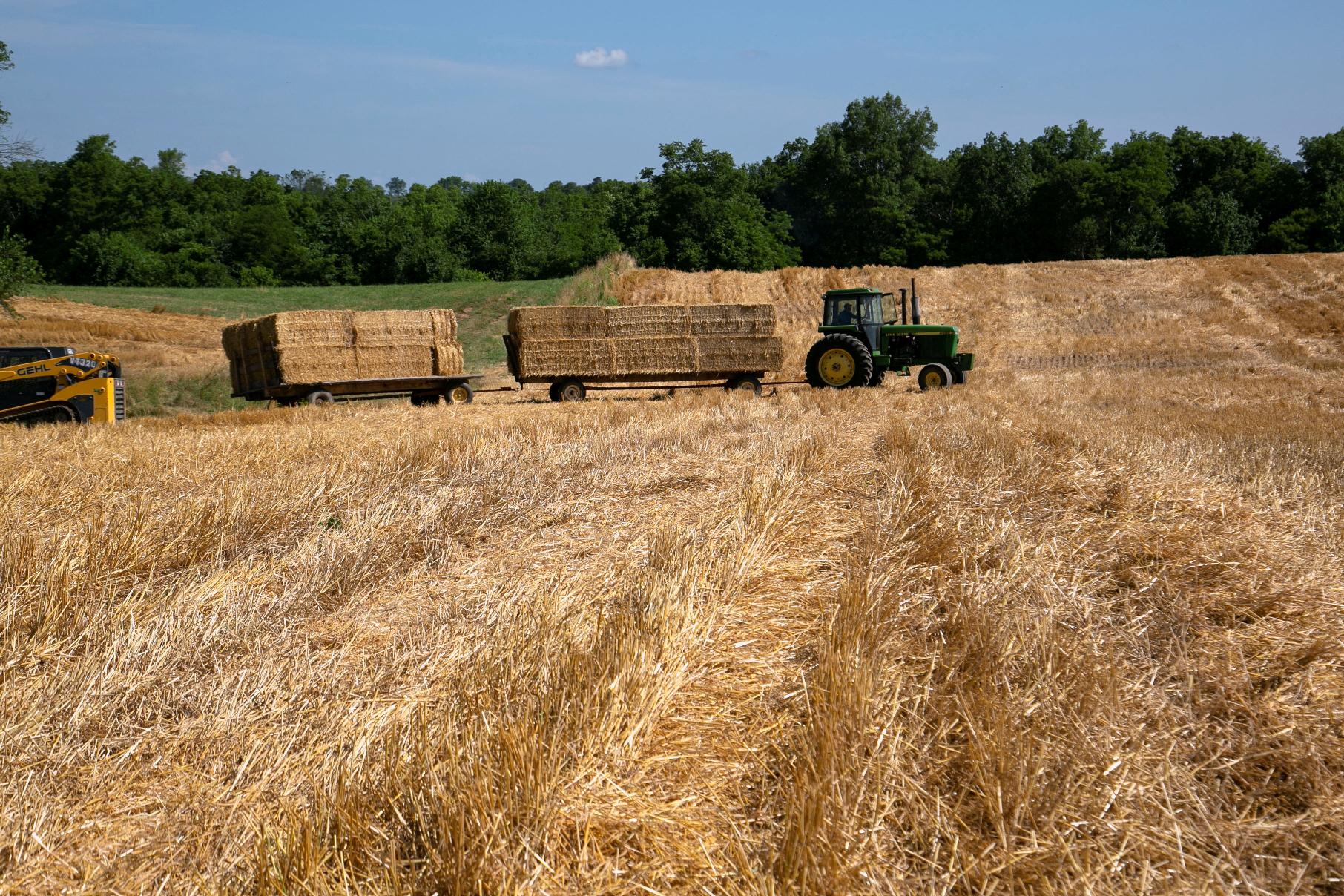
NAPERVILLE, Illinois, Oct 30 (Reuters) - It has been a few years since the United States has had a truly good winter wheat harvest, though the 2024 crop could be on its way despite lingering drought in top states. In its first assessment of the growing season, the U.S. Department of Agriculture rated 47% of the domestic wheat crop as good or excellent (GE) as of Sunday, the date’s best since 2019 and above the recent five-year average of 44%. That is substantially better than last year’s initial rating of 28% GE, which was by far the worst start for winter wheat since conditions began in 1986. Come April, the 2023 crop still carried some of the worst-ever ratings, seemingly guaranteeing a terrible harvest was looming. But national winter wheat yield ended up only about 2% below the long-term trend in 2023. Some of the worst harvests, as in 2014 or 2015, featured yields around 12% below trend. Last year offered a very split story as top winter wheat grower Kansas notched yields 26% below trend, its worst result in nine years. However, yields in 14 other states matched or broke their previous highs, most prominently in soft red wheat areas from Illinois to Ohio, and south into Missouri, Kentucky and Tennessee. Nationally, yields are more correlated with spring conditions rather than fall ones, but a similar storyline exists this year as hard red winter wheat giant Kansas continues to grapple with dryness. Winter wheat there is only 32% GE, down from the week’s five-year average of 43% but above the year-ago 24%. Drought is still hanging around in Oklahoma and Texas, but nowhere near the degree of last year. Winter wheat is 42% and 41% GE, respectively, equal to the Oklahoma average and 13 points above the Texas one. This year’s El Nino pattern typically brings ample growing season moisture to the Southern Plains, including Kansas, but many parts of the state still await relief. Winter wheat at 47% GE is among the lower ratings for the date historically, but it is not necessarily in poor company. The epic 2016 harvest was 48% GE at the end of the prior October and yield eventually surged 13% above trend. Also note 2015-2016 was a strong El Nino season. The 2021 and 2022 crops are also within range, having been rated 42% and 45% GE in this same week, respectively. The 2021 yield was about 1% below trend but 2022 yield fell 8%. Karen Braun is a market analyst for Reuters. Views expressed above are her own. https://www.reuters.com/markets/commodities/us-winter-wheat-health-starts-2024-season-four-year-high-2023-10-31/
2023-10-31 11:06
BERLIN, Oct 31 (Reuters) - German seed producer KWS Saat (KWSG.DE) said on Tuesday it will sell its Chinese corn business due to new regulations that could mean its conventionally bred traits would be unable to compete with genetically modified corn over the longer term. The company said it expects to sell its corn unit and the corresponding 49% minority stake in joint venture Kenfeng-KWS Seed to its Chinese partner firm Kenfeng for a mid-range double digit million euro sum. The decision was driven by changes in China’s regulatory framework, a company spokesperson told Reuters. China has approved genetically modified corn for domestic companies, but bans foreign companies – including partners in joint ventures – from developing GMO corn traits. KWS Saat said without giving further details that it expects the deal to positively affect its after-tax operating income for 2023/2024. Kenfeng-KWS Seed was founded as a joint venture in 2014 as KWS Saat bet on the Chinese corn market opening up to foreign companies. With the sale, KWS Saat will largely exit the Chinese market, where its corn business accounts for about 1% of global revenue, or about 15 million euros ($15.95 million). ($1 = 0.9406 euros) https://www.reuters.com/markets/deals/kws-saat-sell-china-corn-business-gmo-rules-overhauled-2023-10-31/

2023-10-31 10:24
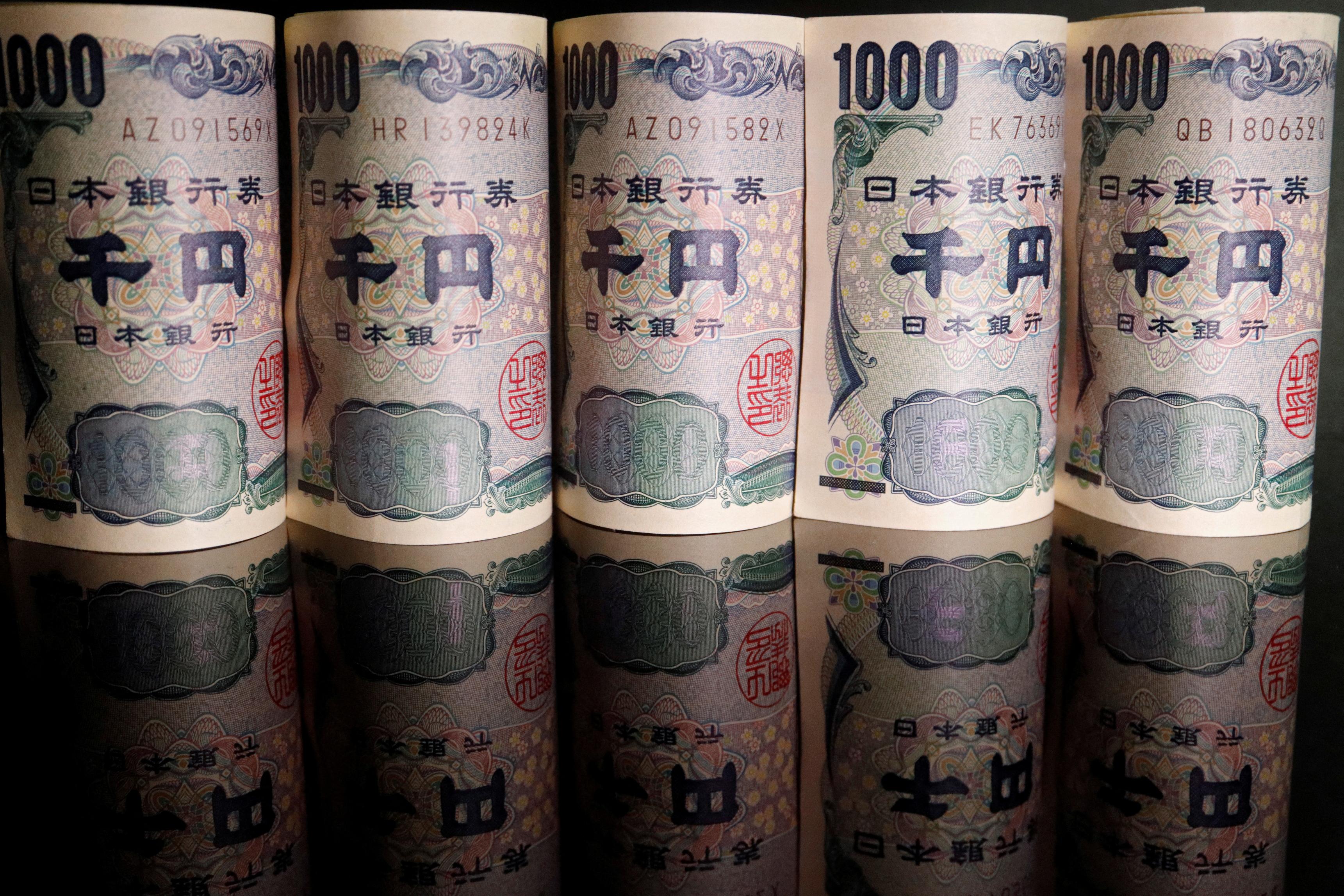
BOJ's yield curve control all but over - analysts Yen down, JGBs down, Nikkei bounces slightly Ueda: We'll accommodate fundamental-led rise in long-term rates BOJ revises up inflation forecasts for 2023, 2024 SINGAPORE/TOKYO, Oct 31 (Reuters) - One of the last anchors for global bond markets was being hauled in on Tuesday, as the Bank of Japan announced a new degree of tolerance for rising government bond yields and signalled an end to its seven-year straightjacket on long-term rates. A 1% cap on the 10-year Japanese government yield became a "reference" and the central bank watered down language about the effort and cash it would expend to keep the rate under control. Yields along the Japan curve rose to decade highs - the 10-year breached 0.95% - as investors eyed higher rates in a debt market worth more than a quadrillion yen ($7 trillion). Bund and Treasury yields were broadly steady. "The Bank of Japan today de-facto abolished YCC," said Marcel Thieliant, head of Asia-Pacific at Capital Economics, referring to the central bank's yield curve control policy. The BOJ's vow to buy the 10-year bond at a yield of 1% every day is now gone, replaced with a vaguer promise to buy taking account "market rates and other factors," which was taken by markets as a green light for ultra-low yields to rise. The move followed relaxations to the yield control policy in December and July and had been expected in some quarters -- leading to a fall for the yen and a gain for Japanese stocks in relief that the BOJ hadn't announced anything more radical. The yen was last down about 0.9% to 150.4 per dollar, while the Nikkei (.N255) closed 0.5% higher, with insurance (.IINSU.T) and bank stocks (.IBNKS.T) leading gains. Still, the signal can be expected to reverberate around the world: One of the last central bank hold outs is slowly but surely leaving the era of ultra-easy policy behind. Japanese authorities will no longer be leaning so forcefully against the rising tide of global interest rates. In time, it also means higher borrowing costs for the Japanese government, companies and consumers, and perhaps fewer foreign investment outflows from Japan - the world's biggest creditor - if rates at home turn attractive. "Global investors will pay heed to the Bank of Japan's policy decision today, which signals a further step towards global monetary policy normalisation," said Frederic Neumann, chief Asia economist at HSBC in Hong Kong. LAGGARD YEN Quickening inflation at home, rising interest rates abroad and a falling yen currency had pressured policymakers to shift and is feeding expectations that a rise in short-term rates will follow. Two-year Japanese government bond (JGB) yields , which track short-term expectations, made their sharpest jump since March 2020 on Tuesday to a 12-year high of 0.14%. Inflation ran above the BOJ's 2% target for an 18th straight month in September, and the board revised up its forecasts to project it above 2% this year and next. The gap between 10-year Japanese yields and their U.S. equivalent also hit over 400 basis points in October - its widest for more than 22 years, which has driven the yen close to three-decade lows. The BOJ spent some 9 trillion yen ($59.84 billion) defending its yield cap in October alone, according to Capital Economics' Thieliant. "The BOJ apparently feared that sticking to 1% would force the Bank to purchase a large amount of government bonds and further weaken the yen," said Hirofumi Suzuki, chief FX strategist at Sumitomo Mitsui Banking Corporation. "As a result, the YCC framework seems to have become more of a dead letter." To be sure, the BOJ has foreshadowed a gradual rather than a sudden exit -- in contrast to the Reserve Bank of Australia which abruptly ceased defending its yield target in 2021, later announcing the end of the policy after wild trade in the market. In part, analysts said that explained why the yen fell on Tuesday to languish around 150, with a rally no longer expected until U.S. rates start falling or Japanese rates go up quickly enough to reverse so-called "carry" trades, where investors take advantage of differences in borrowing costs between countries. BOJ Governor Kazuo Ueda said he has no pre-set ideas on the sequence of an end to yield curve control or negative rates, and that he doesn't expect the 10-year yield to sharply exceed 1% on a sustained basis. It didn't on Tuesday. But Ueda added that the bank will "accommodate a rise in long-term interest rates that reflect fundamentals." It is likely the market will soon test what that means, to see when and how tenaciously the BOJ will respond with bond purchases if it thinks yields are rising too quickly. "This is working, in a way, to increase the volatility of the global rates market," said Naka Matsuzawa, chief macro strategist at Nomura in Tokyo. "It depends now how ... they operate on purchase operations." ($1 = 150.3900 yen) https://www.reuters.com/markets/asia/japan-unshackles-its-sliding-bond-market-2023-10-31/

2023-10-31 10:16
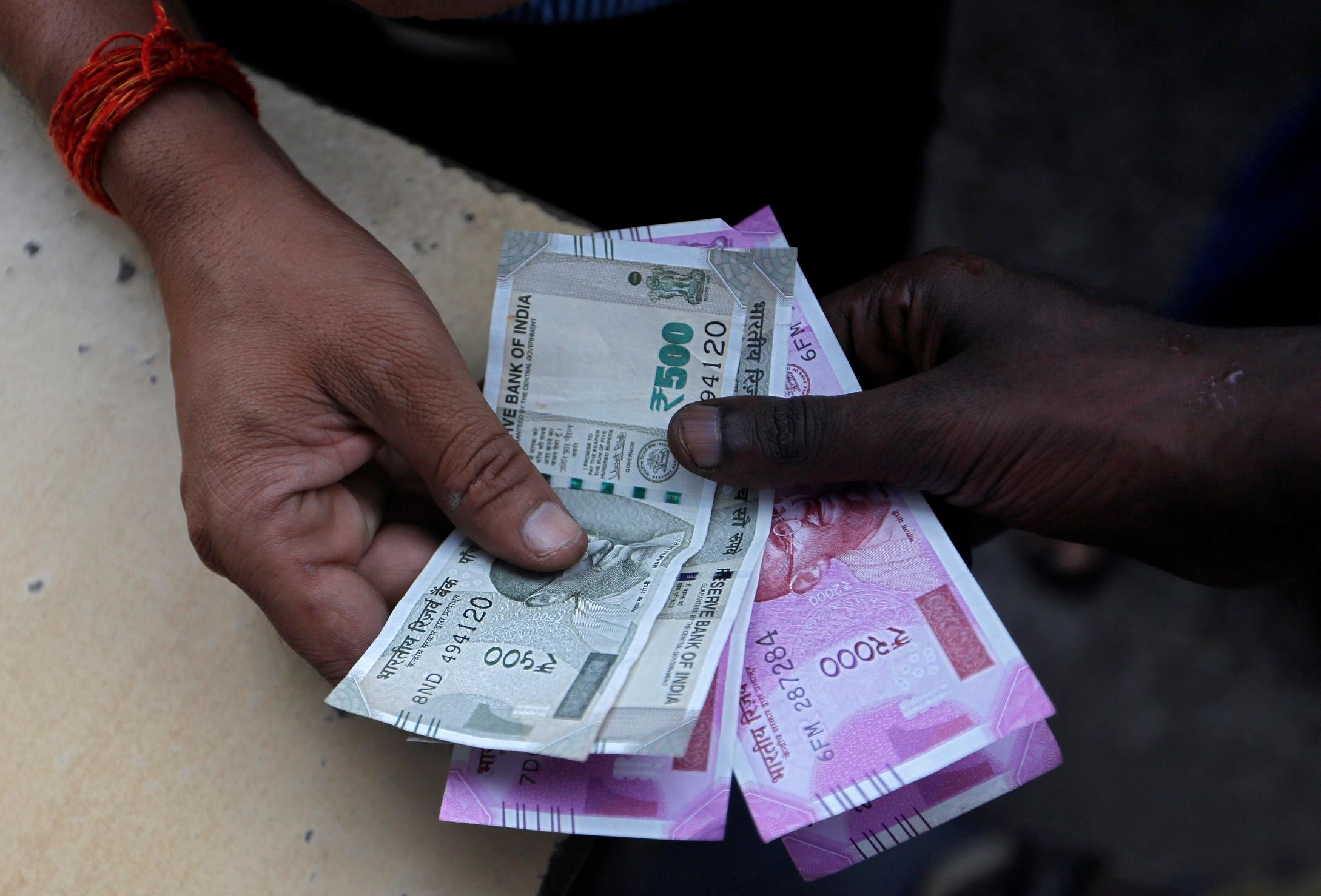
MUMBAI, Oct 31 (Reuters) - The Indian rupee ended unchanged on Tuesday after holding in a narrow range through the session, as buoyant U.S. dollar demand squared off against expectations the central bank will prevent further weakness in the local currency. The rupee closed at 83.25, the same as the previous session. The unit logged its fourth consecutive monthly decline in October, weakening 0.25%. Losses in the rupee this month were limited because of likely intervention by the Reserve Bank of India (RBI), which has routinely stepped in to prevent a breach of the record low, traders said. The rupee had hit its record low of 83.29 in October 2022. Regional peers like the Thai baht and the Korean won outperformed the rupee in October. On Tuesday, the dollar index was last quoted lower at 106 while Asian currencies traded mixed. The Japanese yen declined over 1% to fall below the 150 mark against the greenback after the Bank of Japan slightly tweaked its bond yield control policy but was not as hawkish as some had expected. The rupee is "completely on a flat line," said Dilip Parmar, a foreign exchange research analyst at HDFC Securities. The prevailing narrow range could break following the U.S. Federal Reserve's policy decision on Wednesday, but a strong directional move will depend on the amount of flexibility the RBI allows, according to Parmar. The Fed is widely expected to keep rates unchanged . The Bank of England will announce its rate decision on Thursday. While the rupee hardly budged on Tuesday, worries over a shortage of dollars drove the USD/INR overnight swap rate and forward premiums lower. The USD/INR cash swap rate fell to an intraday low of 0.04 paisa while forward premiums declined across tenors. Dollar shortage concerns prompted receiving in near-forwards, driving premiums lower, traders said. https://www.reuters.com/markets/currencies/india-rupee-ends-flat-notches-fourth-monthly-decline-trot-2023-10-31/
2023-10-31 10:16
TOKYO, Oct 31 (Reuters) - Japan's government confirmed on Tuesday that it did not intervene in the currency market to prop up the yen in the past month, data from the Ministry of Finance showed. The monthly Ministry of Finance data showed no spending on intervention between Sept. 28 and Oct. 27. Earlier this month, the Japanese currency had rebounded sharply by around 3 yen within minutes of softening beyond 150 to the dollar, a level seen by investors as a possible trigger for intervention. The yen's weakening had been a source of concern as it raises energy costs and other expenses for households struggling with stagnant wages. Earlier estimates based on money market brokers showed that Tokyo likely did not intervene. https://www.reuters.com/markets/currencies/japan-did-not-intervene-forex-market-past-month-mof-data-shows-2023-10-31/