2026-08-04 07:12
Key takeaways ^DXY = US Dollar Index, is an index (or measure) of the value of the USD against major global currencies, including the EUR, JPY, GBP, CAD, SEK and CHF. Source: HSBC https://www.hsbc.com.my/wealth/insights/fx-insights/fx-navigator/the-case-for-usd-upside-still-intact/

2026-08-03 08:09
Key takeaways The FOMC kept policy rates unchanged for a fifth straight meeting, but three dissenters voted for a 25bp rate hike. Policymakers are likely to continue debating possible rate hikes through the remainder of this year. We expect the USD to grind higher supported by widening interest rate differentials and robust US economic activity. The Federal Open Market Committee (FOMC) kept the policy rate unchanged at 3.50-3.75% at its 28-29 July meeting. While this was in line with the near-unanimous economist consensus, markets had priced a 35% chance of a 25bp hike, leading to immediate USD weakness as rate expectations were modestly repriced lower. Federal Reserve (Fed) Chair Warsh avoided explicit guidance on the likelihood of a near-term hike, which the market interpreted as dovish and USD-negative. He also provided limited insight into the committee’s internal debate, instead reiterating the shared commitment to return inflation to the 2% target and referencing a discussion centred on four questions – including the impact of recent economic shocks and supply-chain strains – without disclosing the committee’s conclusions. The debate likely echoed recent Fed rhetoric. Hawkish members have argued for higher rates given persistently above-target inflation, a resilient US labor market and easy financial conditions, while the dovish contingent favours patience to allow more time to assess conditions and decide on next steps. Although the press conference did not deliver a “hawkish hold” tone, the emphasis on achieving 2% inflation suggests the door remains open to tightening if needed. Overall, we do not expect this meeting to derail our generally constructive USD outlook. The Fed’s narrative has shifted from an easing bias to a willingness to hike, a transition that has come alongside resilient economic activity, upside inflation risks and widening interest rate differentials (see charts). Geopolitical risk may also provide sporadic USD support although FX sensitivity to the US-Iran conflict is waning. We continue to expect modest USD strength ahead despite this setback. Source: Bloomberg, HSBC Source: Bloomberg, HSBC https://www.hsbc.com.my/wealth/insights/fx-insights/fx-viewpoint/usd-dip-post-fomc-but-strength-ahead/

2026-07-31 12:01
Key takeaways Market concerns over AI overspending have led a rotation from semiconductor and hardware stocks to hyperscaler and software stocks. We maintain exposure across the AI ecosystem to avoid being caught by rapid shifts in momentum. We remain optimistic about the long-term AI trend, which supports broadening earnings growth within and beyond the IT sector, including Energy, Materials, Communications and Financials across regions. Despite elevated energy prices amid ongoing geopolitical uncertainty, the macro backdrop and corporate fundamentals remain favourable for equities. Bonds are driven by the fragility of the US-Iran peace agreement, surging AI investments and a more hawkish Fed Chair. Within bond markets, we prefer investment grade credit, given its higher quality and attractive valuations, with coupon income continuing to be the primary driver of total returns. The UK’s new Prime Minister, Andy Burnham, is prioritising easing cost-of-living pressures, decentralising decision-making and increasing investment in public services, signalling that fiscal policy could become more expansionary. Gilt yields have moved higher and remain sensitive to fiscal policy and government borrowing. We expect the Bank of England to keep the Bank Rate unchanged this year. While the FTSE 100’s exposure to energy and defensive sectors provides resilience, limited catalysts for a more positive overall equity outlook warrant a neutral stance on UK equities. https://www.hsbc.com.my/wealth/insights/asset-class-views/investment-monthly/market-rotation-reinforces-diversification-across-the-ai-ecosystem/

2026-07-30 12:01
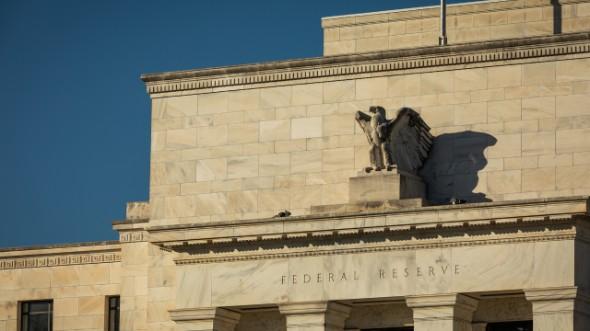
Key takeaways The US Fed Reserve left interest rates unchanged for a fifth consecutive meeting, in line with expectations, but the 9-3 vote revealed a lively debate within the FOMC. Despite the dissents, our base case remains for the FOMC to maintain the federal funds target range at 3.50%-3.75% through both 2026 and 2027 as we believe core PCE inflation will remain stable. Fed Chair Kevin Warsh delivered a constructive assessment of the US economy, highlighting resilient growth, a balanced labour market and accelerating AI-driven investment, while reiterating the Fed’s unwavering commitment to returning inflation to its 2% target. We remain overweight on US equities, supported by resilient economic growth, broadening earnings and continued AI leadership, and continue to emphasise diversification across the AI ecosystem. We also expect policy uncertainty and evolving trade developments to create opportunities for active portfolio positioning. In fixed income, we maintain a neutral duration stance and favour high-quality investment grade credit to capture attractive yields and coupon income. We remain positive on the US dollar, supported by resilient US economic fundamentals and relatively attractive interest rate differentials. Please refer to the full report for details about the event and our investment view. “Overweight” implies a positive tilt towards the asset class, within the context of a well-diversified, typically multi-asset portfolio. “Underweight” implies a negative tilt towards the asset class, within the context of a well-diversified, typically multi-asset portfolio. “Neutral” implies neither a particularly negative nor a positive tilt towards the asset class, within the context of a well-diversified, typically multi-asset portfolio. https://www.hsbc.com.my/wealth/insights/market-outlook/special-coverage/fed-holds-rates-steady-despite-dissenting-views/
2026-07-30 07:03
Key takeaways Renewed Middle East tensions and looming US Section 301 tariffs are driving another bout of inventory front-loading. June industrial production surprised to the upside; output of select segments like electrical equipment, electronics and plastics strengthened in 2Q. July PMI, too, points to the fastest finished-goods stock build-up since 2015, alongside rising input inventories; new export orders also picked up. Renewed tensions in the Middle East have once again prompted firms to build buffers to manage the uncertainties around the longevity of the supply-side shock. At the same time, there were worries around higher tariffs linked to the implementation of Section 301. The government of India estimates that about 55% of exports will attract the additional 10% duty (PIB, 25 July 2026). Back in April-May, manufacturers were building inventories to hedge against the risk of energy-input shortages. We’re now seeing a similar front-loading dynamic in the recently released June industrial production and July Flash PMI data. June industrial production rose 7.3% y-o-y, much higher than our aboveconsensus estimate of 6.3%. On a seasonally adjusted basis, the sequential momentum grew by 1.6% m-o-m sa after staying flat in May. The underlying growth momentum continues to look up, underscoring resilient industrial activity. Consumer goods grew while capital goods contracted on a sequential basis. Within consumer goods, output of durables rose faster than non-durables, suggesting that front-loading was concentrated in categories where consumers may prefer to buy ahead of any meaningful retail price increases. A more granular industry breakdown also points to strength in select segments such as electrical equipment, electronics, non-metallic mineral products and plastic, where output rose by an average of c3.5% m-o-m sa in 2Q26. The July Flash PMI signalled a sharp rise in finished goods stocks – the fastest rate of expansion since 2015 – reversing June’s decline. Input inventories, too, increased alongside a pick-up in purchasing volumes. New export orders also picked up ahead of US tariff implementation, even as overall manufacturing growth eased slightly. The big question for 2H. With a possible pivot from resilient manufacturing (c20% of GDP) to uncertain agriculture (c20% of GDP), where could growth come from? We look at the remaining 55% of GDP – services. What could help? A possible pullback in oil prices towards pre-war levels should help lift the trade and transport sector (which makes up c15% of GDP). Easier financial conditions on the back of the FX package could help lubricate the financial sector (which makes up c25% of GDP). Even before the package induced capital inflows have started in earnest, yields across a variety of instruments have eased. https://www.hsbc.com.my/wealth/insights/market-outlook/india-economics/on-a-front-loading-high/

2026-07-28 08:04
Key takeaways The Monetary Authority of Singapore (MAS) surprised the markets by delivering an unexpected tightening of monetary policy at its meeting on 27 July 2026. This comes on the back of a policy tightening in April. The MAS raised the slope of the SGD NEER (Singapore dollar nominal effective exchange rate) band “very slightly” by 0.25% to 1.25%. Singapore’s robust growth trajectory also gives the central bank greater confidence to focus on tackling inflation. The tailwind from the artificial intelligence boom, along with the resilience of the construction and services sectors, leads us to upgrade our 2026 GDP growth forecast to 4.6% (from 3.3% previously). We expect the MAS to tighten the monetary policy again in October, bringing the SGD NEER slope to 1.50%. Solid fundamentals and an attractive dividend yield support our overweight stance on Singapore equities, which continue to offer high-quality and defensive exposure. Please refer to the full report for details about the event and our investment view. “Overweight” implies a positive tilt towards the asset class, within the context of a well-diversified, typically multi-asset portfolio. “Underweight” implies a negative tilt towards the asset class, within the context of a well-diversified, typically multi-asset portfolio. “Neutral” implies neither a particularly negative nor a positive tilt towards the asset class, within the context of a well-diversified, typically multi-asset portfolio. https://www.hsbc.com.my/wealth/insights/market-outlook/special-coverage/mas-delivers-a-surprise-tightening/