2025-09-18 12:02
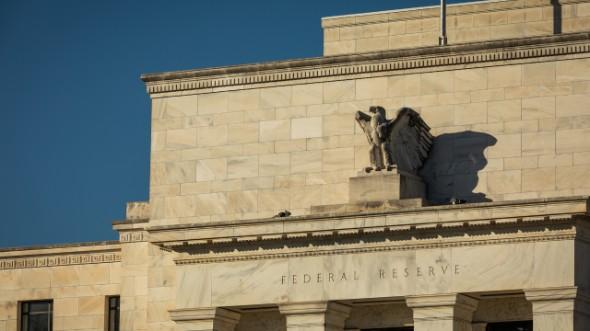
Key takeaways As expected, the FOMC voted at its September meeting to cut the federal funds target range by 0.25% to 4.00-4.25%, a first change after 9 months. Fed Chair Powell characterised it as a ‘risk- management cut’ as unemployment is still low and Fed forecasters may not have great confidence. We maintain our view of only two more 0.25% cuts (in December and next March) through end-2026 due to the resilient US economy and still low unemployment. However, the recent deterioration in labour market data is a dovish risk to our view as we may see little more easing than our forecast. This risk is reflected in the Fed’s new projections, which now see two more cuts this year. With easing underway, resilient earnings in the face of tariffs, and upward earnings revisions, the prospects for S&P 500 corporate earnings suggest an acceleration over the next six quarters. Therefore, we maintain an overweight US equities stance. The tech revolution led by productivity-enhancing AI, nearshoring/onshoring and the reindustrialisation of the US continue to lift growth prospects and valuations. We also maintain an overweight on US IG credit and prefer medium-to-long duration Treasuries as growth moderates and the Fed eases gradually. We expect the USD to weaken further into year-end as Fed easing contrasts with G10 peers. Tariff/geopolitical risks remain a swing factor. Please refer to the full report for details about the event and our investment view. https://www.hsbc.com.my/wealth/insights/market-outlook/special-coverage/fomc-resumption-of-rate-cut-cycle-should-be-accretive-to-markets/
2025-09-16 12:01
Key takeaways Weak July and August data have fuelled hopes for policy stimulus; China plans to rebalance and reflate the economy. Anti-involution campaign is still in the early stages with detailed sector policies likely to be unveiled soon. We expect rate cuts and a resumption of bond purchases; China may intervene more forcefully to stabilise housing. China data review (August 2025) Retail sales slowed to 3.4% y-o-y in August, partly due to a higher base. Distributions for trade-in subsidies resumed in August, but they were not enough to accelerate growth. Moreover, support from subsidies may slow further, given the high base from September last year. A recent campaign to clamp down on excessive spending by government officials on banquets (SCIO, 22 May) also likely weighed on catering sales (which rose 1% y-o-y versus c5% in Q1). Fixed Asset Investment fell to -7.1% y-o-y in August, dragged down by a steeper fall in property investment (-19.5%), while manufacturing and infrastructure investment saw their second consecutive month of decline. Trade uncertainty, the outlook for the anti-involution campaign, as well as extreme weather conditions all weighed on investment. The property sector continued to drag on growth. Aside from weaker property investment, primary home sales fell 10% y-o-y, while floor space starts were down 18% y-o-y, all steeper falls. The renewed weakness may prompt stronger policy actions, as indicated by Premier Li recently (Gov.cn, 18 August). As prior supply-side efforts appear to have made limited progress, a more promising move would be a direct intervention by the central government. CPI contracted by 0.4% y-o-y in August. However, excluding volatile items (food and energy), core CPI continued to improve in y-o-y terms (+0.9%) and stood at its highest level since March 2024. On the producer front, deflationary pressures eased, PPI fell 2.9% (from -3.6% in July), helped by a more favourable base, as well as the ongoing anti-involution campaign. Export growth moderated to 4.4% y-o-y in August, largely on the back of a sharper drop in US shipments, despite continued stronger exports to ASEAN (22.5% y-o-y) and the EU (10.4%). Meanwhile, import growth decelerated to 1.3%, as commodity imports (especially crude oil) were weighed down by lower global prices and weakness in the construction sector due to extreme weather. China Policy Watch – Five FAQs on how to reflate and rebalance After a resilient H1, China’s growth has slowed in July and August. Some market watchers see this as a turning point that will lead to more assertive easing. We have, indeed, seen an acceleration in policy rollouts recently, and we expect China to dial up its policy support using a combination of cyclical and structural measures. We lay out five key questions around China’s policy expectations and what to watch out for in the remaining months of the year. Q1: Recent data surprised on the downside: Will policy step up? Yes, a stronger policy stance is likely to come through but more as a planned move than just reacting to the recent weak data. We expect much of the heavy lifting from fiscal policy, especially from the central government’s budget, while monetary policy will continue to maintain an easing bias. This will not only provide support in the near term but also help the long-term transition, with more structural measures to lift consumption demand and promote technology and innovation. More will be unveiled in the new 15th Five-Year-Plan in October or November. Q2: Anti-involution: Will the implementation be more than “gradual”? The anti-involution campaign is a key plank of China’s effort to rebalance its economy, i.e., to stimulate domestic consumption, while reducing excess capacity in the economy. In 2016, it took a month for PPI to turn positive in m-o-m terms (six months in y-o-y terms). This time it may take longer, but it won’t be too gradual: top officials have set the tone in July and government agencies are working out the details. Once sector-specific policies are formed using supervision and enforcement tools, things will speed up – likely in the next month or two. Q3: Monetary policies: How much policy room does the PBoC have? We think the People’s Bank of China (PBoC) will cut rates again soon but may be approaching their lower limit, given constraints linked to banks’ net interest margins. Liquidity injections will likely follow, including cuts to the reserve requirement ratio and open market operations. The PBoC may also resume treasury bond purchases from the secondary market soon. “Excess demand” that pushed yields to low levels is no longer a concern, given recent investor rotation into equities, while bond issuance may surge, as the government ramps up fiscal policy support. Q4: Fiscal space: Is local government debt a binding constraint? No, for two key reasons. First, the government has already taken significant measures to help alleviate stress in local government debt as seen in the RMB12trn debt swap package announced last year. Second, we are seeing more fiscal reforms to both improve revenue sources for local governments and to have the central government take on a larger role in providing fiscal support. Meanwhile, there is still cRMB3.3trn in new government bonds (general and special bonds) left to be issued for the remainder of 2025. Special bonds will help infrastructure spending and provide funding support for additional consumer subsidies. Q5: Housing: With the changing rhetoric, will there be an upside surprise? The housing sector may rise up in terms of policy priorities: in August, Premier Li re-emphasised the urgent need to stabilise the housing market. Bloomberg reported on 14 August 2025 that the government is considering asking distressed asset managers and central state-owned enterprises (SOEs) to acquire housing inventory from troubled developers. Other than purchase relaxations, urbanisation may boost housing demand, as migrant workers gain access to basic public services, including social housing. Source: LSEG Eikon * Past performance is not an indication of future returns Source: LSEG Eikon. As of 15 September 2025, market close. https://www.hsbc.com.my/wealth/insights/market-outlook/china-in-focus/five-faqs-on-how-to-reflate-and-rebalance/

2025-09-15 08:06
Key takeaways Downside risks to the GBP look set to build… … with growing market concern on the UK government’s capacity to meet its fiscal target, on top of stagflationary signs. That said, US factors will eventually dominate GBP-USD. The UK Treasury announced that the Autumn Budget will be held on 26 November. There is growing market concern on the UK government’s capacity to meet its fiscal target. In March, the government had to make budgetary adjustments to restore GBP9.9bn of fiscal headroom. But a failure to push through spending cuts has resulted in additional fiscal slippage which the government now faces a much larger fiscal gap to fill in November, with estimates (excluding any headroom) ranging from GBP20bn to 40bn (Bloomberg, 3 September 2025). The Bank of England’s (BoE) Decision Maker Panel survey showed further stagflationary evidence. One-year ahead inflation expectations rose to 3.44% (from 3.18% previously), while three-year ahead expectations rose to 2.99% (from 2.80%). Employment expectations fell, illustrating the conflicting signals emerging from the economy. In his testimony to the Treasury select committee on 3 -September, BoE Governor, Andrew Bailey, reiterated his inflation concerns (Bloomberg, 4 September 2025). With the Autumn Budget creating added near-term uncertainty, the BoE is in no rush to cut rates. The market expects the BoE to keep rates steady at its 19 September meeting, and only see a c20% chance of rate cut in November (Bloomberg, 4 September 2025). The combination of sluggish productivity growth, fiscal pressures and bond yields reaching new highs (Chart 1) is providing a challenging cyclical backdrop for the GBP. In addition, the structural challenges of the UK’s twin fiscal and current account deficits (Chart 2) could also weigh on the GBP, in our view. Source: Bloomberg, HSBC Source: Bloomberg, HSBC However, the UK is not alone in facing challenges. There are growing market concerns about the Federal Reserve’s (Fed) independence, while political risks are rising in France. In our view, the GBP is likely to be sensitive to UK budget news over the near term, probably facing downside risks, but US factors (in particular, discussions around the Fed) will eventually dominate GBP-USD. https://www.hsbc.com.my/wealth/insights/fx-insights/fx-viewpoint/gbp-fiscal-risks/

2025-09-15 08:05
Key takeaways With the combination of the Fed’s cutting cycle seen resuming and questions about its independence… …the USD is likely to weaken in the months ahead. But the ECB’s stance is providing static support to the EUR. With the magnitude of the USD’s descent since the start of the year, it is not surprising that some may make the case that the worst is behind us. But our baseline scenario still sees the USD weakening in the coming months. There has been re-convergence in the US Dollar Index (DXY) with its weighted rate differential (Chart 1), after a clear breakdown in these relationships earlier this year when US policy uncertainty was intensifying, especially in the context of tariffs. With this in mind, the pace and size of the Federal Reserve’s (Fed) expected decision to ease will be crucial to the USD. Our analysis suggests that the DXY performance in the six episodes of rate cuts by the Fed over the past 30 years was mixed. Gradual Fed easing can weigh on the USD, but faster easing may not. While there is a greater focus on the cyclical side of the US, political factors are still relevant, especially when considering market concerns over the Fed’s independence. In our view, the combination of the Fed’s cutting cycle seen resuming and questions about its independence would probably point to two scenarios for the USD to decline. One opens a faster USD decline if the Fed needs to lower interest rates quickly and US policy uncertainty intensifies in the coming months. The other one is slower moving whereby the USD weakens gradually, but suspicions linger as to what lies next around the corner. We believe the latter is the more likely scenario, but the direction of the USD’s travel has not changed. Source: Bloomberg, HSBC Source: Bloomberg, HSBC As for the EUR, the latest announcement from the European Central Bank (ECB) came in line with market expectations. On 11 September, the ECB kept its key deposit rate unchanged at 2.00% and said that risks were "more balanced". Our economists’ central case is that the ECB easing cycle is over, but one more insurance cut cannot be ruled out, as the higher US tariffs, a stronger EUR and French political uncertainty all still suggest downside risks to near-term inflation. With EUR-USD converging with its rate differential (Chart 2), the ECB’s stance has been providing static support to the EUR, leaving US factors as the dynamic driver. https://www.hsbc.com.my/wealth/insights/fx-insights/fx-viewpoint/eur-usd-central-banks-diverge/

2025-09-15 07:05
Key takeaways Mainland Chinese stocks have performed well this year – with the offshore market in Hong Kong rising by more than 30%. But during Q3, some of the biggest moves in mainland China have been in the onshore A-share market – with firms in the growth-oriented ChiNext index doing especially well. A genuine conundrum in investment markets today is that despite still elevated levels of policy uncertainty, equity market volatility – as measured by the VIX index – has been remarkably low over the summer months. Fixed income seems to be in flux, with the usual order of risk premia almost inverted. Fiscal risk premia for government bonds, especially in the US, are rising as government debt burdens balloon. But risk premia in credit markets are shrinking, with high-grade issuers deleveraging, lengthening debt maturities, and building cash buffers. Chart of the week – Stagflation-lite US The US Federal Reserve looks set to cut the funds rate at its 17 September meeting. The main question appears to be whether it will surprise the market with a 0.5% move. This marks a significant shift in expectations relative to those that prevailed immediately after Chair Powell’s July press conference, when the market was pricing only around a 40% chance of a 0.25% rate cut in September. Deteriorating labour data have been key. The July payrolls release was weaker than expected and included substantial downward revisions to May and June. This was followed by another soft reading for August and further large downward revisions for the twelve months to March 2025. The upshot is that total non-farm payrolls fell in June and have risen by an average of only around 30k from June to August. Moreover, once healthcare jobs are excluded, private sector payrolls have edged down since April, indicating a significant cooling. On the inflation front, the latest two core CPI prints have been broadly as expected, showing a gradual pick-up in goods price inflation, driven partly by tariffs, and stickiness in some service sector prices. The worse-than-expected labour data have pulled rates lower across the curve, despite inflation creeping up. The 1.5% of Fed cuts now priced in by end-2026, the decline in 10-year Treasury yields and the steepness of the 2s-10s yield curve suggest the rates market is increasingly concerned about the state of the economy. Fed cuts plus an AI surge are boosting stocks. Market Spotlight Resurgent India Global trade uncertainty and a cyclical economic slowdown crimped the profit growth outlook for Indian firms this year, leaving the country’s stock market a relative underperformer versus global peers. It marks a significant shift in mood after a surging two-year rally that took Indian stock valuations to long-term highs late last year. From here, expectations of a cyclical recovery driven by supportive monetary and fiscal policies are good news for the profits outlook. In terms of policy support, we think the goods & services tax (GST) overhaul and cuts, personal income tax relief, front-loaded rate cuts, and regulatory moves to improve credit availability, should help revive urban consumption. Softer inflation is also helping consumer real purchasing power. It’s worth remembering too, that India’s strong structural tailwinds, including significant infrastructure spending and the “demographic dividend” from its rapidly growing working age population, are also longer-term drivers. While stock valuations remain a little high versus EM peers, the combination of growth in both corporate profits and GDP provide a degree of justification. The value of investments and any income from them can go down as well as up and investors may not get back the amount originally invested. Past performance does not predict future returns. The level of yield is not guaranteed and may rise or fall in the future. For informational purposes only and should not be construed as a recommendation to invest in the specific country, product, strategy, sector, or security. Diversification does not ensure a profit or protect against loss. Any views expressed were held at the time of preparation and are subject to change without notice. Any forecast, projection or target where provided is indicative only and is not guaranteed in any way. Source: HSBC Asset Management, Bloomberg, Macrobond. Data as at 7.30am UK time 12 September 2025. Lens on… China’s bull run Mainland Chinese stocks have performed well this year – with the offshore market in Hong Kong rising by more than 30%. But during Q3, some of the biggest moves in mainland China have been in the onshore A-share market – with firms in the growth-oriented ChiNext index doing especially well. Several factors have been driving this performance. One is the continuing readiness of policymakers to offer targeted support to the economy and markets. Efforts to tackle over-production and excessive discounting in some sectors is one example. The extension of the US-China tariff truce has also helped build confidence. And mainland China’s fast-growing technology sectors have also been a re-rating catalyst. Where now? The impressive onshore market rally has been driven by higher liquidity and multiple expansion, with Q2 reporting season seeing fairly modest year-on-year profits growth. Given its lower valuations and exposure to high-tech sectors, the mainland Chinese market has the potential to benefit from rising global fund inflows. Desensitised markets A genuine conundrum in investment markets today is that despite still elevated levels of policy uncertainty, equity market volatility – as measured by the VIX index – has been remarkably low over the summer months. What gives? One possible reason is that investors may have been reassured by evidence that disruptive US policy actions are constrained by market sell-offs, especially in the bond market. We saw a taste of that in the aftermath of the early-April Liberation Day announcements. But with uncertainty now a feature, rather than a bug, of the global landscape, could investors – and the media – have lost some sensitivity to developments that once would have triggered major headlines and market ructions? It’s interesting to see that news stories and social media posts mentioning the word “shock” have collapsed in recent months. This could mean the bar for global developments to trigger market volatility is now higher. But the risk now is that sanguine markets encourage extreme policy moves by the US administration. And with significant economic headwinds stemming from a soft labour market and sticky inflation, another burst in volatility this year cannot be ruled out. Credit – a haven for portfolios? Fixed income seems to be in flux, with the usual order of risk premia almost inverted. Fiscal risk premia for government bonds, especially in the US, are rising as government debt burdens balloon. But risk premia in credit markets are shrinking, with high-grade issuers deleveraging, lengthening debt maturities, and building cash buffers. The 2010s saw a protracted period of divergence between US sovereign and US corporate indebtedness. US federal debt-to-GDP is now at all-time highs and rising but corporate debt-to-GDP is below historical highs and falling. This divergence is an important long-term anchor for credit spreads. Equilibrium spreads could remain at current low levels despite higher government bond yields because fundamentals justify a bigger increase in sovereign risk premia than credit risk premia. Over time, investors may well seek safety in the fortress balances sheets of the high-grade corporate sector. Overall, while spreads may appear low, these structural changes imply that current spreads may not necessarily be too tight. Past performance does not predict future returns. The level of yield is not guaranteed and may rise or fall in the future. For informational purposes only and should not be construed as a recommendation to invest in the specific country, product, strategy, sector, or security. Diversification does not ensure a profit or protect against loss. Any views expressed were held at the time of preparation and are subject to change without notice. Index returns assume reinvestment of all distributions and do not reflect fees or expenses. You cannot invest directly in an index. Any forecast, projection or target where provided is indicative only and is not guaranteed in any way. Source: HSBC Asset Management. Macrobond, Bloomberg. Data as at 7.30am UK time 12 September 2025. Key Events and Data Releases Last week The week ahead Source: HSBC Asset Management. Data as at 7.30am UK time 12 September 2025. For informational purposes only and should not be construed as a recommendation to invest in the specific country, product, strategy, sector or security. Any views expressed were held at the time of preparation and are subject to change without notice. Any forecast, projection or target where provided is indicative only and is not guaranteed in any way. Market review Positive risk market sentiment persisted last week, despite rising geopolitical tensions. The US dollar index was range-bound, while gold prices touched a record high. 10-year Treasury yields fell on further signs of labour market softening ahead of this week’s FOMC meeting. Investors are pricing in five to six 0.25% rate cuts over the next 12 months as the latest CPI data largely met consensus. In Europe, the ECB left policy on hold, with growth risks now viewed as “more balanced”. US and eurozone IG and HY credit spreads narrowed. In DM equities, the S&P 500 and Japan’s Nikkei 225 reached all-time highs. The Euro Stoxx 50 advanced, alongside gains in most Asian markets. South Korea’s Kospi and the Hang Seng index saw notable increases, and the Shanghai Composite also rose. Political uncertainties weighed on Indonesian stocks. In commodities, oil prices trimmed earlier gains. https://www.hsbc.com.my/wealth/insights/asset-class-views/investment-weekly/stagflation-lite-us/

2025-09-10 08:05
Key takeaways As reciprocal tariffs took effect in August, global data should remain volatile in the coming months. US labour market data have clearly weakened – how will consumers and the Federal Reserve react? Inflationary pressure is building in the US, but less so elsewhere due to lower energy prices. 2025 has been a year of very messy global data. Global trade readings have been distorted by tariffs and frontloading, as have inflation prints in the US. Big moves in the oil price have caused falls in inflation outside the US and we’ve had growth data hold up much better than many had expected. But after all the policy noise, what happens now? Tariff payback The final third of the year is likely to be characterised by how much payback there is now that US tariffs are set at their August rates, the impact on the US economy, and how the Federal Reserve (Fed) reacts given that data. A September rate cut looks locked in, but after that, the trade-off between activity and inflation data will be key. Meanwhile, the US labour market is clearly wobbling after the weak prints (and backward revisions) in July and August (chart 1). On the other side of the equation, the US inflation data continue to show growing evidence of the tariff impact (chart 2) – the detail here will be key in the coming months to see where these effects are being seen. Source: Macrobond Source: BLS Consumer strength Despite all of the uncertainty around tariff and fiscal policy, the US consumer is, for now, still spending (chart 3). Whether that resilience continues despite more worries about job security will play a big role in the global outlook in the coming months. Because of the combination of better exports so far this year and lower inflation (helped by lower oil prices), we’re seeing a better-than-expected set of growth data across much of the rest of the world. Consumers in Europe, Asia and Latin America are seeing a better real wage picture, and while spending has held up (chart 4), caution is clearly limiting how much of that increased income is spent. Source: Macrobond Source: Macrobond The trade picture will also become even more clouded in the next few months. July’s data saw another wave of US imports picking up, and while this should drop back in August after the new tariffs, the path after that is less certain given impending sector tariffs. We still expect a pay back in terms of exports to the US for many economies. Fiscal challenges For policymakers, it’s not an easy mix to digest. We continue to expect the Fed to cut in September, December and March, and while the European Central Bank is most likely finished with its easing cycle, elsewhere central banks are still broadly cutting rates. However, despite lower policy rates, government bond yields remain high, and in some cases are rising – highlighting the scale of the fiscal challenge many governments are facing in these uncertain times. Source: Bloomberg, HSBC ⬆ Positive surprise – actual is higher than consensus, ⬇ Negative surprise – actual is lower than consensus, ➡ Actual is in line with consensus Source: LSEG Eikon, HSBC https://www.hsbc.com.my/wealth/insights/market-outlook/macro-monthly/assessing-the-tariff-fallout/