2023-11-08 11:33
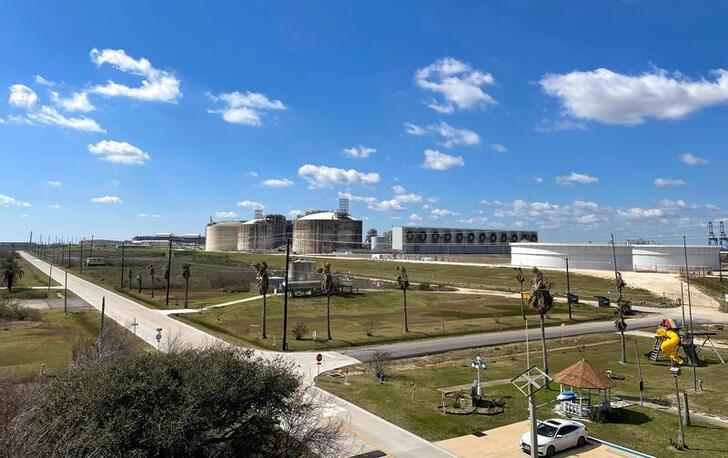
Nov 8 (Reuters) - Carbon dioxide emissions from U.S. liquefied natural gas facilities have jumped to 18 million tons per year, up 81% since 2019, adding a volume of greenhouse gas to the atmosphere equivalent to that produced by several big coal plants, according to United States government data. They could more than double to 45 million tons per year by the end of the decade as new facilities, encouraged by soaring overseas demand for the super-cooled fuel, come online, according to company projections provided to the U.S. Environmental Protection Agency and the Federal Energy Regulatory Commission tallied by Reuters. The emissions figures and projections, which have not been previously reported, reflect a troublesome tradeoff for the Biden administration, which wants to boost fuel shipments to European allies while also cutting greenhouse gas output at home to fight climate change. The Biden White House has said U.S. LNG can help Europe reduce its dependence on gas supplies from Russia, which is facing western sanctions over its war in Ukraine. The administration approved five U.S. LNG export licenses to serve the European market following Russia's invasion, having approved none beforehand. The White House did not return messages seeking comment on the increase in emissions from the LNG sector. The Energy Department, which oversees LNG export permitting, said it is funding several initiatives focused on reducing carbon dioxide emissions from LNG terminals and other sources. U.S. special climate envoy John Kerry told Reuters last year that greenhouse gas emissions were an inevitable "downside" to increasing LNG exports to European allies. Carbon dioxide emissions from all seven operating U.S. LNG export facilities totaled 17.6 million tons in 2022, up 81% since 2019 when the sector had 6 facilities, according to EPA data. By 2028, five projects now under construction are due to come online, producing an additional 27 million tons a year of emissions, according to company projections provided to the EPA and FERC. That works out to more than 45 million tons per year by the end of the decade or roughly 2.5% of current carbon emissions from the U.S. power industry. LNG exporters, meanwhile, have shelved plans to use carbon capture and sequestration (CCS) to reduce emissions, according to regulatory filings, casting doubt on the viability of the technology as a large-scale solution to the industry's climate impact. CO2 emissions from the energy-intensive process of liquefying gas for export mark only one stage in the industry's overall climate impact. Methane leaks during drilling, piping, shipping, and distribution also add to pollution - even before the fuel is used. A CLEANER FUEL? The United States became an LNG exporter in 2016 on the back of a domestic natural gas drilling boom, with overseas shipments rising fast. U.S. LNG exports averaged a record 11.6 billion cubic feet per day during the first half of 2023, up 4% from the first half of last year, with much of those volumes going to Europe, making the United States the world's largest exporter, according to the Energy Information Administration. Advocates of LNG argue the fuel burns cleaner than coal. "Countries around the world are looking to replicate the U.S. model," said Robert Fee, vice president of climate and international affairs for LNG exporter Cheniere Energy (LNG.A). Critics argue that it is unclear whether the U.S. gas export boom to Europe is displacing coal or delaying a transition to renewables like solar and wind. "We don't really know how much coal is being displaced in these overseas markets," said Alexandra Shaykevich, an analyst at Washington-based Environmental Integrity Project. CARBON CAPTURE DOUBTS Three LNG operators – Freeport LNG, Sempra (SRE.N) and Venture Global in 2021 and 2022 announced plans to use carbon capture to keep a portion of their greenhouse gases from reaching the atmosphere. Freeport's CCS project was to start injecting CO2 pollution from its Texas plant into the ground by 2024, according to a 2021 press release. But in an August disclosure to the SEC, its partner in the project, Talos Energy, said, "We have no future development plans related to the project." Freeport declined to comment on the development and Talos did not return messages. Sempra last year announced a plan to incorporate a CCS project in its Cameron LNG facility in Louisiana. But the company has said in SEC disclosures that the project needs a commitment from its partners before moving ahead. Sempra did not respond to requests for comment on the likelihood the project would be built. Upcoming CCS projects are also in doubt. NextDecade Corp has said its proposed terminal near Brownsville, Texas, could remove more than 90% of its expected 6.4 million tons per year of carbon emissions. But the company told Reuters the economics are uncertain. "There must be customers that are willing to support the revenue requirements to cover the cost to finance, build and operate the facility and to provide acceptable returns on invested capital," spokesperson Susan Richardson said. https://www.reuters.com/sustainability/climate-energy/how-shipping-more-us-natural-gas-europe-helped-fuel-c02-pollution-2023-11-08/
2023-11-08 11:32
LISBON, Nov 8 (Reuters) - Portuguese anti-mining groups have urged the government to suspend and review all lithium projects while authorities investigate alleged corruption in the handling of "green" energy deals that have led to the resignation of the prime minister. Antonio Costa resigned on Tuesday, hours after prosecutors detained five people, including his chief of staff, and named two formal suspects close to him in an investigation into lithium mining and hydrogen projects. Costa's possible role is also being investigated by the Supreme Court of Justice after prosecutors said they had become aware the suspects allegedly used his name and authority to "unblock procedures" related to the deals. He has denied wrongdoing and said his conscience is clear. With more than 60,000 metric tons of known lithium reserves, Portugal is Europe's biggest lithium producer, but its miners sell almost exclusively to the ceramics industry. They are now preparing to produce the higher-grade lithium used in electric cars and electronic appliances, as Europe seeks to develop its own strategic energy resources to reduce dependence on suppliers like China. Environment agency APA earlier this year gave environmental approvals for local company Lusorecursos to extract battery-grade lithium and for London-based Savannah Resources to develop four open-pit mines. Both projects are in northern Portugal. Lusorecursos did not reply to a request for comment. Savannah said in a statement it was cooperating with the authorities who visited some of its locations, but that neither the company nor anyone one its staff was a target of the investigation Lithium projects have faced strong opposition from local residents and environmentalists. They say the processes lacked transparency and have repeatedly warned of the "dangerous promiscuity" between decision-makers and mining companies. They have also been demanding stronger regulation. In a joint statement, eight anti-mining groups said the current situation was proof their concerns were legitimate, namely because APA President Nuno Lacasta was named a suspect along with Infrastructure Minister Joao Galamba, who previously served as energy secretary. "Lithium mining projects in Portugal must be immediately cancelled to not allow territories and populations to be affected based on corrupt and unclear processes," the groups said. They accused APA of working in the interest of mining companies and said the government had "created a network of business opportunities to benefit very few (people)". APA did not immediately reply to a Reuters request for comment. It was confirmed on Tuesday that its offices had been searched as part of the investigation. In 2019, Portugal's government came under fire from lawmakers for signing a contract giving exploration rights for lithium mining to Lusorecursos when the company was only three days old. The UDCB movement, which is campaigning against mining expansion in the Barroso region, where Savannah Resources wants to develop its project, said in a separate statement that the environmental approvals given by APA should be reviewed. "We believe that the suspension of any licensing, prospecting or exploration licences is imperative until criminal responsibilities can be properly ascertained," UDCB said. https://www.reuters.com/world/europe/portuguese-anti-mining-groups-urge-suspension-lithium-projects-after-pms-2023-11-08/

2023-11-08 11:17
LONDON, Nov 8 (Reuters) - The pound weakened against the dollar and euro on Wednesday, as markets continued to digest remarks from the Bank of England's chief economist that interest rate cuts could come around the middle of 2024. The pound was last down 0.4% against the dollar at $1.2251, and off a near two-month high of $1.2428 hit Monday. Part of those moves versus the dollar come as the greenback bounced back after recent losses, but sterling was also a touch softer against the euro, which was at 87.05 pence, and up from Monday's around three-week low of 86.5 pence. Markets were focusing on remarks from the BoE's Chief Economist Huw Pill on Monday that pricing in financial markets - that currently points to a first rate cut to Bank Rate in August 2024 - "doesn't seem totally unreasonable." Though governor Andrew Bailey, on Wednesday, said it was "really too early to be talking about cutting rates." "The pound is pretty interesting,... openly speaking about rate cuts is not something central bankers are doing," said ING FX strategist Francesco Pesole. "I think sterling will be under pressure today because markets did not go too aggressive on pricing in those rate cuts. There's still more for the Bank of England rate expectations to drop." Markets are currently fully pricing in a 25 basis point BoE rate cut in August, and pricing reflects roughly a two-thirds chance of such a cut in June. An August cut was seen as likely but not fully priced in before the remarks. Also in the mix was an industry survey released Wednesday that showed pay growth slowed in October and rising redundancies led to an increase in the number of job-seekers. Wage growth is one of the BoE's considerations when assessing the stickiness of inflation in Britain, and its rate policy. Bailey, on Wednesday, said he was "optimistic" that the BoE would return inflation to 2% by late 2025, as the bank forecast last week https://www.reuters.com/markets/currencies/sterling-drops-timing-boe-rate-cuts-focus-2023-11-08/

2023-11-08 11:16
LONDON, Nov 8 (Reuters) - HSBC (HSBA.L) plans to launch in 2024 a custody service for storing blockchain-based assets excluding cryptocurrency, the bank said on Wednesday. The service, which is a partnership with Swiss digital asset firm Metaco, will allow institutional clients to store blockchain-based tokens representing traditional financial assets, as opposed to crypto or stablecoins, HSBC said. HSBC said last week it had made tokens representing physical gold held in its London vault. The bank last year launched a digital asset platform, HSBC Orion, which allows financial institutions to issue blockchain-based versions of financial assets, also known as tokenised securities. "We’re seeing increasing demand for custody and fund administration of digital assets from asset managers and asset owners, as this market continues to evolve," said Zhu Kuang Lee, chief digital, data and innovation officer at HSBC. Blockchain is a digital ledger that records ownership of tokens. It has not seen widespread adoption but proponents say it has the potential to make trading more efficient and transparent. So far, its main use-case has been cryptocurrencies, which remain a relatively small part of the global financial system. The value of all cryptocurrencies is around $1.4 trillion, down from a peak above $3 trillion in late 2021, according to CoinGecko data. HSBC did not give a figure for the size of the market for blockchain-based assets excluding cryptocurrencies. Banks and other financial firms have invested billions of dollars into finding uses for blockchain. In 2019, HSBC announced a platform called Digital Vault, which allows investors to access digital records of securities bought on private markets. https://www.reuters.com/technology/hsbc-plans-custody-service-non-crypto-digital-assets-2023-11-08/
2023-11-08 11:09
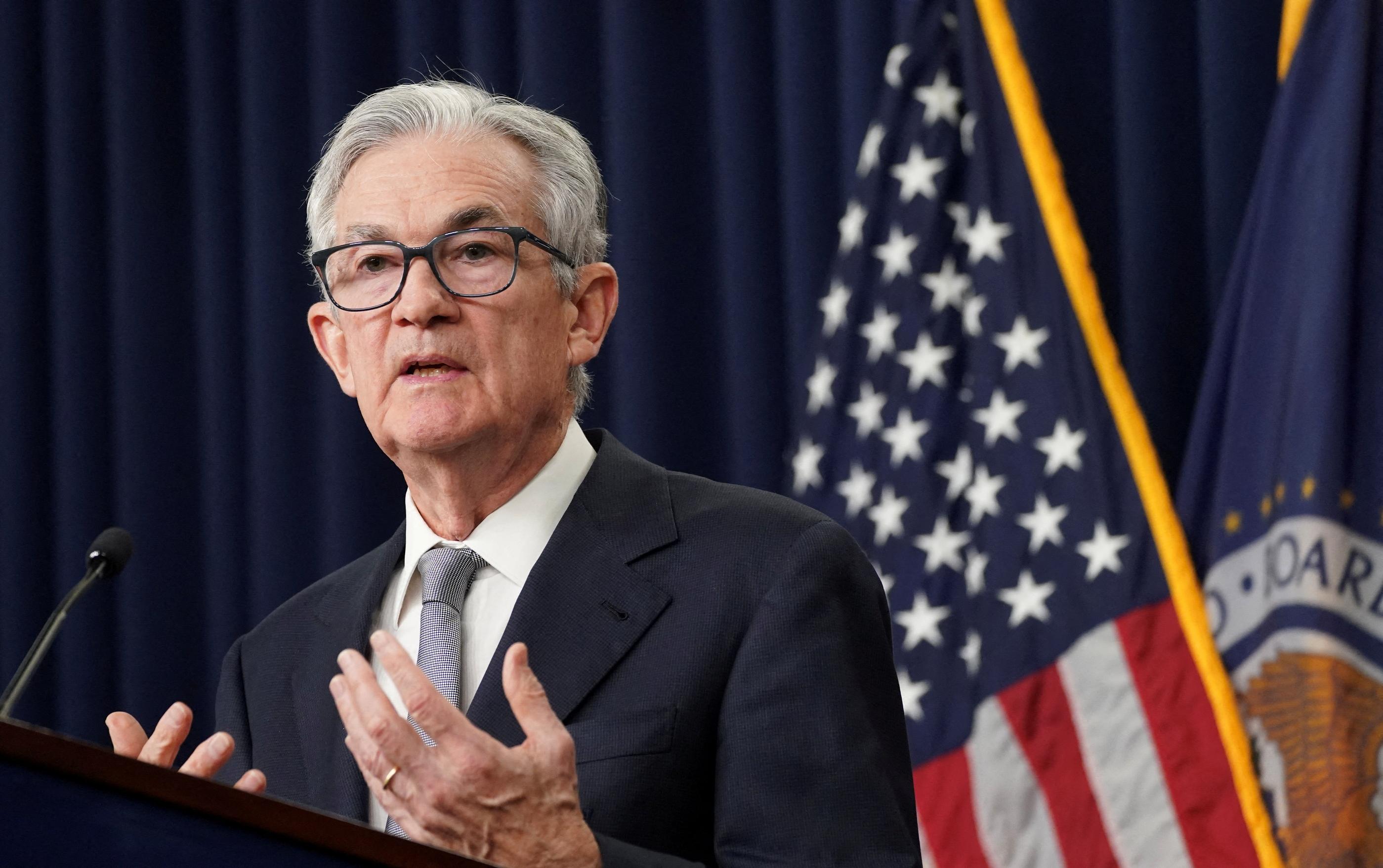
A look at the day ahead in U.S. and global markets from Mike Dolan Wall Street stocks' (.SPX) longest winning streak in two years - clocking seven straight daily gains - has been underscored by a slump in crude oil prices to their lowest in over three months - reining in inflation expectations and worrisome bond yields. Partly due to global demand worries, partly on record U.S. production and partly on ebbing supply concerns surrounding the Gaza conflict, U.S. crude prices have now plunged more than 15% in less than three weeks. And that's hit home by dragging U.S. pump prices down to levels not seen since March. Along with the cooling labor market and Tuesday's data on rising credit card delinquencies, softer energy prices have pulled two-year U.S. inflation expectations in the bond market to just 2.2% - their lowest in almost a month. Decent demand at Tuesday's 3-year Treasury auction also helped calm recently restive bonds as $40 billion of 10-year notes go under the hammer later today. The overall picture should prove a relief to Federal Reserve Chair Jerome Powell, who's due to speak on Wednesday alongside another long list of senior Fed colleagues - with European Central Bank boss Christine Lagarde and Bank of England chief Andrew Bailey also scheduled to speak in a packed diary. Despite the signs of a U.S. economic slowdown in the fourth quarter - where the Atlanta Fed's real-time model is showing a sharp slowdown to 1.45% annualised growth from 4.9% in Q3 - Powell's colleagues speaking on Tuesday gave a mixed review of what they felt still needed to be done on policy. The usually hawkish Fed board governor Michelle Bowman stuck to her line that one more Fed hike was likely to be needed, while the more dovish Chicago Fed president Austan Goolsbee indicated recent bond market tightening should hold the Fed back. Striking a balance between the two, Fed board governor Christopher Waller signalled the situation was still being closely monitored - between what was a 'blowout' third quarter for the U.S. economy and the bond market 'earthquake' that followed. Overall, U.S. 10-year yields remained on the back foot at 4.57% first thing and ahead of Wednesday's auction. Although Asian and European stocks fell back a bit, Wall St stock futures were unchanged before the bell. The ViX (.VIX) volatility gauge was also steady after clocking its lowest close on Tuesday since mid-September. The dollar (.DXY) was firmer, extending gains against sterling in the particular as UK government bond yields swooned on a combination of bets on a BoE cut as soon as midyear 2024 and no new tax cuts in UK government budget plans. Japanese government bond yields also fell to their lowest in two weeks even as Tokyo said it was set to issue close to 9 trillion yen ($60 billion) in bonds in its second extra budget to fund a planned 13.2-trillion-yen economic package aimed at easing living costs. Chinese stock indexes (.CSI300) ended lower again, even as property shares rallied on a Reuters report that Ping An Insurance had been asked by government to take a controlling stake in embattled developer Country Garden (2007.HK). Ping An's stock plunged 5%. Elsewhere, U.S. markets were eyeing key gains for Democrats and abortion rights advocates in a string of electoral victories on Tuesday, including in conservative Ohio and Kentucky. The results were seen as an early signal that reproductive rights remain a potent issue for Democrats ahead of the 2024 presidential race and offset opinion polls earlier in the week showing former President Donald Trump favourite in some key states for a return to the White House next year. Key developments that should provide more direction to U.S. markets later on Wednesday: * Federal Reserve Chair Jerome Powell, Fed Vice Chair Philip Jefferson, Fed Vice Chair for Supervision Michael Barr, Fed Board Governor Lisa Cook and New York Fed chief John Williams all speak; European Central Bank President Christine Lagarde and Bundesbank President Joachim Nagel both speak; Bank of England Governor Andrew Bailey speaks * Euro zone finance ministers meet in Brussels * U.S. Sept wholesale inventories and sales * U.S. corporate earnings: Walt Disney, Warner Bros Discovery, MGM Resorts, Biogen, Ralph Lauren, Atmos Energy, Corteva, Ameren, Fleetcor, Kallanova etc * U.S. Treasury auctions $40 billion of 10-year notes https://www.reuters.com/markets/us/global-markets-view-usa-2023-11-08/
2023-11-08 11:00
LONDON, Nov 8 (Reuters) - If the notorious 'term premium' is evaporating again, then last month's bond rout may just have been a nightmare. But it may require monitoring Treasury and Congress as much as the Federal Reserve to make sure it is not a recurring dream. After a brutal squeeze higher in long-term U.S. borrowing rates in October, Treasury yields suddenly U-turned and plunged by more than half a percentage point late last week on signs of a cooling labor market and both a pared and better-calibrated government borrowing schedule into 2024. Described by Fed governor Christopher Waller on Tuesday as the central banking equivalent of an 'earthquake', the yield shock was only matched by the speed with which it reversed. All of October's 50 basis point 10-year yield spike has disappeared again and almost half of the jump since midyear is gone too. Rising yields have continually drawn investors - who appear to have loaded up on bonds for much of the year to lock in the highest fixed-rate coupons in more than a decade. Their faith in Treasury yields cresting around 5% was underpinned by data on ebbing jobs growth and related bets on the Fed moving to cut rates by the middle of 2024. And even if real, long-term neutral rates were now as high as 2% and the Fed gets average inflation back to 2% - as former U.S. Treasury Secretary Larry Summers suggested this week - then there's still juice in 10-year Treasury yields now at 4.5% - at least for investors willing to swallow some short-term pips. But the extra twist in the October selloff was the emergence of a long-absent buy-and-hold premium - a so-called 'term premium' demanded by bond investors to hold long-term bonds to maturity rather than just rolling short-term securities. Although slightly amorphous, the term premium is meant to capture an element of uncertainty over what can go wrong over the life of a decade-long bond beyond current assumptions about the trajectory of rates and inflation. While it can involve extrapolating current market stress, it typically points to debt supply concerns. In this instance, it seems to have riffed off multi-year U.S. deficit projections, a fiscal impasse in Congress and a gradual withdrawal of the Fed as buyer as it winds down a pandemic-bloated balance sheet via 'quantitative tightening'. The New York Fed's favoured model has mostly been below zero for the past 10 years, due in part to serial 'quantitative easing' programs from the Fed. But it re-emerged with a vengeance over the past month. Climbing by almost 1.5 percentage points between midyear and an 8-year peak near 0.50 last month, the premium seems to reflect markets struggling to adequately price a deluge of U.S. government debts sales alongside the Fed's 'higher for longer' mantra and relentless QT. But it too has fallen back sharply during the big reversal of the past week - with the NY Fed estimate more than halving from October's peak to just 20 basis points as of Friday. How much does this ephemeral premium matter, or is it just getting swept along with the ebb and flow of the market? SWEET DREAMS ARE MADE OF THIS What's for sure is that Fed officials from Chair Jerome Powell down the ranks are hyperfocussed on it. Chicago Fed boss Austan Goolsbee said on Tuesday the reasons behind the recent yield spike were critical to assess as it helped the Fed understand how its own policy is working. "If that's coming from term premium and it's tightening, then we have got to take that into account." And Fed Governor Lisa Cook seemed adamant on Monday that the term premium was the chief culprit behind the recent spike and she doubted changing Fed expectations had much to do with it. The upshot, presumably, is that if the term premium were to return to historical norms, that added tightening of financial conditions may mean the Fed can dial back accordingly. But if the premium disappears once more - the Fed may have to resume its slog and to hang tough to see inflation fall further. As Summers estimated this week, a term premium just back at 60-year averages would put it at 150bps - 130bps above current levels. But to gauge if that's warranted, investors may have to turn to Treasury and Congress - and also how long the Fed can persist with QT. At the heart of market debt supply concerns this month was fear of a developing loop. Persistent deficits, exaggerated by high servicing costs risk forcing more of the trillions in short-term bills sales to be refinanced into long-term bond maturities - baking in interest bills that, in turn, keep budget gaps and debt sales higher for longer. And that's partly why Treasury's tax receipt windfall and reduced fourth-quarter debt tally last week, as well as its more front-loaded quarterly refunding plan, had as much an impact as the jobs data on the yield reversal. But a looming election year, Congress still at loggerheads and a significant chance of another U.S. government shutdown don't encourage a great deal of fiscal optimism. Morgan Stanley estimates an additional near $1 trillion in gross debt sales from G7 governments are coming down the pike next year. Net of redemptions, that's smaller $663 billion - but a 34% increase versus this year, with a 61% rise in U.S. debt sales the biggest component. However, it said a 32% increase in new debt sales, net of redemptions and central bank purchases, to a 14-year high total of $2.45 trillion could be absorbed comfortably in a weak economic environment of ebbing rates and inflation and that marked only the fourth biggest annual increase in 15 years. A recurring 'term premium' nightmare - or sweet dreams ahead? The opinions expressed here are those of the author, a columnist for Reuters. https://www.reuters.com/markets/rates-bonds/october-suddenly-looks-like-bad-bond-dream-mike-dolan-2023-11-08/