2023-10-30 11:02
A look at the day ahead in U.S. and global markets from Mike Dolan Another Monday bounce in world markets sets up a Fed-dominated week ahead - although the U.S. central bank may not yet have a great deal to offer stock and bond markets that seem keener to see the glass half empty as October comes to a close. A worrying late-year stock market unwind is starkest in small-cap indexes (.RUT) now tracking year-to-date losses of some 7% - even as the benchmark S&P500 (.SPX) remains up 7% and Big Tech leaders of the Nasdaq 100 are still 30% (.NDX) higher. Tech stocks gained on Friday (.IXIC), for example, even as the Russell 2000 lost more than 1% on the day to hit its lowest since 2020. Even though incoming third-quarter earnings seem like a mixed bag - mainly because of some large individual stock losses due to investors' high bar for 2024 outlooks - the aggregate actually looks quite impressive. Annual earnings growth for S&P500 companies is now expected to have picked up to a 4.3% annual growth rate, according to LSEG estimates, from as low as 1.6% before the reporting season began. And 77% of companies have beaten Wall Street forecasts. A big problem for small firms, however, is that they disproportionately bear the burden of the higher borrowing costs that show little sign of coming down any time soon. The Federal Reserve delivers its latest policy decision on Wednesday and is widely expected to keep rates unchanged for the second straight meeting. Although futures see less than a 50% chance of another rate rise in the cycle, they don't seen a cut coming until June at the earliest. And even though third-quarter U.S. economic growth raced ahead an annualised 4.9%, many now see that too as a high watermark - with GDP models seeing fourth-quarter growth at less than half that rate for now. A key input to that as always will be the state of the labor market, with data this Friday expected to show October payroll growth cooling to 188,000 new jobs from the blowout 336,000 gain last month. And autoworker strikes against Detroit's Big Three car manufacturers could subtract at least 29,000 jobs from October, government data shows. But beyond Fed policy rates, it's the restive bond market and near 16-year-high long-term borrowing costs that are starting to hurt most. As much concern as there is with the slew of new government debt coming down the pike, a key moment this week may well be the Treasury's quarterly refunding plans today and Wednesday. For now at least, market concern about the tense Middle East conflict has allowed some relief. Even though Israel's land invasion of Gaza appears to be under way amid heavy fighting and a dire humanitarian crisis, demands for some aid-related ceasefire are growing. Global bourses and Wall St futures were higher to start the week, with oil and gold prices ebbing a bit - the former now back down 4% year-on-year. Apple (AAPL.O) dominates the week's earnings diary on Thursday. HSBC HSBA.L gained 1.2% in London after reporting a fresh $3 billion share buyback and a more than doubling of third-quarter profit. U.S. 10-year Treasury yields held steady at 4.85% - well below the 5% threshold they breached last week. The dollar (.DXY) was a touch higher, with the Swiss franc ebbing as the Swiss National Bank cut the rate on overnight deposits it pays on commercial bank reserves. The yen was firmer as Japanese government bond yields climbed to fresh 10-year peaks near 0.9% on Monday, with markets weighing the chances of another policy tweak in Tuesday's latest monetary policy decision from the Bank of Japan. In Europe, data showed Germany's economy contracted by a smaller-than-forecast 0.1% in the third quarter but October inflation numbers showed a sharp easing of price pressures. In Hong Kong, a court gave China Evergrande (3333.HK) a five-week reprieve to come up with a deal with creditors or face liquidation after the embattled developer said on Monday it was working on a revised debt-restructuring plan. Key developments that should provide more direction to U.S. markets later on Monday: * Dallas Fed manufacturing survey * U.S. corporate earnings: McDonald's, Loews, Western Digital, FMC, Arista Networks, Welltower, VF, Revvity, Simon Property, Healthpeak, Arch Capital, ON Semiconductor * U.S. Treasury auctions 3-, 6-month bills https://www.reuters.com/markets/global-markets-view-usa-2023-10-30/
2023-10-30 10:59
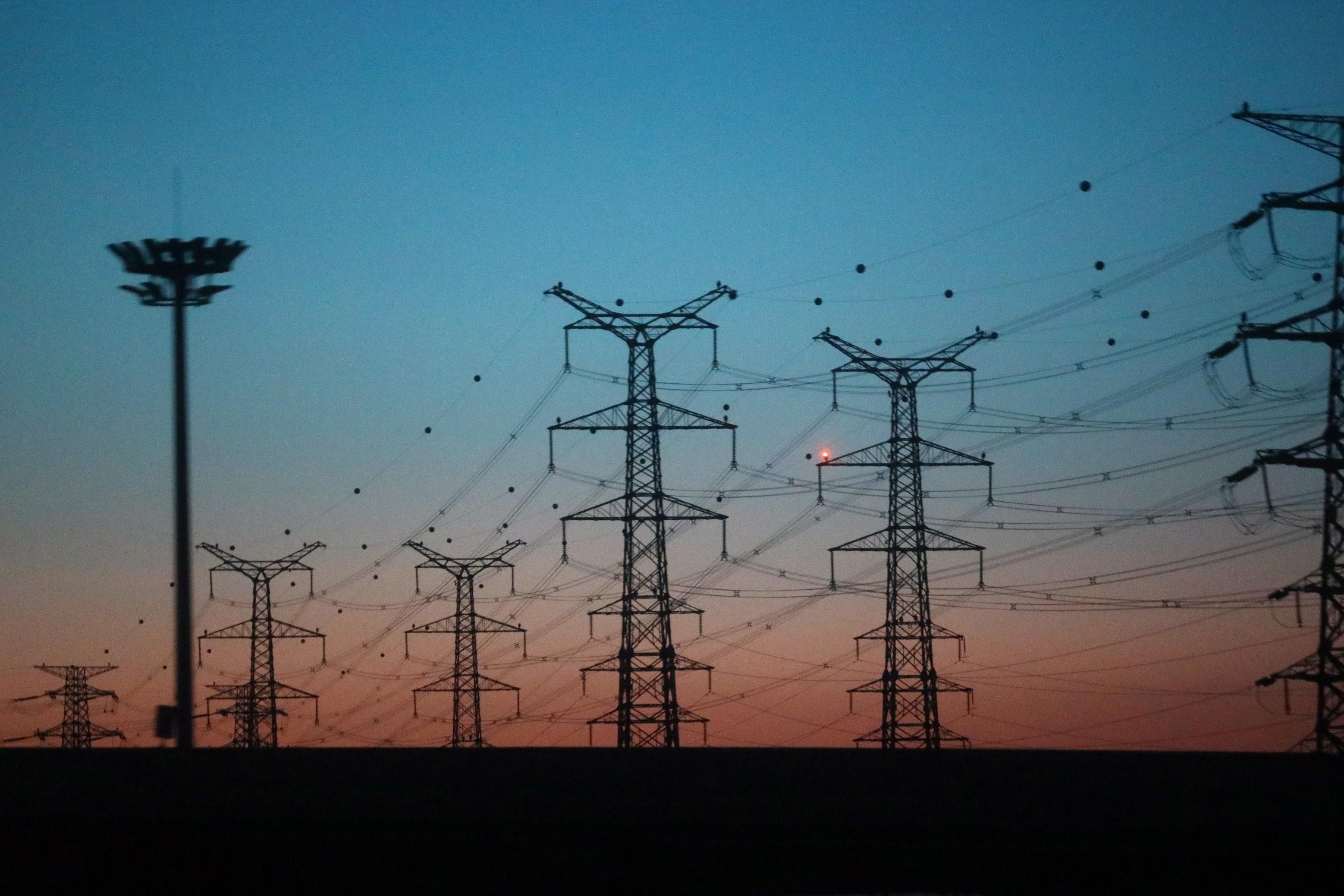
BEIJING, Oct 30 (Reuters) - China's maximum power demand this winter may increase by 140 gigawatts (GW) or 12.1% from last year's peak, as electricity usage surges in the second half of 2023, an official said on Monday. Last winter's peak demand was 1,159 GW, according to previously released data from the National Energy Administration (NEA). China's power demand in September rose by 9.9% from a year earlier to 781,000 gigawatt hours (GWh), the NEA said earlier this month, as economic activity in the world's No. 2 economy picked up. Hotter than normal temperatures have also contributed to higher electricity demand in the second half of the year, NEA spokesperson Zhang Xing told a press briefing. By comparison, this summer's record peak demand was about 50 GW higher than the previous summer, Zhang said, or a 3.6% increase from last year's 1,390 GW. While winter power supply is generally guaranteed, shortages are expected in Yunnan province, and there could be power shortages in Inner Mongolia, the official added. To ensure a stable supply of electricity this winter, Zhang said the NEA would ensure coal production remained at a high level, especially the production of high calorific value thermal coal in Yunnan and other regions. Stocks at power plants should be kept at record highs of around 200 million metric tons, Zhang said. In October last year - following record domestic production - coal stocks stood at 170 million tons, according to NEA figures. Guangdong, Hainan, and other major natural gas and power producing provinces are also urged to ensure a stable supply of natural gas. https://www.reuters.com/world/china/chinas-peak-power-demand-may-rise-121-this-winter-energy-official-2023-10-30/
2023-10-30 10:46
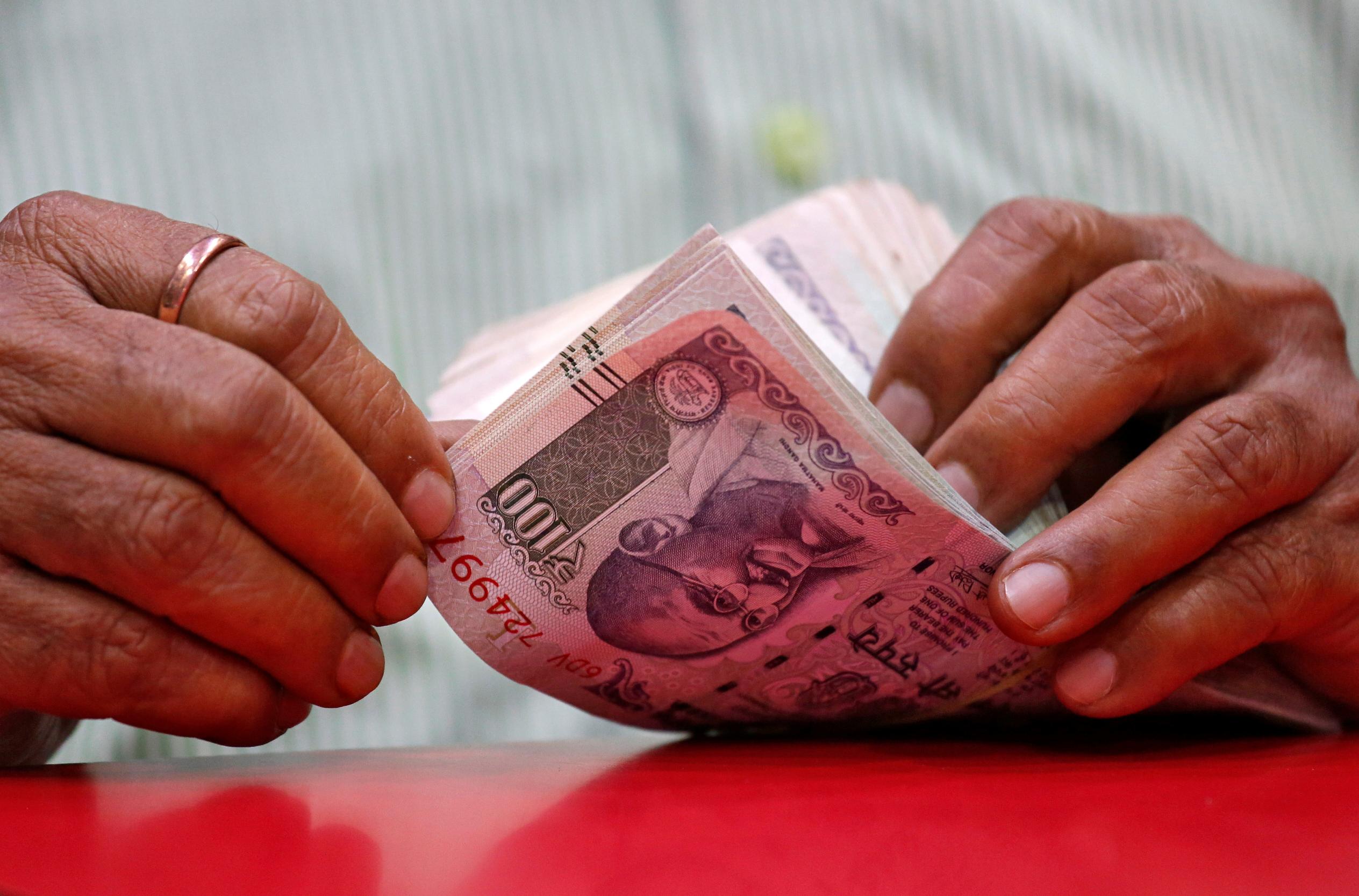
MUMBAI, Oct 30 (Reuters) - The Indian rupee ended flat on Monday as pressure from month-end U.S. dollar demand from importers was blunted by the Reserve Bank of India's continued defence of the local unit. The rupee closed at 83.25, little changed from its close at 83.2450 in the previous session. The currency traded in a narrow 83.2450 to 83.27 range in the spot session. Asian currencies were mostly higher and the dollar index dipped slightly. The rupee "continues to outperform in instance of dollar strength and underperform in case of dollar weakness," a foreign exchange salesperson at a private bank said. The Indian currency has largely held its ground during dollar rallies, likely aided by the central bank's market intervention, but has not gained much when the dollar falls, signalling persistent demand for the greenback. The Reserve Bank likely sold dollars near 83.26-83.27 levels on Monday as the rupee remained close to its record low of 83.29, traders said. Elevated U.S. Treasury yields and weak risk sentiment have prompted outflows from Indian equities, increasing pressure on the rupee. Overseas investors have sold $2.44 billion of Indian shares in October so far. But the rupee may be unable to hold its ground for much longer, analysts said. "Rupee will be unable to hold such dragging factors until the foreign capital inflows improves substantially, which looks a bit of a tight call," said Arnob Biswas, head of foreign exchange research at SMC Global Securities. This week investors are focussed on central bank policy decisions due in the United States, Japan and England. The Bank of Japan will decide whether to raise its yield cap on Tuesday while the U.S. Federal Reserve is expected to keep rates steady on Wednesday. https://www.reuters.com/markets/currencies/india-rupee-ends-flat-cenbank-help-counters-month-end-dollar-demand-2023-10-30/
2023-10-30 10:34
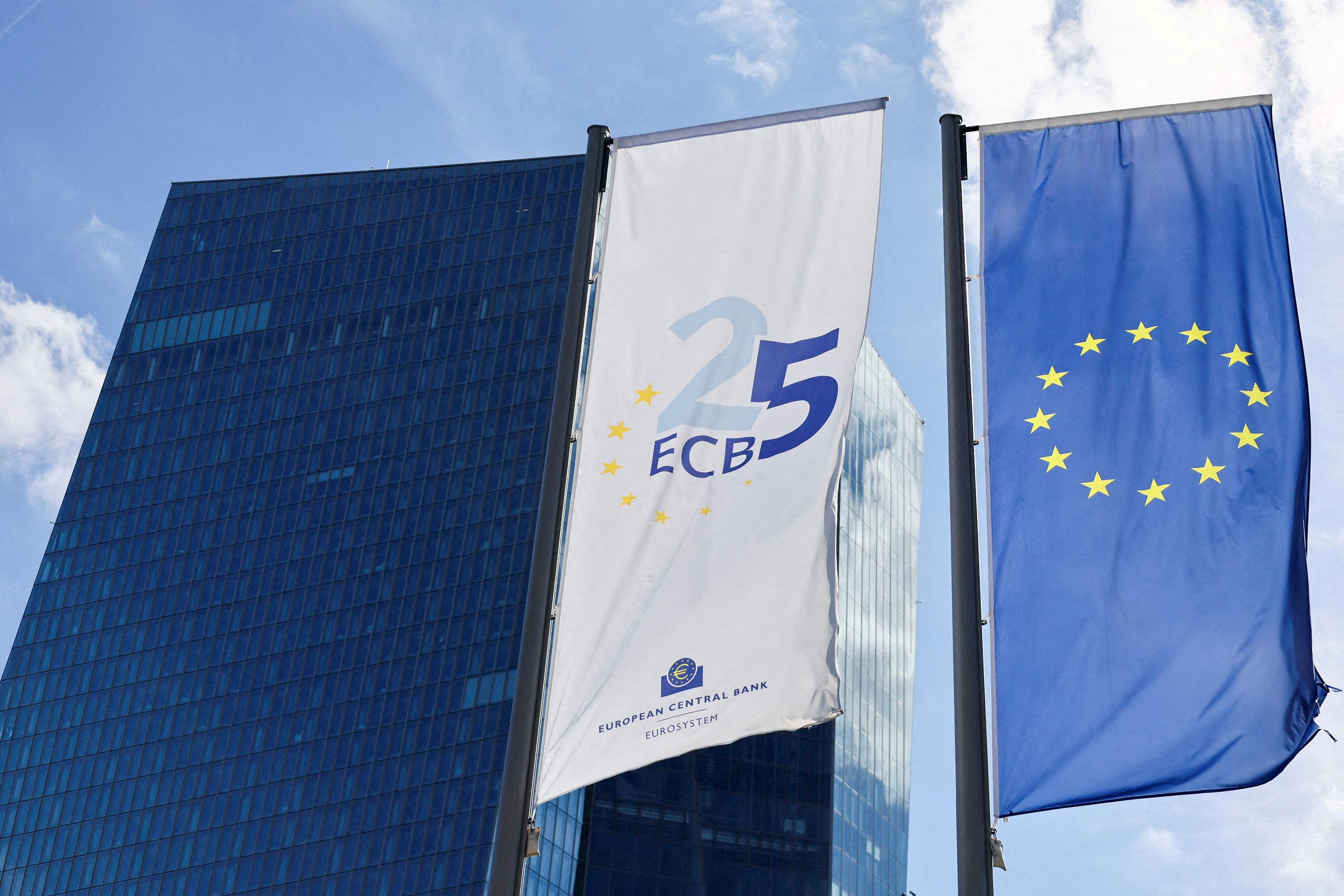
FRANKFURT/VILNIUS, Oct 30 (Reuters) - Two European Central Bank policymakers pushed back on Monday against market bets that the ECB will start cutting interest rates in the first half of next year and undo some of its recent efforts to fight high inflation. The ECB ended an unprecedented streak of 10 consecutive rate hikes last week and investors are now pricing in some chance of a cut as early as April, despite President Christine Lagarde's insistence that this is premature. Slovak central bank governor Peter Kazimir and his Lithuanian peer Gediminas Simkus - two so-called hawks who favour tighter policy - sought to hammer home the message on Monday, even keeping further hikes on the table as an outside possibility. "I would be surprised if we would need to lower rates during the first half of the next year," Simkus told reporters in Vilnius. Kazimir said bets on a rate cut in the first six months of the year were "entirely misplaced" and ECB policymakers would need to see the bank's next macroeconomic projections in December and March. "Only then will we be able to say the tightening cycle is completed and move on to the subsequent – monitoring – phase," Kazimir said. Inflation has been easing, with a state reading out of Germany on Monday confirming expectations for a substantial fall in October, and growth slowing amid signs of a credit crunch induced by surging interest rates. The ECB last week left the rate it pays on bank deposits unchanged at a record high of 4% while it waits for its recent hikes to work their way through the economy. "We will have to stay at the peak for the next few quarters," Kazimir said. https://www.reuters.com/markets/europe/ecbs-kazimir-too-early-call-end-rate-hikes-bet-cuts-2023-10-30/
2023-10-30 10:25
Central bank to scrap interest paid on minimum reserves Says move will reduce costs, have no impact on monetary policy Analyst estimates SNB could save 700 million francs per year ECB also considering cutting the interest it pays ZURICH, Oct 30 (Reuters) - The Swiss National Bank is set to reduce the amount of money it pays commercial banks after it announced on Monday a cut in interest it pays lenders who park cash with it overnight. The SNB announced the change after costs soared with the switch from negative interest rates - aimed at stemming the rise of the safe-haven franc - to positive rates as its focus shifted to battling inflation. It paid out 3.3 billion Swiss francs ($3.66 billion) in interest on sight deposits in the first six months of 2023, after reversing a near eight-year run of negative rates during which commercial banks paid the central bank to park cash overnight. European Central Bank policymakers are also considering ways to reduce interest payments to the euro zone's commercial lenders early next year, Reuters reported earlier this month. In Switzerland, sight deposits held to meet minimum reserve requirements will no longer be remunerated from Dec. 1, under the changes announced on Monday. From the same date, banks will be paid the SNB's policy rate, currently 1.75%, on deposits equivalent to 25 times their minimum reserve requirements, down from 28 times. It also set interest on deposits held above a bank's individual threshold at 0.5 percentage points below the SNB's policy rate. "These adjustments will ensure that monetary policy implementation remains effective and will reduce interest costs for the SNB," the SNB said. "The changes have no impact on the current monetary policy stance," it added. The SNB received 11.3 billion Swiss francs from the banks during the era of negative rates, but flows reversed when its rates entered positive territory in September. "Now that the interest rates are positive, the central banks still pay interest and this is costly," said Yvan Lengwiler, professor of economics at the University of Basel. This has been a big issue for the SNB because of the high level of cash held in sight deposits for banks - 472 billion francs according to the latest data on Monday. The SNB declined to comment on the level of savings it expected to achieve. UBS economist Maxime Botteron estimated the SNB could be saving around 700 million francs per year at its current policy rate. With excess deposits earning 50 basis points below the policy rate, banks will have an incentive to lend in the money market, contributing to higher activity and supporting the transmission of monetary policy, he added. The central bank made a loss of 1 billion francs on its Swiss franc positions last year after the payments that followed the September shift to positive interest exceeded the income from negative overnight rates earlier in the year. It made a total 2022 full-year loss of 132.5 billion francs, mainly due to losses on its foreign currency investments. "It is politically difficult for a central bank to keep paying interest to commercial banks when it is making a loss and not transferring profits to the government, especially after a period in which the interest paid to savers has been negligible," said Stefan Gerlach, Chief Economist at EFG Bank. The SNB had used sight deposits to conduct foreign currency transactions aimed at keeping the strength of the safe-haven Swiss franc in check - crediting the local currency accounts of commercial banks with newly created francs in exchange for foreign currencies. ($1 = 0.9022 Swiss francs) https://www.reuters.com/business/finance/swiss-national-bank-adjusts-interest-bank-deposits-2023-10-30/

2023-10-30 10:18
LONDON, Oct 30 (Reuters) - Britain said on Monday it would legislate to implement its first set of rules to regulate the crypto sector, requiring market participants to be authorised before they can offer services to consumers. Cryptoassets remain a tiny part of the world's financial system, although the price of bitcoin has recovered after the collapse of crypto exchange FTX raised concerns about links to mainstream finance and harms to consumers. The European Union has already started deploying the world's first set of comprehensive rules specifically for cryptoasset markets in June, which are attracting crypto firms keen for regulatory certainty to set up base in the bloc. Britain's finance ministry said it would move ahead as proposed in a February public consultation, requiring firms undertaking cryptoasset activities to be authorised by the Financial Conduct Authority, although it gave no start date. The rules, which draw lessons from the FTX collapse, focus on cryptoassets, such as bitcoin, and the underlying distributed ledger technology (DLT) or blockchain that underpins the sector, and seen as promising for uses such as the settlement of securities. "The government’s position is that firms dealing directly with UK retail consumers should be required to be authorised irrespective of where they are located," the ministry said. The rules cover the offering of a cryptoasset, operating a trading platform, swapping cryptoassets for currencies such as sterling, arranging investments and lending in cryptoassets and safekeeping or custody. The ministry said the new rules will be brought under market law, rather than exist as a standalone regime. "It’s unlikely that crypto regulation will be easily shoe-horned into the existing regulatory framework," said Jonathan Cavill, a lawyer at Pinsent Masons. "The reality is that as the market develops at pace, the UK runs the risk of being left behind if it fails to attract crypto businesses." IN LINE WITH EU The ministry said Britain remains committed to creating a regulatory environment in which firms can innovate, while maintaining financial stability so that people can use new technologies both reliably and safely. It said it would accelerate overall implementation of the rules in order to give the sector clarity, with secondary legislation presented to parliament next year. "At a high level, the Treasury’s approach is broadly consistent with what we have seen in the EU," said Sophia Le Vesconte, fintech counsel at Linklaters law firm. Crypto companies currently only face requirements to have safeguards against money laundering, although Britain introduced rules this month on marketing cryptoassets. The UK announcement comes at a time of reviving fortunes for the crypto sector after bitcoin , the largest cryptocurrency by circulation, had lost much of its value amid the FTX and other scandals over the past year. Last week bitcoin rose to $38,872, its highest in nearly a year and a half, on mounting speculation that an exchange traded bitcoin fund is imminent in the United States. The ministry said it would also regulate stablecoins, a digital currency backed by government-issued currencies for retail payments, and will present legislation in 2024 to give the FCA powers to oversee them. The ministry also said it would set out regulations on how to manage the failure of a major stablecoin. https://www.reuters.com/world/uk/britain-push-ahead-with-rules-cryptoassets-2023-10-30/