
2023-10-30 19:59
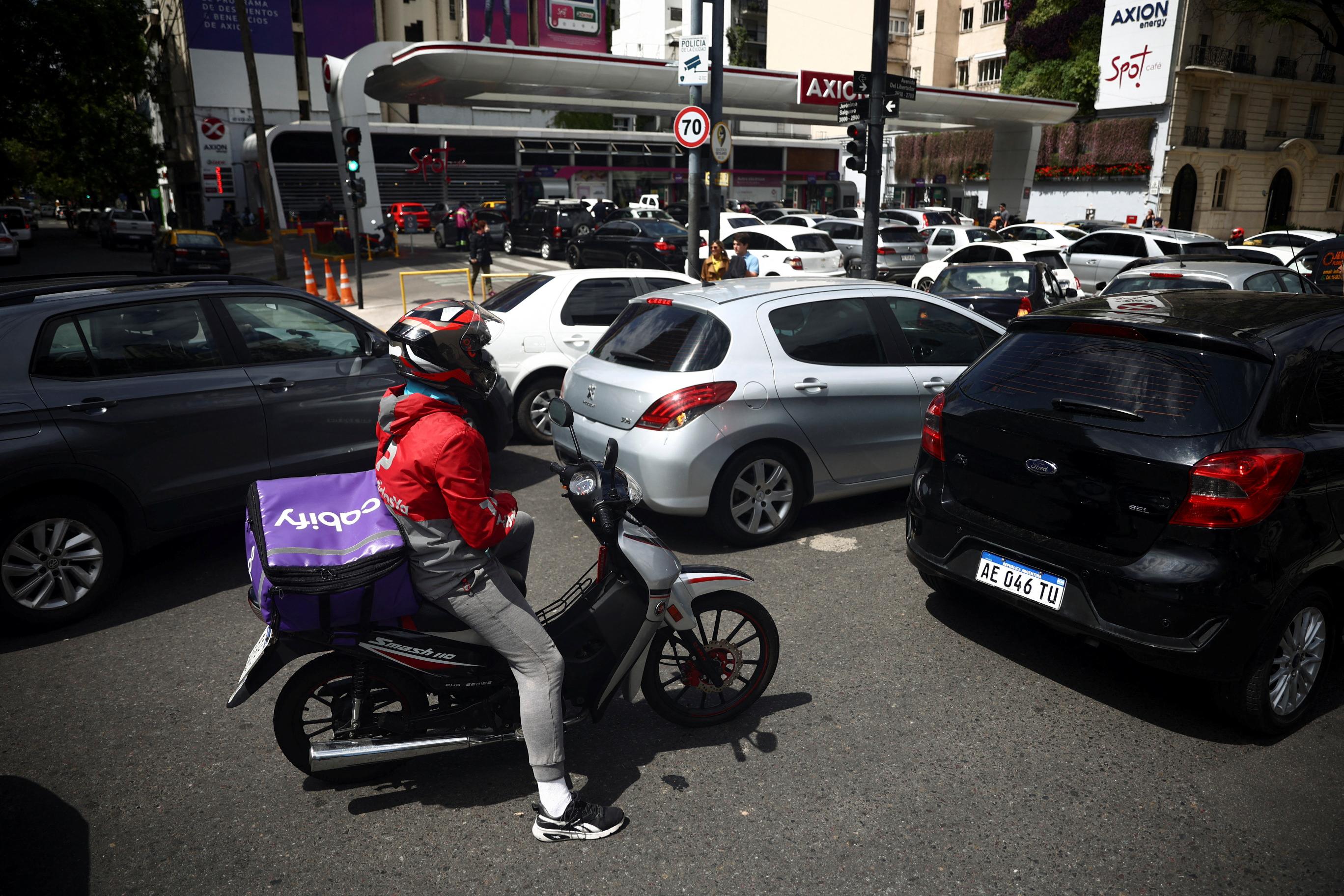
BUENOS AIRES, Oct 30 (Reuters) - Argentine drivers ran the gauntlet on Monday to find scarce supplies of petrol to fill their tanks amid the most acute shortage in years, which has left many filling stations out of supply and long lines at any pumps still operating. The South American country, a major shale oil and gas producer, has suffered shortages of petrol and diesel since late last week because of domestic refining problems and as a lack of dollars has delayed imports. That has sparked anger at the government ahead of a second-round presidential election runoff next month between the ruling Peronist coalition's economy chief Sergio Massa, seen as the front-runner, and radical libertarian Javier Milei. "The truth is that I work with the car and it's like looking for water in the desert," said 38-year-old Cabify driver Raul Paretto. "It is distressing because you don't know on a day-to-day basis what can happen; we are living one day at a time." Around capital Buenos Aires, Reuters reporters saw empty filling stations with signs saying no more petrol. In other places, long queues formed and some rationed sales. There were, however, some signs of things starting to improve. "Today they sold me only super, though there was no premium," said self-employed worker Leonardo Villa with his car. "But, well, yesterday there was none anywhere, the day before neither. At least today I was able to fill up." In Argentina's farmlands, producers said a shortage of diesel showed signs of abating too, key for the start of the planting season of soy and late season corn, the country's main cash crops. "It is not completely normalized but there is a little more supply," Jorge Chemes, the head of the Argentine Rural Confederations (CRA), told Reuters on Monday. EXPORT HALT THREAT Oil executives cited planned halts at local refineries, which provide 80% of domestic supply, and the country's scarce foreign currency reserves that have held up imports. "It's not a problem of lack of crude oil, the problem is that there's no more processing capacity with the refineries we have in Argentina," said one industry source, asking not to be named because he was not authorized to speak to the media. "On top of that, you need dollars to pay for imports and the central bank does not have them. And even when they do import, the refining companies make a loss selling at the pump below the price they are buying," the source said. Argentina's government has fixed a local oil price at $56 per barrel, far below the international price around $86 to try to calm local inflation of nearly 140%. That skews the economics for firms importing product from overseas. During the weekend Economy Minister Massa told oil companies they must solve the domestic supply crisis by the end of Tuesday or the government would halt crude oil export shipments from the huge Vaca Muerta shale formation. "I am going to defend the internal supply, I am going to defend the consumption of Argentines," he said. Local unions backed Massa's position and threatened a strike from Wednesday unless the domestic situation was resolved. They said crude production was at a record and the oil companies were being "opportunistic and petty". A second industry source, also declining to be named, also said that the issue was not output, but issues in refining the crude oil and the hurdles to bringing in imports. Halting shipments from Vaca Muerta would not help, the source said. https://www.reuters.com/world/americas/argentina-fuel-pump-crisis-deepens-government-threatens-export-halt-2023-10-30/
2023-10-30 18:47
Oil retreats after 3% rally on Friday Traders see signs Israel-Hamas war won't disrupt crude flows Fed, BoE and BOJ all hold meetings this week HOUSTON, Oct 30 (Reuters) - Oil slipped more than 3% on Monday as fears eased that the Israel-Hamas war would disrupt supply from the region, and as investors grew cautious ahead of this week's U.S. Federal Reserve meeting. Brent crude futures settled at $87.45 a barrel, down $3.03, or 3.35%, while U.S. West Texas Intermediate crude finished at $82.31 a barrel, down $3.23, or 3.78%. "The main feature here has been the market reacting to events between Israel and Hamas," said Jim Ritterbusch, president of Ritterbusch & Associates. "Macroeconomic factors could easily emerge later this week, when we'll see if the Fed has something to say." Crude jumped 3% on Friday after Israel stepped up ground incursions into Gaza, stoking worries the conflict could expand in a region that accounts for a third of global oil output. However, that concern was fading on Monday, analysts said. "The war premium has come out of the market," said Phil Flynn, analyst at Price Futures Group. "It's a situation where over the weekend the war seemed to intensify, but there seems to be no disruption to supply." Israeli troops and tanks attacked Gaza's main northern city from the east and west on Monday, three days after it began ground operations in the Palestinian enclave. "There is a propensity for market users in all their guises to have at least some oil length going into the weekends, and when the fear of conflict spread shows no validation... that fear hedge is ordinarily unwound," said John Evans of oil broker PVM. Investors are also focused on the outcome of Wednesday's Federal Reserve meeting, as well as on what earnings from the likes of tech giant Apple Inc (AAPL.O) might indicate regarding the prospects for an economic slowdown. The Fed is widely expected to keep interest rates unchanged, while the central banks of Britain and Japan are also set to review their policies this week. Meanwhile German inflation eased in October, pointing to a substantial cooling in headline inflation in the euro zone. China reports its October manufacturing and services PMIs this week, with investors looking out for more signs that the economy of the world's top crude importer is stabilising. On Monday the World Bank said it expected global oil prices to average $90 a barrel in the fourth quarter and $81 in 2023 as slowing growth eases demand, but warned that an escalation of the Middle East conflict could spike prices significantly higher. https://www.reuters.com/markets/commodities/oil-dips-caution-about-data-heavy-week-offsets-mid-east-war-boost-2023-10-30/

2023-10-30 17:54
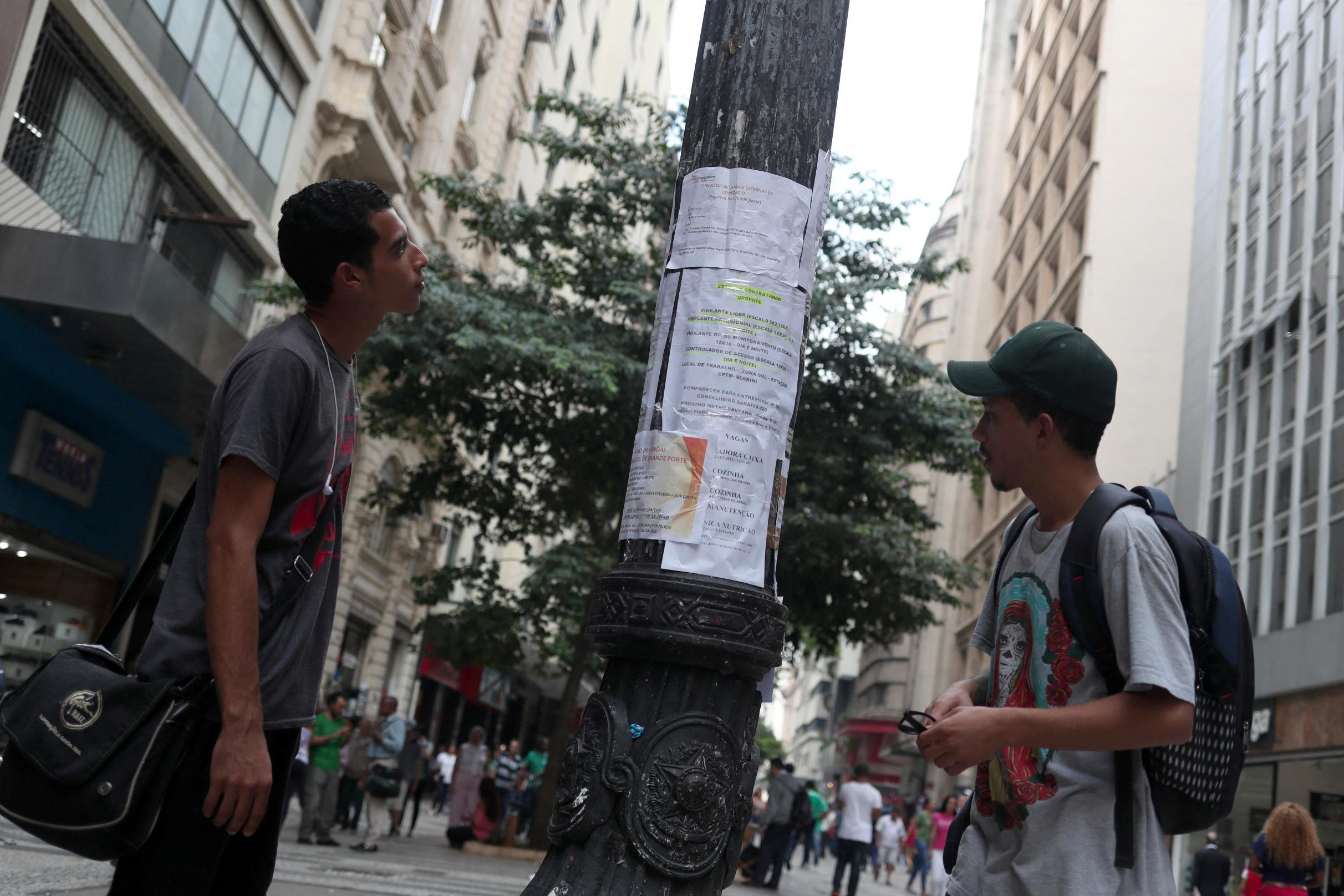
BRASILIA, Oct 30 (Reuters) - Brazil created a net 211,764 formal jobs in September, official figures showed on Monday, slightly exceeding expectations as the labor market shows resilience in the country. Economists polled by Reuters were expecting 208,850 jobs to be created in the month. Year to date, 1.6 million jobs were created, according to the Labor Ministry, whose minister Luiz Marinho had previously forecast that 2 million formal jobs would be added this year. All five activity groups analyzed by the government posted positive prints in September, with the services sector once again leading the list with a net creation of 98,206 positions. The average monthly salary for these newly created positions decreased to 2,032 reais ($403) from 2,040 reais in August. The total count of formally registered workers in Brazil has now reached 44 million, said the ministry. This figure excludes around 40 million undocumented workers who are not engaged in formal employment in Brazil. ($1 = 5.0449 reais) https://www.reuters.com/world/americas/brazil-creates-more-formal-jobs-than-expected-september-2023-10-30/
2023-10-30 17:05
BOGOTA, Oct 30 (Reuters) - Colombia's inflation could have slowed in October but forecasts for consumer price growth through the year end rose due to uncertainty caused by the El Nino weather phenomenon, a Reuters poll found on Monday. According to the median forecast from 17 analysts, consumer prices could have risen 0.35% n October, slower than the 0.54% in September and the 0.93% seen in the same month last year. Estimates ranged from 0.29% to 0.50%. If the median forecast is met, inflation for the 12 months through October would hit 10.60%, below the 10.99% through September but still far higher than the central bank's 3% target. "We expect moderation in food and housing, and as has become the norm, there could be pressure from gasoline in transport," said David Cubides, chief economist of the Alianza brokerage, who forecast inflation of 0.31% in October. The government's DANE statistics agency will publish October inflation data on Wednesday Nov. 8. Colombia's "slow" process of disinflation is aided by the delayed effect of tighter financial conditions and the country's sharp economic slowdown, but "is limited by rising gasoline prices and high indexation," said Andres Abadia, Phanteon Macroeconomics' chief economist for Latin America. Inflation forecasts for the year rose to 9.62%, compared to the 9.30% shown in the previous survey. The El Nino weather phenomenon leads to drier weather, affecting crops and subsequently food prices. Analysts also forecast inflation would close 2024 at 5.40%, versus a previous estimate of 5.10%, and estimated that consumer prices would grow 3.80% in 2025. Persistent inflationary pressure has driven the central bank to hike its benchmark interest rate by 1,150 basis points, taking it to 13.25% from September 2021 to April this year, where board members have since held it stable. In a recent Reuters poll, analysts forecast the bank board would hold the rate steady at its meeting on Tuesday. https://www.reuters.com/markets/colombia-12-month-inflation-forecast-slow-october-2023-10-30/

2023-10-30 16:42
BOGOTA, Oct 30 (Reuters) - Colombian markets rose on Monday, pushed higher on the view that the defeat of President Gustavo Petro's coalition in regional elections would dampen political capital for pushing a number of controversial reforms through Congress. Voting on Sunday for mayoralties and governorships saw opposition candidates beat those backed by Petro, whose administration ends in 2026. Petro, Colombia's first leftist president, has seen a sharp deterioration in approval ratings, according to opinion polls. He has been beset by challenges, including the breakdown of the government's coalition in Congress and the loss of several close allies over investigations into alleged influence peddling and abuses of power, while his eldest son will face trial for alleged crimes of illicit enrichment and money laundering. The Colombian currency appreciated 1.19% to 4,060 pesos to the dollar, its highest level in five weeks while the MSCI Colcap (.COLCAP) index on Colombia's stock exchange rose 0.50% to 1,099.33 points. TES domestic public debt bonds maturing in February 2033 were valued at a yield of 11.859%, versus 11.93% on Friday's close. Petro is pushing a raft of reforms through Congress, concerning pensions, health, and labor, which have caused uncertainty among business owners and investors. The proposed pension reform has caused uncertainty among the finance sector because if approved, it would see the migration of billions of dollars of savings from privately run funds to state-owned Colpensiones, which would affect capital markets. Sergio Olarte, Scotiabank's chief economist in Colombia, said Sunday's result will force Petro to further negotiate the reforms. "The possibility of passing overtly structural reforms is very difficult because it's not going to be a fight between right and left," he said. "The majority of regional leaders are not extreme and that takes away the power of Petro's extremist speech." https://www.reuters.com/markets/colombia-markets-rise-wake-government-defeat-local-elections-2023-10-30/
2023-10-30 15:54
BRASILIA, Oct 30 (Reuters) - Brazilian Finance Minister Fernando Haddad said on Monday that as long as he is in his job he will look to ensure "fiscal balance", but stopped short of saying the government's goal of erasing the budget deficit in 2024 remains in place. "My goal has been set, I will seek fiscal balance," Haddad told reporters in Brasilia, after President Luiz Inacio Lula da Silva last week said there was no need for his government to zero its fiscal deficit next year. The president's statement triggered a negative reaction in the market and further eroded confidence in his commitment to fiscal responsibility. When questioned multiple times about whether the government would alter the target of eliminating the primary deficit set for the next year, Haddad did not provide direct answers to the questions during a news conference. Instead, he emphasized that he would seek fiscal rebalancing in the face of a challenging scenario, acknowledging significant tax concessions that erode Brazil's tax collection base and high borrowing costs. "We brought to the president's consideration what is happening with the tax revenue, because it is not following (our expectations), and I told the president that we have several alternatives, including anticipating measures that would be taken in 2024," he said. Haddad also said he had received instructions from the president to share this scenario with lawmakers. The goal of erasing the primary deficit in 2024 had been outlined in new fiscal rules introduced by Lula's administration and approved by Congress earlier this year, aiming to prevent the uncontrolled growth of public debt amid higher social expenses. Although always met with skepticism by both the market and political circles within Lula's sphere, Haddad until now had been vocal in defending the viability of the goal, as long as a series of measures aimed at boosting public revenues designed by the government were approved. https://www.reuters.com/markets/brazils-haddad-affirms-fiscal-commitment-avoids-questions-2024-budget-target-2023-10-30/


